
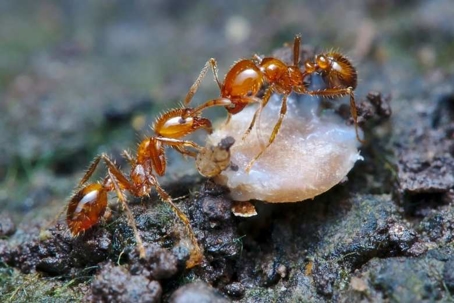
What Do Fire Ants Eat?
Understanding fire ants’ diet is crucial for selecting effective baits. Fire ants are attracted to specific types of foods at different times—protein-rich foods are preferred during colony growth phases, while carbohydrate-rich foods may be favored when the colony is focused on energy storage. Using the correct bait type significantly increases the likelihood of colony elimination.
Efficient Pest Control Planning: Knowing what fire ants eat allows people to strategically place baits in areas where they are most likely to forage. This reduces the amount of product needed and minimizes environmental impact by targeting these ants specifically rather than broadcasting pesticides indiscriminately.
Timing Treatments: Fire ant dietary preferences change seasonally and with the ants’ life cycle. For example, reproductive phases may increase their protein consumption. By understanding these patterns, treatments can be timed when ants are most actively seeking the food types incorporated in baits, making interventions more effective.
Preventing Non-Target Effects: Fire ants compete with other insects and wildlife for food. Knowing their specific food preferences helps in designing baits that minimize attraction to non-target species, protecting beneficial insects, pets, and wildlife while effectively controlling fire ants.
Diet knowledge informs understanding of colony behavior, including foraging patterns, nest expansion, and seasonal activity. This allows for more comprehensive pest management strategies beyond simply applying pesticides.
What Fire Ants Eat
Fire ants are omnivorous, meaning they eat a wide variety of foods. Their diet can be broken down into several categories:
Proteins: Fire ants are highly attracted to protein sources, which are critical for larval development and colony growth. They feed on insects (live or dead), small animals, and other arthropods. Protein-rich foods like meat scraps, tuna, or insect-based baits are particularly appealing to them.
Carbohydrates: Sugars and other carbohydrates provide energy for foraging and daily activity. Fire ants readily consume nectar, honeydew (produced by aphids and other sap-sucking insects), syrup, sugar, and sweet fruits.
Fats and Oils: Some fat-based foods, such as peanut butter, grease, or fatty animal matter, attract fire ants, especially in baits designed to lure them. Fats are also an energy-dense food source that can be incorporated into colony-building activities.
Plant Material: Fire ants occasionally consume seeds, small pieces of leaves, and other plant material, although this is less significant compared to protein and carbohydrate sources. Some species may farm aphids for their honeydew, indirectly feeding on plant sap.
Human Food Waste: Fire ants are opportunistic feeders. They will consume almost any human food left outdoors, including pet food, sugary drinks, crumbs, or spilled grains, which can increase their presence in residential or commercial areas.
Bait Acceptance Patterns: Their food preferences vary by colony needs and season. For instance, protein is more attractive when larvae are developing, while sugar becomes a priority when the colony focuses on worker activity and energy storage. This adaptability makes fire ants highly resilient and opportunistic feeders.
Fire ants are essentially omnivorous scavengers, opportunistically consuming proteins, sugars, and fats, which explains why strategic baiting must align with their current dietary preferences for effective control.
What Insects Do Fire Ants Eat?
Fire ants are opportunistic predators and will consume a wide range of insects and other arthropods. Some of the insects that fire ants may eat include:
Do Fire Ants Eat Other Ants?
Yes, fire ants do eat other ants. They are highly aggressive and opportunistic predators, often raiding neighboring ant colonies to feed on their brood (eggs, larvae, and pupae) as well as adult workers. This behavior provides a rich protein source, which supports the growth of their own colony. Fire ants may also scavenge dead ants from other species, making them both predators and scavengers within their ecosystem.
Do Fire Ants Eat Aphids?
Fire ants do not typically eat aphids directly. Instead, they “farm” aphids for the honeydew they secrete, which is a sugar-rich substance. The ants protect aphids from predators and move them to optimal feeding locations on plants in exchange for this sweet food source. This mutualistic relationship provides fire ants with a steady carbohydrate supply while supporting the aphids’ survival.
Do Fire Ants Eat Bees?
Yes, fire ants will eat bees, especially when they can access hives or encounter injured or dead bees. They prey on bee larvae, pupae, and sometimes adult bees, often raiding hives to obtain protein-rich food for their colony. This predatory behavior can negatively impact local bee populations and disrupt pollination in affected areas.
Do Fire Ants Eat Beetles?
Yes, fire ants eat beetles. They are opportunistic predators and will attack both adult beetles and their larvae. Beetles provide a rich protein source that supports colony growth, especially for developing larvae. Fire ants may also scavenge dead beetles, further contributing to their diet and demonstrating their highly adaptable feeding behavior.
Do Fire Ants Eat Butterflies?
Yes, fire ants can eat butterflies, but typically they target the more vulnerable stages—caterpillars (larvae) and pupae—rather than healthy adult butterflies. These immature stages provide a concentrated protein source that supports colony growth. Occasionally, fire ants may scavenge injured or dead adult butterflies, but active adults are usually too mobile to be regularly captured.
Do Fire Ants Eat Centipedes?
Yes, fire ants will eat centipedes. They are aggressive predators and will attack small or juvenile centipedes, using their stings to subdue them. Centipedes provide a protein-rich food source for the colony, particularly benefiting developing larvae. Larger, mature centipedes may be avoided due to their speed and defensive abilities, but fire ants will scavenge dead or injured ones when available.
Do Fire Ants Eat Cicadas?
Yes, fire ants eat cicadas, primarily targeting nymphs or injured and dead adults. Cicadas are a rich protein source that supports colony growth and larval development. While healthy adult cicadas can often escape due to their size and flight, fire ants will swarm and consume vulnerable individuals, showing their opportunistic and predatory feeding behavior.
Do Fire Ants Eat Cockroaches?
Yes, fire ants eat cockroaches. They are aggressive predators and will attack both nymphs and adult cockroaches, using their stings to immobilize them. Cockroaches provide a high-protein food source that supports colony growth and larval development. Fire ants may also scavenge dead cockroaches, making them a reliable component of their opportunistic diet.
Do Fire Ants Eat Crickets?
Yes, fire ants eat crickets. They are aggressive predators and will attack both live crickets and scavenge dead ones. Crickets provide a rich protein source, which is essential for larval development and overall colony growth. Fire ants’ ability to subdue and consume crickets demonstrates their opportunistic and adaptable feeding behavior.
Do Fire Ants Eat Earwigs?
Yes, fire ants eat earwigs. They actively prey on smaller or vulnerable earwigs, using their stings to subdue them. Earwigs provide a protein-rich food source that supports colony growth and larval development. Fire ants may also scavenge dead or injured earwigs, reflecting their opportunistic and adaptable feeding behavior.
Do Fire Ants Eat Fleas?
Yes, fire ants can eat fleas, though it’s not a primary food source. They will prey on flea larvae and pupae when they encounter them in soil or leaf litter, using them as a protein-rich supplement for the colony. Adult fleas are typically too mobile to be regularly captured, but any vulnerable or dead individuals may also be consumed.
Do Fire Ants Eat Flies?
Yes, fire ants eat flies. They will attack and consume both adult flies and their larvae when they can catch them. Flies provide a rich protein source that supports colony growth and larval development. Fire ants’ predatory and scavenging behavior makes flies an opportunistic part of their diet, especially when other protein sources are available nearby.
Do Fire Ants Eat Grasshoppers?
Yes, fire ants eat grasshoppers. They are aggressive predators that will attack nymphs and smaller adults, using their stings to immobilize them. Grasshoppers provide a high-protein food source that supports colony growth and larval development. Fire ants may also scavenge dead or injured grasshoppers, reflecting their opportunistic and adaptable feeding behavior.
Do Fire Ants Eat Millipedes?
Yes, fire ants eat millipedes, though they usually target smaller or injured individuals. Millipedes provide a protein-rich food source for the colony, especially for developing larvae. Larger millipedes may be avoided due to their size, chemical defenses, and hard exoskeleton, but fire ants will scavenge dead or weakened millipedes when available.
Do Fire Ants Eat Mites?
Yes, fire ants eat mites, but usually only when they encounter them in the soil, leaf litter, or on other insects. Mites are tiny and provide a small protein source, which can supplement the ants’ diet. Fire ants primarily consume them opportunistically rather than actively hunting them, but any available mites may be collected for the colony’s nutritional needs.
Do Fire Ants Eat Mosquitoes?
Yes, fire ants eat mosquitoes, but primarily the larvae rather than flying adults. Mosquito larvae in water or damp soil can be preyed upon by foraging fire ants, providing a protein-rich food source for the colony. Adult mosquitoes are typically too fast and mobile to be regularly captured, so they are rarely a significant part of the ants’ diet.
Do Fire Ants Eat Moths?
Yes, fire ants eat moths, mainly targeting the larvae (caterpillars) and pupae, which are rich in protein and easier to subdue. They may also scavenge injured or dead adult moths, but healthy flying adults are usually too mobile to be captured. This predatory and opportunistic behavior helps supply essential nutrients for colony growth and larval development.
Do Fire Ants Eat Silverfish?
Yes, fire ants eat silverfish. They will attack and consume both live and dead silverfish, using their stings to immobilize them. Silverfish provide a protein-rich food source that supports colony growth and larval development. This predatory behavior highlights fire ants’ opportunistic feeding habits, allowing them to exploit a variety of small arthropods in their environment.
Do Fire Ants Eat Slugs?
Yes, fire ants eat slugs, but usually small or injured ones. Slugs provide a protein-rich and moist food source for the colony, especially for larvae. Larger or healthy slugs may be avoided because of their size and slime, which can deter ants, but fire ants will scavenge weakened or dead slugs when available.
Do Fire Ants Eat Snails?
Yes, fire ants eat snails, but typically they target small, young, injured, or dead individuals. Snails provide a protein-rich and calcium-containing food source that supports colony growth and larval development. Healthy adult snails are usually avoided due to their size and protective shells, but any vulnerable or exposed snails may be consumed opportunistically.
Do Fire Ants Eat Springtails?
Yes, fire ants eat springtails. Springtails are tiny, soft-bodied arthropods that provide a protein-rich food source for the colony. Fire ants will prey on them opportunistically in soil, leaf litter, or other moist environments where springtails are abundant. Their small size and abundance make them an easy and frequent supplemental food for fire ant colonies.
Do Fire Ants Eat Spiders?
Yes, fire ants eat spiders. They are aggressive predators and will attack and subdue small to medium-sized spiders using their stings. Spiders provide a rich protein source that supports colony growth and larval development. Fire ants may also scavenge dead or injured spiders, reflecting their opportunistic and adaptable feeding behavior.
Do Fire Ants Eat Termites?
Yes, fire ants eat termites and are known to be effective predators of them. They will attack both worker and soldier termites, using their stings to immobilize them. Termites provide a high-protein food source that supports colony growth and larval development. Fire ants may also raid termite nests, which can significantly impact local termite populations.
Do Fire Ants Eat Ticks?
Yes, fire ants eat ticks, primarily when they encounter them on the ground or on hosts. Ticks provide a protein-rich food source for the colony, particularly for developing larvae. Fire ants will sting and kill ticks, then carry them back to the nest to be consumed, demonstrating their opportunistic predatory behavior.
Do Fire Ants Eat Wasps?
Yes, fire ants eat wasps, but they typically target vulnerable individuals such as injured, grounded, or smaller wasps. They use their stings to subdue prey, providing a protein-rich food source for the colony. Fire ants may also scavenge dead wasps, but healthy, flying adults are generally too agile to be frequently captured.
Do Fire Ants Eat Animals?
Fire ants are primarily insectivorous, but when it comes to animals outside insects and arthropods, their diet is opportunistic and limited to small, vulnerable, or immobile creatures:
Small amphibians: Tiny frogs or tadpoles can be attacked if they are within reach, especially in moist habitats or shallow water.
Small reptiles: Hatchling lizards or geckos may be preyed upon, particularly if injured or unable to escape quickly.
Small mammals (rarely): Newborn rodents, mice, or shrews may be targeted if they are exposed or vulnerable in nests or burrows.
Bird eggs or hatchlings: Fire ants may invade nests to consume eggs or newly hatched chicks that cannot yet defend themselves.
Fire ants tend to target small, immobile, or vulnerable vertebrates rather than actively hunting larger animals. Most of their energy comes from insects, other arthropods, and occasionally plant-derived sugars.
Do Fire Ants Eat Plants?
Fire ants are opportunistic omnivores and may consume a variety of plant materials. While they primarily feed on insects and other protein sources, they can eat various plant parts when the opportunity arises. Some of the plant materials that fire ants might eat include:
- Seeds: Fire ants can consume seeds from a wide range of plants. This can be detrimental to agriculture, as they may damage crops by digging up and consuming seeds.
- Fruits: They may feed on ripe or overripe fruits that have fallen to the ground. Fruit trees and shrubs can be attractive food sources for fire ants.
- Flowers: Fire ants are known to visit flowers in search of nectar. This behavior can sometimes be beneficial for plants, as the ants may help with pollination.
- Tender Plant Parts: In some cases, fire ants may consume tender plant parts, such as young leaves or shoots. This can result in damage to ornamental plants and garden vegetables.
While fire ants can consume plant materials, their primary sources of nutrition come from animal-based sources, including insects and other arthropods. Their plant-based diet is often a supplement to their protein-rich diet, and they may opportunistically forage on plants when other food sources are scarce. The specific plant species they target can vary based on the local environment and food availability.
Do Fire Ants Eat Nectar And Honeydew?
Fire ants consume nectar and honeydew. Nectar and honeydew provide a source of carbohydrates in the diet of fire ants, which consists of a mixture of animal-based and plant-based foods. Here's more information on their consumption of nectar and honeydew:
- Nectar: Fire ants are known to visit flowers to feed on nectar. This behavior is beneficial for both the ants and the plants. The ants receive a source of carbohydrates in the form of nectar, while the act of foraging for nectar can assist in pollination, benefiting the plants.
- Honeydew: Fire ants often engage in a mutualistic relationship with honeydew-producing insects, such as aphids and scale insects. They protect these honeydew-producing insects from predators and "milk" them for the sugary honeydew they excrete. Honeydew is a valuable carbohydrate source for fire ants and is an essential part of their diet. This mutualism benefits the ants by providing a consistent source of carbohydrates, and it benefits the honeydew-producing insects by gaining protection from predators.
The consumption of nectar and honeydew allows fire ants to obtain the necessary carbohydrates for energy, which complements their primarily protein-based diet. Their ability to adapt to a wide range of food sources, including these sugary substances, contributes to their success in various ecosystems.
Do Fire Ants Drink Water?
Yes, fire ants do require water for survival, and they actively seek out water sources. Adequate water is essential for the health and hydration of the ant colony. Here's how fire ants obtain and use water:
- Water Collection: Fire ants are skilled at collecting and storing water. They often scout their surroundings for sources of water, which can include puddles, streams, or other water bodies. They will readily take in water to transport back to their colony.
- Water Storage: Fire ant colonies have special chambers or areas within their nests where they store water. This stored water serves multiple purposes, including providing hydration for the colony members and regulating the temperature and humidity within the nest.
- Cooling and Hydration: Water is essential for cooling the nest during hot weather, as fire ants may use it to dampen the nest material. Additionally, the water is used to keep the ant larvae and pupae well-hydrated. The worker ants often regurgitate water to feed the developing ants and maintain their moisture levels.
- Drinking: Individual fire ants will also drink water directly to satisfy their own hydration needs.
Water is a vital resource for fire ants, and they are well adapted to locate, collect, store, and utilize water within their colony for various purposes, including temperature regulation and hydration. The availability of water is a critical factor in the survival and functioning of a fire ant colony.