
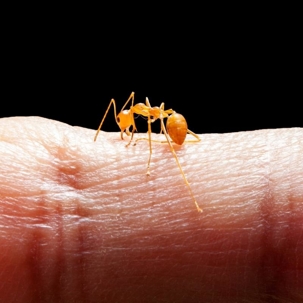
Fire Ants Sting
Fire ants can sting, and their sting is one of the main reasons they’re considered such a serious pest. Unlike many other ants that only bite, fire ants both bite and sting. Here’s what happens:
They bite first — Fire ants bite before they sting because the bite helps them anchor themselves securely to the skin. Once attached, they can use their abdomen to pivot and deliver one or more stings while maintaining their grip. This behavior allows them to inject venom more effectively and defend themselves or their colony against perceived threats.
Then they sting repeatedly — After biting to hold on, a fire ant usually stings repeatedly rather than just once. It stays attached with its jaws and pivots its body in a circular motion, injecting venom multiple times into nearby areas of skin. This often results in a cluster or ring of painful stings from a single ant.
Fire ant stings can cause pain, burning, itching, redness, swelling, and the formation of small white pustules that may last for several days. While most stings are not serious and heal on their own, scratching the affected area can increase the risk of infection. In some people, especially those who are allergic to fire ant venom, stings can trigger a severe allergic reaction that may include hives, difficulty breathing, swelling of the face or throat, dizziness, or anaphylaxis, which requires immediate medical attention.
When Do Fire Ants Sting?
Fire ants typically sting when they feel threatened or when their nest is disturbed, and they do so aggressively and in large numbers. Here are the most common situations where people or pets might get stung by fire ants:
Accidentally disturbing a mound – Fire ants sting when you disturb their mound because they perceive the disturbance as a threat to their colony, queen, and brood. When the mound is shaken, stepped on, or damaged, worker ants quickly emerge and become defensive, biting and stinging to drive away the perceived intruder and protect the nest. This aggressive response helps the colony survive against predators and other dangers.
Yard work or outdoor activities – Fire ants often sting during yard work and other outdoor activities because these activities can accidentally disturb their nests or bring people into direct contact with foraging ants. Actions such as mowing, gardening, digging, raking, or moving outdoor objects may shake or damage a mound, causing the ants to become defensive. When fire ants perceive a threat, they quickly swarm, bite to hold on, and deliver multiple stings to protect their colony.
Children or pets playing outside – Fire ants may sting children or pets that play outside because running, digging, sitting, or playing on the ground can accidentally disturb a fire ant mound or bring them into contact with foraging ants. When the ants perceive these movements as a threat to their colony, they respond defensively by swarming, biting to gain a secure hold, and delivering multiple stings. Children and pets may be especially vulnerable because they often spend more time in grassy areas and may not notice a mound before coming into contact with it.
Heavy Rain/Flooding – Fire ants may sting more frequently during heavy rain or flooding because rising water can disrupt and displace their colonies. To survive, the ants often leave flooded nests and gather into floating rafts or move to higher ground, increasing the likelihood of contact with people and animals. When disturbed during these stressful conditions, fire ants can become highly defensive and may bite and sting to protect themselves and their colony.
Disturbed colonies indoors – Fire ants may sting when disturbed indoors because they can become defensive when their nesting sites or foraging trails are disrupted. Ants that enter homes through cracks, utility openings, or other entry points may react aggressively if they are touched, stepped on, trapped in clothing, or disturbed while searching for food or shelter. As a defensive response, they may bite to hold on and then deliver one or more stings.
Protecting food or prey – Fire ants sting when their food sources or prey are disturbed because they aggressively defend anything they are actively harvesting or using to feed the colony. If a person or animal interrupts their foraging trail or comes into contact with captured insects or food items, the ants interpret the disruption as a threat to their resources. In response, they quickly swarm, bite to secure a grip, and deliver multiple stings to drive the intruder away and protect the colony’s energy supply.
Fire ants respond quickly and in coordinated groups because their survival depends on rapid, collective defense. When a disturbance is detected, they release chemical alarm signals (pheromones) that alert nearby workers, triggering a mass defensive response. This is why multiple ants often swarm the same target at once, sometimes climbing upward on a person or animal as they seek exposed skin and stable footing. Once in position, they bite to anchor themselves and then sting repeatedly, and because many ants act simultaneously, the result is multiple stings delivered in a short period, which increases both the pain and the number of welts.
Fire Ant Stings
Fire ant stings can range from mildly irritating to medically serious, depending on the number of stings, the individual’s sensitivity, and how the body reacts to the venom. Here’s how bad they can be:
Immediate Pain and Burning
A fire ant sting is typically quite painful and is often described as a sudden, sharp burning sensation that can intensify within seconds after the venom is injected. The pain comes from both the physical sting and the venom, which irritates the skin and triggers an inflammatory response. Many people compare the feeling to a small burn or a sharp pinch that quickly becomes itchy and uncomfortable. After the initial pain, the area usually develops a red bump that may later form a small white pustule, which can remain tender or itchy for several days. The intensity of pain can vary depending on the person’s sensitivity, the number of stings received, and where on the body the sting occurs, but even a single sting is often noticeable and unpleasant.
Multiple Stings at Once
When a fire ant mound is disturbed, many ants can sting at the same time because they respond quickly to alarm chemicals released by the colony. Instead of a single attacker, a person or animal may be swarmed by dozens or even hundreds of worker ants within seconds, especially if a large nest is disrupted. This coordinated response means multiple stings can occur almost simultaneously in a concentrated area. In addition, a single fire ant can sting multiple times. After biting to anchor itself to the skin, it can pivot its body and deliver several stings in a circular pattern before eventually detaching. This combination of swarm behavior and repeated stinging from individual ants is what makes fire ant encounters particularly painful and irritating.
Itchy, Pus-Filled Blisters
After a fire ant sting, it is common for small, raised bumps to form that develop into white or yellowish pustules within about 24 hours. These are not true infections in most cases, but rather sterile blisters filled with fluid and immune cells as the body reacts to the venom. The pustules are typically firm, round, and slightly tender or itchy, and they often sit on a red, inflamed base. They can appear singly or in clusters depending on how many times the skin was stung. While they may look concerning, they usually remain localized and gradually dry out and crust over within several days, eventually healing without scarring unless they are scratched or become secondarily infected.
Learn more: What Do Fire Ant Stings Look Like?
Allergic Reactions
Fire ant stings can cause allergic reactions in some people. While most individuals experience only localized pain, redness, swelling, and itchy pustules, those who are sensitive to fire ant venom may develop a more widespread immune response. Mild allergic reactions can include larger areas of swelling around the sting, hives on other parts of the body, or persistent itching. More severe reactions, such as anaphylaxis, are less common but potentially life-threatening and can involve difficulty breathing, swelling of the face or throat, rapid heartbeat, dizziness, or a sudden drop in blood pressure. Because these severe reactions can progress quickly, they require immediate emergency medical treatment, typically with epinephrine and follow-up care.
Secondary Infections
Fire ant stings can sometimes lead to secondary infections, although this is not caused directly by the venom itself. The main risk comes from breaking or scratching the skin at the sting site, especially after the itchy pustules form. When the skin barrier is damaged, bacteria from the environment or from under the fingernails can enter the area and cause infection. Signs of a secondary infection may include increasing redness, warmth, swelling, worsening pain, pus that looks cloudy or spreads beyond the original blister, or fever in more severe cases. While most stings heal without complications, keeping the area clean and avoiding scratching significantly reduces the risk of infection.
Effects on Pets and Wildlife
Animals most vulnerable to fire ant stings are typically small, young, sick, or immobile species that cannot quickly escape or defend themselves. Newborn or very young animals—such as chicks, kittens, puppies, and small rodents—are especially at risk because even a modest number of stings can cover a large portion of their bodies and deliver a relatively higher venom dose. Ground-nesting or burrowing animals, including reptiles, amphibians, and some small mammals, are also highly exposed because fire ants often invade nests and attack in large numbers. Livestock and pets can be vulnerable as well, particularly when resting, sleeping, or restrained, since they may not react quickly enough to avoid swarming ants. In severe cases, multiple stings can lead to significant pain, swelling, stress, or systemic toxicity, and very small animals may experience life-threatening reactions from relatively few stings.
What To Do About Fire Ant Stings
If you’re stung by fire ants, acting quickly and correctly can make a major difference in minimizing pain, preventing infection, and avoiding complications. Here’s exactly what to do:
Move Away Immediately
It is important to move away from fire ants immediately if stung because they typically attack in coordinated groups once their colony is disturbed. Staying in the area increases the chance of receiving many more stings, as alarm chemicals released by the ants attract additional workers that continue swarming and stinging. Quickly leaving the site reduces exposure and limits the number of stings, which helps decrease pain, swelling, and the risk of a large venom load. Moving away also allows the person to safely remove any ants still attached to the skin or clothing without further agitation of the colony, lowering the likelihood of ongoing attacks.
Clean the Affected Area
Cleaning the affected area after a fire ant sting is important because it helps reduce the risk of infection and supports proper healing. The sting site is essentially a small break in the skin, and if it is not cleaned, bacteria from the environment or from scratching can enter and cause a secondary infection. Washing with soap and water also removes any remaining venom residue on the skin and helps reduce irritation. Keeping the area clean can lessen inflammation, prevent the pustules from becoming infected, and make it less tempting to scratch, which further protects the skin.
Control Pain and Swelling
Reducing pain and swelling after a fire ant sting is important because it improves comfort, limits the inflammatory response, and helps prevent complications such as excessive scratching and secondary infection. Once away from the ants, any remaining ants should be brushed off carefully to avoid further stings. The affected area should then be washed thoroughly with soap and water to remove irritants from the skin. Applying a cold compress or ice pack wrapped in cloth for short intervals can help constrict blood vessels, reduce swelling, and numb the pain. Elevating the affected limb, when possible, can also minimize swelling. Over-the-counter pain relievers and antihistamines may help control discomfort, itching, and the body’s allergic response. It is important to avoid scratching, even though itching may develop later, because scratching can break the skin and increase the risk of infection or worsen inflammation.
Watch for Signs of Infection
It is important to monitor fire ant stings for signs of infection because the skin is already irritated and slightly damaged at the sting site, which makes it easier for bacteria to enter if the area is scratched or not kept clean. While most fire ant stings heal without complications, a secondary infection can develop and become more serious if it is not recognized and treated early. A person should watch for increasing redness that spreads beyond the original sting area, worsening pain instead of gradual improvement, warmth or swelling that intensifies after the first day or two, and pus that becomes cloudy, thick, or expands rather than drying out. Other warning signs include red streaks extending from the sting, fever, or general feelings of illness, which may suggest the infection is spreading.
Be Alert for Allergic Reactions
Anaphylaxis from fire ant stings is a rare but serious allergic reaction that requires immediate emergency attention. Symptoms to watch for include difficulty breathing, wheezing, or a tight feeling in the chest or throat, as well as swelling of the face, lips, tongue, or throat that can interfere with swallowing or speaking. A person may also develop widespread hives or intense itching far beyond the sting sites, along with dizziness, lightheadedness, or fainting caused by a sudden drop in blood pressure. Other warning signs can include a rapid or weak pulse, nausea, vomiting, abdominal cramps, or a sense of severe anxiety or impending doom. These symptoms can progress quickly, so prompt treatment with emergency medical care and epinephrine is critical.
For Pets
If a pet is stung by fire ants, the priority is to quickly remove the animal from the area to prevent additional stings, since fire ants often attack in large numbers once their nest is disturbed. The pet should then be carefully checked for ants still attached to the skin or fur and brushed or wiped off gently. If it is safe to do so, the affected areas can be washed with mild soap and cool water to help remove venom and reduce irritation. Applying a cool compress wrapped in a cloth to swollen or painful areas can help ease discomfort and limit inflammation. It is important to prevent the pet from licking, scratching, or biting at the sting sites, as this can worsen irritation or lead to infection, so an Elizabethan collar may be needed in some cases. Over the next several hours, the pet should be closely monitored for signs of a more serious reaction, including excessive swelling (especially around the face), difficulty breathing, weakness, vomiting, collapse, or signs of severe pain, all of which require immediate veterinary attention. Even if the reaction seems mild at first, multiple stings can sometimes lead to delayed complications, so observation for at least 24 hours is important, and contacting a veterinarian for guidance is advisable if there is any uncertainty about the severity of the exposure.
How To Prevent Future Fire Ant Stings
There are a number of things you can do to help prevent fire ant stings:
Inspect Outdoor Areas Before Use
Inspecting outdoor areas before use helps prevent fire ant stings by allowing a person to identify and avoid active nests or foraging activity before accidental contact occurs. Fire ant mounds can blend into grass, soil, or sand and may not be obvious at first glance, but a quick visual check can reveal disturbed earth, small openings, or visible ant movement. By spotting these warning signs early, someone can choose a different location for sitting, playing, or working, or take steps to treat the area before use. This simple precaution reduces the chance of stepping on or disturbing a colony, which is the main trigger for the ants’ rapid defensive swarming and multiple stings.
Avoid Disturbing Ant Mounds
Avoiding ant mounds helps prevent fire ant stings because the mound is the central structure of the colony, where a large number of worker ants are concentrated and ready to defend it. When the mound is stepped on, kicked, or even lightly disturbed, the ants respond almost immediately by releasing alarm chemicals that trigger a mass defensive attack. This leads to rapid swarming, with many ants climbing onto the intruder, biting to secure themselves, and then stinging repeatedly. By simply recognizing and steering clear of mounds, a person greatly reduces the chance of triggering this coordinated defense response, which is the main situation in which fire ant stings occur.
Keep Children And Pets Away From Known Mounds
Keeping children and pets away from known ant mounds is especially effective because it removes the most common trigger for fire ant attacks: direct disturbance of the colony. Fire ants respond defensively when pressure, vibration, or movement occurs on or near their nest, and children and animals are more likely to accidentally step on, dig into, or rest near a mound without recognizing it. Unlike adults who may notice and avoid visible nests, kids and pets tend to explore the ground closely and unpredictably, which increases the chance of triggering a mass swarm. By maintaining distance, the likelihood of initiating the ants’ alarm response is greatly reduced, preventing the rapid biting and multiple stings that typically follow a mound disturbance.
Stay Alert During Yard Work
Staying alert during yard work helps prevent fire ant stings because it increases the chance of noticing nests or foraging activity before contact occurs. Tasks like mowing, digging, raking, or moving debris can easily disturb hidden mounds, triggering a rapid defensive swarm if the ants are not seen in time. By paying attention to the ground and watching for loose soil, ant movement, or areas of unusual activity, a person can adjust their actions to avoid stepping directly on or working over a colony. This awareness also allows for early reaction if ants begin climbing onto clothing or equipment, making it possible to step away quickly and reduce the number of stings.
Wear Closed-Toe Shoes, Long Pants, And Socks
Wearing closed-toe shoes, long pants, and socks helps reduce the risk of fire ant stings by creating a physical barrier between the skin and the ants. Fire ants typically target exposed areas at ground level, such as feet, ankles, and lower legs, especially when a nest is disturbed. Sturdy footwear prevents ants from easily reaching the skin on the feet, while socks and long pants limit access to the legs and make it harder for ants to climb directly onto exposed skin. Even if ants get onto clothing, the added layers can delay or prevent stings long enough for the person to notice them and remove them before significant envenomation occurs.
Avoid Standing Still For Long Periods Where Ants May Be Foraging
Avoiding standing still in areas where fire ants may be foraging helps reduce the chance of stings because stationary movement gives ants more time to discover, climb onto, and attack a person without being noticed. Fire ants often travel in search of food in loose trails across grass, soil, and other outdoor surfaces, and a still target is easier for them to investigate and swarm if they detect it. When a person keeps moving, it becomes harder for ants to establish a foothold or coordinate a sustained attack, and any ants that climb on are more likely to be shaken off or noticed quickly. Staying mobile therefore lowers both the likelihood of prolonged contact and the number of ants that can successfully sting.
Shake Out Clothing, Blankets, And Shoes After Spending Time Outdoors
Shaking out clothing, blankets, and shoes after being outdoors helps prevent fire ant stings because ants can easily climb into folds, seams, and enclosed spaces without being immediately noticed. Fire ants are small, persistent, and capable of clinging to fabric or hiding inside footwear, especially if someone has been near a nest or walking through grassy or sandy areas. If they remain trapped, they may sting when the item is put back on or when they come into contact with skin later indoors. By shaking and inspecting these items, any ants that have hitched a ride are dislodged before they have a chance to bite or sting, reducing the risk of unexpected stings after leaving the outdoor area.
Reduce Attractants That Draw Foraging Ants Closer To Living Spaces
Fire ants are drawn toward living spaces by a variety of food-related and environmental attractants that signal a reliable source of nutrition or shelter. Sweet substances such as spilled drinks, fruit juice, soda, or sugary food residues are especially attractive, as fire ants actively seek carbohydrates for energy. Protein sources, including pet food, grease, meat scraps, and dead insects, can also draw them in when available. In addition, unsecured trash bins, compost piles, or outdoor eating areas can provide both food and shelter opportunities. Moisture is another important factor, so leaky outdoor faucets, irrigation systems, or damp soil near foundations may encourage colonies to establish closer to buildings. Once attracted, fire ants may begin foraging in and around homes, increasing the likelihood of encounters with people and pets.
Reduce Fire Ant Colonies Around Homes And Yards
Reducing the fire ant population lowers the risk of stings by decreasing both the number of active colonies and the frequency of worker ants foraging in areas where people and pets are present. With fewer colonies, there are fewer mounds that can be accidentally disturbed during activities like mowing, walking, or playing, and fewer ants available to respond in large defensive swarms. This reduces the likelihood of mass stinging events, which are responsible for the most painful and widespread exposures. Common do-it-yourself control methods include broadcast bait treatments, where ants carry poisoned food back to the colony and gradually eliminate the queen and brood, as well as mound-specific treatments such as liquid drenches or granular insecticides applied directly to visible nests. Some people also use natural or home-based approaches like boiling water or soapy water poured into mounds, though these tend to be less reliable for fully eliminating colonies and can sometimes cause ants to relocate rather than die off. Regular yard maintenance, combined with repeated baiting over time, is often necessary because fire ant colonies can spread and multiple queens may allow them to rebound if not fully controlled.
Hire Our Professional Fire Ant Control Team
Hiring our professional exterminators is often the safest and most effective way to reduce fire ant stings because our trained pest control specialists can identify the extent of an infestation and target multiple colonies at once using methods that are more thorough and controlled than typical do-it-yourself approaches. Fire ant colonies are often widespread, can have multiple queens, and may exist in hidden or hard-to-reach areas, which makes partial treatment ineffective and can sometimes cause the ants to spread or relocate if not handled properly. Our professionals use specialized baits, insect growth regulators, and mound treatments in strategic combinations designed to eliminate the entire colony over time rather than just disturbing it. We also understand how to apply treatments in a way that minimizes exposure risk to people, pets, and beneficial insects, while reducing the chance of accidental mound disturbance that could trigger defensive swarming. In addition, our exterminators will put together a long-term management plan, monitoring and re-treating areas as needed to prevent reinfestation, which significantly lowers the likelihood of future encounters and mass stinging incidents around homes, yards, and public spaces. Contact us to learn more!