
What Animals Eat Cockroaches?
Cockroaches are a highly attractive food source for many animals for several reasons:
Abundance and Ubiquity – Cockroaches are widespread and can thrive in a variety of habitats, from tropical forests to urban environments. Their presence in large numbers makes them an accessible and reliable food source for predators.
High Nutritional Value – Cockroaches are rich in protein, fats, and essential nutrients, making them a concentrated and energy-efficient prey item. This is particularly important for small predators and insectivores that require high-protein diets to sustain rapid metabolisms.
Nocturnal Activity – Many cockroach species are nocturnal, which aligns with the foraging patterns of a wide range of predators, including amphibians, reptiles, mammals, and spiders. This temporal overlap increases the likelihood of predation.
Slow or Predictable Movement – While some cockroaches are fast, many are slow-moving or frequent predictable microhabitats like cracks, leaf litter, and walls. This makes them easier to ambush or capture by predators like mantises, frogs, and centipedes.
Size and Life Stage Variability – Cockroaches vary in size from tiny nymphs to large adults, allowing predators of all sizes—from small spiders and ants to large amphibians and lizards—to exploit them as a food source. Predators can feed on eggs, nymphs, or adults depending on their own size and hunting abilities.
Adaptability and Low Defense Mechanisms – Despite their tough exoskeleton, cockroaches have relatively few chemical or behavioral defenses against a broad range of predators. They rely mainly on hiding and fleeing, which can be ineffective against ambush predators or swarming attackers.
Ecological Niche – Cockroaches occupy a low trophic level as detritivores and scavengers, feeding on decaying organic matter. This makes them abundant in ecosystems and a consistent energy source that supports higher trophic levels, including birds, mammals, amphibians, reptiles, and arthropods.
Cockroaches are an ideal prey item: plentiful, nutritious, and accessible to a wide variety of predators, which is why so many animals across multiple taxa feed on them. Their ecological role as scavengers indirectly sustains a diverse community of predators.
Do Amphibians Eat Cockroaches?
Yes, many amphibians do eat cockroaches. Cockroaches are a suitable prey for a variety of amphibians because they are high in protein, relatively slow-moving, and active at night—coinciding with the nocturnal foraging habits of many amphibians.
Frogs – Most frogs are insectivorous and will eat cockroaches when they are available. Larger species, like bullfrogs or horned frogs, can consume bigger roaches. They usually hunt by ambushing or snapping them up with their sticky tongues.
Toads – Toads are ground-dwelling and opportunistic feeders. They eat cockroaches and other crawling insects, making them effective predators in gardens or near human habitation.
Tree Frogs – While smaller, tree frogs will eat cockroaches that venture near lights or foliage where the frogs hunt.
In general, terrestrial and nocturnal amphibians are the most likely to consume cockroaches, whereas strictly aquatic species rarely encounter or eat them.
Do Birds Eat Cockroaches?
Many species of birds, especially omnivorous ones like chickens, pigeons, and sparrows, will eat cockroaches if they can catch them:
Chickens (Domestic and Backyard) – Chickens are opportunistic omnivores and will readily eat cockroaches if they encounter them. They scratch through leaf litter and soil, which makes them effective at controlling roach populations in outdoor areas.
Robins – American robins and similar species consume a variety of insects, including cockroaches, especially during the warmer months when roaches are more active. They primarily hunt on the ground and in low vegetation.
Blue Jays – These intelligent birds eat a wide range of insects and are known to feed on cockroaches when available. They are adaptable and will forage in gardens and urban areas.
Sparrows – House sparrows and other urban-adapted sparrows can opportunistically eat cockroaches, particularly in areas where food is scarce or human habitation provides easy access to insects.
Crows and Ravens – Both crows and ravens are omnivorous scavengers that consume insects, including cockroaches. They are highly adaptable and can target roaches in both rural and urban environments.
Wrens – Small insectivorous birds like wrens actively hunt small crawling insects, including cockroaches. They are efficient foragers in shrubs, woodpiles, and garden debris.
Starlings – European starlings and related species are opportunistic feeders that will eat cockroaches when they find them, often foraging on the ground in open areas.
Flycatchers – These birds, although primarily aerial insect hunters, will also take ground insects, including cockroaches, especially when young chicks need protein-rich food.
Nighthawks and Nightjars – While primarily feeding on flying insects, some species may opportunistically consume cockroaches if they are active at dusk or near lights where roaches congregate.
Though more associated with aquatic prey, some wading birds will also eat large cockroaches in damp environments, particularly around urban wetlands or garden ponds.
Do Other Insects Eat Cockroaches?
Cockroaches are preyed upon by a wide variety of insects and arthropods. Many of these are natural predators in the environment or are sometimes used in pest control programs. Their effectiveness depends on size, hunting method, and activity patterns:
Do Ants Eat Cockroaches?
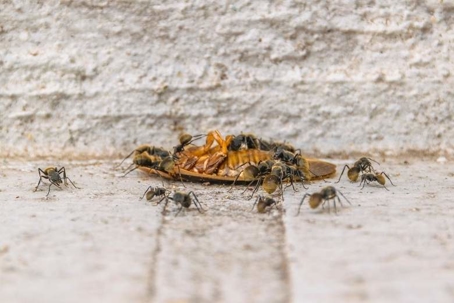
Yes, ants do eat cockroaches, although their effectiveness depends on the species of ant and the size or life stage of the cockroach. Many ant species, such as fire ants, Argentine ants, and some tropical and urban ants, are aggressive and opportunistic feeders that will attack cockroaches if the opportunity arises. They typically swarm the prey, biting and stinging to immobilize it, which allows them to carry off parts of the cockroach to feed their colony. Ant predation is generally most effective on smaller or juvenile cockroaches, as adult roaches can be fast and armored enough to escape or fend off individual ants. Some ants will also target cockroach eggs and nymphs, which can help suppress population growth over time. In natural or outdoor environments, ants serve as important biological control agents, but their impact indoors is usually limited unless there is a high density of both ants and roaches.
Do Beetles Eat Cockroaches?
Yes, certain beetle species do eat cockroaches, though not all beetles are predatory. Predatory beetles, such as ground beetles (Carabidae) and some rove beetles (Staphylinidae), actively hunt and consume cockroaches, particularly nymphs and smaller adults. Ground beetles are nocturnal hunters that search leaf litter, soil, and debris, seizing cockroaches with their strong mandibles. Rove beetles often specialize in preying on eggs or very young roaches, which helps reduce population growth over time. Larger predatory beetles, like some Calosoma species, can even take down medium to large cockroaches. In natural or outdoor environments, these beetles serve as effective biological control agents, but their impact indoors is typically limited unless populations are artificially introduced or encouraged in enclosed spaces.
Do Centipedes Eat Cockroaches?
Yes, centipedes are effective predators of cockroaches. Large house centipedes (Scutigera coleoptrata) and soil-dwelling species (Scolopendra spp.) actively hunt cockroaches, using their speed, venomous forcipules, and strong mandibles to subdue prey. They are particularly efficient at capturing medium to large cockroaches that are active at night, which coincides with the centipedes’ nocturnal hunting patterns. Centipedes inject venom to immobilize their prey, then consume it, often tackling multiple cockroaches in succession if the opportunity arises. They are generalist predators, so while cockroaches are a preferred target when available, centipedes will also feed on other insects and arthropods. In homes and outdoor environments alike, centipedes play a natural role in controlling cockroach populations, though their presence is more noticeable in damp, sheltered areas where both predator and prey thrive.
Do Earwigs Eat Cockroaches?
Yes, earwigs can eat cockroaches, although they are generally opportunistic and not primary predators. Earwigs will feed on small cockroach nymphs or eggs when they encounter them, using their forceps-like cerci to grasp or manipulate the prey. Their nocturnal and scavenging behavior often brings them into contact with cockroach hiding spots, such as leaf litter, cracks, or damp areas. While adult cockroaches are usually too large and fast for earwigs to handle effectively, earwigs can contribute to controlling younger roaches and reducing overall population growth. In natural or garden settings, earwigs serve as minor biological control agents, complementing other predators like spiders, centipedes, and ants.
Do Praying Mantises Eat Cockroaches?
Yes, praying mantises readily eat cockroaches and are considered one of the most effective insect predators for them. Mantises are ambush predators that use their powerful, spiny forelegs to grasp and hold prey while they consume it. They are opportunistic and will attack cockroaches of almost any size, from nymphs to fully grown adults, provided the prey is within reach. Because mantises are patient hunters that remain still until prey comes close, they can catch cockroaches that are otherwise fast and elusive. In gardens and outdoor areas, praying mantises play a significant role in naturally controlling cockroach populations, as well as other insects, making them highly valued for biological pest control.
Do Spiders Eat Cockroaches?
Yes, many spiders eat cockroaches and can be important natural predators, especially of juvenile or smaller roaches. Ground-dwelling hunters like wolf spiders and huntsman spiders actively stalk or ambush cockroaches, using speed and powerful fangs to subdue them. Some larger species, including certain tarantulas, can even tackle adult cockroaches. Web-building spiders, such as orb-weavers, may catch cockroaches if they wander into their webs, though this is less common than active predation. Spiders generally hunt at night, which aligns with the nocturnal activity of most cockroach species, making them effective natural controllers in both outdoor and indoor environments where populations overlap.
Do Wasps Eat Cockroaches?
Yes, certain wasps do eat cockroaches, although the method and purpose vary by species. Some solitary predatory wasps, such as those in the family Sphecidae, actively hunt cockroaches to paralyze them with a sting and provide them as food for their developing larvae. The wasp injects venom to immobilize the cockroach, then either drags it to a burrow or lays an egg on it so the larva can feed on the still-living prey. Other social wasps, like paper wasps, may opportunistically attack smaller cockroaches, but this is less common. While not as widespread as spiders, centipedes, or mantises, these predatory wasps are highly specialized and effective at reducing cockroach populations in their immediate environment.
Do Mammals Eat Cockroaches?
Shrews – Small insectivorous mammals like the common shrew feed heavily on insects, including cockroaches. They are highly active hunters with fast metabolisms, which makes them effective at reducing cockroach populations in natural settings.
Bats – Many insectivorous bats, particularly smaller species that hunt near the ground or in low vegetation, consume cockroaches. They are especially effective at night, coinciding with the peak activity of roaches.
Hedgehogs – Hedgehogs are opportunistic feeders that consume insects, worms, and other invertebrates. They will eat cockroaches when available, especially in gardens or yards.
Opossums – These nocturnal marsupials eat a wide range of insects, including cockroaches, along with fruits, small vertebrates, and carrion. Their opportunistic feeding makes them potential cockroach predators in suburban and rural areas.
Mammals that prey on cockroaches are generally small, nocturnal, and insectivorous or omnivorous, which aligns with the roaches’ nocturnal and terrestrial habits.
Do Mice Eat Cockroaches?
Yes, mice can eat cockroaches, though they are not as likely to actively hunt them as rats might. Mice are omnivorous and opportunistic feeders, meaning they will eat a wide variety of food if it's available to them, including insects like cockroaches. In environments where food is scarce, or if a cockroach is within reach, mice will take advantage of the opportunity to eat it.
However, mice typically prefer to consume more accessible food sources like grains, seeds, and scraps. They are more likely to scavenge dead cockroaches or consume them if they happen to encounter them, especially in areas with poor sanitation or where both pests coexist, such as in homes, attics, or basements.
While cockroaches may not be a primary food source for mice, they can be part of the diet when other options are limited.
Do Rats Eat Cockroaches?
Yes, rats do eat cockroaches. Rats are opportunistic feeders, meaning they will eat almost anything available to them, especially in environments where food sources are scarce. Cockroaches are a natural part of their diet, particularly in places where both rats and cockroaches coexist, such as urban areas, sewers, and buildings with poor sanitation.
Rats are nocturnal and often scavenge at night. If they encounter a cockroach, they may quickly capture and consume it. They are capable of hunting smaller insects like cockroaches if they are hungry or if other food sources are limited. Therefore, in a setting where both rats and cockroaches are present, it's not uncommon for rats to prey on cockroaches when the opportunity arises.
Do Reptiles Eat Cockroaches?
Yes. The type of reptiles most likely to consume cockroaches depends on their size, diet, and foraging behavior:
Geckos (House Gecko, Leopard Gecko, etc.): Small, nocturnal geckos are among the most effective cockroach predators. They hunt crawling insects at night and can consume multiple roaches in a single feeding session.
Anoles: Active during the day, they eat small insects, including juvenile cockroaches.
Skinks: Opportunistic insectivorous lizards that will eat cockroaches when encountered.
Chameleons: These insectivorous reptiles use their projectile tongues to catch roaches and other moving insects. They prefer live prey and can handle a variety of cockroach sizes.
Bearded Dragons: Omnivorous lizards that consume cockroaches as part of their insect diet, especially in captivity where they are offered gut-loaded roaches.
Snakes: While they primarily eat rodents, snakes may occasionally eat large insects or cockroaches if their preferred prey is scarce. Most snakes rely on larger prey, so cockroaches are less significant for them.
Turtles: Opportunistic feeders that consume insects, including cockroaches, if accessible.
Many reptiles eat cockroaches, as roaches are protein-rich, easily captured, and commonly found in habitats shared with reptiles.