
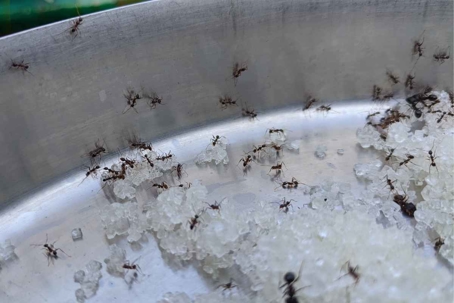
Do Little Black Ants Bite?
Little black ants (Monomorium minimum) are generally not aggressive toward humans or pets, and their bites are rare. However, there are certain situations where these ants may bite:
Disturbance of the Nest: If someone accidentally steps on or disturbs a nest, the ants may bite defensively. Their colonies are usually underground or in decaying wood, so contact often comes from outdoor activities like gardening, walking barefoot, or moving debris.
Foraging Encounters: These ants forage for food, especially sweet substances or proteins. If a person or pet comes into close contact with a concentrated foraging trail, they might bite as a defensive response.
Handling Infested Objects: Moving objects or materials that contain a colony, such as firewood, potted plants, or infested furniture, can provoke bites.
Pet Contact: Pets that investigate ant trails or nests with their paws or mouths may be bitten as the ants attempt to defend themselves.
If bites occur frequently in a specific area, it often indicates a nearby colony, and controlling the nest or preventing access can reduce interactions.
Little Black Ant Bites
Bites from little black ants (Monomorium minimum) are generally considered low-risk, but there are still a few potential concerns:
Mild Skin Irritation: The most common effect is a small, red, itchy spot at the bite site. Swelling is usually minor and resolves on its own within a few hours to a day.
Allergic Reactions: Though rare, some individuals may be sensitive to ant saliva. Signs of an allergic reaction include increased redness, swelling beyond the bite site, hives, or itching. Severe allergic responses (anaphylaxis) are extremely uncommon for this species.
Secondary Infection: Scratching bites can break the skin, creating an entry point for bacteria. This can lead to localized infections, especially in children or pets who might scratch repeatedly.
Irritation to Pets: Pets that get bitten on sensitive areas, such as paws, lips, or noses, may show temporary discomfort, redness, or mild swelling. Frequent bites could lead to paw chewing or licking, which increases the risk of secondary skin infections.
Minor Nuisance and Stress: Large infestations inside the home can lead to repeated bites and annoyance, particularly for children or pets exploring floors or countertops.
Bites from Monomorium minimum are not medically dangerous, unlike more aggressive ants such as fire ants. The main concern is irritation or potential secondary infection if the bite is scratched excessively.
What Do Little Black Ant Bites Look Like?
Bites from little black ants (Monomorium minimum) are generally mild and subtle, often going unnoticed at first. Here’s what they typically look like:
Small Red Bumps: The bite usually appears as a tiny red spot or bump, often smaller than a mosquito bite. They may be slightly raised but rarely form large welts.
Itchiness: The affected area may itch mildly, sometimes prompting scratching. Unlike fire ant stings, little black ant bites rarely form pustules or blister-like lesions.
Minimal Swelling: Any swelling is usually localized and small. It typically subsides within a few hours to a day.
Clustered Appearance (Sometimes): If multiple ants bite at once—more common when a nest is disturbed—there may be several tiny red bumps close together, forming a small cluster.
Temporary Discomfort: Pain is minimal, often described as a mild sting or pinch. The redness and itch usually resolve without treatment.
For pets, bites may look similar but are often concentrated on paws, snouts, or around the mouth if the animal comes into contact with the nest or a foraging trail. Pets may lick or chew the area, which can worsen irritation.
What To Do About Little Black Ant Bites
If you get bitten by little black ants (Monomorium minimum), the bites are usually minor and self-limiting, but taking proper care can reduce discomfort and prevent complications:
Immediate Steps
Move Away from the Source: Step away from the nest or trail to avoid additional bites.
Clean the Bite Site: Wash the area with soap and lukewarm water to remove any residual ant saliva or bacteria.
Apply a Cold Compress: Use a cool, damp cloth or ice pack (wrapped in a cloth) for 5–10 minutes to reduce redness, swelling, and itching.
Symptom Relief
Topical Treatments: Over-the-counter hydrocortisone cream or calamine lotion can relieve itching. Antihistamine creams or oral antihistamines may help if itching is pronounced.
Avoid Scratching: Scratching can break the skin and lead to secondary infection.
Monitor for Complications
Signs of Infection: Increased redness, swelling, warmth, pus, or pain at the bite site. If these occur, clean the area, apply an antiseptic, and consider medical evaluation.
Allergic Reactions (Rare): Watch for hives, swelling beyond the bite area, difficulty breathing, or dizziness. Seek emergency medical attention immediately if severe allergic symptoms appear.
Prevention Tips
Wear shoes and gloves when in areas where nests may be present.
Avoid disturbing ant nests or foraging trails.
Keep food sealed indoors to prevent attracting ants.
For pets, the same principles apply: clean the bite, prevent licking or chewing, and monitor for swelling or signs of irritation. If your pet develops a significant reaction, consult a veterinarian.