
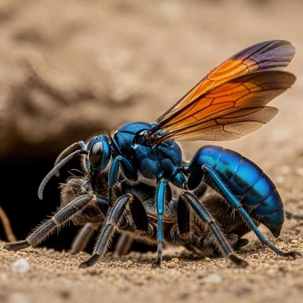
Do Tarantula Hawk Wasps Sting?
Tarantula hawk wasps are among the most intimidating wasps due to their large size and powerful sting, but they are actually not usually aggressive towards humans or pets. These wasps use their stingers primarily to paralyze tarantulas, which they need to feed their larvae. However, stings to people or pets can occur under certain conditions, usually when the wasp feels threatened or is accidentally provoked. Here are the most common situations in which a tarantula hawk wasp might sting:
Accidental Handling or Disturbance: The most likely reason a tarantula hawk would sting is if someone accidentally grabs, steps on, or traps it in clothing. They typically sting only in direct self-defense.
Defensive Reaction: If a person or pet swats at or tries to capture the wasp, it may sting to defend itself. These wasps rely on their sting as a last resort and will often try to fly away first.
Nesting or Hunting Interference: Female tarantula hawk wasps may become defensive if someone disturbs them while they are hunting tarantulas or preparing a burrow for their eggs. Though they do not form colonies, they are territorial during nesting activities.
Trapped Indoors: A tarantula hawk that accidentally enters a home, garage, or vehicle may panic when it feels trapped, increasing the risk of stinging if someone attempts to catch or swat it.
Pet Curiosity: Dogs or cats that chase or paw at a tarantula hawk may get stung. The wasp’s size and movement can attract attention from pets, but any close interaction poses a sting risk.
Tarantula hawk wasps are generally docile and prefer to avoid confrontation. As long as they are left alone, they will not sting.
Tarantula Hawk Wasp Stings
Tarantula hawk wasp stings are considered among the most excruciating of all insect stings. On the Schmidt Pain Index—a scientific scale that rates insect sting pain—the tarantula hawk ranks at the very top, rated as a “4,” which is the maximum level. Only a few insects in the world reach that rating, making this wasp’s sting infamous for its intensity. Here’s how bad tarantula hawk stings can be:
Pain Level: The pain is described as immediate, intense, and debilitating, often compared to being struck by a high-voltage electrical shock or a searing burn. Entomologist Dr. Justin Schmidt, who famously developed the pain index, described the sting as “blinding, fierce, and shockingly electric.”
Duration: Fortunately, the pain, while severe, is short-lived, typically lasting 3 to 5 minutes. After that, the pain subsides rapidly, leaving behind mild soreness or sensitivity.
Local Reactions: The sting site often shows redness, swelling, and slight warmth. Some individuals may experience minor itching or tenderness for a day or two afterward, but serious complications are rare.
Systemic Reactions (Rare): Although most people recover quickly, individuals who are allergic to insect venom could experience symptoms such as hives, dizziness, or difficulty breathing—signs of anaphylaxis, which require immediate medical attention.
For Pets: Pets stung by a tarantula hawk will feel intense pain and may yelp, paw at the area, or drool excessively. However, unless they are allergic or stung in a sensitive area (like the face or mouth), recovery is typically quick, and serious side effects are uncommon.
A tarantula hawk sting is extraordinarily painful but not medically dangerous for most people and animals. The best response is to stay still and let the wasp fly away—provoking it is the only way to invite that kind of pain.
What Do Tarantula Hawk Wasp Stings Look Like?
A tarantula hawk wasp sting leaves a mark that can look deceptively mild compared to how intensely painful it feels. While the pain is immediate and overwhelming, the visible wound is usually limited to localized irritation rather than severe swelling or tissue damage. Here’s what a tarantula hawk sting typically looks like and how it progresses:
Immediate Appearance (First Few Minutes): The sting site becomes red and slightly raised almost instantly. There may be a small puncture mark where the stinger entered the skin. The area may feel hot, burning, and tender to the touch. Intense pain sets in immediately but usually subsides after 3–5 minutes.
Short-Term Reaction (Within an Hour): The redness can spread slightly, forming a 1–3 inch area of inflammation around the sting. Some people develop minor swelling or firmness under the skin. The pain transitions to soreness or itching as the initial sting sensation fades.
Later Stages (Next 24–48 Hours): The redness and swelling generally diminish within a day. Mild discoloration (light pink or brownish) may linger briefly. Occasionally, a small welt or bruise-like mark remains for a few days.
Severe or Allergic Reactions (Uncommon): Large swelling, hives, or spreading redness beyond the immediate sting site. Dizziness, shortness of breath, or facial swelling (signs of an allergic reaction). These symptoms require immediate medical attention.
In most cases, the sting’s pain is far worse than its appearance. Unlike stings from hornets or fire ants, tarantula hawk stings don’t typically blister or form pus-filled lesions. Instead, the site looks like a minor insect bite or small red dot—remarkably subtle given the wasp’s reputation for delivering one of the most painful stings known to science.
What To Do About Tarantula Hawk Wasp Stings
If you get stung by a tarantula hawk wasp, the most important thing to know is that while the pain will be intense, it’s typically short-lived and not medically dangerous for most people. The pain usually peaks within seconds, lasts 3–5 minutes, and then subsides rapidly. Still, proper care can help minimize discomfort and prevent secondary irritation or infection. Here’s exactly what to do:
Immediate Steps (First 5–10 Minutes)
Stay Calm and Safe: Move away from the area to avoid additional stings. Tarantula hawk wasps are solitary and rarely sting twice, but stepping back prevents panic and further contact.
Avoid Rubbing or Scratching the Area: Friction can worsen the burning sensation and spread venom under the skin.
Apply a Cold Compress: Use an ice pack or cold, damp cloth on the sting site for 10–15 minutes to reduce pain, swelling, and redness.
Control the Pain: Although the pain is extreme, it typically fades quickly. If soreness persists, take an over-the-counter pain reliever such as ibuprofen or acetaminophen.
Aftercare (Next Few Hours to Days)
Clean the Area: Once the pain subsides, gently wash the sting with soap and water to remove surface bacteria and prevent infection.
Reduce Itching or Swelling: Apply hydrocortisone cream or take an oral antihistamine (like diphenhydramine or cetirizine) if itching or mild swelling develops later.
Keep the Site Clean and Dry: Avoid covering it tightly with a bandage—light airflow helps it heal faster.
Monitor for Allergic Symptoms: Although rare, some people can experience an allergic or systemic reaction. Watch for signs such as difficulty breathing, dizziness or fainting, swelling of the face, lips, or throat, and rapid heartbeat or nausea. If any of these occur, call 911 or seek emergency medical care immediately.
For Pets
If a dog or cat is stung, remove them from the area and observe closely. Most pets recover quickly, but if you see persistent whining, swelling around the face or neck, drooling, vomiting, or trouble breathing, contact a veterinarian right away.
A tarantula hawk sting is extraordinarily painful but short-lived. The best course of action is to stay calm, use cold therapy, manage discomfort with over-the-counter medications, and monitor for any allergic signs. Within a few hours, most people feel normal again—though the memory of the pain is likely to linger far longer than the sting itself.