
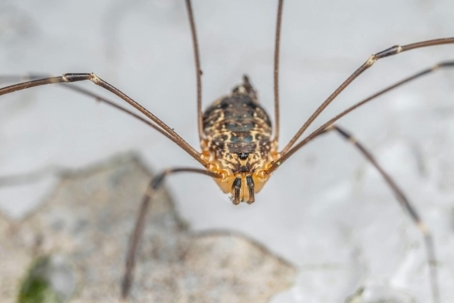
What Do Daddy Long Legs Eat?
Harvestmen, also known as daddy long legs or opiliones, are arachnids that primarily feed on a diet that consists mainly of decomposing organic matter and small invertebrates. Harvestmen do not have venom glands or silk-producing spinnerets like true spiders, and they do not build webs to capture prey. Instead, they rely on their sensory organs to locate food, and their feeding habits contribute to the decomposition and nutrient recycling processes in ecosystems.
What Bugs Do Daddy Long Legs Eat?
Daddy long legs (harvestmen) are opportunistic predators and will feed on a variety of small arthropods, including insects like aphids, mites, springtails, and even the eggs or larvae of other insects. They use their long legs to capture prey and their specialized mouthparts to consume it, often liquefying the food before ingestion.
They are not limited to live prey—they also scavenge on dead arthropods, making them both predators and scavengers in their ecosystems.
Do Daddy Long Legs Eat Ants?
Yes, daddy long legs (harvestmen) can eat ants, particularly smaller or slower-moving individuals. They are opportunistic predators and scavengers, so if they can capture an ant, they will feed on it by externally digesting its tissues and then ingesting the resulting fluids.
However, many ants are aggressive, have strong mandibles, or release defensive chemicals, so harvestmen usually target ants that are vulnerable, isolated, or deceased. Ants are part of their diet but are not their most common prey compared to mites, springtails, or other small arthropods.
Do Daddy Long Legs Eat Aphids?
Yes, daddy long legs (harvestmen) do eat aphids. Aphids are small, soft-bodied bugs, making them an easy and nutritious prey for harvestmen. These arachnids will use their long legs to capture or handle aphids and then consume them by liquefying their bodies with external digestive enzymes before ingestion.
Do Daddy Long Legs Eat Centipedes?
Daddy long legs (harvestmen) generally do not eat centipedes, especially adult centipedes, because centipedes are often larger, faster, and possess venomous claws that make them dangerous to harvestmen. Harvestmen tend to focus on smaller, slower-moving arthropods such as insects, mites, springtails, and scavenged organic matter.
In rare cases, if a centipede is very small, injured, or dead, a harvestman might scavenge it, but live centipedes are usually avoided due to the high risk involved.
Do Daddy Long Legs Eat Cockroaches?
Daddy long legs generally do not actively hunt or prey upon larger insects such as cockroaches. Their primary diet consists of detritus (decaying organic matter) and small invertebrates, but they may opportunistically scavenge dead insects and small invertebrates they come across.
While harvestmen might occasionally encounter and consume dead cockroaches or other insects, they are not significant predators of live cockroaches. True spiders are more efficient and active hunters of live prey, whereas harvestmen have a more passive feeding approach, primarily relying on scavenging and feeding on decaying organic material.
Do Daddy Long Legs Eat Crickets?
Yes, daddy long legs (harvestmen) can eat crickets, but usually only small or juvenile crickets. They are opportunistic predators and scavengers, so if a cricket is manageable in size, a harvestman can capture it with its long legs and feed by externally digesting its tissues and then ingesting the resulting fluids.
Adult crickets, being larger and stronger, are often too difficult for harvestmen to subdue, so they are not a common prey item. Their diet mainly consists of small insects, mites, springtails, and decaying organic matter.
Do Daddy Long Legs Eat Flies?
Yes, daddy long legs (harvestmen) can eat flies, especially smaller species or young individuals. They are opportunistic predators and scavengers, so they will capture and consume flies when they can subdue them.
Harvestmen use their long legs to grasp prey and then externally digest it by releasing enzymes that liquefy the tissues, which they then ingest. Larger or stronger adult flies may escape, so harvestmen typically target flies that are manageable in size.
Do Daddy Long Legs Eat Fruit Flies?
Yes, daddy long legs (harvestmen) can eat fruit flies. Fruit flies are small, soft-bodied insects, making them ideal prey for harvestmen. They capture them with their long legs and consume them by externally digesting their tissues and then sucking up the resulting fluids.
This fits into the harvestmen’s broader diet, which includes tiny insects, mites, springtails, and decaying organic matter, reflecting their opportunistic feeding behavior.
Do Daddy Long Legs Eat Insect Eggs?
Yes, daddy long legs (harvestmen) can eat insect eggs. They are opportunistic feeders and will consume eggs when they find them, as they are soft, protein-rich, and easy to digest. This behavior supplements their diet of small insects, mites, springtails, and decaying organic matter.
Eating insect eggs allows harvestmen to take advantage of a nutrient-rich food source that requires little effort to subdue, making it an efficient part of their scavenging and predatory habits.
Do Daddy Long Legs Eat Ladybugs?
Yes, daddy long legs (harvestmen) can eat ladybugs, but this is relatively uncommon. Ladybugs have hard exoskeletons and chemical defenses that make them difficult and sometimes unappealing prey. Harvestmen are opportunistic feeders, so they may attack a small, injured, or vulnerable ladybug, but healthy adult ladybugs are generally avoided.
Harvestmen more commonly feed on softer-bodied insects, mites, springtails, and decaying organic matter, which are easier to handle and digest.
Do Daddy Long Legs Eat Mites?
Yes, daddy long legs (harvestmen) do eat mites. Mites are small arthropods, and harvestmen are opportunistic predators that will consume them when available. Using their long legs to grasp prey, harvestmen can feed on mites by externally digesting their tissues and then sucking up the resulting fluids.
Do Daddy Long Legs Eat Moths?
Yes, daddy long legs (harvestmen) can eat moths, but usually only smaller or vulnerable individuals, such as moth larvae or tiny adult moths. Harvestmen are opportunistic predators and scavengers, so if a moth is small enough to handle or is already dead, it can become part of their diet.
Larger adult moths are typically too big for harvestmen to subdue, so they generally rely on smaller insects, mites, springtails, and decaying organic matter as their main food sources.
Do Daddy Long Legs Eat Spiders?
Daddy long legs, also known as harvestmen, may occasionally consume small spiders, but they are not specialized spider hunters. Their diet primarily consists of detritus (decaying organic matter), small invertebrates, and dead insects. Harvestmen are opportunistic feeders, and if they come across a small spider that is either dead or incapacitated, they might scavenge and consume it.
Daddy long legs are not active predators like true spiders. They lack the specialized silk-producing spinnerets and venomous fangs that many spiders possess for capturing and subduing their prey. Instead, harvestmen primarily rely on scavenging and feeding on decaying organic material, making them less likely to actively hunt and catch live spiders. Their feeding habits are more focused on detritus and the consumption of readily available food sources in their environment.
Do Daddy Long Legs Eat Springtails?
Yes, daddy long legs (harvestmen) eat springtails. Springtails are small, soft-bodied arthropods that are an ideal prey for harvestmen. Using their long legs to capture or manipulate them, harvestmen externally digest the springtails’ tissues and then consume the resulting fluids.
Like with mites and aphids, springtails are part of a broader diet that includes various tiny insects, other arthropods, and decaying organic matter, highlighting the harvestmen’s opportunistic feeding habits.
Do Daddy Long Legs Eat Ticks?
Yes, daddy long legs (harvestmen) can eat ticks, particularly small or soft-bodied ones. As opportunistic predators and scavengers, they will feed on tiny arthropods they can overpower, and ticks fall into that category.
However, they generally prefer easily captured prey like mites, springtails, and small insects. Harder, larger, or engorged ticks may be avoided if they are too difficult to handle. Dead or weakened ticks are more likely to be scavenged.
Do Daddy Long Legs Eat Wasps?
Daddy long legs (harvestmen) generally do not eat adult wasps. Wasps are agile, often aggressive, and can sting, making them dangerous prey for harvestmen. However, harvestmen may scavenge dead or injured wasps if they are accessible.
Their diet primarily consists of small, soft-bodied insects, mites, springtails, and decaying organic matter, which are easier and safer for them to handle.
Do Daddy Long Legs Eat Plants?
Daddy long legs (harvestmen) are primarily carnivorous and scavengers, but they can occasionally consume plant material. They do not feed on living plants in a herbivorous sense; instead, they may nibble on decaying plant matter, fungi, or spores when animal prey is scarce.
Their diet is mostly composed of small insects, mites, springtails, and other arthropods, along with dead organic matter, so plant material is a very minor component compared to animal-based foods.
Do Daddy Long Legs Eat Dead Plants?
Yes, daddy long legs (harvestmen) will eat dead or decaying plant material. While their diet is mainly composed of small insects, mites, springtails, and other arthropods, they are opportunistic scavengers and will consume organic matter—including decaying plants—when animal prey is scarce. This behavior helps recycle nutrients in their environment.
Do Daddy Long Legs Eat Fungi?
Yes, daddy long legs (harvestmen) can eat fungi, though it is not a primary food source. They are opportunistic feeders, so if animal prey is scarce, they may consume fungi, spores, or decaying plant material. This behavior allows them to supplement their diet, which mainly consists of small insects, mites, springtails, and other arthropods, as well as scavenged organic matter.
Fungi provide nutrients and moisture, helping harvestmen survive in environments where live prey is limited.
Are Daddy Long Legs Scavengers?
Yes, daddy long legs (harvestmen) are scavengers. While they actively hunt small insects, mites, springtails, and other tiny arthropods, they also feed on dead or decaying organic matter, including dead insects and plant material. This scavenging behavior allows them to survive when live prey is scarce and plays an important role in nutrient recycling within their ecosystems.
How Do Daddy Long Legs Eat?
Daddy longlegs, also known as harvestmen, have a unique feeding mechanism that differs from many other arachnids, such as spiders. Their feeding process is relatively simple; here's how they eat:
- Mouthparts: Harvestmen have a small mouth located on the underside of their body, which is quite different from spiders. This mouth has specialized structures for feeding.
- Chewing: When a daddy longlegs encounters its food source, it uses its chelicerae, which are the first pair of appendages near its mouth, to grasp and hold onto the food item. The chelicerae are not adapted for injecting venom, unlike true spiders. Instead, they serve a more straightforward purpose of manipulating and holding onto food.
- Digestion: Daddy longlegs are unable to chew or break down their food into small pieces, so they rely on external digestion. They secrete digestive enzymes onto their food, which start breaking it down externally. These enzymes liquefy the food, making it easier for the harvestmen to ingest.
- Sucking: After the food is partially digested and liquefied, the daddy longlegs sucks up the resulting liquid food through its small mouth. This liquid is then processed by their internal digestive system, and nutrients are absorbed for energy and growth.
Daddy longlegs are not venomous, and they do not possess silk-producing spinnerets or build webs to catch prey. Their feeding habits are more focused on scavenging and consuming readily available food sources, including decaying matter, which contributes to nutrient cycling in their habitats.
How Often Do Daddy Long Legs Eat?
Daddy long legs (harvestmen) do not have a fixed feeding schedule, but they generally eat whenever food is available. As opportunistic feeders and scavengers, they consume small insects, mites, springtails, and decaying organic matter whenever they encounter it.
Because they can digest liquid food slowly and survive on relatively small meals, they may feed intermittently—sometimes daily, sometimes every few days—depending on the availability of prey and environmental conditions like humidity and temperature. In times of scarcity, they can survive for extended periods without eating by relying on stored energy from previous meals.
Do Daddy Long Legs Drink Water?
Yes, daddy long legs (harvestmen) need water, but they do not drink it in the same way many animals do. They absorb moisture from their environment—such as dew, rain, or damp surfaces—and from the fluids of the prey and decaying organic matter they consume. Maintaining hydration is essential for their survival, as they are prone to desiccation due to their thin exoskeleton and long, slender legs.
They are most active in humid or damp habitats, which helps prevent water loss and supports their scavenging and hunting activities.