Bald Faced Hornets
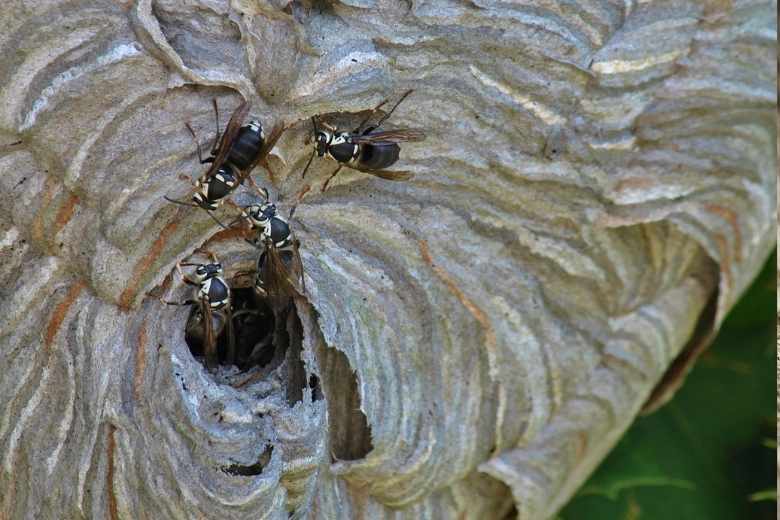
Are Bald Faced Hornets Harmful?
Bald-faced hornets (Dolichovespula maculata) can be considered dangerous under certain circumstances, primarily due to the defensive behavior and painful stings of these hornets. Here is an explanation of their potential danger:
- Defensive Behavior: Bald-faced hornets are known for their aggressive and territorial nature when it comes to defending their nests. If they perceive a threat to their colony or nest, they are quick to respond with aggression. Their nests are well-protected, and they will vigorously defend them against any perceived intruders, including humans.
- Painful Stings: Bald-faced hornets possess a potent venom and can deliver painful stings. Bald faced hornet stings can be especially uncomfortable, and for some individuals, they can cause severe allergic reactions. Multiple stings from a swarm of these hornets can be a medical emergency.
- Allergic Reactions: Like other stinging insects, some people may be allergic to the venom of bald-faced hornets. An allergic reaction can cause symptoms such as severe swelling, difficulty breathing, and anaphylaxis, which is a life-threatening condition. Anyone with a known allergy to insect stings should seek immediate medical attention if stung.
- Nuisance: While not inherently dangerous, bald-faced hornets can be a nuisance when their nests are located near human activity areas. Their presence can lead to discomfort and anxiety, especially if the nests are in close proximity to homes, gardens, or recreational areas.
- Nest Locations: Bald-faced hornets often build their nests in trees, shrubs, or on the sides of buildings, and if these locations are near human dwellings, they can pose a danger if disturbed.
Bald-faced hornets are generally considered dangerous when their nests are disturbed or when they perceive a threat to their colony. Their stings can be painful, and for individuals with allergies, they can be life-threatening. It's essential to exercise caution and avoid provoking them. If you encounter a nest in a location that poses a risk to you or others, it's advisable to contact our professional pest control team for safe nest removal rather than attempting it yourself.
Bald Faced Hornet Removal
Getting rid of bald-faced hornets is important for several reasons, as these hornets are aggressive and pose real risks if left unchecked:
- Aggressiveness and Stinging Risk: Bald-faced hornets are highly defensive of their nests. Unlike many other wasps, they will aggressively sting if they perceive a threat. Their stings are painful and can be dangerous, especially for individuals who are allergic to wasp venom, potentially causing severe reactions like anaphylaxis. Even non-allergic people may experience multiple stings, which can be dangerous if they occur in sensitive areas such as the face, neck, or throat.
- Multiple Stings: Unlike bees, hornets can sting repeatedly. A single nest can produce dozens or even hundreds of hornets, increasing the likelihood of multiple stings if the nest is disturbed. This makes proximity to a nest especially hazardous for families, pets, and workers.
- Property Damage Risks: Bald-faced hornets build large, paper-like nests, often attached to trees, shrubs, or the exterior of buildings. Over time, their nests can damage plant branches or interfere with structural elements if they are built on roofs, siding, or vents. Although they don’t consume wood the way termites do, their nests can still create weak points in structures or become unsightly hazards.
- Impact on Outdoor Activities: Hornets’ aggressive nature can significantly restrict outdoor activities around homes or workplaces. Children, pets, or employees in outdoor environments may be at constant risk if nests are present. Even casual gardening or maintenance work can become unsafe.
- Rapid Nest Growth: Bald-faced hornet colonies grow quickly during the spring and summer months. A small nest can turn into a large one housing hundreds of hornets. The longer a nest remains, the higher the risk of stings and the harder it becomes to remove safely.
- Interference with Ecosystem Management: While bald-faced hornets do prey on other insects, including pests, their aggressive behavior near human dwellings outweighs this benefit. Ignoring them can lead to unexpected encounters that may escalate quickly into emergency situations.
Promptly identifying and safely removing bald-faced hornet nests is crucial to protect human health, prevent property damage, and maintain safe outdoor environments. Our professional removal is often the safest approach, as hornets are highly defensive and improper handling can lead to multiple stings and serious injury.
Learn more: How To Get Rid Of Bald Faced Hornets
Bald Faced Hornet Control
Our professional bald-faced hornet control is highly recommended because these stinging insects are among the most aggressive and dangerous wasps you can encounter on your property. Attempting to eliminate them without the right expertise, tools, and safety precautions can put you, your family, or employees at serious risk. Here are the key reasons to invest in our professional bald-faced hornet control:
- Safety from painful, repeated stings: Bald-faced hornets are extremely defensive of their nests and can sting multiple times. Their venom is more potent than that of many other stinging insects, causing intense pain, swelling, and in some cases severe allergic reactions or anaphylaxis. Our professionals use protective gear and proven methods to remove nests safely, keeping you out of harm’s way.
- Expertise in locating and removing nests: Unlike ground-dwelling wasps, bald-faced hornets often build large, paper-like nests high in trees, under eaves, or attached to buildings. These nests can be difficult to reach and dangerous to disturb. Our professionals can accurately identify nest locations, even hidden ones, and remove them completely.
- Prevention of colony regrowth: Simply knocking down or spraying a nest rarely solves the problem. Surviving hornets often rebuild nearby, and DIY sprays may not reach the core of the colony. Our pest control specialists apply targeted treatments that eliminate the colony at its source and help prevent re-infestation.
- Protection of family, pets, and visitors: Hornets don’t just sting when provoked—vibrations from lawnmowers, kids playing nearby, or pets wandering too close can trigger an attack. Our professional control ensures these nests are eliminated, creating a safer environment for everyone around your home or business.
- Time and cost efficiency: DIY attempts often fail and can even make the situation worse by scattering hornets or driving them into new areas of your property. Our professional services solve the problem faster, reducing long-term risks and saving you from repeated store-bought treatments that don’t work.
Our professional bald-faced hornet control protects your health, ensures effective nest removal, and provides peace of mind that the threat has been properly handled.
Bald Faced Hornet Exterminators
Here's why hiring our local exterminators is more effective for bald-faced hornet control, compared to a national company:
- Local Expertise and Knowledge: Our local exterminators have in-depth knowledge of the specific pest species in the area, including bald-faced hornets. We understand seasonal behaviors, nesting habits, and the typical locations where these hornets build nests. National companies rely on broad, standardized protocols that do not account for local environmental factors, reducing effectiveness.
- Faster Response Times: Our local exterminators can respond quickly to urgent situations, which is crucial for aggressive hornets. National companies often have longer wait times due to centralized scheduling, which increases the risk of stings or nest growth while waiting for treatment.
- Customized Treatment Plans: Our local experts tailor our approach to your property, considering vegetation, structural features, and proximity to people and pets. National companies use one-size-fits-all solutions, which often do not address the specific nesting locations or behaviors of hornets on your property.
- Better Knowledge of Local Regulations: Pesticide use is regulated differently in each state and municipality. Our local exterminators are familiar with local regulations, ensuring our treatments are both legal and environmentally safe. National companies may follow general guidelines that could conflict with local laws or recommended practices.
- Follow-up and Ongoing Support: Hornet nests often require follow-up monitoring or retreatment. Our local team provides consistent, hands-on support and follow up on previous treatments, while national companies often have limited follow-up due to corporate scheduling policies.
- Accountability and Reputation: Our local exterminators rely heavily on our community reputation. Our success and customer satisfaction are closely tied to our local reviews and referrals, motivating us to provide superior service. National companies often do not have the same personal accountability in the community.
- Safety and Precision: Bald-faced hornets are aggressive, and improper handling can result in multiple stings. Our local exterminators perform precise, careful nest removal using techniques proven in your environment. National companies often prioritize speed over careful handling, which can increase risk.
Hiring our local exterminators ensures a safer, faster, and more effective approach to bald-faced hornet control, while reducing risk to people, pets, and property.
Bald Faced Hornet Solutions
Our exterminators use Integrated Pest Management (IPM) to control bald-faced hornets because these aggressive stinging insects can pose serious risks to humans and pets, particularly when their large, paper-like nests are located near homes, gardens, or recreational areas. IPM begins with a thorough inspection to identify hornet activity, nest locations, and environmental factors that attract them, such as abundant food sources, water, and sheltered sites suitable for nest construction. Management strategies focus on habitat modification by removing attractants like exposed garbage and sweet food sources, trimming vegetation near structures, and sealing potential entry points to discourage nesting. Physical controls, including careful and safe nest removal and trapping, are applied selectively, while targeted insecticide treatments are used only in areas with persistent activity. Ongoing monitoring allows our exterminators to track hornet populations, evaluate the effectiveness of control measures, and prevent reinfestation. By integrating inspection, habitat management, selective intervention, and monitoring, IPM provides a long-term, safe, and environmentally responsible approach to managing bald-faced hornet populations.
What Do Bald Faced Hornets Look Like?
Bald-faced hornets (Dolichovespula maculata) have distinct physical characteristics that make them easily recognizable. Here's what they look like:
- Size: Bald-faced hornets are relatively large wasps, typically measuring between 0.5 to 0.75 inches (1.3 to 2 cm) in length. Their size can vary slightly depending on their role within the colony, with queens being slightly larger than workers.
- Coloration: The most striking feature of bald-faced hornets is their black body with white or ivory-colored markings. These white markings are found on their face and most prominently on the front of their head, which is why they are commonly referred to as "white-faced hornets." They also have white bands or patches on their abdomen.
- Body Shape: Bald-faced hornets have a robust and elongated body shape. They have two pairs of membranous wings, six jointed legs, and a characteristic narrow waist, or petiole, which is a common feature of wasps in the Vespidae family.
- Wings: Their wings are transparent and folded longitudinally when at rest. Like all wasps, they have two pairs of wings, with the forewings being larger than the hindwings.
- Antennae: Bald-faced hornets have long, slender antennae that emerge from the front of their head. These antennae are used for sensory perception, including detecting chemical signals and locating food sources.
- Stinger: Like other wasps, bald-faced hornets possess a stinger that they use for self-defense. Their stings can be painful and may cause allergic reactions in some individuals.
- Leg Structure: Their legs are adapted for grasping and manipulating prey. They have strong, sharp claws at the ends of their legs for capturing and immobilizing insects.
Bald-faced hornets have a distinctive appearance characterized by their black body with prominent white markings on their face and abdomen. Their overall body shape and size, along with their unique coloration, make them easily distinguishable from other wasp species. It's important to exercise caution and avoid disturbing their nests, as these hornets can be defensive and may sting if they feel threatened.
Where Are Bald Faced Hornets Found?
Bald-faced hornets (Dolichovespula maculata) are native to North America and can be found in a variety of habitats across the continent. They are known for building distinctive, large, paper nests. Here are some common places where you might find bald-faced hornets:
- Forested Areas: Bald-faced hornets are often found in wooded or forested areas, where they build their nests in trees and shrubs. They tend to select locations that provide shelter and protection, such as the branches of trees or the understory of the forest.
- Urban and Suburban Settings: These hornets are also known to adapt to human-altered environments. You can find their nests in suburban neighborhoods, parks, and gardens, especially if suitable nesting sites are available, such as on the sides of buildings or in trees.
- Vegetation: Bald-faced hornets prefer nesting in trees and shrubs, so look for their large, football-shaped paper nests hanging from branches or hidden within dense foliage. The nests are typically gray or brown and can be quite conspicuous.
- Structures: In urban and suburban areas, bald-faced hornets may build their nests on structures such as houses, sheds, barns, or even playground equipment. Their nests can be attached to eaves, awnings, or in other sheltered locations.
- Overhangs and Eaves: They are known to build their nests in sheltered locations with overhead cover. Check the eaves of buildings or any structures with overhangs, as these provide the protection they seek for their nests.
- Underground: While it is less common, bald-faced hornets have been known to build underground nests, typically in abandoned rodent burrows or other subterranean cavities.
- Vegetation Near Water: In some cases, you may find bald-faced hornet nests near bodies of water, like lakes or ponds, especially if there is suitable vegetation and nesting sites nearby.
Exercise caution and avoid disturbing bald-faced hornet nests, as they can be aggressive when defending their colonies. Their stings are painful, and some individuals may have allergic reactions. If you suspect a nest on your property or in a location where people frequent, it's advisable to contact our professional pest control team to safely remove the nest if necessary. Attempting to remove the nest on your own can be dangerous.
What Do Bald Faced Hornets Eat?
Bald-faced hornets (Dolichovespula maculata) are primarily carnivorous insects, and their diet consists mainly of other insects. Here is a detailed overview of what bald-faced hornets eat:
- Insects: Bald-faced hornets are effective predators of various insects. They capture and paralyze their prey using their powerful mandibles and venomous stings. They then chew the insects into a paste-like consistency to feed to their developing larvae. Common prey items include flies, caterpillars, grasshoppers, and other flying and crawling insects.
- Sugary Substances: While their primary source of nutrition is insects, bald-faced hornets also have a preference for sugary substances, especially nectar. They are often seen visiting flowers to collect nectar. The nectar provides them with a source of carbohydrates and energy.
- Rotting Fruit: In addition to nectar, bald-faced hornets may be attracted to overripe or rotting fruits, which contain sugars. They are occasionally found near fruit trees and may scavenge for sugary juices or decaying fruit.
- Carrion: In certain situations, bald-faced hornets may be observed scavenging on carrion or dead insects. They are known to feed on the fluids released by decaying animals, which can include proteins and sugars.
- Tree Sap: Bald-faced hornets may also consume tree sap if it is available. This behavior is more commonly observed in other wasp species, such as paper wasps, but bald-faced hornets can engage in sap-feeding when the opportunity arises.
The primary purpose of foraging for these various food sources is to provide nutrition to the developing larvae in the nest. Worker hornets are responsible for capturing prey and collecting sugary substances to feed to the larvae. In return, they receive sugary secretions from the larvae, creating a mutualistic relationship within the colony. While they can be considered beneficial for their role in controlling insect populations, they can also be a nuisance when they forage for sugary foods near human activities.
Bald Faced Hornet Life Cycle
The life cycle of bald-faced hornets (Dolichovespula maculata) is a fascinating and intricate process that includes multiple stages and plays out over the course of a year. Here is an overview of the life cycle of these social insects:
- Founding the Colony (Spring): The life cycle begins in spring when a mated queen, which has overwintered in a protected location, emerges from hibernation. The queen searches for a suitable nesting site to establish a new colony. She constructs a small, initial nest and begins laying eggs. These eggs develop into female worker hornets.
- Development of Workers (Early to Mid-Spring): The first generation of worker hornets emerges from the eggs laid by the queen. These workers take over the responsibilities of foraging for food, expanding the nest, and caring for subsequent generations.
- Colony Growth (Late Spring to Summer): As the season progresses, the colony grows in size and number. New generations of workers are produced, and the nest expands. The workers collect food (predominantly insects) and bring it back to the nest to feed the developing larvae.
- Production of Reproductive Individuals (Summer): Toward the middle to late summer, the colony begins to produce reproductive individuals. These include new queens and males. The queens are larger and resemble the original founding queen, while the males are smaller. The queens and males leave the nest to mate.
- Mating and Colony Decline (Late Summer to Early Fall): The newly mated queens and males disperse from the colony and engage in mating flights. Once mating is complete, the males die, and the mated queens search for suitable overwintering sites. The original queen and most of the workers also begin to die, and the colony's activity decreases.
- Overwintering (Fall and Winter): The mated queens find protective locations to overwinter, often in hollow trees, under loose bark, or other sheltered spots. They enter a state of dormancy during the cold months, emerging in the following spring to begin the cycle anew.
The annual life cycle of bald-faced hornets is typical for many social wasps. While the colony starts with a single mated queen and expands to include a large number of workers, the colony's main purpose is to produce new queens and males for the following year. This cycle ensures the survival and continuation of the species. It's important to note that, unlike honeybees, bald-faced hornets do not survive the winter as a colony, and only the mated queens survive to start new colonies in the spring.
Hear From Our Happy Customers
-
"Great Communication"
Tech was on time, communication was great, and he accommodated my needs.
- Alonzo W. -
"Professional & Considerate"
I’m pleased with Miche services. Jarvis came today. Professional and considerate. Thank you!
- Judy B. -
"Fantastic & Patient"
Jarvis was fantastic and patient. He answered my questions with an in-depth explanation and addressed all of my areas of concern. Would love for him to be my assigned tech going forward. Well done!
- Yonnette M. -
"Exceeds Expectations"
I can’t say enough positive things about this company... The tech that came out, Jarvis went above and beyond my expectations. Thank you guys, I will continue using your services.
- Jake M. -
"Very Knowledgeable"
The tech that arrived was courteous, professional, and very knowledgeable. He was Great.
- Uerial I. -
"Wonderful Service"
Wonderful service. Jarvis is great. Took care of everything I needed. Thank you!
- Henry P.