
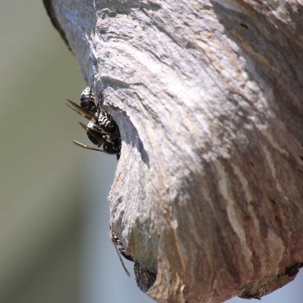
Do Bald Faced Hornets Sting?
Bald-faced hornets (Dolichovespula maculata) are generally not aggressive unless provoked, but there are specific situations where these hornets are more likely to sting humans or pets:
Nest Disturbance: This is by far the most common trigger. Bald-faced hornets are highly defensive of their nests. Any activity near the nest—such as trimming bushes, mowing the lawn, knocking on a tree where a nest hangs, or attempting to remove a nest—can provoke stings. Like other wasps, they can sting repeatedly if threatened.
Accidental Contact: Walking into a nest by accident or brushing against it can elicit an aggressive response. Even light contact with the outer structure of a nest may trigger defensive behavior.
Rapid Movements or Threatening Gestures: Sudden movements, swatting at the hornets, or vibrations near the nest can provoke them. They interpret these actions as threats.
Protecting Larvae: Bald-faced hornets are more aggressive in late summer and early fall when the colony has mature larvae. Workers are highly protective of developing young at this stage.
Bright Colors or Strong Scents: While less significant than nest proximity, bright clothing, floral patterns, perfumes, or strong-scented lotions can sometimes attract hornets, increasing the chance of a defensive sting if they feel threatened.
Pet Curiosity: Dogs or cats that sniff, paw, or try to play near a nest can provoke hornets. Pets are more vulnerable because they may inadvertently get very close to the nest or agitate the hornets with their movement.
Bald-faced hornets sting primarily in self-defense to protect their nest. Unlike honeybees, they can sting multiple times because their stinger is not barbed. Avoiding nests and keeping pets away from areas with hornet activity is the safest strategy.
Bald Faced Hornet Stings
Bald-faced hornet stings can be quite painful and, in some cases, medically significant:
Pain and Local Reactions
Immediate Pain: Their sting is sharp, burning, and intense. Many people describe it as one of the more painful insect stings, often lasting several minutes.
Swelling and Redness: The area around the sting usually becomes red, swollen, and warm. This can extend beyond the immediate sting site.
Itching and Tenderness: Over the next several hours, the site may be itchy and tender.
Multiple Stings
Bald-faced hornets can sting repeatedly because their stinger is smooth (unlike honeybees).
Multiple stings significantly increase pain, swelling, and the risk of systemic reactions.
Pets are particularly at risk because they may provoke several stings at once.
Systemic Reactions
Mild Allergic Reactions: Some people experience hives, generalized itching, or mild swelling away from the sting site.
Severe Allergic Reactions (Anaphylaxis): In rare cases, a sting can trigger anaphylaxis—a life-threatening reaction characterized by difficulty breathing, swelling of the face/throat, dizziness, or rapid heartbeat. Immediate medical attention is required.
People who are allergic to other stinging insects (like bees, wasps, or yellowjackets) are at higher risk for severe reactions.
Secondary Complications
Infection Risk: Scratching the sting site or puncturing the skin can lead to bacterial infection.
Tissue Damage (rare): Extremely large swarms of stings in sensitive areas (face, neck, or near the eyes) can cause more serious tissue reactions.
For most people, a bald-faced hornet sting is intensely painful but temporary, with swelling, redness, and itching lasting a few hours to a day. Multiple stings or allergic individuals can face serious complications, so caution around nests is critical.
What Do Bald Faced Hornet Stings Look Like?
Bald-faced hornet stings have a fairly distinct appearance, though they can look similar to other wasp or bee stings:
Immediate Appearance
Red, Raised Bump: Right after the sting, a small red bump usually forms at the site.
White or Yellow Center: In some cases, the center may appear pale or slightly whitish, similar to a small blister.
Surrounding Redness: The skin around the sting may become red and inflamed.
Within Hours
Swelling: The area often swells and can feel warm to the touch. The swelling can be localized or extend a bit beyond the sting.
Pain or Burning: The site may throb, sting, or burn. Pain typically peaks within the first 10–30 minutes.
Itching: As the initial pain fades, itching often develops.
After 1–2 Days
Bump May Flatten: The raised bump usually begins to flatten and shrink.
Color Changes: Redness may linger, and the site can turn slightly darker as it heals.
Possible Blistering: Some people develop a small blister or tiny fluid-filled bump that eventually dries and flakes off.
Signs of Severe Reaction
Rapidly Spreading Swelling: Especially on the face, lips, or throat.
Hives or Rash: Small, raised bumps appearing elsewhere on the body.
Difficulty Breathing or Dizziness: Signs of anaphylaxis requiring immediate medical attention.
A typical bald-faced hornet sting looks like a red, raised, sometimes white-tipped bump that swells and itches over a day or two. Multiple stings will create multiple bumps that can merge into a larger swollen area.
What To Do About Bald Faced Hornet Stings
If you or someone else gets stung by a bald-faced hornet, prompt care can reduce pain, swelling, and complications. Here’s what to do:
Move to Safety
If you haven't already, immediately get away from the nest or hornet swarm to prevent additional stings.
Calmly leave the area—flailing or swatting can provoke more stings.
Remove the Stinger (if present)
Bald-faced hornets usually don’t leave their stinger behind, unlike honeybees.
If you notice a stinger, remove it gently with a fingernail, tweezers, or by scraping with a flat object.
Avoid squeezing the stinger, as this can inject more venom.
Clean the Sting Site
Wash the area with soap and water to remove venom and reduce infection risk.
Avoid harsh scrubbing, which can irritate the skin further.
Reduce Pain and Swelling
Cold Compress: Apply an ice pack or cold cloth for 10–15 minutes at a time, several times a day.
Elevation: If the sting is on a limb, elevate it to reduce swelling.
Over-the-Counter Pain Relief: Ibuprofen or acetaminophen can help with pain.
Topical Treatments: Hydrocortisone cream or calamine lotion can relieve itching and inflammation.
Monitor for Allergic Reactions
Watch for serious symptoms, which can appear quickly:
Difficulty breathing or swallowing
Swelling of face, lips, or throat
Dizziness, rapid heartbeat, or fainting
Widespread hives
Call 911 or seek emergency care immediately if these occur.
Treat Mild Reactions
Most stings only cause local pain, redness, and swelling.
Keep the area clean and avoid scratching.
Swelling and redness typically improve within 24–48 hours.
Care for Multiple Stings
Multiple stings increase venom exposure and can be more painful.
Follow the same treatment steps, but monitor more closely for systemic reactions, especially in children, elderly, or pets.
Consider Medical Attention
For large, persistent swelling, signs of infection (pus, worsening redness, fever), or if you’re unsure about an allergic reaction, consult a healthcare provider.
Extra Tips for Pets
Keep pets calm and away from the nest.
For stings on pets, clean the site, apply a cold compress, and watch for swelling or signs of anaphylaxis.
Seek veterinary care immediately if the pet shows difficulty breathing, vomiting, or lethargy.