
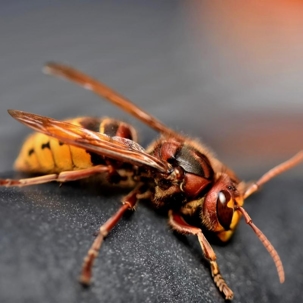
Do European Hornets Sting?
European hornets (Vespa crabro) are generally not aggressive toward humans unless provoked, but there are specific situations where these hornets are more likely to sting:
Nest Disturbance: The most common trigger for stings is disturbing their nest. European hornet nests are usually in hollow trees, attics, wall voids, or other protected areas. Any vibration, tapping, or intrusion near the nest can provoke defensive stings.
Perceived Threats: If a hornet feels directly threatened—such as being swatted at, grabbed, or cornered—it may sting in self-defense. Unlike some smaller wasps, European hornets may sting repeatedly.
Protecting Food Sources: European hornets forage for food like other insects, fruit, or sugary liquids. If a person or pet interferes with a hornet that’s feeding, it may sting to defend its food.
Aggressive Encounters During Late Summer/Fall: Toward the end of the season, hornets can become more defensive and irritable, as colonies are at their largest and resources are dwindling. This increases the likelihood of stings if humans or pets are nearby.
Accidental Contact: Walking through areas with hornets in flight or accidentally putting hands or pets near their resting or foraging areas can lead to stings. European hornets are large and fast, and sudden contact can trigger a defensive sting.
European hornets are more defensive than aggressive hunters. They usually only sting when they perceive an immediate threat to themselves or their colony.
European Hornet Stings
European hornet stings can be quite painful and, in some cases, medically significant, though they are rarely fatal for healthy individuals:
Pain and Local Reaction:
A sting from a European hornet typically causes sharp, immediate pain, similar to a strong bee sting but often lasting longer.
Swelling, redness, and warmth around the sting site are common and can last from several hours to a few days.
The pain is usually more intense than that of smaller wasps or bees due to the hornet’s larger stinger and venom volume.
Multiple Stings:
European hornets are capable of stinging multiple times, unlike honey bees which leave their stinger behind.
Multiple stings can significantly increase pain, swelling, and the risk of a systemic reaction.
Allergic Reactions:
Individuals allergic to wasp or bee venom may experience severe allergic reactions (anaphylaxis), which can include:
Hives or widespread rash
Swelling of the lips, tongue, or throat
Difficulty breathing or swallowing
Dizziness, rapid heartbeat, or fainting
Anaphylaxis is a medical emergency and requires immediate treatment with epinephrine.
Secondary Complications:
Rarely, the sting site may become infected if scratched excessively.
Large stings in sensitive areas (like the face or near the eyes) can be particularly dangerous due to swelling that could impair vision or breathing.
Duration of Symptoms:
Pain and swelling generally subside within 24–48 hours for most people.
Some bruising or itching may persist for several days.
For most healthy adults, a European hornet sting is intensely painful but not life-threatening. The main concern is for children, the elderly, or anyone with a known venom allergy.
What Do European Hornet Stings Look Like?
A European hornet sting usually has a characteristic appearance, which can help differentiate it from other insect bites or stings. Here’s what to expect:
Immediate Appearance:
Small puncture mark(s): Often a single point where the stinger penetrated the skin.
Redness: The area around the sting typically turns bright red almost immediately.
Swelling: Mild to moderate swelling usually develops quickly. For some people, it can become more pronounced over a few hours.
Pain and Texture:
The sting site may feel warm, tender, and slightly raised.
Pain is sharp and can last from several minutes up to a few hours.
Delayed Reaction:
Itching or burning: Can develop within a few hours.
Larger raised area (wheal): Some people may develop a swollen, firm bump around the puncture site, sometimes up to 1–2 inches in diameter.
Bruising or discoloration: Mild bruising may occur if the sting was particularly aggressive or if scratched.
Multiple Stings:
If stung multiple times, the area may have several puncture marks, often clustered, each surrounded by redness and swelling.
Allergic Reactions:
Severe reactions may show extensive swelling, spreading beyond the immediate sting site.
Hives, widespread redness, or skin rash may appear.
Think of a European hornet sting as a red, raised, tender bump, sometimes with a small central puncture, possibly surrounded by a ring of swelling. It’s typically larger and more inflamed than a common bee or smaller wasp sting.
What To Do About European Hornet Stings
If you get stung by a European hornet, quick and appropriate care can reduce pain, swelling, and the risk of complications:
Move to Safety
Immediately leave the area to avoid additional stings.
European hornets can sting multiple times and may become aggressive if threatened.
Clean the Sting Site
Wash the area gently with soap and water to reduce the risk of infection.
Avoid scrubbing, as it can worsen irritation.
Reduce Pain and Swelling
Cold compress: Apply an ice pack or cold cloth to the sting for 10–15 minutes at a time. Repeat as needed.
Elevation: If the sting is on a limb, keeping it raised can reduce swelling.
Over-the-counter medications such as ibuprofen or acetaminophen for discomfort, and antihistamines like diphenhydramine (Benadryl) or topical hydrocortisone cream for swelling.
Monitor for Allergic Reactions
Local redness, swelling, and pain that improve in 24–48 hours are typical. Seek emergency help immediately if you notice:
Difficulty breathing or swallowing
Swelling of lips, tongue, or throat
Dizziness, fainting, or rapid heartbeat
Widespread hives or rash
People with known allergies should use their epinephrine auto-injector (EpiPen) immediately and call 911.
Treat Complications
Infection: If the area becomes increasingly red, warm, or oozes pus, see a doctor.
Severe swelling: Applying a cool compress and taking antihistamines can help. If swelling is extreme, medical attention may be needed.
Prevention for Next Time
Avoid disturbing hornet nests.
Wear light-colored clothing outdoors, as dark or patterned clothing may attract hornets.
Keep food and drinks covered when outside.
For most people, European hornet stings are intensely painful but not dangerous. Care focuses on reducing pain and swelling while watching for allergic reactions. Immediate medical attention is only needed for severe allergic responses or complications.