Lanternflies
Are Lanternflies Harmful?
Lanternflies (Lycorma delicatula) are highly invasive pests that pose significant threats to agriculture, ecosystems, and even human infrastructure. Here are some of the ways they are considered harmful:
Agricultural and Economic Damage
- Vineyards & Wineries: They are particularly destructive to grapevines, feeding on the sap and weakening the plants, which can result in lower yields and even plant death. This is a major concern for the wine industry.
- Orchards & Fruit Trees: They also attack apple, peach, and other fruit trees, reducing fruit quality and yield.
- Forestry & Timber Industry: They feed on hardwood trees such as maples, walnuts, and willows, weakening them over time and making them more vulnerable to disease and environmental stress.
- Hops & Other Crops: They also target hops, affecting beer production, and damage crops like soybeans and other ornamental plants.
Environmental and Ecological Impact
- Tree Stress & Decline: The feeding activity of lanternflies weakens trees, making them susceptible to secondary infections from fungi and other pests.
- Honeydew & Sooty Mold: Their feeding produces a sugary excretion called honeydew, which promotes the growth of black sooty mold. This mold can cover leaves, blocking sunlight and reducing photosynthesis, ultimately harming plant health.
Nuisance to People and Communities
- Infestations in Public Areas: Swarms of lanternflies can gather in parks, backyards, and gardens, creating an unpleasant experience for residents.
- Excessive Honeydew Secretion: This sticky substance coats outdoor furniture, vehicles, sidewalks, and decks, making surfaces dirty and attracting stinging insects like wasps and ants.
- Impact on Tourism & Outdoor Activities: Areas with heavy infestations may see reduced tourism, particularly in places known for vineyards, orchards, or scenic tree-lined spaces.
Transportation and Spread
- Hitchhiking Behavior: Lanternflies lay egg masses on cars, trucks, trains, firewood, and outdoor equipment, allowing them to spread quickly to new areas. This has made containment efforts difficult.
- Regulatory Costs: Infestations lead to quarantines and increased regulatory costs for businesses transporting goods from affected areas, particularly in agriculture and landscaping industries.
Impact on Native Species
- Disrupting Food Chains: They compete with native insects for plant resources and disrupt ecosystems by altering the balance of plant and insect populations.
- Tree of Heaven (Ailanthus altissima) Proliferation: Although lanternflies prefer this invasive tree, their presence does not control it effectively. Instead, they help it spread by attracting attention away from the need for its removal.
The lanternfly is a major pest with far-reaching consequences. Its rapid spread threatens vital industries, disrupts ecosystems, and creates headaches for homeowners and businesses alike. Efforts to control its population involve quarantine measures, public awareness campaigns, and biological control research to mitigate its impact before it becomes an even greater issue.
Learn more: Do Lanternflies Bite? || || What Do Lanternflies Eat?
Lanternfly Removal
Lanternflies are far more than a seasonal nuisance—they’re a serious ecological and economic threat. These insects feed by piercing plants and draining their sap, which weakens the host and leaves behind a sugary residue that promotes mold growth. Over time, this combination stresses plants to the point where they can’t grow, fruit, or defend themselves effectively.
What makes lanternflies especially dangerous is their broad appetite. They target dozens of plant species, including grapes, apples, stone fruits, hardwoods, and many ornamentals. In vineyards, they can cause significant crop loss or even kill vines outright. For orchards and nurseries, heavy infestations reduce yields, stunt growth, and increase the likelihood of long-term decline.
The spread pattern is equally concerning. Lanternflies travel easily by hitchhiking on vehicles, outdoor equipment, and materials stored outside. Because they lack natural predators in many regions, their populations can explode rapidly once established. That puts agricultural industries, forests, and residential landscapes at continual risk.
Removing lanternflies helps slow their expansion, protects valuable crops and wooded areas, and reduces the economic costs associated with damaged plants and increased pesticide use. Early and consistent control makes a dramatic difference, which is why experts emphasize taking action as soon as they appear.
Learn more: How To Get Rid Of Lanternflies
Lanternfly Control
Our professional lanternfly control is crucial because this invasive pest is not just a nuisance—it poses a serious threat to your property, landscaping, and even local agriculture. Here are some of the reasons why investing in our expert control is the best choice:
- Protection of Trees, Plants, and Property Value: Lanternflies feed on the sap of over 70 plant species, including valuable hardwoods, fruit trees, and ornamentals. Their feeding weakens plants, stunts growth, and makes them more vulnerable to disease. Left unchecked, an infestation can kill trees and reduce curb appeal, which directly impacts your property’s value. Our professionals know how to identify and treat the most at-risk plants before permanent damage occurs.
- Stopping the Spread of a Destructive Pest: These insects reproduce rapidly, laying egg masses on nearly any surface—trees, furniture, vehicles, even stone and siding. Without professional intervention, it’s easy for infestations to spread to other parts of your property or to neighbors. Our expert control helps break the reproductive cycle, preventing the problem from multiplying.
- Targeted Treatments That Work: DIY sprays and home remedies rarely eliminate spotted lanternflies at the source. Our pest control professionals use proven, EPA-approved products and techniques that target both the insects and their egg masses. This ensures a more effective, long-term solution rather than just reducing visible bugs temporarily.
- Safer Solutions for Families, Pets, and the Environment: Lanternfly control requires precision—using the wrong products, timing, or application methods can harm beneficial insects, pets, or even your plants. Our trained technicians know how to apply treatments safely and responsibly, protecting your household and the environment while still getting results.
- Year-Round Monitoring and Prevention: Because lanternflies lay eggs in fall and hatch in spring, a one-time treatment usually isn’t enough. Our professionals provide ongoing monitoring and seasonal treatments, ensuring that eggs, nymphs, and adults are all addressed at the right times. This approach gives you full protection year-round.
- Peace of Mind: Instead of wasting time and money experimenting with DIY methods, you’ll have confidence knowing trained experts are handling the problem properly. Our professional control saves you stress and prevents long-term damage that could cost far more to repair.
Lanternfly Exterminators
Our local specialists bring a level of precision and accountability that large national companies often struggle to match. When dealing with lanternflies—an invasive pest whose behavior, population patterns, and seasonal movements vary greatly from one neighborhood to the next—our local expertise becomes especially valuable. Our local exterminators work in the same environment every day, so we recognize early population shifts, high-risk host plants, and the specific conditions that allow lanternflies to thrive in the area. That familiarity translates into faster identification, more accurate treatment plans, and strategies tailored to the exact pressures your property faces.
You also gain the advantage of responsiveness. Our local teams can schedule service quickly, adjust our treatments based on real-time results and conditions, and return promptly if activity changes. National providers often rely on rigid scheduling and standardized protocols, which often leaves gaps in protection when dealing with a fast-moving invasive species. Lanternflies require proactive monitoring and timely follow-ups, and our nearby technicians are far better positioned to deliver that continuity.
Accountability is another factor. Our locally based team depends on our reputation, direct customer satisfaction, and long-term relationships within our community. This leads to more thorough work, clearer communication, and a stronger commitment to solving the problem rather than simply completing a service call. With lanternflies, thoroughness matters—overlooking egg masses or missing key host trees can allow populations to rebound.
Choosing our local exterminators ultimately gives you a more attentive, knowledgeable, and invested partner in protecting your property. When the goal is preventing an invasive pest from gaining ground, those advantages make a measurable difference.
Lanternfly Solutions
Our exterminators use Integrated Pest Management (IPM) to control lanternflies because these invasive insects feed on a wide range of plants, including trees, vines, and crops, causing significant damage to agriculture, landscapes, and forests. IPM begins with a detailed inspection to identify infestation sites, assess population levels, and determine environmental factors that favor their spread, such as host plant availability and proximity to transportation corridors. Management strategies focus on habitat modification, including removing or treating infested plants, limiting the spread of egg masses, and promoting plant health to reduce vulnerability. Targeted interventions, such as sticky bands, traps, or selective insecticide applications, are used strategically to minimize chemical impact while effectively controlling populations. Ongoing monitoring allows our exterminators to track activity, evaluate treatment effectiveness, and prevent reinfestation or further spread. By integrating inspection, habitat management, selective control, and monitoring, IPM provides a sustainable, long-term, and environmentally responsible approach to managing lanternfly populations.
What Do Lanternflies Look Like?
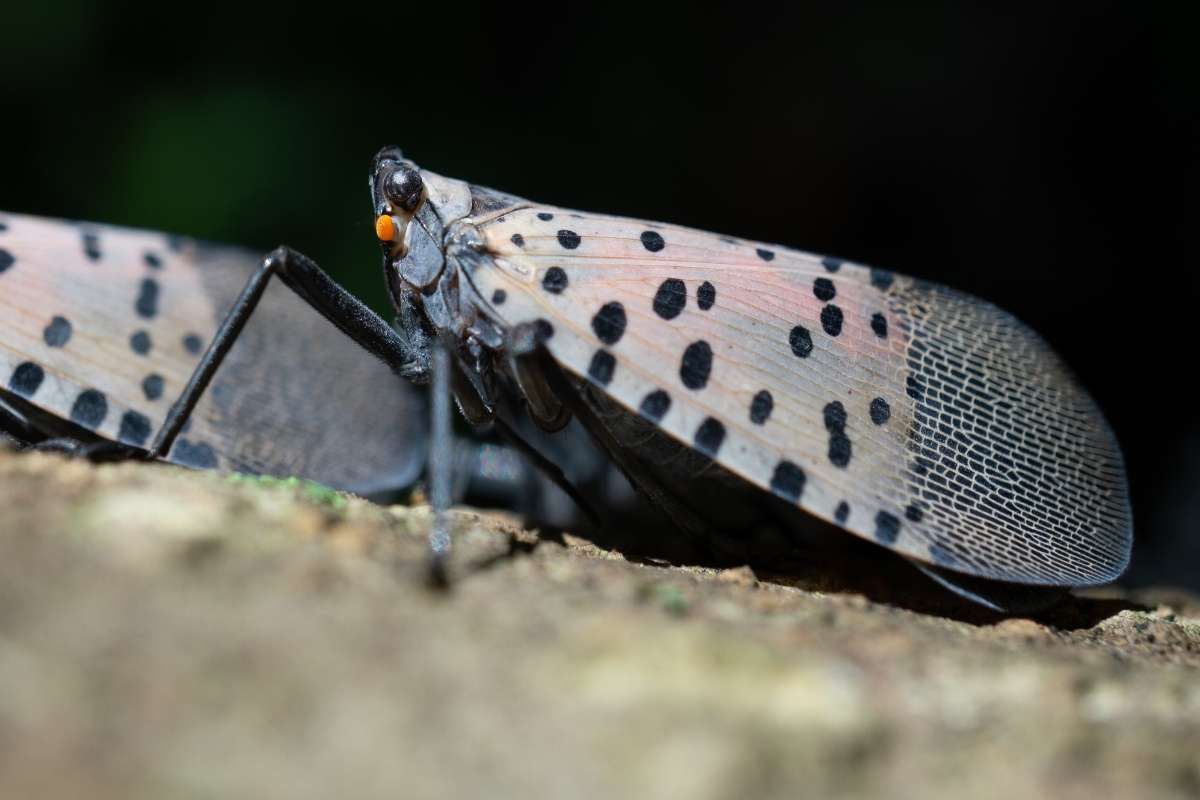
Lanternflies (Lycorma delicatula) exhibit distinct and easily recognizable physical characteristics at different stages of their life cycle. Here is what they look like:
Adult Lanternflies:
- Adult lanternflies are approximately one inch (2.5 cm) in length.
- They have a pair of wings with a grayish background color and are adorned with black spots.
- When their wings are closed, a vibrant red color is visible on the lower part of the wings.
- The forewings have contrasting black spots that are distributed irregularly, with some spots forming a partial pattern.
- Their hindwings are brightly colored and display a bold, contrasting pattern of black blocks and patches on a red background.
Lanternfly Nymphs:
- Nymphs go through several developmental stages, each with a distinct appearance.
- Early nymphs are small and black, usually with white spots.
- As they grow, they develop larger white spots on their black bodies, and their appearance becomes more contrasting.
These striking and conspicuous features make spotted lanternflies relatively easy to identify. Their vivid coloration and unique markings are among the key traits that help distinguish them from other insects. It's important to be able to recognize them to aid in their control and management, especially since they are considered invasive pests in various regions.
Where Are Lanternflies Found?
Lanternflies (Lycorma delicatula) are adaptable insects that can be found in a variety of habitats. They have a preference for certain host plants, which can influence their habitat selection. Here are the types of habitats where you might encounter lanternflies:
- Forests: Lanternflies can be found in wooded areas, particularly those containing their preferred host trees like oak and walnut. They tend to infest these trees, which are common components of forest ecosystems.
- Orchards and Vineyards: These insects are known to be damaging pests in orchards, where they feed on fruit trees such as apple, peach, and cherry. They can also infest vineyards, affecting grapevines.
- Urban and Suburban Areas: Lanternflies are highly adaptable to human-altered environments. They can be found in and around residential areas, parks, and gardens. In these settings, they often target ornamental plants and trees.
- Agricultural Land: Beyond orchards and vineyards, lanternflies can infest other crops, including agricultural crops such as soybeans and corn. This poses a significant threat to agriculture.
- Transportation Corridors: Lanternflies can be unintentionally transported via vehicles and cargo. They are known to congregate on vehicles, making highways, railways, and shipping hubs potential locations for their spread.
- Wooded Edges: They often infest areas where woodlands meet open fields or developed areas, as they can feed on the trees in the forest and then move into nearby fields and gardens.
- Riparian Zones: Lanternflies can also be found near streams, rivers, and other water bodies, as they may be attracted to the moisture and the vegetation found in riparian habitats.
Understanding the diverse habitats in which lanternflies can be found is crucial for monitoring and managing their populations, especially in regions where they are invasive pests. Early detection and control measures are important to prevent their spread and mitigate the damage they can cause to various ecosystems and industries.
Lanternfly Life Cycle
The life cycle of lanternflies (Lycorma delicatula) involves several distinct stages, each with its own characteristics. Understanding their life cycle is important for effective management and control. Here is an overview of the lanternfly life cycle:
- Egg Stage: Lanternflies start their life cycle as eggs. Eggs are laid in late summer or early fall, typically on smooth surfaces, such as tree trunks, rocks, or outdoor furniture. The eggs are laid in masses, covered with a gray, putty-like substance, which hardens over time and protects the eggs through the winter.
- Nymph Stage: In spring, the eggs hatch, giving rise to nymphs. The nymphs go through four instar stages, during which they undergo gradual development. Early nymphs are small, black, and have white spots. As they progress through instar stages, they become larger and develop red patches.
Nymphs actively feed on plant sap during this stage. - Adult Stage: After completing the nymphal stages, lanternflies become adults, usually in late summer. Adult lanternflies have a distinct appearance: they are about one inch in length, with grayish wings adorned with black spots. Their hindwings display a striking red and black pattern when opened. During the adult stage, lanternflies reproduce, laying eggs for the next generation. Mating usually occurs in late summer and early fall. Females lay egg masses, as described in the egg stage, to overwinter and continue the cycle.
The lanternfly life cycle is a key factor contributing to their potential for rapid population growth. Their ability to reproduce and spread is a concern for agriculture and ecosystems, as they feed on a wide variety of plants, including economically important crops. Effective management strategies often target the egg masses and nymphs to prevent their proliferation and limit the damage they can cause. Early detection and control measures are essential to mitigate their impact in affected regions.

Hear From Our Happy Customers
-
"Fantastic & Patient"
Jarvis was fantastic and patient. He answered my questions with an in-depth explanation and addressed all of my areas of concern. Would love for him to be my assigned tech going forward. Well done!
- Yonnette M. -
"Very Knowledgeable"
The tech that arrived was courteous, professional, and very knowledgeable. He was Great.
- Uerial I. -
"Exceeds Expectations"
I can’t say enough positive things about this company... The tech that came out, Jarvis went above and beyond my expectations. Thank you guys, I will continue using your services.
- Jake M. -
"Great Communication"
Tech was on time, communication was great, and he accommodated my needs.
- Alonzo W. -
"Wonderful Service"
Wonderful service. Jarvis is great. Took care of everything I needed. Thank you!
- Henry P. -
"Professional & Considerate"
I’m pleased with Miche services. Jarvis came today. Professional and considerate. Thank you!
- Judy B.