
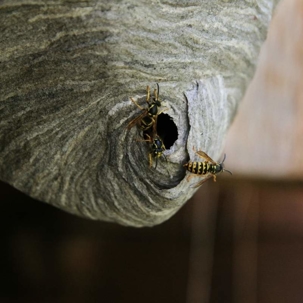
Yellowjackets Sting
Yellowjackets are among the most aggressive stinging insects in the wasp family, and their stings can be painful and potentially dangerous to those allergic to their venom. Understanding the situations that trigger yellowjacket stings can help you avoid encounters and reduce risk. The situations where yellowjackets are most likely to sting include:
Defending Their Nest
Yellowjackets are highly protective of their colonies. They will aggressively defend their nest if they sense a threat. Typical triggers include:
Approaching or accidentally disturbing a nest in the ground, tree, or building eaves.
Vibrations or movements near the nest entrance (even footsteps or lawn mowing nearby).
Disturbing loose soil or garden mulch where ground nests are hidden.
In these cases, multiple yellowjackets may swarm and sting repeatedly.
Feeling Threatened
Even away from the nest, yellowjackets will sting if they feel directly threatened. Situations include:
Getting too close to a yellowjacket that is feeding.
Attempting to swat or crush a yellowjacket.
Wearing perfumes, bright clothing, or food-scented products that attract attention and cause defensive behavior.
Food Competition
Yellowjackets are scavengers and are often aggressive around food sources, especially in late summer and early fall when their natural food supply declines. Common scenarios:
Picnics, outdoor barbecues, and camping trips.
Open beverage containers, sugary drinks, or meat.
Garbage cans, compost bins, or outdoor trash that smell of protein or sugar.
They may sting if they perceive you as trying to take their food or if you accidentally grab a foraging yellowjacket.
Sudden Movements or Vibrations
Yellowjackets are sensitive to quick movements or vibrations. Examples include:
Jogging or running near a nest.
Using power tools or lawn equipment near nests.
Throwing objects or clapping near them.
Even without direct contact, rapid motion can provoke defensive stinging behavior.
Multiple Stings Due to Aggression
Yellowjackets can sting repeatedly because their stinger is smooth (unlike honeybees, which have barbed stingers). If one feels threatened, it can alert others via pheromones, leading to multiple stings in a short period.
Yellowjackets are most likely to sting when their nest is threatened, when they feel directly threatened themselves, when competing for food, or when disturbed by sudden movements. Avoiding rapid motions, keeping food covered outdoors, and steering clear of nests are the best preventive measures.
Yellowjacket Stings
Yellowjacket stings can range from mildly irritating to medically serious depending on the individual and the number of stings received. Here’s what you can expect:
Mild Reactions (Most People)
For the average person with no allergy to insect venom, yellowjacket stings usually cause:
Immediate sharp pain: Often described as burning or stabbing.
Redness and swelling: Typically around the sting site.
Itching or mild irritation: This can last a few hours to a couple of days.
Most mild stings resolve on their own without medical treatment. Ice, topical antihistamines, or pain relievers can help relieve symptoms.
Moderate Reactions
Some people experience larger local reactions, which can include:
Swelling extending beyond the sting site (sometimes the entire limb or hand).
More intense redness or warmth.
Tenderness lasting several days.
While uncomfortable, these reactions are not usually dangerous, but they can increase risk of secondary infection if scratched excessively.
Severe Allergic Reactions (Anaphylaxis)
Some people are allergic to yellowjacket venom, which can trigger life-threatening reactions. Signs of anaphylaxis include:
Swelling of the face, lips, or throat
Difficulty breathing or swallowing
Rapid heartbeat, dizziness, or fainting
Nausea, vomiting, or diarrhea
Hives spreading beyond the sting site
Immediate emergency treatment is critical. Epinephrine (EpiPen) should be administered if available, and emergency medical services should be called.
Multiple Stings
Yellowjackets can sting repeatedly, unlike honeybees. Multiple stings can cause:
Intense localized pain and swelling
Nausea, headache, or mild systemic symptoms
Rarely, venom toxicity if dozens of stings are received, which can stress the cardiovascular and renal systems
Multiple stings can be dangerous, even in people without allergies, particularly for children, elderly individuals, or those with underlying health conditions.
Secondary Complications
Infection from scratching the sting site
Rarely, delayed hypersensitivity reactions (rash, joint pain, or fever a few days later)
For most people, a yellowjacket sting is painful but self-limited. However, for those allergic to venom or exposed to multiple stings, it can be life-threatening. Immediate care, avoidance of scratching, and monitoring for severe reactions are key.
What Do Yellowjacket Stings Look Like?
Yellowjacket stings have a fairly characteristic appearance, which can help distinguish them from other insect bites or stings:
Immediate Appearance
Right after a yellowjacket sting:
Small puncture mark: The stinger itself is smooth, so it usually leaves a tiny dot.
Redness: The area around the puncture becomes red and inflamed.
Raised bump (papule): A firm, slightly swollen bump forms at the sting site.
Pain or burning: The sting often causes immediate sharp, burning pain.
Within a Few Hours
Swelling: The bump may enlarge, sometimes up to a few centimeters in diameter.
Itching or tenderness: The surrounding skin can feel itchy or sore.
White or pale center: Occasionally, a small whitish area develops at the puncture site due to localized fluid accumulation.
Over 24–48 Hours
Redness and swelling peak: This usually occurs within the first day.
Possible blistering: Rarely, a small blister can form in sensitive individuals.
Discoloration: The area may turn pink or purple before gradually fading.
Severe or Allergic Reactions
Large local reaction: Swelling may extend well beyond the sting site, sometimes involving an entire hand, foot, or limb.
Hives: Raised, itchy welts can appear elsewhere on the body.
Anaphylaxis signs: Swelling of lips, tongue, or throat, accompanied by difficulty breathing, requires immediate emergency attention.
Yellowjacket stings are usually painful immediately, unlike some other insect bites which itch first. The puncture mark is tiny, but the redness and swelling can be disproportionately large. Multiple stings often result in clusters of red bumps.
What To Do About Yellowjacket Stings
If you get stung by a yellowjacket, the immediate response can make a big difference in reducing pain, swelling, and potential complications:
Move to Safety
Yellowjackets can sting repeatedly and release pheromones that attract other yellowjackets when they sting.
Leave the area calmly—avoid swatting or running, which may provoke more stings.
Remove the Stinger (if present)
Unlike honeybees, yellowjackets do not leave their stinger behind in the skin.
However, if there is any debris or a puncture wound, gently clean the area.
Clean the Sting Site
Wash the area with soap and cool water to reduce risk of infection.
Pat dry with a clean cloth or tissue.
Reduce Pain and Swelling
Ice or cold pack: Apply for 10–15 minutes at a time.
Elevation: If the sting is on a limb, elevate it to reduce swelling.
Over-the-counter pain relievers: Ibuprofen or acetaminophen can help with pain.
Topical treatments: Hydrocortisone cream or calamine lotion can reduce itching and inflammation.
Monitor for Reactions
Most stings cause mild local reactions. Watch for:
Swelling beyond the sting site
Increasing redness, warmth, or tenderness
Signs of infection (pus, spreading redness, fever)
Treating Allergic Reactions
Mild allergy: Antihistamines like diphenhydramine (Benadryl) may reduce itching and swelling.
Severe allergy (anaphylaxis): Emergency treatment is required. Administer epinephrine immediately if available (EpiPen). Call 911 or go to the nearest emergency room. Symptoms of anaphylaxis may include difficulty breathing, throat swelling, dizziness, or widespread hives.
Prevent Secondary Issues
Avoid scratching the sting to reduce risk of infection.
Keep the area clean and monitor for persistent redness or pain.
Multiple Stings
If stung several times, even without allergy history, monitor for systemic symptoms such as nausea, headache, or rapid heart rate.
Seek medical advice if symptoms escalate or if stings cover large areas of the body.
For most people, yellowjacket stings are painful but manageable with ice, cleaning, and over-the-counter treatments. For anyone with a known allergy—or signs of anaphylaxis—immediate emergency care is essential.