
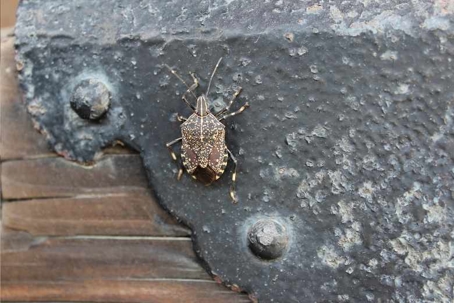
How To Get Rid Of Stink Bugs
When dealing with stink bugs on your own, the goal is to minimize their entry, remove the bugs already inside, and discourage them from gathering around your property. Here’s a thorough approach a home or business owner can take to get rid of stink bugs themselves:
Reduce Outdoor Attraction
The most effective way to reduce stink bug attraction is to limit the conditions that draw them to structures in the first place, especially as temperatures cool.
- Exterior lighting plays a significant role in drawing stink bugs closer to structures at night. These insects are attracted to artificial light sources, particularly bright white and bluish lights. Switching to warm-colored LED bulbs, reducing unnecessary exterior lighting, and using motion-activated fixtures can significantly reduce attraction pressure. Where lighting is necessary for security or operations, positioning fixtures away from entry points helps prevent insects from clustering directly on doors, windows, and loading areas.
- Vegetation management around the structure is another key factor. Stink bugs commonly feed and aggregate on ornamental plants, fruit trees, and garden crops before moving onto buildings. Trimming tree branches so they do not touch roofs or siding reduces “bridge” access into the structure. Overgrown shrubs and dense plantings should be thinned to improve airflow and reduce sheltered resting sites. In commercial settings, keeping landscaped beds well-maintained and avoiding plants known to host stink bug populations near entrances can meaningfully reduce pressure on the building envelope.
- Moisture and shelter conditions near the building should also be controlled. Stink bugs are more likely to linger in areas that provide stable humidity and protection from wind and predators. Eliminating debris piles, stacked materials, unused pallets, leaf litter buildup, and clutter near foundations removes ideal harboring sites. Ensuring gutters and downspouts function properly prevents moisture accumulation on exterior walls, which can make adjacent areas more attractive as resting zones.
- Structural maintenance and exclusion work should extend beyond obvious gaps. Vents, attic openings, chimney gaps, crawl space access points, and soffit vents should be fitted with intact insect screening that is properly secured and free of tears. Garage door seals are particularly important in both residential and commercial buildings because stink bugs frequently exploit small gaps at the bottom seal. Door sweeps should be flush to the floor without leaving visible light gaps, even on uneven concrete surfaces.
Reducing indoor attraction factors helps prevent secondary buildup once stink bugs gain entry. While they do not feed on human food sources indoors, they are drawn to warmth and light. Keeping blinds closed at night in heavily infested periods, minimizing indoor light visible from the outside, and promptly removing any insects that enter prevents aggregation and pheromone-driven clustering behavior. For persistent pressure, exterior perimeter treatments by our licensed pest professionals can provide a protective barrier, especially when timed before seasonal invasion peaks in the fall.
Treat For Stink Bugs On The Exterior
Treating the exterior of a structure is effective against stink bug intrusion because it targets the problem at the point where entry actually begins—before insects ever reach interior gaps or voids.
Stink bugs do not typically establish infestations indoors; instead, they aggregate on the outside of buildings during seasonal movement and then exploit small structural openings to get inside. Exterior treatments create a residual insecticidal barrier on siding, trim, window frames, soffits, and other landing surfaces. When stink bugs contact these treated surfaces, they either die quickly or become irritated enough to avoid continuing movement toward entry points. This reduces the likelihood that they will locate and exploit cracks, seams, or utility penetrations.
Another key factor is behavioral. Stink bugs are guided largely by visual cues and environmental gradients (warmth, shelter, and light reflection from structures). They often crawl extensively on exterior walls before finding access points. A properly applied exterior treatment disrupts this “search phase,” effectively reducing the time they spend on the structure and lowering the chance of successful entry.
Exterior applications also provide a protective buffer zone around the most vulnerable areas of a building—doors, windows, soffits, and roof-wall junctions—where exclusion is never perfect. Even well-sealed structures have micro-gaps that can’t be fully eliminated due to building movement, aging materials, or utility lines. The residual barrier helps compensate for these unavoidable imperfections.
Timing is also critical. When applied ahead of seasonal dispersal (typically late summer through fall in many regions), exterior treatments intercept stink bugs during the peak period when they are actively seeking overwintering sites. This preemptive effect reduces overall pressure on the structure, meaning fewer insects are attempting entry at once.
Finally, exterior-only contact reduces the need for interior pesticide use. Because stink bugs are primarily a perimeter problem rather than an indoor breeding issue, controlling them outside is both more efficient and more consistent with integrated pest management principles.
Seal Potential Stink Bug Entry Points
The most effective approach is a layered exclusion strategy that focuses on eliminating every practical entry pathway rather than relying on a single sealant or material. Stink bugs exploit extremely small gaps, often as narrow as 1–3 mm, so the goal is to create continuous, uninterrupted barriers across the building envelope.
- A primary step is sealing static cracks and joints in the exterior shell. High-quality, flexible sealants such as 100% silicone or polyurethane caulk are preferred because they adhere well to varied materials (wood, vinyl, masonry, metal) and remain flexible through seasonal expansion and contraction. Priority areas include window and door frames, siding seams, utility penetrations, hose bib openings, and foundation-to-wall junctions. These are the most common “first contact” entry points during seasonal migration.
- Dynamic openings—areas that move or open—require physical exclusion materials rather than caulk alone. Door sweeps should be installed on all exterior doors and adjusted so there is no visible light gap at the threshold. Weatherstripping around door jambs and window sashes should be intact, compressed evenly, and replaced when hardened or flattened. Garage doors are especially important; a bottom seal made of durable rubber or vinyl that conforms to uneven concrete is essential, since this is one of the most common large-scale entry points.
- Ventilation points are another critical vulnerability and often overlooked. Soffit vents, ridge vents, foundation vents, and attic exhaust openings should be fitted with corrosion-resistant insect screen (typically 20–30 mesh). The screening must be securely fastened so there are no edge gaps where insects can bypass it. Dryer vents and exhaust fans should also have properly functioning flaps that close fully when not in use.
- Utility and service penetrations require detailed attention because they often leave irregular gaps that are difficult to see. Electrical conduits, cable lines, plumbing pipes, and HVAC refrigerant lines should be sealed using a combination of backer rod (for larger gaps) and flexible exterior sealant. Expanding foam can be used for deeper voids, but it should be trimmed and sealed over, since exposed foam degrades and becomes porous over time.
- Structural interfaces such as siding transitions, trim boards, and fascia boards should be inspected for separation caused by weathering or building movement. These areas often develop hairline gaps that are sufficient for stink bug entry. Re-caulking and repainting exposed joints not only restores the barrier but also improves long-term durability of the seal.
Effective sealing is not a one-time task but a maintenance cycle. Seasonal inspection—especially in late summer before stink bug dispersal begins—helps identify new gaps caused by expansion, settling, or material degradation. Buildings that maintain consistent perimeter integrity year after year experience significantly lower indoor intrusion because stink bugs rely heavily on cumulative access points rather than forcing entry through intact materials.
Flush Out The Stink Bugs Hiding In The Walls
Once stink bugs are inside wall voids, the goal is to force them out into open areas where they can be physically removed or prevented from re-entering—not to try to “kill inside the walls,” which is usually inefficient and can create odor issues if large numbers die in hidden spaces.
A practical first step is to use temperature and light as controlled triggers. On warm, sunny days, increasing indoor heating slightly while simultaneously opening exterior-facing windows on the opposite side of the structure can encourage movement toward exit points. Stink bugs are strongly drawn to light and will often migrate toward illuminated openings, especially late morning through afternoon when they are more active.
Mechanical flushing using targeted vacuuming is often the most reliable method once they emerge. A shop vacuum with a disposable bag or sealed canister is preferred so the insects can be removed without crushing, which triggers their defensive odor. Focus on window frames, attic access points, baseboards near exterior walls, and electrical outlets or switch plates on perimeter walls, since these are common emergence zones.
Another useful tactic is creating controlled “exit pressure” using exterior access points. Opening windows and doors on the same exterior wall where activity is detected can reduce the incentive for insects to disperse deeper into the structure. When combined with interior darkness in adjacent rooms, this light gradient helps guide them outward rather than further into living spaces.
For wall void populations that are more persistent, targeted application of a desiccating dust in void-adjacent areas can help reduce survival and movement. Products such as silica gel or diatomaceous earth (applied into void access points like outlet boxes or attic gaps—not broadly into living space) can dry out insects over time. This works best when applied by a professional who can safely access void entry points without contaminating indoor airspaces.
Stink bugs do not reproduce inside walls, so infestations are typically seasonal accumulations rather than established colonies. Because of this, complete “eradication” from inside voids is less realistic than interrupting their overwintering behavior and sealing access points for future seasons. Once the majority are flushed or removed, improving exterior exclusion and reducing entry pressure is what prevents them from returning to the same hiding zones.
Carefully Remove The Stink Bugs That Are Already Inside
The most reliable method for physically removing stink bugs indoors is controlled vacuuming using a shop vacuum or a standard vacuum with a sealed bag or canister. This approach avoids crushing the insects, which is important because stink bugs release their defensive odor when compressed. A dedicated vacuum attachment (crevice tool) allows you to reach along window frames, door trim, baseboards, and ceiling corners where they commonly congregate. If a bagged vacuum is used, the bag can be immediately sealed and discarded after collection to prevent escape or odor release.
- Manual collection is effective for smaller numbers. Using a tissue, paper towel, or disposable glove, stink bugs can be gently picked up and dropped into a container of soapy water. The soap breaks surface tension and ensures they cannot escape, while also preventing odor release compared to crushing. This method works well for isolated insects found on walls, curtains, or furniture.
- Light-based attraction and interception can help in rooms with active movement. Stink bugs naturally move toward windows and light sources, especially during daytime warming cycles. By closing interior lights at night and opening blinds during daylight hours, insects tend to aggregate near windows where they can be more easily vacuumed or removed. Some people also place a shallow dish of soapy water beneath a lamp near a window to concentrate activity in one area for easier collection.
- Sticky interception tools can be used selectively. Adhesive traps placed along window sills, behind curtains, or near known entry points can capture individuals that are actively moving. These are most useful as a supplemental tool rather than a primary control method, since stink bugs are relatively slow and not strongly attracted to baited traps indoors.
- For larger or persistent indoor populations, coordinated “flush and remove” techniques are more efficient than chasing individual insects. This involves focusing on one room at a time, closing off adjacent areas, and concentrating removal efforts where light leakage from exterior-facing windows is strongest. This reduces dispersion and makes vacuuming significantly more efficient.
Avoid methods that agitate or crush stink bugs, such as sweeping with a broom or smashing with objects, because these actions increase odor release and can make the situation worse. Similarly, broad indoor pesticide use is usually not effective for immediate removal since stink bugs are often resting in protected locations rather than actively contacting treated surfaces.
How To Get Rid Of Stink Bugs Fast
If your goal is rapid elimination of stink bugs, the focus has to be on direct removal and targeted chemical treatments, because prevention measures work more slowly over time. Here are some of the fastest-acting strategies for both indoor and outdoor infestations:
Immediate Indoor Removal
Vacuuming: The quickest way to remove stink bugs indoors. Use a vacuum with a disposable bag to avoid odor contamination. This can eliminate dozens or hundreds quickly, but you have to dispose of the bag immediately.
Manual Collection: For small numbers, wearing gloves and dropping bugs into a container of soapy water kills them almost instantly.
Insecticidal Sprays
For fast knockdown:
Pyrethrin-Based Aerosols: These are fast-acting and can kill stink bugs on contact. Only use indoors in targeted areas (cracks, window sills, baseboards). Avoid spraying open surfaces where food is present.
Permethrin or Lambda-Cyhalothrin Sprays (Outdoor Use): These can rapidly reduce populations around building perimeters. Spray foundation edges, door frames, eaves, and other points of entry. Effects are usually visible within hours.
Contact sprays kill bugs on the spot, but residual insecticides are better for preventing new bugs from entering.
Sticky and Light Traps
Light Traps Over Water: Bugs are attracted and drown quickly.
Pheromone Traps: These can draw stink bugs out of hiding, especially in attics or large storage spaces. They don’t eliminate the source but can dramatically reduce visible numbers in hours to days.
Environmental Speed Boosters
Temperature Manipulation: Stink bugs are cold-blooded. Rapid cooling or heating a room can temporarily immobilize them, making collection easier. For example, sealing bugs in a sun-warmed room and then vacuuming or trapping them is surprisingly effective.
Remove Immediate Hiding Spots: Decluttering areas indoors and moving firewood or garden debris away from the building makes stink bugs accessible for faster elimination.
There’s no single method that instantly solves a stink bug infestation. The fastest elimination always involves a direct kill method (vacuum, manual, or spray) combined with quick exclusion and traps.
How To Get Rid Of Stink Bugs Permanently
To eliminate stink bugs permanently—or at least prevent recurring infestations—the focus needs to shift from quick knockdown to long-term exclusion, habitat modification, and population suppression. Stink bugs, particularly the brown marmorated stink bug, overwinter inside buildings, so permanent control is about blocking access, eliminating attractants, and targeting breeding populations:
Seal Entry Points (Permanent Barrier)
Stink bugs enter through cracks, gaps, and openings in walls, windows, doors, eaves, and vents. Proper exclusion is critical:
Caulk or Foam Gaps: Seal all cracks around doors, windows, siding, and utility penetrations.
Weather Stripping: Ensure doors and windows close tightly; repair or replace worn weather stripping.
Mesh Screens: Use fine mesh to cover vents, chimneys, and any other openings larger than 1/16 inch.
Door Sweeps: Install on exterior doors to eliminate gaps at the bottom.
Once thoroughly sealed, most stink bugs can no longer enter the building, which is the single most important step toward permanent control.
Outdoor Perimeter Management
Reducing the population near the structure decreases the likelihood of them trying to enter:
Residual Insecticides: Apply a perimeter treatment in early fall using pyrethroids like permethrin or bifenthrin along foundations, eaves, and door frames.
Vegetation Management: Remove or relocate host plants (tomatoes, peppers, apples, peaches, and ornamentals) away from the building. Prune tall shrubs that touch the structure.
Debris Removal: Keep firewood, rocks, and leaf piles away from walls, as these are common staging areas before overwintering.
Reduces the local stink bug population near the building, making future infestations less likely.
Indoor Habitat Reduction
Stink bugs prefer attics, crawl spaces, and quiet storage areas for overwintering. Permanent control requires making these areas inhospitable:
Declutter Storage Areas: Remove boxes, cardboard, and unnecessary storage where bugs can hide.
Temperature and Ventilation: Properly ventilated attics or storage rooms reduce warmth and humidity, discouraging stink bugs.
Indoor Pesticides (Targeted): Use crack-and-crevice insecticides only in areas where bugs gather—not broad sprays—if populations are already inside.
Long-Term Trapping and Monitoring
Pheromone Traps: Deploy outside or in attics to monitor populations and capture stragglers.
Sticky Traps and Light Traps: Help catch wandering bugs before they establish themselves indoors.
These traps don’t eliminate the entire population but act as an early-warning and suppression system.
Seasonal Timing
Early Fall Prevention: Stink bugs seek indoor shelter as temperatures drop. Intensify sealing, perimeter treatment, and monitoring in late summer through fall.
Spring Cleanup: Remove any overwintering bugs that survived indoors before they start breeding outdoors.
Why Quick-Kill Methods Alone Fail
Sprays, vacuums, and traps remove visible bugs but do not address the source or prevent new ones from entering.
Without sealing and outdoor population management, infestations will recur annually.
How To Get Rid Of Stink Bugs Naturally
There are natural methods that can help reduce or control stink bugs, but it’s important to understand that “natural” does not always mean complete elimination. Most natural approaches are preventive or suppressive rather than instantly lethal, so they work best when combined with exclusion and habitat management:
Physical Removal (Natural, Immediate)
Manual Collection: Wear gloves and drop stink bugs into a container of soapy water. This kills them without chemicals.
Vacuuming: Using a vacuum (with disposable bag) is highly effective indoors. Though it’s mechanical, it’s “natural” in that it doesn’t rely on chemical insecticides.
This works well for small infestations but requires persistence for larger populations.
Exclusion and Habitat Modification
Sealing Entry Points: Caulking cracks, repairing screens, and weatherstripping doors and windows prevent stink bugs from entering. This is 100% natural and highly effective long-term.
Remove Attractants: Reduce nearby host plants, overripe fruit, and clutter where stink bugs hide.
Outdoor Buffers: Planting non-host vegetation between gardens and the building reduces attraction.
This is the cornerstone of permanent stink bug management, and it is fully natural.
Traps (Non-Chemical)
Light and Water Traps: Stink bugs are drawn to light and fall into soapy water.
DIY Pheromone Traps: Commercial traps often use aggregation pheromones to lure stink bugs, which can then be collected or drowned.
Good for reducing numbers, especially indoors or near entry points, but not a complete solution on their own.
Natural Repellents
Some natural substances can discourage stink bugs from settling but won’t kill them outright:
Essential Oils: Garlic, neem, mint, clove, or citronella oils can be mixed with water and sprayed around windows, doors, and garden areas.
Diatomaceous Earth: Sprinkled around entry points or outdoor perimeters, it abrades insect exoskeletons, leading to dehydration.
Companion Planting: Some plants like marigolds or chrysanthemums may repel stink bugs naturally.
These are preventive rather than curative. They reduce attraction but usually don’t eliminate established infestations.
Biological Control (Natural Predators)
Predatory Insects: Ladybugs, parasitic wasps, and certain spiders eat stink bugs.
Birds and Small Mammals: Some birds, like swallows, will feed on them.
Biological control is slow and more practical for outdoor garden populations than for indoor infestations.
Natural methods are most effective when combined with exclusion and habitat management. Alone, they rarely eliminate an infestation permanently, but when used as part of a comprehensive plan, they can reduce dependence on chemical insecticides while keeping stink bug populations under control.
The Best Way To Get Rid Of Stink Bugs
Hiring our professional pest control services is the best way to get rid of stink bugs because these pests are notoriously difficult to eliminate once they invade a property. Unlike a few nuisance bugs that can be vacuumed or trapped, stink bugs often invade in large numbers, hide deep in wall voids, and return year after year if preventative measures aren’t put in place. Here’s why our professional services are the most effective solution:
- Comprehensive Inspection and Identification: Our professionals know where stink bugs enter and hide. We can identify overlooked gaps, cracks, and structural vulnerabilities that allow stink bugs to get inside — many of which the untrained eye may miss.
- Targeted Treatments That Work: Store-bought sprays or DIY methods usually only kill stink bugs you see, not the ones hiding behind walls or in attics. Our licensed pest control technicians apply professional-grade products that are proven to be effective and safe when used correctly. We apply exterior barrier treatments to prevent entry, as well as interior spot treatments when necessary.
- Preventative Protection: Our professionals don’t just remove existing stink bugs — we focus on long-term prevention. By sealing entry points, applying protective barriers, and scheduling seasonal treatments (especially in late summer and early fall before overwintering season), we can stop infestations before they start.
- Safe and Efficient Methods: DIY solutions like bug bombs or misapplied sprays can be ineffective or potentially even dangerous indoors. Our professionals know how to apply treatments safely, without putting residents, employees, pets, or property at risk.
- Experience With Large-Scale Infestations: When stink bugs gather in overwhelming numbers — covering windows, walls, or invading entire buildings — homeowners and business owners often struggle to keep up. Our professionals have the equipment, training, and strategies to quickly and effectively eliminate widespread infestations.
- Guaranteed Results: We return at not extra cost if stink bugs persist. This provides peace of mind that DIY methods simply can’t match.
While DIY methods can temporarily reduce stink bug numbers, our professional pest control offers the only reliable, long-term solution by combining inspection, exclusion, treatment, and prevention strategies.
Get Rid Of Stink Bugs With Miche Pest Control
Hiring our team of professionals at Miche Pest Control is an investment in long-term protection, expertise, and peace of mind. Here’s why:
- Personalized Service and Local Expertise: We know the specific pest pressures in the area. Our technicians understand the environment, climate, and building types common to the area, allowing them to provide targeted, effective treatments.
- High-Quality, Comprehensive Solutions: As a full-service provider, we don’t just treat surface problems; we address the root causes. From inspections and prevention to exclusion and ongoing maintenance, we deliver complete, integrated pest management (IPM) programs designed to both eliminate infestations and prevent future ones.
- Accountability and Reliability: We live and die by our reputation. We rely on trust, referrals, and repeat business, meaning we're committed to doing the job right the first time and providing exceptional customer care.
- Faster Response Times: We respond quickly to emergencies and schedule services sooner than large, national chains. Especially when you’re dealing with urgent pest issues, that speed matters.
- Customized Treatment Plans: We tailor our services to your property’s specific needs instead of using one-size-fits-all chemical treatments. This results in safer, more effective pest control that minimizes environmental impact and reduces unnecessary pesticide use.
- Highly Trained, Experienced Technicians: We invest in training, certification, and continuing education for our technicians. We stay current on the latest pest biology, control techniques, and safety standards.
- Long-Term Prevention and Value: Our focus on providing quality service means fewer callbacks, longer-lasting protection, and better value over time. Instead of repeated, temporary fixes, you get strategic solutions that protect your home or business for the long run and provide better peace of mind.
Hiring our team means you get expertise you can trust, faster service, safer and more effective treatments, and long-term results that protect both your property and your peace of mind. Contact us today!