
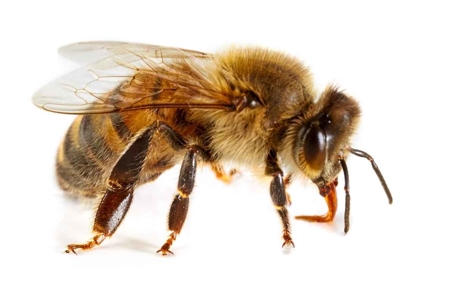
What Do Honey Bees Look Like?
Honey bees are often mistaken for wasps, yellowjackets, or hornets. Knowing what honey bees look like helps people avoid killing them out of fear, especially since these bees are generally non-aggressive and only sting when threatened. Misidentification frequently leads to the destruction of beneficial insects that pose little risk to humans.
Honey bees are critical pollinators: Honey bees play a major role in pollinating food crops and wild plants. Correctly recognizing them helps ensure they are protected rather than eliminated, which directly supports agriculture, ecosystem stability, and food production.
Different insects require different responses: Honey bees, bumblebees, and wasps behave differently and require different management approaches. For example, a honey bee swarm is usually temporary and can often be relocated safely, while a wasp nest may require professional removal. Visual identification leads to appropriate, informed action.
Safety and risk assessment depend on identification: Honey bees are less aggressive than many stinging insects and typically sting only once in self-defense. Knowing their appearance helps people assess real risk, avoid panic, and respond calmly, reducing the chance of provoking stings.
Legal and ethical considerations matter: In many regions, honey bees are protected or subject to specific regulations due to population declines. Proper identification helps individuals and professionals comply with environmental laws and ethical conservation practices.
For property managers, landscapers, and pest control professionals alike, correct identification builds trust and ensures decisions are scientifically sound. It demonstrates expertise and prevents costly or reputational mistakes caused by treating beneficial insects as pests.
Learn more: Honey Bees vs Bumblebees
What Size Are Honey Bees?
Knowing the typical size range helps distinguish honey bees from more aggressive stinging insects. When combined with color, body hair, and behavior, size is a key factor in accurate identification:
Average body length: An adult honey bee typically measures about ½ to ⅝ inch long (approximately 12–16 millimeters). This size places them smaller than bumblebees but larger than many solitary bees.
Worker bees: The most commonly seen; usually ½ inch (12–14 mm) long.
Queen bees: Noticeably larger, often ⅝ to ¾ inch (16–20 mm) long, with a longer abdomen.
Drones (males): Similar in length to workers but bulkier, with larger eyes.
Body proportions: Honey bees have a slender, oval-shaped body with a relatively narrow waist and visible segmentation. Their size is consistent and streamlined, unlike the rounder, fluffier appearance of bumblebees.
Size compared to common look-alikes: Smaller than bumblebees (which can reach 1 inch). Slightly smaller or similar to yellowjackets, but honey bees appear less shiny and more hairy. Larger than sweat bees and many native solitary bees.
In practical terms, a honey bee is roughly the size of a small paper clip segment or a standard fingernail, making it recognizable once you know what to look for.
What Color Are Honey Bees?
Honey bees (Apis mellifera) display a distinctive coloration, which can vary slightly among individuals and subspecies. However, they generally have a color pattern that includes shades of yellow, brown, and black. Here is the typical coloration of honey bees:
Yellow and Brown: The primary colors of honey bees are yellow and brown. Their thorax (the middle section of their body) is typically covered in yellow-brown or tan-colored hairs, giving it a fuzzy appearance. The abdomen (the rear section) also features similar yellow or brown hues.
Dark Bands or Stripes: One of the most recognizable features of honey bees is the presence of alternating dark bands or stripes on their abdomen. These bands are usually black or dark brown and are separated by lighter-colored segments, often yellow or tan. The number and width of these bands can vary among different honey bee subspecies.
Hair color and texture: Honey bees are covered with fine hairs that often appear tan, light brown, or golden, giving them a slightly fuzzy, matte look rather than a shiny surface.
Dark honey bee variations: Some honey bees appear much darker, ranging from dark brown to nearly black, especially certain subspecies or bees from cooler climates. These bees still show faint banding but it may be subtle.
Lighter or yellowish forms: Other honey bees may look lighter yellow or orange, particularly in warm regions or specific genetic lines bred for gentler behavior. The bands are still present and contrast more strongly.
Head and Antennae: The head of a honey bee is typically brown and somewhat darker than the thorax and abdomen. Honey bees have large, compound eyes that are dark in color. Between their eyes, they have a pair of short, segmented antennae that are typically brownish in color.
Legs: Usually dark brown to black.
Wings: Honey bee wings are transparent and veined, with a slightly smoky appearance. They may have a faint tinge of brown or gray, but they are predominantly clear.
Color compared to look-alikes: Honey bees are less bright yellow than yellowjackets. They lack the sharp black-and-neon contrast seen in wasps. Their coloration appears muted and natural, not glossy.
Why color matters for identification: Understanding the color range helps prevent misidentification. While honey bees vary from light golden to very dark, they consistently show soft striping, hairiness, and a non-shiny appearance, which separates them from more aggressive stinging insects.
While the general coloration described here is typical for honey bees, there can be some variation in color among individual bees and subspecies. Honey bees can range from light golden yellow to dark brown or almost black, but they always maintain a subtle, striped, and fuzzy appearance. The specific patterns and shades of yellow, brown, and black may differ slightly, but the alternating dark bands on the abdomen are a characteristic feature that helps distinguish honey bees from other bee species.
What Shape Are Honey Bees?
Honey bees have a slender, elongated, and slightly oval body, which is tapered at the head and rear. Their shape is streamlined, allowing efficient flight and pollen collection:
Head: Rounded and slightly wider than the neck, housing the eyes, antennae, and mouthparts.
Thorax: Compact and muscular, where the wings and legs attach; appears slightly humped from a side view.
Abdomen: Elongated and tapered, with visible segments and alternating bands of color.
Head features: The head is roughly oval, with large, almond-shaped compound eyes on the sides and short, slender antennae.
Legs: Legs are jointed, thin, and slightly hairy, aiding in pollen collection.
Wings: Wings are transparent, narrow, and elongated, overlapping when at rest.
Behavioral influence on shape perception: In flight, honey bees appear slender and tapered, while when crawling or landing, the slight humped thorax becomes noticeable, giving them a characteristic profile.
Honey bees have a streamlined, oval, and segmented shape—slender and slightly humped at the thorax, tapering at the abdomen, with clear separation between head, thorax, and abdomen.
Are Honey Bees Hairy?
Yes, honey bees are hairy, though the hairs are fine and often easy to overlook at first glance.
Distribution of hairs: Most concentrated on the thorax, giving them a slightly fuzzy appearance. Present on the abdomen, legs, and head, though usually shorter and finer than on the thorax. Specialized hairs on the hind legs form pollen baskets (corbiculae) for collecting pollen.
Pollen collection: The hairs trap pollen grains, allowing bees to transport them back to the hive.
Sensing: Some hairs act as tactile sensors, helping bees navigate and communicate.
Thermal regulation: The hairs provide slight insulation, helping bees maintain body temperature.
Identification clue: Their fuzzy appearance sets them apart from wasps and hornets, which are generally smooth and shiny.
Honey bees are distinctively hairy, with the thorax being the hairiest part, serving both functional and identifying purposes.
Do Honey Bees Have Stripes?
Yes, honey bees have stripes, but they are subtle and part of the body’s segmentation rather than bright, bold markings.
Location of stripes: The stripes run horizontally across the abdomen. They alternate between the slightly raised segments, giving a banded texture.
Appearance of stripes: Even without considering color, the stripes are visible as raised ridges along the abdomen. They contribute to the segmented look of the bee’s body.
Purpose of stripes: They are mainly structural, reflecting the segmentation of the exoskeleton. Combined with hair and subtle coloration, the stripes help identify honey bees compared to smooth-bodied insects like wasps.
Comparison to other insects: Wasps and hornets may have bold, high-contrast stripes. Honey bee stripes are less shiny, muted, and integrated into the body segments.
So, honey bees do have stripes, but they are soft, subtle, and part of the natural segmentation of the abdomen rather than flashy or high-contrast.
What Honey Bees Look Like
Segmentation: Their abdomens are segmented, with visible bands across each segment. Even without considering color, this banded texture is a notable identifying feature.
Eyes: Honey bees have large, almond-shaped compound eyes on the sides of the head, along with three smaller simple eyes (ocelli) on top, which help with navigation and detecting light.
Antennae: They possess long, thin, jointed antennae that move actively. These are sensory organs used for smell, touch, and communication.
Wings: Honey bees have two pairs of transparent wings with a characteristic veined pattern. When at rest, the wings fold flat over the back, sometimes overlapping.
Legs and pollen baskets: Their legs are jointed, hairy, and specialized. On the hind legs of worker bees, there are corbiculae, or “pollen baskets,” which are concave areas with stiff hairs used for carrying pollen.
Stinger: Female honey bees have a barbed stinger at the end of the abdomen used only in defense. It is usually not visible unless the bee is threatened.
Behavioral cues as visual identifiers: Honey bees often move deliberately, visiting flowers, crawling in hives, or forming swarms. They rarely hover aggressively near humans like some wasps do, which also helps visually distinguish them.
Beyond size, shape, and color, honey bees are fuzzy, segmented, winged insects with distinctive eyes, antennae, pollen-carrying legs, and a subtle defensive stinger, often displaying calm, purposeful movements.
Last Updated: 12/20/2025