
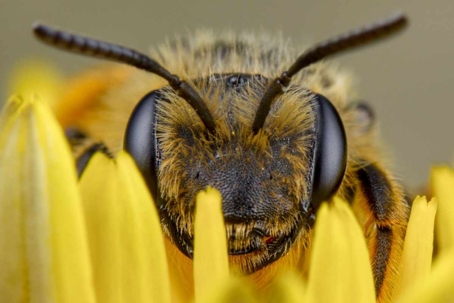
Do Honey Bees Bite?
Honey bees are generally much more likely to sting than to bite, because their primary defense mechanism is stinging. However, honey bees do have mandibles and can bite in certain situations, usually when stinging is not feasible. Here are the key situations where these bees might bite people or pets:
When trapped or confined – If a honey bee is accidentally trapped against the skin, in clothing, or in hair, it may bite in an attempt to free itself. This is more likely if a person or pet swats at a bee or catches it.
During hive disturbances – Beekeepers or anyone handling frames, honeycombs, or the hive may experience bites. Bees may bite when trying to cling to clothing, gloves, or even bare skin to prevent being moved away from their hive.
When swatting or irritating them – Sudden movements near bees, like swatting at one, can provoke defensive biting. Bees may use their mandibles to grab onto whatever is threatening them before stinging.
Feeding or foraging situations – Rarely, if a bee is caught while foraging, such as on a pet’s fur or on human clothing, it may bite to maintain a hold or try to escape.
Inter-species interactions – Pets like dogs or cats trying to bat at or eat bees may provoke bites as bees attempt to hold on and escape.
Unlike honey bee stings, honey bee bites do not inject venom, so the risk is minimal. The bite is primarily mechanical and defensive.
Honey Bee Bites
Honey bee bites are generally far less risky than stings, but there are still some potential issues to be aware of, especially in sensitive individuals or pets:
Local skin irritation
Description: Redness, mild swelling, slight pain or discomfort at the bite site.
Cause: Mechanical trauma from the bee’s mandibles.
Severity: Usually minor and self-limiting, resolving within a few hours.
Infection
Description: Scratching or poor hygiene after a bite could introduce bacteria.
Signs: Increasing redness, warmth, pus formation, or tenderness around the bite.
Prevention: Wash the area thoroughly with soap and water and keep it clean.
Allergic reactions
Description: Rare, but some individuals may be allergic even to the minor proteins in a bee’s saliva or mandible secretions.
Signs: Hives, swelling beyond the bite site, itching, or more rarely systemic symptoms like difficulty breathing.
Severity: Mild reactions are uncommon; severe systemic reactions (anaphylaxis) from a bite alone are extremely rare.
Secondary irritation in pets
Description: Pets may get bites on noses, ears, or paws when interacting with bees.
Signs: Pawing at the area, redness, minor swelling.
Complications: Mostly minor; in rare cases, multiple bites could cause stress or discomfort.
Misidentification risks
Description: People may confuse bites for stings, leading to unnecessary worry or improper treatment.
Note: Bee stings inject venom, while bites do not, so risks of venom-related allergic reactions are negligible with bites.
Honey bee bites are mostly harmless, causing minor mechanical irritation. The main risks are local discomfort, possible infection, and very rare allergic reactions. Pets may experience similar minor effects. Compared to stings, bites are low-risk.
What Do Honey Bee Bites Look Like?
Honey bee bites are usually subtle and minor, especially compared to stings. Here’s what you can expect visually:
Small, shallow marks: Usually one or a few pinpoint punctures or tiny scrapes. Often linear if the bee bites and holds on.
Redness or mild swelling: Slight redness around the bite site. Mild swelling may appear, but it’s generally localized and does not spread far.
Surface irritation: Sometimes the skin may feel slightly raised or itchy. A small scab or abrasion can form if scratched.
No stinger puncture or venom blister: Unlike stings, bites do not leave a stinger or inject venom, so there’s no central white dot or fluid-filled blister.
Duration: Most bites fade within a few hours. Minor redness or irritation may persist for up to a day.
Honey bee bites are easy to identify because they look like tiny red punctures without a stinger, and discomfort is usually minor.
What To Do About Honey Bee Bites
If you are bitten by a honey bee, the situation is usually minor, but proper care can prevent irritation or infection. Here’s a detailed, professional guide:
Immediate Actions
Stay calm and remove the bee: Gently brush the bee away—do not crush it on your skin, as this can release more irritants.
Wash the area thoroughly: Use mild soap and warm water to clean the bite site. This reduces the risk of infection from bacteria introduced during the bite.
Apply a cold compress: Wrap ice or a cold pack in a cloth and apply for 5–10 minutes. Helps reduce redness, swelling, and minor discomfort.
Managing Symptoms
Mild irritation or itching: Apply a soothing topical cream, such as hydrocortisone, calamine lotion, or aloe vera gel. Over-the-counter oral antihistamines (like cetirizine or loratadine) can reduce itching if necessary.
Monitor for infection: Signs include increased redness, warmth, swelling, pus, or tenderness. If any of these occur, see a healthcare provider.
When to Seek Medical Attention
If you experience severe allergic reactions, even though rare from bites:
Difficulty breathing or swallowing
Widespread hives or swelling
Dizziness or fainting
If the bite area shows signs of infection that worsen over 24–48 hours.
Additional Tips
Avoid scratching, which can worsen irritation or introduce bacteria.
Keep the bite site clean and dry.
Pets bitten by bees can be treated similarly: wash the area, apply a cold compress, and monitor for excessive swelling or discomfort.
In short: clean, cold, soothe, monitor—the bite itself is minor, and serious complications are extremely uncommon.