
What Do House Centipedes Eat?
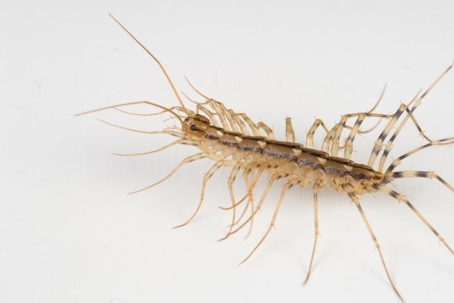
House centipedes are predators, and their diet primarily consists of other small arthropods and insects found in the home. These centipedes actively hunt at night and are beneficial in controlling pest populations.
House centipedes have venomous claws (forcipules) just behind their head, which they use to immobilize their prey before consuming it. Despite their somewhat alarming appearance, they are generally considered beneficial because they naturally reduce populations of pests.
Do House Centipedes Eat Ants?
Yes, house centipedes do eat ants. House centipedes are voracious predators and have a diverse diet that includes various small insects and arthropods, including ants. They are effective at catching and consuming ants, which are a common household pest. House centipedes can be beneficial in controlling ant populations in your home, making them a natural form of pest control. Their agile and quick movements, along with their venomous fangs, enable them to hunt and feed on a wide range of small insects, including ants.
Do House Centipedes Eat Bed Bugs?
Yes, house centipedes are known to eat bed bugs. Bed bugs are small, blood-feeding insects that can be a nuisance in homes. House centipedes are carnivorous predators with a diverse diet that includes various small insects and arthropods, and bed bugs are one of their potential prey. House centipedes are effective at catching and consuming bed bugs, making them beneficial for controlling bed bug populations in your home. Their agility and venomous fangs enable them to hunt and feed on a wide range of small pests, including bed bugs. However, it's essential to note that while house centipedes can help in reducing bed bug numbers, they may not be a comprehensive solution for a severe bed bug infestation, which often requires professional pest control measures.
Do House Centipedes Eat Cockroaches?
Yes, house centipedes are known to eat cockroaches. Cockroaches are a common household pest, and house centipedes are natural predators with a diverse diet that includes various small insects and arthropods, including cockroaches. House centipedes are effective at catching and consuming cockroaches, which makes them beneficial for controlling cockroach populations in your home. Their agile and quick movements, along with their venomous fangs, enable them to hunt and feed on a wide range of small insects, including cockroaches. House centipedes are a form of natural pest control and can help reduce the presence of cockroaches in your living space.
Do House Centipedes Eat Fleas?
Yes, house centipedes can eat fleas, but it’s relatively uncommon. Fleas are small and fast, and they typically spend most of their life on a host (like pets or humans), so they aren’t as easily accessible to centipedes as slower-moving pests like silverfish, ants, or cockroaches.
If fleas are present in the environment—on floors, carpets, or bedding where centipedes can encounter them—then a house centipede may attack and consume them. However, because fleas are usually on animals rather than freely roaming in a home, centipedes aren’t considered a reliable method of flea control.
Do House Centipedes Eat Flies?
Yes, house centipedes will eat flies, but there are some nuances. They are opportunistic predators, so if a fly lands on a surface where a centipede can reach it, the centipede may capture and consume it. Their hunting strategy relies on speed and ambush—they chase down or pounce on slow-moving or resting insects.
Flying insects that remain airborne most of the time, like healthy adult flies, are more difficult for centipedes to catch, so they are not a primary food source. Flies that are grounded, trapped, or weak (for example, dead or dying ones) are much more likely to be eaten.
Do House Centipedes Eat Fruit Flies?
Yes, house centipedes can eat fruit flies, but with some limitations. Fruit flies are very small and fast, so they are a more challenging prey than slow-moving insects like silverfish or cockroaches. House centipedes rely on ambush and speed, so they are more likely to catch fruit flies when the flies are resting on surfaces—like countertops, walls, or near fruit bowls—rather than while flying.
Because fruit flies are usually concentrated near overripe fruit or organic matter, a centipede might patrol those areas and consume the ones it can reach. While they can help reduce fruit fly numbers, they are not a highly reliable solution for infestations due to the flies’ small size and rapid movement.
Do House Centipedes Eat House Flies?
Yes, house centipedes can eat house flies, but it’s not their most common prey. Their hunting style relies on speed, agility, and ambush, so they are most effective against insects that move on walls, floors, or ceilings rather than constantly flying. A house fly that is resting or trapped on a surface is vulnerable, and a centipede can grab and immobilize it with its venomous forcipules.
However, healthy, flying house flies are usually too fast and mobile to be caught regularly. In practice, centipedes contribute more to controlling slower or crawling pests such as silverfish, spiders, ants, cockroaches, and other small arthropods. House flies are only an occasional or opportunistic addition to their diet.
Do House Centipedes Eat Moths?
Yes, house centipedes will eat moths if they can catch them, but it depends on the moth’s size and activity. House centipedes are nocturnal hunters that rely on speed and ambush, so they are most successful with moths that are resting on walls, ceilings, or other surfaces rather than actively flying.
Smaller moths, like Indian meal moths or clothes moths, are more likely to be captured than large, strong-flying species. Once caught, the centipede uses its venomous forcipules to immobilize the moth before consuming it.
Do House Centipedes Eat Silverfish?
Yes, house centipedes readily eat silverfish and are very effective predators of them. Silverfish are slow-moving, soft-bodied insects that dwell in dark, damp areas—exactly the type of environment where house centipedes hunt, such as basements, bathrooms, and kitchens.
A house centipede uses its venomous forcipules to immobilize the silverfish before consuming it. Because silverfish are a common household pest that feed on paper, fabrics, and stored foods, house centipedes can play a helpful role in naturally controlling their population. Among indoor pests, silverfish are one of the primary and most accessible prey for house centipedes.
Do House Centipedes Eat Spiders?
Yes, house centipedes do eat spiders. House centipedes are skilled predators and are known to hunt and feed on various small arthropods, including spiders. Spiders are a common part of their diet, and house centipedes are effective at catching and consuming them. This makes house centipedes beneficial in controlling the spider population in your home, as well as other household pests, given their carnivorous nature and excellent hunting abilities.
Do House Centipedes Eat Termites?
Yes, house centipedes are known to eat termites. Termites are small arthropods that can be destructive household pests, often causing damage to wooden structures. House centipedes, being carnivorous predators, include termites in their diet. They are effective at catching and consuming termites, making them beneficial for controlling termite populations in your home. House centipedes use their agility and venomous fangs to hunt and feed on various small insects and arthropods, and termites are among their potential prey. However, while house centipedes can help with termite control, they are not a complete solution for a severe termite infestation, and professional pest control measures may be necessary in such cases.