
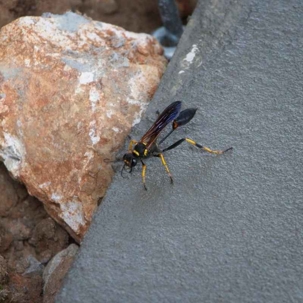
Do Mud Dauber Wasps Sting?
Mud dauber wasps are generally among the least aggressive wasps and are not prone to stinging humans. Unlike yellowjackets and hornets, they rarely defend their nests aggressively. That said, stings can occur in specific situations:
Direct Handling or Disturbance: If a mud dauber is picked up, squished, or trapped against your skin, it may sting in self-defense.
Nest Disturbance: Mud daubers build their nests in sheltered locations like under eaves, in garages, sheds, or attics. If a nest is touched, shaken, or sprayed, the wasp may respond defensively, though attacks are typically limited to the individual wasp present.
Accidental Contact: Stings can happen if someone leans or reaches into a nest unknowingly, such as behind a piece of furniture or inside a shed.
Extreme Threat Perception: While rare, if a mud dauber feels trapped or cornered, it may sting. They are solitary wasps, so there’s no colony defense behavior like in social wasps.
Even when stings occur, mud dauber stings are usually mild, causing minor pain, redness, or swelling. Severe allergic reactions are uncommon but possible in people sensitive to wasp venom.
Mud Dauber Wasp Stings
Mud dauber wasp stings are generally mild compared to other wasps or hornets, but the severity can vary depending on individual sensitivity:
Typical Reaction
Pain: Usually described as a brief, sharp sting that quickly subsides.
Redness & Swelling: Mild localized redness and swelling at the sting site, often less than that of a yellowjacket or hornet sting.
Duration: Symptoms typically last a few hours to a day.
Moderate Reactions
Some people may develop larger localized swelling or tenderness that lasts a couple of days.
Itching or mild warmth around the sting area can occur.
Severe Allergic Reactions (Rare)
Individuals with wasp or insect venom allergies could experience:
Hives, widespread itching
Swelling beyond the sting site
Difficulty breathing or swallowing
Dizziness or fainting
This is a medical emergency and requires immediate attention with epinephrine and calling 911. For most people, a mud dauber sting is a brief, localized nuisance. Generally, only those with venom allergies need to worry about severe reactions.
What Do Mud Dauber Wasp Stings Look Like?
A mud dauber wasp sting is usually subtle compared to stings from more aggressive wasps or bees, but it still has some recognizable features. Here’s what to expect:
Immediate Appearance
Small puncture mark: Usually a tiny red dot where the stinger penetrated the skin.
Mild redness: A small area of redness around the puncture.
Slight swelling: Often just a few millimeters to a centimeter in diameter.
Sharp pain: A quick, brief sting or burning sensation at the moment of the sting.
Within a Few Hours
Redness may spread slightly around the puncture site.
Mild swelling and tenderness are common.
Some people may notice itching as the venom settles in.
After a Day or Two
Most swelling and redness subside quickly.
The sting site may form a tiny scab if scratched.
Pain usually disappears within hours, though mild discomfort or itching can last a day or two.
Signs of Allergic Reaction (Rare)
Rapid swelling beyond the sting area
Hives or widespread redness
Difficulty breathing or swallowing
These require immediate medical attention.
Mud dauber stings are generally small, isolated, and short-lived, unlike yellowjacket or hornet stings that can cause larger, more inflamed welts.
What To Do About Mud Dauber Wasp Stings
If you get stung by a mud dauber wasp, the reaction is usually mild, but proper care helps reduce discomfort and prevent infection:
Remove the Stinger (if present)
Mud daubers usually don’t leave a stinger, but check the site just in case.
If a stinger is present, gently scrape it out with a fingernail or credit card. Avoid squeezing, which can inject more venom.
Clean the Area
Wash the sting site with soap and warm water to prevent infection.
Pat dry with a clean towel.
Reduce Pain and Swelling
Cold compress or ice pack: Apply for 10–15 minutes at a time to reduce pain and swelling.
Over-the-counter pain relief: Acetaminophen or ibuprofen can help if the sting is uncomfortable.
Topical treatments: Hydrocortisone cream or an antihistamine cream can help with redness and itching.
Monitor for Allergic Reactions
Seek immediate medical attention if you notice:
Difficulty breathing, swallowing, or speaking
Widespread hives or swelling
Dizziness or fainting
Even though mud dauber stings are rarely severe, allergic reactions can happen.
Manage Mild Symptoms at Home
Redness, swelling, and pain usually subside within a day or two.
Avoid scratching to prevent infection.
Keep the area clean and dry.
Prevent Future Stings
Wear gloves and long sleeves when working around areas where mud daubers build nests (eaves, sheds, garages).
Be aware of their nests—they are solitary, so avoiding contact is all you usually need to do to prevent stings.