
Do Pharaoh Ants Bite?
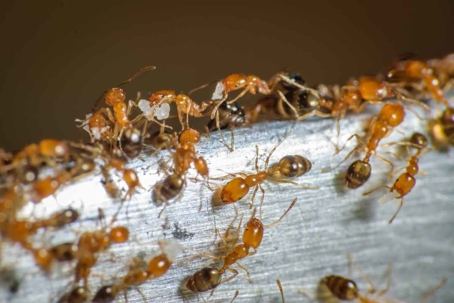
Pharaoh ants (Monomorium pharaonis) are tiny, yellow to light brown ants, typically around 1.5–2 mm long. Unlike many ants, they are not aggressive and do not bite or sting humans or pets under normal circumstances. However, there are specific situations where they may bite:
Disturbance of the nest: Pharaoh ants often establish colonies indoors in hidden, warm, humid areas like wall voids, behind baseboards, under sinks, or near electrical appliances. If a nest is disturbed, the workers may attempt to defend it and can bite. Their bites are minor and generally only produce tiny, pinprick sensations.
Large infestations: In cases where pharaoh ants infest kitchens, hospitals, or areas with abundant food sources, people may occasionally get bitten while trying to remove or squash the ants. Because of their small size, multiple ants might bite simultaneously, but the effect is usually mild.
Contact with sensitive areas of skin: Bites are more likely if the ants crawl onto exposed skin, especially on hands, feet, or arms, such as when a person is handling contaminated surfaces, food, or cleaning infested areas.
High-stress colony environments: Pharaoh ants are notorious for splitting into multiple colonies when disturbed. If one colony feels threatened, workers may bite more readily, though their bites remain harmless for most people and pets.
Pharaoh ants are primarily a vector risk, not a biting risk. They can contaminate food and surfaces with bacteria, and in hospital settings, they can transmit pathogens to immunocompromised patients. So while bites are rare and mild, their public health implications are far more significant.
Pharaoh Ant Bites
Pharaoh ant bites are generally mild and not medically serious. Here’s a detailed breakdown:
Sensation and appearance:
The bite usually feels like a tiny pinprick or slight sting.
Redness or a small raised bump may appear at the site, but swelling is usually minimal.
In some cases, a tiny blister may form, but this is uncommon.
Duration:
Discomfort typically lasts only a few minutes to an hour.
Minor redness or itching may persist for a day or two, but it usually resolves on its own.
Allergic reactions:
Severe allergic reactions to pharaoh ant bites are extremely rare because the ant injects very little venom.
Mild allergic reactions—such as localized itching, swelling, or small hives—can occur in sensitive individuals, but systemic reactions (like difficulty breathing, dizziness, or widespread hives) are virtually unheard of.
Risk for pets:
Pets are unlikely to suffer more than minor irritation if bitten. Some scratching or licking of the bite site might occur.
Pets with very sensitive skin could develop minor irritation or redness, but serious reactions are not expected.
Complications:
Infection is the main concern if the bite site is scratched excessively or comes into contact with bacteria, but this is uncommon given the small size of the bite.
Pharaoh ants themselves are more of a contamination risk than a bite risk—they can carry pathogens in hospitals or kitchens, so bites are rarely the primary concern.
Pharaoh ant bites are mild, temporary, and rarely problematic, usually only causing minor itching or redness. The bigger concern is their ability to infest environments and contaminate food or surfaces, especially in sensitive areas like hospitals or food preparation zones.
What Do Pharaoh Ant Bites Look Like?
Pharaoh ant bites are very subtle and often easy to miss. Here’s what to look for:
Size and appearance:
The bite usually appears as a tiny red dot or bump, often less than 2–3 millimeters in diameter.
In some cases, the center may be slightly raised, resembling a small pinprick welt.
Blister formation is rare, but can happen in extremely sensitive individuals.
Surrounding skin reaction:
Mild redness or slight swelling around the bite may occur.
It may become slightly itchy for a few hours or up to a day.
There is usually no pus or major inflammation, unlike bites from more aggressive ants.
Distribution:
Because pharaoh ants are tiny, multiple bites can occur in clusters, often along the hands, arms, or feet if someone disturbs a colony.
Bites are often incidental—people usually notice them only when they start itching.
Duration:
The redness and swelling are temporary, typically resolving within 24–48 hours.
Scratching can prolong irritation or potentially cause a minor secondary infection.
Pharaoh ant bites are mild and superficial. They don’t produce the large, painful pustules seen with fire ants, nor do they inject venom that causes systemic reactions.
What To Do About Pharaoh Ant Bites
If you get bitten by pharaoh ants, the bites are usually mild, so treatment focuses on relieving discomfort and preventing infection:
Clean the bite area
Wash the affected skin with mild soap and warm water to remove any bacteria from the ant or your skin.
Pat the area dry with a clean towel.
Reduce itching and swelling
Apply a cold compress or ice pack wrapped in a cloth for 5–10 minutes. This helps reduce redness and swelling.
Over-the-counter topical treatments such as hydrocortisone cream or calamine lotion can help relieve itching.
If needed, an oral antihistamine (like cetirizine or diphenhydramine) can reduce itching or minor allergic reactions.
Avoid scratching
Scratching increases the risk of secondary infection and can make irritation last longer.
Keep fingernails trimmed and clean if you tend to scratch unconsciously.
Monitor for signs of infection or allergic reaction
Seek medical attention if you notice any of the following:
Increasing redness, warmth, or swelling around the bite
Pus or fluid-filled blisters
Fever or spreading rash
Severe allergic reaction signs (rare, but includes difficulty breathing, dizziness, or widespread hives)
Prevent further bites
Identify and eliminate the ant infestation, especially if it’s indoors.
Keep food sealed, clean up crumbs, and remove standing water sources.
Consider our professional pest control if the infestation is large, as pharaoh ants are notoriously difficult to eradicate due to their tendency to split colonies when disturbed. Contact us to learn more about our professional pest control services.
Pharaoh ant bites are minor and self-limiting. Cleaning the area, soothing itching, avoiding scratching, and monitoring for infection are usually all that’s needed. The bigger concern is controlling the ant colony to prevent repeated bites or contamination.