
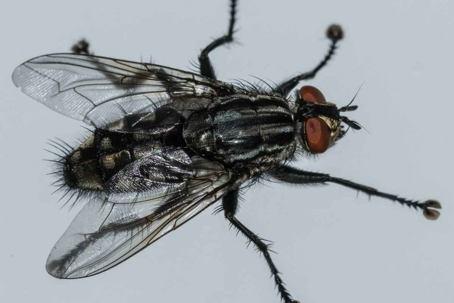
Can Flesh Flies Bite?
Flesh flies (family Sarcophagidae) do not bite people or pets. Unlike biting flies such as horse flies or deer flies, flesh flies do not have the specialized mouthparts needed to pierce skin or feed on blood. Instead, these flies have sponging mouthparts designed for feeding on decaying organic matter, bodily fluids, feces, and other decomposing materials.
People sometimes mistake them for biting flies because they often appear around garbage, carrion, or animal wounds, which can create the impression that they are biting or feeding on flesh. In reality, they are simply attracted to the odors and moisture of decomposition.
Although flesh flies don’t bite, they can still pose sanitation and health risks. The adults can transfer bacteria or pathogens picked up from unsanitary surfaces onto food or open wounds. Their larvae (maggots) can also infest decomposing organic material, and in rare cases, may cause a condition called myiasis if they develop in living tissue—usually involving animals with existing wounds or compromised health.
Do Flesh Flies Bite?
People are most likely to believe that flesh flies have bitten them in situations where the flies are hovering persistently around their skin, wounds, or food, or when they notice itchy red marks shortly after seeing the flies nearby. However, these are misinterpretations—flesh flies cannot bite. The confusion tends to occur in a few specific situations:
Presence Around Wounds or Sores – Flesh flies are attracted to open cuts, scabs, and moist skin because they feed on bodily fluids and decaying tissue. When one lands and probes with its mouthparts, it can feel like a light prick or tickle, leading people to assume they’ve been bitten.
Association With Painful or Itchy Skin Reactions – If someone develops welts, hives, or bug bites from other insects (such as mosquitoes, fleas, or mites) around the same time flesh flies are seen, they often blame the visible flies rather than the hidden culprits.
Infestations Near Unsanitary Conditions – Flesh flies are common in places with garbage, pet waste, or decomposing material. People working or living near these environments may notice skin irritation from other pests or environmental factors and mistakenly link it to the abundant flesh flies.
Confusion With Other Fly Species – Because flesh flies resemble house flies or stable flies (the latter do bite), people often misidentify them. Stable flies, in particular, are notorious for biting ankles and legs, so flesh flies in the same area are often blamed incorrectly.
Psychological or Sensory Misinterpretation – When a person feels a sharp sensation after a fly lands—especially in warm, humid conditions—it’s easy to assume a bite occurred, even though the fly’s contact was harmless.
People most often think flesh flies have bitten them when the flies’ behavior—landing, probing, or hovering—coincides with unrelated skin irritation or other biting insects in the same environment.
Flesh Fly Bites
Because flesh flies don’t actually bite, there are no direct medical risks from their contact with human or animal skin. However, when people experience what they believe to be “flesh fly bites,” the real risks come from indirect factors related to the fly’s biology and behavior rather than an actual bite wound.
Here are the main concerns:
Bacterial Contamination – Flesh flies feed and breed on decaying matter, animal carcasses, feces, and garbage. When they land on food, utensils, wounds, or skin, they can transfer bacteria such as Salmonella, E. coli, and other pathogens capable of causing gastrointestinal or wound infections.
Secondary Skin Reactions – If a person scratches irritated skin after a presumed “bite,” they can introduce bacteria and trigger inflammation, redness, or infection—though this results from scratching, not the fly itself.
Myiasis (Rare) – In rare cases, flesh fly larvae can infest open wounds or necrotic tissue on people or animals, a condition known as facultative myiasis. This typically occurs in environments with poor hygiene or in individuals with compromised health, and it involves larvae developing in already damaged tissue rather than from an adult “bite.”
Nuisance and Sanitation Concerns – Flesh flies breed rapidly in unsanitary conditions, and infestations indicate the presence of decaying organic material indoors (such as dead rodents or spoiled meat). While not directly dangerous, this environment increases the likelihood of bacterial spread and odor issues.
Flesh flies pose hygienic and bacterial risks, but they do not inflict bites or inject venom or saliva. Managing their presence by finding and removing breeding sources, improving sanitation, and keeping flies out of indoor spaces effectively eliminates any associated health risks.
What Do Flesh Fly Bites Look Like?
Because flesh flies cannot bite, there are no true flesh fly bite marks. However, people who believe they’ve been bitten usually notice some kind of skin irritation or reaction that they attribute to the flies. In reality, these marks almost always come from other causes, such as bites from different insects or mild irritation from the flies’ contact with the skin.
Here’s what people often mistake for “flesh fly bites”:
Small red bumps or welts – These are typically caused by mosquitoes, fleas, mites, or bed bugs rather than flesh flies. They can appear itchy or swollen and often occur on exposed skin like arms, legs, or ankles.
Localized redness or irritation – When a flesh fly lands and probes the skin with its sponging mouthparts, it can cause a fleeting tickle or a mild irritation—especially if the person’s skin is sensitive or if the fly had contact with bacteria or waste beforehand.
Clusters of itchy spots – These often come from other biting flies (such as stable flies or black flies), but if flesh flies are seen nearby, people may wrongly assume they’re the source.
Inflamed sores or scratches – If someone scratches irritated skin after assuming a fly “bit” them, the scratching itself can create small wounds or secondary infections that resemble bite marks.
There is no characteristic appearance of a flesh fly bite, because flesh flies don’t have the mouthparts needed to pierce skin or feed on blood. Any marks thought to be caused by them are almost certainly due to other insects, allergic reactions, or minor skin irritation unrelated to the flies themselves.
What To Do About Flesh Fly Bites
If you think a flesh fly has bitten you, the good news is that it almost certainly did not. Flesh flies are not capable of biting or piercing skin, so the irritation you’re experiencing likely has another cause—such as a bite from a different insect, contact with bacteria the fly carried, or a mild allergic reaction. Still, it’s smart to take precautions and treat the affected area properly.
Here’s what to do:
Clean the area thoroughly – Wash the skin with warm water and mild soap to remove any bacteria or contaminants that might have been transferred when the fly landed.
Soothe irritation – Apply a cool compress or a gentle anti-itch cream (such as hydrocortisone or calamine lotion) to reduce redness and itching.
Avoid scratching – Scratching can break the skin and increase the risk of infection, especially if the irritation wasn’t from an actual bite but from bacteria or minor inflammation.
Watch for signs of infection – If the area becomes increasingly red, swollen, warm, or starts oozing, it may indicate a secondary bacterial infection. In that case, clean the area again and contact a healthcare provider.
Rule out other pests – If you’re noticing multiple “bites” or repeated irritation, you may be dealing with another insect such as mosquitoes, fleas, bed bugs, or stable flies. Our pest inspections and professional evaluations can help identify and eliminate the true cause. Contact us to learn more about our professional pest control services.
Eliminate attractants – Since flesh flies are drawn to decomposing organic material, check for and remove potential breeding sources such as dead rodents, spoiled food, or garbage indoors or nearby.
While flesh flies can’t bite, treating the irritation as a minor skin issue, maintaining good hygiene, and investigating possible other pests will quickly resolve the problem and prevent future concerns.