
How To Get Rid Of Bed Bugs From Your House
Eliminating bed bugs without professional help is possible in some situations, but it requires discipline, patience, and a methodical plan. These bugs reproduce quickly, hide extremely well, and can survive months without feeding, so effective DIY control depends on combining multiple tactics rather than relying on a single product:
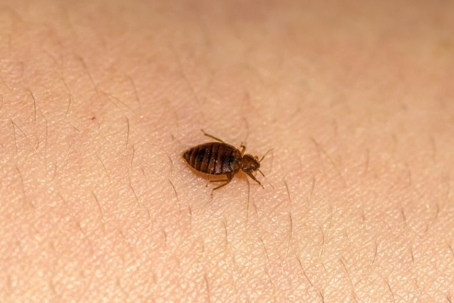
Confirm the problem before taking action. Many insects resemble bed bugs, so correct identification prevents wasted effort. Look for small, flat, reddish-brown insects, black fecal specks along seams, shed skins, or tiny white eggs. Use a flashlight to inspect mattresses, box springs, bed frames, couch cushions, and baseboards.
Reduce clutter to create a space that can actually be treated. Bed bugs thrive in tight hiding spots, so simplifying the environment helps expose them. Remove unnecessary items around sleeping areas, seal anything you aren’t treating in airtight bags, and avoid relocating infested items to clean parts of the home.
Launder and heat-treat fabrics. Heat is one of the few reliably lethal methods for bed bugs. Strip bedding and clothing, wash in hot water, and dry on the highest heat for at least 30 minutes. Store clean items in sealed bags. Heat chambers can be used for items that can’t go through the washer.
Use thorough vacuuming to physically remove bugs. Vacuum mattresses, box springs, bed frames, baseboards, and furniture cracks using a crevice tool. Dispose of the vacuum bag immediately in a sealed trash bag outdoors.
Apply steam to seams, cracks, and upholstery. Steamers that reach at least 160–180°F at the surface can kill bed bugs and eggs on contact. Move slowly—about an inch per second—to ensure the heat penetrates. Avoid steaming outlets or electronics.
Apply EPA-registered bed bug products correctly. Choose sprays and dusts labeled for indoor residential use and for bed bugs specifically. Apply them only to cracks, seams, and harborage areas. Use desiccant dusts such as silica gel or diatomaceous earth (labeled for bed bugs) in thin layers. Always follow label instructions and never use outdoor pesticides indoors.
Encase the mattress and box spring. Bed bug-proof encasements trap any hidden bugs and stop new ones from settling inside. Install encasements after steam treatment and keep them sealed for at least a year, which also simplifies future inspections.
Use interceptors under bed legs. These devices trap bed bugs as they attempt to climb the bed. Place one under each leg, pull the bed slightly away from walls, and ensure bedding doesn’t touch the floor to limit their access.
Monitor for success and re-apply treatments as needed. Bed bugs and their eggs often survive initial efforts, so re-inspect and re-treat every 7–14 days for at least six to eight weeks. Continue laundering and vacuuming consistently during this period.
Homeowners can eliminate early or localized infestations, but persistent activity, multi-room involvement, inaccessible hiding sites, or reinfestation risks in shared buildings indicate the need for our professional intervention. Contact us to learn more about our professional treatment options.
When all components are used together and done thoroughly, homeowners have a reasonable chance of eliminating a bed bug infestation on their own.
Learn more: What Kills Bed Bugs Instantly?
How To Get Rid Of Bed Bugs From A Mattress
Removing bed bugs from a mattress requires a combination of heat, physical removal, and long-term prevention. Here’s the most effective approach a homeowner can carry out without professional equipment.
- Start with a careful inspection. Use a flashlight to check the seams, piping, tufts, labels, and the underside of the mattress. Bed bugs commonly hide in tight folds and stitching, so slow, detailed inspection helps you identify where to focus treatment.
- Vacuum thoroughly to remove as many bugs as possible. Use a crevice tool to work along every seam and fold. Vacuuming won’t eliminate the problem by itself, but it immediately reduces the population and makes later steps more effective. Afterward, bag and discard the vacuum contents outside.
- Apply high-temperature steam to kill bugs and eggs. Steam is the most reliable homeowner method for treating a mattress directly. Use a steamer capable of maintaining at least 160–180°F at the surface. Move slowly—about one inch per second—across seams, tufts, and any area bed bugs might hide. Avoid getting the mattress excessively wet by using a nozzle designed for upholstery rather than a jet tip.
- Treat the mattress exterior with approved products only where appropriate. Some sprays labeled specifically for mattresses can be lightly applied to seams and edges, but they must be EPA-registered for bed bug use and must explicitly state they’re safe for mattresses. Do not soak the surface and avoid treating the areas where skin contacts directly unless the label allows it. Many homeowners skip chemical use on mattresses entirely and rely on steam plus encasements to avoid safety concerns.
- Install a high-quality bed bug-proof encasement. Once the mattress and box spring are steamed and fully dry, cover both with certified bed bug encasements. These trap any surviving insects inside, preventing them from feeding, while also blocking new ones from entering. Keep the encasements sealed for at least a year to ensure any hidden eggs or nymphs die off.
- Add interception and prevention measures. Place bed bug interceptors under each bed leg and ensure the bed doesn’t touch walls or drapes. These devices help cut off access to the mattress and act as a monitoring tool to confirm whether activity remains.
Even with proper treatment, a mattress may require multiple steam sessions a week apart because new eggs can hatch. Ongoing inspection of seams and encasements helps verify whether the infestation is fully resolved.
How To Get Rid Of Bed Bugs From Clothes
Getting rid of bed bugs from clothes is one of the more straightforward parts of treatment because bed bugs and their eggs are highly susceptible to heat:
To ensure total bed bug elimination, it is safest to assume that all clothing is infested clothing. Place all clothing in sealed plastic bags to prevent the bed bugs from spreading while you handle the clothing.
Wash clothes in hot water. Use the highest temperature your fabric allows, ideally 120°F (49°C) or higher, since bed bugs die at this temperature. Wash all items thoroughly, including bedding, towels, and clothing.
Dry clothes on the highest heat setting. Dryers are highly effective because bed bugs die at temperatures above 120°F for 20–30 minutes. Ensure clothes are completely dry, as even slightly damp items may allow eggs or nymphs to survive.
Handle delicate or non-washable items. Use a portable heat chamber, garment steamer, or hang items in direct sunlight if temperatures are high enough. For items that cannot tolerate heat, consider sealing them in airtight bags for at least one year, as bed bugs will eventually die without feeding.
Prevent re-infestation. Once cleaned, store clothes in sealed containers or drawers away from bed bug hotspots. Avoid placing freshly cleaned items back on the bed or floor until the surrounding area has been treated.
For items that cannot be washed or steamed: freezing. Bed bugs can be killed by exposure to 0°F (-18°C) for at least four days in a sealed bag. Ensure the items are completely frozen for the full duration to kill all life stages.
Treating clothes alone will not eliminate an infestation if bed bugs are hiding in mattresses, furniture, or wall voids. Clothes treatment must be combined with thorough room and furniture treatment for complete eradication.
How To Get Rid Of Bed Bugs Fast
When speed is the priority, the most effective approaches are those that deliver a total kill in a single treatment window. Bed bugs are extremely resilient, so only a few methods can achieve rapid, across-the-board elimination. Here’s how the major options compare in terms of true speed and reliability:
- Whole-structure heat treatment is by far the fastest method. Raising the temperature of the entire infested area—typically the full home or business—to lethal levels eliminates all life stages in a single session when done correctly. Heat penetrates mattresses, furniture, belongings, and deep hiding spots where chemicals can’t reliably reach. The key reason it works so quickly is that it doesn’t rely on residual exposure; it kills instantly when the correct temperatures are sustained long enough. Professional systems achieve this far more consistently than consumer devices because they can heat large volumes evenly and monitor temperatures throughout the structure. For people who want the quickest possible resolution, this method is the closest to “same-day eradication.”
- Steam offers fast, targeted results for smaller areas. A high-quality steamer can kill eggs, nymphs, and adults on contact when applied slowly along seams and cracks. It isn’t whole-structure heat, but for focused zones such as bed frames, couches, chairs, and baseboard edges, it produces immediate reductions. Steam is most effective when combined with other methods because it only kills where the wand actually passes.
- Vacuuming and physical removal give the quickest immediate reduction. Although this doesn’t eliminate an infestation alone, removing live insects and debris right away accelerates the effectiveness of all other methods. It’s especially valuable before heat, steam, or any follow-up measures.
- Encasements speed up control by trapping any surviving insects. Once mattresses and box springs are sealed in certified encasements, any bugs inside are contained and permanently removed from the breeding cycle. This doesn’t kill instantly, but it prevents them from escaping, simplifies ongoing checks, and reduces the areas that require treatment.
- Chemical treatments are usually not the fastest option, but they can be effective when applied correctly over multiple visits. Bed bugs are highly resistant to many active ingredients, and even strong formulations require time for residual contact. Because of this, chemical-only plans almost never produce same-day elimination and typically take weeks to fully break the infestation cycle.
Taken together, the methods that work the fastest are those that use high, sustained heat across the environment, backed by targeted steam, vacuuming, and encasements. For homeowners or businesses looking for the quickest resolution, full-structure heat remains the top-performing choice, with steam as the fastest DIY-accessible tool for immediate, localized impact.
How To Get Rid Of Bed Bugs Permanently
Permanently eliminating a bed bug infestation depends less on any single product and more on a thorough, multi-layered strategy that removes current bugs, destroys eggs, and prevents re-establishment. Certain approaches, however, consistently deliver long-term success because they target the insect’s biology, hiding behavior, and reproductive cycle.
- Integrated pest management (IPM) programs are often considered the gold standard for lasting results. These programs combine thorough inspections, targeted removal of clutter, mattress and box spring encasements, vacuuming, steam, heat treatment, and the judicious use of legally labeled products applied precisely to bed bug harborages. The strength of IPM isn’t any one tool—it’s the way multiple tools disrupt every part of the bug’s lifecycle while reducing the chance of survival or reinfestation. This layered strategy works especially well in settings where reintroduction risk exists, such as apartments, hotels, or offices.
- Whole-structure heat treatment stands out as one of the most reliable solutions. When temperatures are raised uniformly throughout the space and held at lethal levels long enough, every life stage—especially eggs—is destroyed at once. Since there’s no chemical resistance to heat, this method avoids the limitations that often cause chemical-only treatments to fail.
- Encasements play a powerful long-term role. By sealing mattresses and box springs in protective covers, you eliminate two of the most common harborages permanently. Any bugs inside become trapped, and new bugs cannot establish colonies in those areas. This greatly simplifies monitoring and drastically cuts down on future hiding spots.
- Ongoing monitoring ensures permanent success. Interceptors placed under furniture legs and periodic visual inspections help ensure no pockets of activity remain. Catching even a few surviving bugs early prevents them from rebuilding a population.
- Structural and behavioral prevention measures close the loop. Sealing wall gaps, repairing loose baseboards, reducing clutter, isolating beds from walls, and maintaining a laundering routine for at-risk fabrics all reduce the chance of recurrence. In multi-unit properties, building-wide inspection and cooperation are essential, because untreated neighboring units are a major source of reinfestation.
When these elements are applied consistently and with attention to detail, they form the most dependable path to long-term, permanent resolution.
How To Get Rid Of Bed Bugs Naturally
There are natural or non-chemical methods that genuinely work against bed bugs, but only a few have the power to eliminate an infestation on their own. Most “natural remedies” you see online—like essential oils, rubbing alcohol, or homemade sprays—do not solve the problem and often make the infestation harder to eliminate. The reliable options are those that rely on heat, physical removal, and mechanical desiccation, not household concoctions. Here are the natural methods that actually have meaningful, proven impact:
- High heat is the strongest natural method: Bed bugs and their eggs die quickly when exposed to sustained, lethal temperatures. Heat penetrates mattresses, furniture seams, and hidden crevices where insects nest. Portable dryers, steamers, and certain consumer heat chambers designed specifically for bed bug–safe use can eliminate bugs in small items and localized zones. Because bed bugs cannot develop resistance to heat, this approach remains one of the most effective non-chemical options available to homeowners.
- Steam provides immediate kill on contact: A high-temperature, low-moisture steamer can eliminate adults, nymphs, and eggs as you work along seams, edges, and cracks. Steam must be applied slowly to allow heat to penetrate the surface layers. Though it doesn’t treat entire structures, it is invaluable for beds, couches, and structural crevices.
- Vacuuming rapidly reduces live populations: Strong suction with a proper crevice attachment physically removes bed bugs and debris from seams and hiding spots. While it doesn’t kill eggs deep in fabric layers, vacuuming gives you immediate population reduction and should be paired with other methods.
- Encasing mattresses and box springs is a long-term natural control measure: Certified bed-bug-proof encasements trap any bugs inside and eliminate their ability to escape or feed. For prevention and long-term protection, encasements remove two major harborages from circulation entirely.
- Desiccant dusts provide natural, mechanical control.: Products like silica gel dust physically damage the bed bug’s protective outer layer, eventually causing fatal dehydration. Because they rely on a mechanical action, not toxicity, they work even on resistant populations. They must be used exactly according to their product labeling and only in appropriate locations to avoid unnecessary dust exposure.
- Drying and laundering remain core non-chemical steps: Running bedding, clothing, and washable items through a hot wash and high-heat dryer cycle fully eliminates eggs and live insects. This is one of the most dependable natural tools for fabrics.
Natural methods can eliminate bed bugs when used correctly. The ones that work are based on heat, physical control, and mechanical desiccation, not home remedies. A combination of heat (or steam), vacuuming, encasements, and proper use of labeled dusts offers the strongest non-chemical path to full eradication.
Natural approaches that do NOT work reliably:
– Essential oils
– Vinegar
– Alcohol sprays
– Baking soda
– Ultrasonic devices
– DIY “bed bug bombs” made from household materials
These are either ineffective, unsafe, or both, and often cause bugs to scatter deeper into walls and furniture.
The Best Way To Get Rid Of Bed Bugs
Hiring our professional bed bug control services is widely considered the most effective way to eliminate bed bugs from a home or business because of the complexity, resilience, and stealthy nature of these pests. Here’s why hiring our professionals is the best way to get rid of bed bugs:
Expert Knowledge and Experience
Bed bugs are highly skilled at hiding in tiny crevices—mattresses, box springs, bed frames, baseboards, furniture seams, and even electrical outlets. Our professionals are trained to:
Accurately identify infestation sites.
Recognize the signs of bed bugs at all life stages (eggs, nymphs, adults).
Understand the behaviors and biology of bed bugs to target treatments effectively.
Homeowners often miss hidden infestations, which leads to re-infestation.
Access to Professional-Grade Treatments
Many over-the-counter products are limited in effectiveness. Our professional exterminators have access to stronger insecticides, specifically formulated for bed bugs, often with residual effects that continue killing for weeks. Our professionals also know the proper application rates and sequences to avoid ineffective treatment or resistance.
Integrated Pest Management (IPM) Approach
Our professional bed bug control uses an IPM strategy, which combines:
Inspection: Thorough assessment to determine infestation scope.
Treatment: Targeted chemical, heat, or combined methods.
Monitoring: Follow-up inspections to ensure eradication.
Education: Guidance on prevention and reducing future infestations.
This holistic approach is far more effective than DIY spraying, which often addresses only visible bugs.
Safety
Improper use of chemicals can be hazardous to humans and pets. Our professionals are trained to:
Choose treatments safe for indoor environments.
Apply chemicals correctly to minimize exposure risks.
Handle specialized equipment (heat units, steamers) safely.
Guaranteed Results and Follow-Up
Our professional services provide:
Guaranteed eradication: We will re-treat if bed bugs return.
Comprehensive coverage: All hiding spots are treated.
Peace of mind: Reducing stress and preventing the spread to and from neighboring units or areas.
Time and Stress Management
DIY bed bug removal is extremely time-consuming and emotionally draining. Our professionals can treat an entire home or business efficiently, often completing initial treatment in one day and reducing the need for ongoing manual effort.
Bed bugs are notoriously difficult to eliminate because of their size, hiding ability, rapid reproduction, and common resistance to standard insecticides. Our professional exterminators combine expertise, tools, and a structured approach to ensure complete eradication, making them the most reliable and efficient choice for protecting your home or business.
Get Rid Of Bed Bugs With Miche Pest Control
Hiring our team of professionals at Miche Pest Control is an investment in long-term protection, expertise, and peace of mind. Here’s why:
- Personalized Service and Local Expertise: We know the specific pest pressures in the area. Our technicians understand the environment, climate, and building types common to the area, allowing us to provide targeted, effective treatments.
- High-Quality, Comprehensive Solutions: As a full-service provider, we don’t just treat surface problems; we address the root causes. From inspections and prevention to exclusion and ongoing maintenance, we deliver complete, integrated pest management (IPM) programs designed to both eliminate infestations and prevent future ones.
- Accountability and Reliability: We live and die by our reputation. We rely on trust, referrals, and repeat business, meaning we're committed to doing the job right the first time and providing exceptional customer care.
- Faster Response Times: We respond quickly to emergencies and schedule services sooner than large, national chains. Especially when you’re dealing with urgent pest issues, that speed matters.
- Customized Treatment Plans: We tailor our services to your property’s specific needs instead of using one-size-fits-all chemical treatments. This results in safer, more effective pest control that minimizes environmental impact and reduces unnecessary pesticide use.
- Highly Trained, Experienced Technicians: We invest in training, certification, and continuing education for our technicians. We stay current on the latest pest biology, control techniques, and safety standards.
- Long-Term Prevention and Value: Our focus on providing quality service means fewer callbacks, longer-lasting protection, and better value over time. Instead of repeated, temporary fixes, you get strategic solutions that protect your home or business for the long run and provide better peace of mind.
Hiring our team means you get expertise you can trust, faster service, safer and more effective treatments, and long-term results that protect both your property and your peace of mind. Contact us today!