
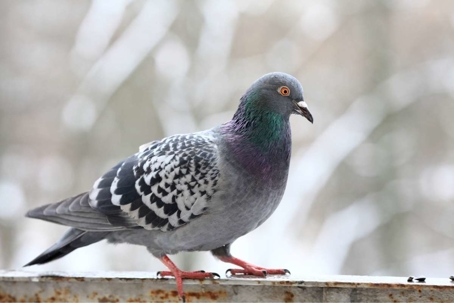
How To Get Rid Of Pigeons
The way to get rid of pigeons is to combine exclusion (netting/patching), physical deterrents (spikes, tension wire, slopes), and habitat modification (remove food/water/roost sites). Here is a step-by-step approach to get rid of pigeons:
Site Assessment
Before attempting pigeon control, a property owner should start with a careful, methodical assessment of both these birds’ behavior and the structure itself, because effective control depends far more on understanding why pigeons are present than on the removal method alone. Begin by identifying where pigeons are roosting, loafing, and nesting, noting specific ledges, beams, rooflines, signage, HVAC units, solar panels, or architectural voids they consistently use; fresh droppings (wet, glossy) indicate active use, while dry, chalky accumulations point to historic activity. Pay close attention to time-of-day patterns, since pigeons often follow predictable routines—morning feeding, midday loafing, and evening roosting—and this helps pinpoint entry points and preferred landing zones. Evaluate food and water sources within and around the property, including open trash containers, outdoor dining areas, food spillage, bird feeders, standing water, roof drainage issues, or nearby businesses contributing to attractants; without addressing these, any control effort will be short-lived. Assess structural vulnerabilities and access routes, such as gaps in eaves, broken vents, open soffits, damaged screens, or ledge widths (pigeons prefer flat surfaces 2 inches or wider), as well as nearby perching “staging areas” like utility lines or adjacent buildings that allow birds to approach comfortably. Document the extent of contamination and associated risks, including droppings buildup (which can create slip hazards and accelerate material corrosion), nesting debris clogging drains or gutters, and potential health concerns like histoplasmosis exposure in heavily soiled areas—this also informs cleanup scope and PPE requirements. It’s critical to determine whether the issue is light, moderate, or heavy pressure, as small, intermittent use may be solved with exclusion and sanitation alone, whereas entrenched infestations often require integrated deterrents (netting, shock track, spikes, or optical systems) combined with habitat modification. Consider species confirmation, since true pigeons (rock doves) behave differently from other birds and are not federally protected like many species, which affects legal control options, though local regulations and humane standards must still be followed. Finally, factor in aesthetic expectations, budget, and long-term maintenance, because some solutions are highly visible or require periodic upkeep, and the most successful programs are those that combine exclusion, deterrence, and environmental correction into a cohesive plan rather than relying on a single tactic.
Exclusion
Properly sealing entry points to keep pigeons out requires a disciplined combination of inspection, material selection, and exclusion design rather than simply “closing holes,” because pigeons exploit both obvious openings and subtle structural features that provide footholds, shelter, or repeat access. Start by identifying every potential access point—gaps in soffits and fascia, uncapped vents, damaged louvers, open eaves, roofline voids, skylight perimeters, sign backs, loading dock canopies, and spaces around HVAC units or solar arrays—and measure them carefully, keeping in mind that pigeons can squeeze through openings as small as 2–3 inches if motivated. Prioritize durable exclusion materials: use galvanized or stainless-steel hardware cloth (typically ½" to 1" mesh) for vents and larger openings, heavy-duty bird netting (¾" mesh for pigeons) for wide spans like under-canopy areas, and UV-stable sealants or expanding foam only as a secondary measure behind physical barriers (foam alone will fail quickly under pecking and weather exposure). When installing, ensure materials are mechanically fastened, not just glued—use screws, anchors, or rivets appropriate to the substrate (masonry, metal, wood), and create tight, tensioned fits so there are no sagging gaps where birds can push through. For ledges and linear gaps, combine sealing with perch deterrents such as spikes or low-profile electric track systems installed along edges to prevent birds from landing and testing the barrier; sealing without removing the landing opportunity often leads to failure. Pay special attention to edge detailing and overlaps—overlap mesh seams by at least 1–2 inches, fold or hem sharp edges to prevent injury and tampering, and seal perimeter lines so there are no daylight gaps, particularly at corners and transitions where most breaches occur. Around functional openings like vents, maintain airflow by installing proper vent guards or custom-fabricated cages that sit off the surface, preventing blockage while denying entry. Before final closure, remove all nesting material and sanitize the area to eliminate scent cues that attract re-entry, and confirm no birds are trapped inside; if active nesting is present, timing and humane considerations matter. Lastly, view sealing as part of a broader exclusion system—address nearby staging perches, food sources, and water access—because even perfectly sealed entry points can be compromised if pigeons are strongly incentivized to remain on-site and persistently probe for weaknesses.
Use Physical Deterrents Where Exclusion Isn’t Practical
When full exclusion isn’t feasible, physical deterrents focus on making landing, roosting, and nesting structurally uncomfortable or unstable so pigeons voluntarily abandon the area, and the most effective systems usually combine multiple approaches rather than relying on a single device. Bird spikes are one of the most common solutions for ledges, beams, parapets, signage edges, and narrow surfaces; properly installed spikes create an uneven landing zone that prevents pigeons from settling, but they must fully cover the usable width of the surface without gaps or “safe zones” where birds can still perch. For broader flat areas such as loading docks, roof perimeters, or equipment pads, bird nettingis often the strongest long-term deterrent, especially when tensioned correctly with stainless steel cable frames and installed with full perimeter sealing so birds cannot slip behind it; netting effectively creates a physical barrier without altering airflow or visibility when properly selected and maintained. In situations involving ledges or architectural features where spikes or netting are impractical, bird slope systems (angled polycarbonate or metal covers) can be used to eliminate horizontal resting surfaces altogether, forcing pigeons to slide off rather than land and stabilize. Another highly effective category is electric track systems, which deliver a mild, low-amperage shock when a bird attempts to land; these are especially useful on ledges, signage, and roof edges where aesthetic concerns limit the use of spikes and where consistent pressure from pigeons would otherwise overcome passive deterrents. For irregular or sensitive surfaces, tensioned wire systems can be installed just above ledges or beams, creating instability that prevents balance without fully blocking the structure visually. In high-traffic industrial or commercial areas, post-and-wire grid systems or suspended cabling can disrupt larger roosting zones under canopies or overhangs while still allowing access for maintenance personnel. It’s also important to consider that deterrents only work when installed with correct spacing, alignment, and continuity—small breaks, loose sections, or partial coverage quickly become preferred landing spots—and they should be paired with routine maintenance to remove nesting material, because accumulated debris can effectively “normalize” a deterrent and reduce its effectiveness over time. Ultimately, the strongest results come from matching the deterrent type to the exact structural behavior of pigeons in that location, ensuring that every potential landing path is interrupted rather than just partially discouraged.
Nest Removal & Egg Management
While pigeons are not protected as part of the Federal Migratory Bird Treat Act, in Washington DC and Maryland, it is still illegal to harm pigeons or their eggs. In Northern Virginia, feral pigeons are considered pests and are legally able to be controlled directly. Safe pigeon and egg removal requires a controlled, sanitary, and methodical approach that prioritizes worker safety, prevents spreading contamination, and avoids encouraging immediate re-nesting. Before any removal begins, confirm legal permissibility and ensure there are no protected species involved, then plan the work around proper personal protective equipment (PPE), including gloves, eye protection, and a respirator rated for dust and bioaerosols, since dried pigeon droppings can carry pathogens such as histoplasmosis. The first step is to identify active nests versus inactive debris, because removal should focus on current nesting sites and eggs while minimizing unnecessary disturbance that can scatter contaminants or cause birds to panic into inaccessible voids. When dealing with eggs, handle them carefully using gloved hands or disposable tools to avoid direct contact, and place them into sealed waste bags immediately; in professional settings, eggs are often removed and disposed of in accordance with local regulations rather than relocated, since relocation can create survival issues and ongoing attraction problems elsewhere. For active nests, gently dismantle nesting material using disposable scrapers or tongs, starting from the outer edges and working inward to avoid pushing debris into cracks or cavities where it becomes difficult to sanitize; all nesting material should be bagged double-layered to prevent leakage during transport. After physical removal, the area must be thoroughly dry-cleaned before wet cleaning, meaning heavy debris is first removed without excessive water to avoid aerosolizing contaminants, followed by application of an appropriate disinfectant or enzymatic cleaner designed for avian waste, allowing adequate dwell time to neutralize pathogens. Hard surfaces should then be scrubbed and rinsed where appropriate, and porous materials heavily contaminated by droppings or nesting may need to be removed entirely if they cannot be properly decontaminated. It is also critical to inspect nearby hidden voids, such as behind signs, under solar panels, or inside soffits, because pigeons often maintain multiple nesting attempts in close proximity, and missing one site can lead to rapid reoccupation. Once removal is complete, immediate follow-up with exclusion or deterrent installation is essential, because pigeons will frequently re-lay eggs in the same location within days if the site remains accessible; without sealing or deterrents, removal alone becomes a repeating cycle rather than a resolution. Finally, all waste should be disposed of according to local biohazard or municipal waste guidelines, tools should be disinfected, and PPE should be carefully removed and cleaned to prevent cross-contamination to other work areas.
Habitat Modification & Attractant Reduction
Habitat modification for pigeon control focuses on removing the conditions that make a property attractive in the first place, because pigeons typically remain where food, water, shelter, and safe perching are consistently available. The first and most important step is eliminating food sources, which includes securing all trash in lidded, heavy-duty containers, preventing overflow around dumpsters, cleaning up spilled food or grease in outdoor dining or loading areas, discouraging intentional feeding, and managing landscaping fruit or seed drop that may attract birds. Closely tied to this is water management, since pigeons rely on accessible drinking and bathing water; this means fixing leaking pipes, dripping HVAC condensate lines, clogged gutters that hold standing water, and roof low spots where water pools, as even small, consistent water sources can sustain a flock. Next, address roosting and loafing opportunities by reducing or altering flat, horizontal surfaces such as ledges, parapet caps, window sills, beams, and signage tops through slope additions, deterrent installations, or redesigning surfaces to eliminate comfortable landing areas; pigeons strongly prefer stable, elevated platforms where they can safely rest and observe. Another key factor is reducing shelter and nesting access, which involves closing off unused building cavities, sealing gaps in soffits and eaves, screening vents, enclosing structural voids, and ensuring that mechanical equipment such as rooftop HVAC units or solar panel arrays are properly skirted or protected so birds cannot nest underneath. Vegetation management also plays a role, since dense trees, untrimmed hedges, or vines growing against buildings can provide staging areas that allow pigeons to access roofs and upper structures more easily, so regular pruning and maintaining clear separation between landscaping and buildings helps disrupt their movement patterns. It is equally important to remove nesting material and droppings promptly and safely, since existing residue acts as a strong attractant and territorial signal that encourages re-occupation; routine cleaning of high-risk areas reduces this “site loyalty” effect over time. For commercial properties, operational habits matter as much as structure, meaning consistent dumpster maintenance, scheduled cleaning of loading docks, and staff training to avoid leaving food waste exposed can significantly reduce pressure. Finally, habitat modification is most effective when viewed as a continuous maintenance strategy rather than a one-time fix, because pigeons are highly adaptable and will quickly return if even a small combination of food, water, and perch access remains available, so ongoing monitoring and incremental adjustments are essential to keep conditions unfavorable for long-term roosting.
Behavioral & Non-Contact Deterrents
Behavioral and non-physical deterrents for pigeons work by making an area feel unsafe, unstable, or unrewarding without relying on direct physical barriers, and they tend to be most effective when used as part of a broader integrated program rather than as standalone solutions. One of the most important behavioral strategies is consistent human presence and activity in problem areas, since pigeons prefer predictable, undisturbed environments; regular movement on rooftops, balconies, loading docks, or walkways can discourage settling simply by interrupting their comfort and routine. Sound-based deterrents can also be used, including ultrasonic devices (though effectiveness is mixed and often limited in open environments), as well as more practical auditory disruption such as timed alarms, motion-activated noise emitters, or randomized distress calls; the key factor is unpredictability, since pigeons quickly habituate to repetitive or constant sounds. Visual deterrents rely on perceived predation or instability, such as reflective tape, spinning reflective devices, predator eye balloons, or laser systems used during early morning and evening roosting periods when birds are most sensitive to disturbance; however, these must be repositioned frequently to prevent habituation. Another behavioral approach is habitat conditioning through negative reinforcement, where pigeons are repeatedly discouraged from settling by combining mild disturbance (light, sound, or motion) with removal of food and nesting cues, gradually training them to avoid the area altogether. Lighting adjustments can also influence behavior, as pigeons prefer sheltered, dim roosting sites; increasing illumination in roost-prone areas or using motion-activated lighting in key zones can reduce nighttime settling. Additionally, eliminating attractant signals is critical: this includes not just food and water removal, but also routine cleanup of droppings and nesting material, since pigeons interpret these as indicators of a safe established colony and are more likely to return to such sites. In some environments, falconry or predator simulation programs are used as a high-level deterrent, where the presence (or simulated presence) of birds of prey creates a strong avoidance response, particularly in large open commercial or agricultural settings, though consistency is required for lasting effect. Ultimately, the most successful non-physical deterrent programs combine unpredictability, environmental discomfort, and removal of reinforcement signals so that pigeons do not form a stable pattern of return, because once habituation occurs, even well-designed deterrents lose much of their effectiveness.
Lethal Control
Lethal methods are subject to strict legal and ethical constraints, and are often not allowed or desirable in urban settings. Always check federal, state and local wildlife regulations before considering lethal control; for most commercial/residential work, humane exclusion and deterrence are the standard. Lethal control is illegal in Washington DC and Maryland.
Even in Northern Virginia, “legal lethal control” for pigeons is quite limited, and in most residential or standard commercial situations it is tightly constrained by a mix of state wildlife law, federal protections (that generally don’t apply to pigeons, but do to other birds), and local discharge/discharge-of-firearm ordinances. The key point is that rock pigeons (feral pigeons) are typically classified as non-native, non-protected wildlife, so they are not covered by the Migratory Bird Treaty Act protections that apply to native birds. That said, legality does not automatically mean permissibility everywhere or for everyone.
In practical terms, the only commonly lawful lethal options in Northern Virginia are: (1) professional trapping followed by humane euthanasia, and (2) limited shooting in very specific, lawful contexts (mostly agricultural or rural property with appropriate firearm legality and local ordinance compliance). Trapping is the most realistic legal pathway in suburban jurisdictions like Fairfax County, Loudoun County, Prince William County, Arlington, and Alexandria, but it must be done under proper wildlife control licensing (typically through a licensed nuisance wildlife control operator). These operators may use cage traps designed specifically for pigeons, and any euthanasia must follow Virginia Department of Wildlife Resources (DWR) guidance and accepted humane methods (typically CO₂ or other approved methods performed by trained personnel—not property owners improvising control). Even when pigeons are trapped legally, disposal still must follow local animal control and waste regulations.
Firearms-based control is where most homeowners and many businesses run into legal barriers. Many Northern Virginia jurisdictions have strict prohibitions on discharging firearms, air rifles, or even pellet guns, especially in densely populated residential or commercial-zoned areas. Even where discharge might be technically allowed in rural zoning (rare in Northern Virginia proper), it can still be restricted by minimum distance-from-structures rules, noise ordinances, and safety requirements. Because of this, lethal shooting is generally not a viable or lawful option for most properties in the region, even though pigeons themselves are not federally protected.
Another important constraint is that poisoning or toxicants are not legal for pigeon control in Virginia for general property use. Avicides (bird poisons) are heavily restricted at the federal level and are not available for homeowner or standard pest control application. Any chemical control method would require federal EPA-approved use labels and specialized certification, and in practice pigeon-toxicants are not a permitted or available tool for typical nuisance situations.
The Best Way To Get Rid Of Pigeons
Hiring our professional pest control services is the most effective and reliable way to get rid of pigeons because it combines expertise, safety, and long-term results in ways DIY methods usually cannot match. Here’s why our professional services are superior:
- Comprehensive Site Assessment: Our professionals start with a detailed inspection of the property to identify roosting and nesting sites, food sources, and access points. We can pinpoint structural vulnerabilities and areas you may overlook, which is critical because pigeons are persistent and often exploit even small openings.
- Legal and Humane Compliance: Our trained technicians are aware of local, state, and federal regulations regarding pigeons, migratory birds, and nesting eggs. We know which actions are legal, humane, and effective, avoiding potential fines or unintentional harm to protected species.
- Expert Installation of Exclusion Devices: Our professionals install high-quality exclusion systems like bird netting, stainless steel spikes, tensioned wires, and vent covers. Proper installation requires precision: netting must be tensioned and anchored correctly, ledge covers angled appropriately, and all potential entry points fully sealed. Improper installation often leads to failure and re-infestation, something DIY methods frequently suffer from.
- Integrated Pest Management (IPM) Approach: We use the principles of IPM, combining multiple methods—exclusion, deterrents, nest removal, and habitat modification—to attack the problem from all angles. We also advise on reducing attractants, such as open trash, standing water, and food left outdoors, which dramatically improves long-term effectiveness.
- Safe Nest and Droppings Removal: Pigeon droppings can harbor pathogens, and nests can be hazardous to remove. Our professionals use personal protective equipment (PPE) and safe cleaning protocols to remove nesting material and droppings while minimizing health risks.
- Maintenance and Monitoring: Even after exclusion measures are installed, pigeons may attempt to return. We provide ongoing monitoring, maintenance, and adjustments to ensure the problem is permanently solved. This follow-up is often the critical difference between temporary relief and lasting control, as pigeons attempt to adapt to and overcome control efforts.
- Liability and Property Protection: Our professionals reduce property damage (from corrosive droppings, blocked gutters, and chewed materials) and slip hazards. We also minimize legal liability from birds nesting in unsafe areas or causing health risks.
While DIY solutions like scare devices, spikes, or netting may offer temporary relief, our trained pest control professionals can provide a permanent, safe, and fully compliant solution. Our expertise ensures exclusion is done correctly, health risks are mitigated, and pigeons are prevented from returning—saving time, money, and frustration for property owners.
Get Rid Of Pigeons With Miche Pest Control
Hiring our team of professionals at Miche Pest Control is an investment in long-term protection, expertise, and peace of mind. Here’s why:
- Personalized Service and Local Expertise: We know the specific pest pressures in the area—such as seasonal rodent activity, regional ant species, or local termite threats. Our technicians understand the environment, climate, and building types common to the area, allowing them to provide targeted, effective treatments.
- High-Quality, Comprehensive Solutions: As a full-service provider, we doe’t just treat surface problems; we address the root causes. From inspections and prevention to exclusion and ongoing maintenance, we deliver complete, integrated pest management (IPM) programs designed to both eliminate infestations and prevent future ones.
- Accountability and Reliability: We live and die by our reputation. We rely on trust, referrals, and repeat business, meaning we're committed to doing the job right the first time and providing exceptional customer care.
- Faster Response Times: We respond quickly to emergencies and schedule services sooner than large, national chains. Especially when you’re dealing with urgent pest issues like rodents or wasps, that speed matters.
- Customized Treatment Plans: We tailor our services to your property’s specific needs instead of using one-size-fits-all chemical treatments. This results in safer, more effective pest control that minimizes environmental impact and reduces unnecessary pesticide use.
- Highly Trained, Experienced Technicians: We invest in training, certification, and continuing education for our technicians. We stay current on the latest pest biology, control techniques, and safety standards.
- Long-Term Prevention and Value: Our focus on providing quality service means fewer callbacks, longer-lasting protection, and better value over time. Instead of repeated, temporary fixes, you get strategic solutions that protect your home or business for the long run and provide better peace of mind.
Hiring our team means you get expertise you can trust, faster service, safer and more effective treatments, and long-term results that protect both your property and your peace of mind. Contact us today!