
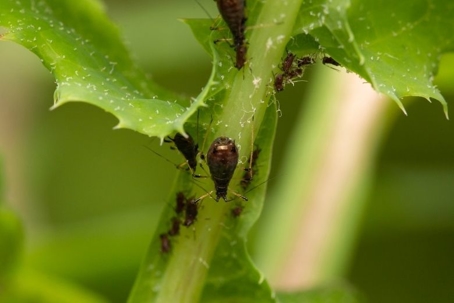
How To Get Rid Of Aphids
Aphids are common bugs that attack plants by sucking out sap, which weakens growth and spreads plant diseases. While they reproduce quickly and can overwhelm gardens or landscaping, a home or business owner can manage them with persistence and the right techniques. Here’s the best approach for do-it-yourself aphid control:
Identification and Assessment: First, confirm that the pest is indeed aphids. Look for small, soft-bodied insects, typically green, black, yellow, or red, often found in clusters on new growth, buds, or the undersides of leaves. Check for signs of aphid damage such as curling, yellowing, or distorted leaves, and sticky honeydew residue. Assess the severity of the infestation to determine whether physical, chemical, or integrated methods are needed.
Physical Removal: For light infestations, use a strong spray of water from a garden hose to knock aphids off plants. This is effective for shrubs, garden plants, and smaller crops. On indoor plants, you can wipe leaves with a damp cloth or gently rinse them in the sink. Repetition every few days is necessary to catch newly hatched aphids.
Pruning Infested Areas: Trim off heavily infested leaves, stems, or buds and dispose of them in sealed bags to prevent aphids from spreading. Pruning also improves air circulation, making the environment less hospitable to aphids and reducing disease risk.
Encouraging Natural Predators: Introduce or attract beneficial insects like ladybugs, lacewings, or parasitic wasps, which naturally feed on aphids. Planting companion plants such as dill, fennel, or marigolds can attract these predators. This method is environmentally friendly and sustainable, though it may take time to establish a noticeable impact.
Soap Solution: Mix 1–2 tablespoons of mild liquid dish soap with a quart of water and spray directly on affected plants. Soap disrupts the aphids’ cell membranes and dehydrates them. Avoid harsh soaps that can harm plants.
Neem Oil: Acts as both a repellent and growth regulator for aphids. Dilute according to label instructions and spray on leaves, stems, and undersides where aphids congregate.
Horticultural Oils: These suffocate aphids when applied thoroughly. Ensure even coverage, especially on undersides of leaves.
Cultural and Preventive Practices: Maintain plant health through proper watering, fertilization, and spacing to reduce stress, which makes plants more resistant to aphid attacks. Avoid excessive nitrogen fertilizer, as it encourages soft, succulent growth that attracts aphids. Regularly inspect plants, especially new growth, for early signs of infestation.
Monitoring and Follow-Up: Aphid populations can rebound quickly due to rapid reproduction. Implement a routine inspection schedule, reapply treatments if necessary, and maintain beneficial predator populations. Keeping records of infestations and treatments helps refine long-term control strategies.
Chemical Controls as a Last Resort: If infestations become severe and other methods fail, targeted insecticides like insecticidal soaps or pyrethrin-based products can be used. Apply according to manufacturer instructions, and focus on minimizing impact on pollinators and beneficial insects. Avoid broad-spectrum pesticides unless absolutely necessary.
The best DIY approach combines regular monitoring, physical removal, natural predators, and safe sprays. Aphids reproduce extremely fast, so consistency is critical—missing even a few days can allow them to rebound.
How To Get Rid Of Aphids Fast
If speed is the priority, the most rapid reduction of aphid populations comes from methods that directly kill or remove them immediately, rather than preventive or slow-acting approaches. Here are the fastest ways to get rid of aphids:
Strong Water Spray (Mechanical Removal): Using a garden hose with a strong stream can knock off 80–90% of aphids instantly on accessible plants. Indoors, rinsing leaves in the sink achieves a similar immediate effect. Repeat every 2–3 days to catch newly hatched aphids.
Insecticidal Soap Sprays: Soap solutions (or commercially labeled insecticidal soaps) work quickly by breaking down the aphids’ protective outer layer, causing dehydration and death within hours of contact. Thorough coverage of all affected areas, including leaf undersides, is essential.
Horticultural Oils or Neem Oil: Oils suffocate aphids on contact. Neem oil also has some growth-inhibiting properties, but its contact effect can kill many aphids within a day. Best applied in the morning or evening to avoid leaf burn.
Chemical Insecticides (Pyrethrin or Other Fast-Acting Products): Synthetic or botanical insecticides labeled for aphids provide rapid knockdown, often killing visible aphids within hours. These are best reserved for severe infestations due to potential harm to beneficial insects and pollinators.
Manual Removal/Pruning: Cutting off heavily infested shoots or buds immediately removes aphids from the plant. While not feasible for very large infestations, it is very fast for localized clusters.
Always spray or treat during early morning or late evening to reduce stress on plants. Ensure complete coverage, especially the undersides of leaves where aphids cluster. Combine mechanical removal with a contact spray (soap or oil) for the fastest overall reduction.
How To Get Rid Of Aphids Permanently
Achieving permanent elimination of aphids is extremely difficult because aphids reproduce rapidly and can migrate from nearby plants or weeds. However, certain strategies greatly reduce the chance of recurring infestations and can keep aphid populations consistently low over the long term. These strategies focus on integrated management, prevention, and environmental control rather than just immediate knockdown.
Encouraging and Maintaining Natural Predators: Ladybugs, lacewings, parasitic wasps, and hoverflies feed on aphids at all life stages. Establishing habitats that attract these beneficial insects—such as planting flowering plants (dill, fennel, marigolds, yarrow) and avoiding broad-spectrum insecticides—creates a natural, ongoing control system. This method doesn’t eradicate every aphid immediately, but it sustainably and continually keeps aphid populations in check.
Cultural and Preventive Practices: Avoid over-fertilizing with nitrogen, which encourages soft new growth that aphids favor. Maintain plant health through proper watering and pruning. In gardens or landscaped areas, rotate susceptible plants and interplant with species that repel aphids (e.g., garlic, chives, nasturtium). Aphids often overwinter on weeds and debris; removing these reduces sources of reinfestation.
Physical Barriers and Environmental Control: Using row covers, insect netting, or reflective mulches can prevent aphids from colonizing plants in the first place. Removing infested plant parts promptly prevents population buildup.
Targeted Contact Treatments: While soaps, neem oil, and horticultural oils do not provide permanent elimination, regular use combined with natural predators and preventive care can suppress populations to negligible levels indefinitely. The key is repeated application during early infestations rather than waiting for a full-blown outbreak.
Integrated Pest Management (IPM): The most reliable long-term strategy is IPM, which combines monitoring plants regularly for early detection, encouraging natural predators, applying physical removal and contact sprays as needed, maintaining plant health and environmental hygiene, and minimizing chemical sprays to avoid killing beneficial insects.
Chemical Treatments as a Last Resort: Systemic insecticides can kill aphids throughout the plant, including hidden nymphs. While effective in the short term, overreliance can harm beneficial insects and lead to resistance. If used strategically, they can help manage severe infestations as part of a broader long-term program.
No single method guarantees permanent eradication, but combining natural predators, preventive practices, careful monitoring, and targeted treatments provides the highest likelihood of keeping aphids under control indefinitely.
How To Get Rid Of Aphids Naturally
There are several natural methods that can effectively control and even eliminate aphids, though “get rid of” must be understood in context: total permanent elimination is rare because aphids reproduce quickly and can migrate from nearby plants. However, natural methods can eradicate infestations locally and keep populations very low when applied consistently. The most effective approaches include:
Water Pressure / Mechanical Removal: A strong spray of water from a hose can knock aphids off plants immediately. Repeating this every few days removes newly hatched aphids before they multiply. This is highly effective on shrubs, vegetables, and small trees.
Insecticidal Soap: Solutions made from mild liquid soap and water destroy the aphids’ protective outer layer, causing dehydration. Spray thoroughly, covering the tops and undersides of leaves. Results can be seen within hours, and repeated application ensures near-total removal.
Neem Oil: Neem oil is a natural botanical that disrupts aphid feeding and reproduction. When applied to foliage, it suffocates and repels aphids while also acting as a growth regulator to prevent eggs from developing. Multiple treatments may be necessary for complete control.
Horticultural Oils: Similar to neem, these oils coat and suffocate aphids. They are safe for most plants and degrade quickly in the environment, making them a natural option for repeated treatments.
Beneficial Insects: Ladybugs, lacewings, parasitic wasps, and hoverflies feed on aphids at all life stages. Introducing or attracting these predators is highly effective at eliminating infestations in gardens or landscaped areas, especially when combined with other natural methods.
Companion Planting and Repellents: Plants like garlic, chives, marigolds, and nasturtiums can repel aphids or attract natural predators. Interplanting these near susceptible plants can reduce infestations over time.
Manual Pruning and Removal: For localized infestations, cutting off heavily infested leaves or stems physically removes the aphids. Dispose of the material away from other plants to prevent spread.
Natural methods are most effective when used together as an integrated strategy: water or soap sprays for immediate knockdown, neem or horticultural oils for ongoing control, beneficial insects for sustained predation, and companion planting or pruning to prevent reestablishment.
The Best Way To Get Rid Of Aphids
Hiring our professional pest control services is the best way to get rid of aphids because it ensures long-term, targeted, and effective management that goes beyond what most home or business owners can achieve with DIY methods. Aphids reproduce rapidly, often in massive colonies, and can spread from one plant to another quickly, causing widespread damage. While at-home treatments like soaps, oils, or sprays may offer temporary relief, they rarely address the root of the infestation or prevent it from returning. Our professional pest control services provide several critical advantages:
Accurate Identification & Assessment: Not all small green or black insects are aphids. Our professionals can correctly identify the pest species and determine the extent of the infestation, ensuring the right treatment is used.
Specialized Treatment Options: Our professionals have access to advanced products and systemic treatments not available over the counter. These methods eliminate aphids at all life stages, including eggs and hidden colonies, while protecting beneficial insects where possible.
Prevention of Plant Damage: Aphids don’t just eat leaves; they spread plant diseases and leave behind honeydew, which fosters mold growth. Our pest control experts act quickly to prevent lasting damage to gardens, landscaping, or crops.
Eco-Friendly & Safe Application: Our technicians are trained to use treatments in ways that minimize risks to people, pets, and the environment, something DIY attempts may not always achieve.
Long-Term Solutions: Rather than simply knocking down the current population, our professionals implement integrated pest management (IPM) strategies that reduce the chance of reinfestation through monitoring, exclusion, and preventative care.
Cost-Effectiveness Over Time: While hiring our professionals may seem more expensive upfront, it prevents repeated plant losses, ineffective treatments, and recurring infestations that often end up costing more in the long run.
Our professionals don’t just kill aphids—we protect your property, landscape, or business from ongoing pest problems, ensuring healthier plants and peace of mind.
Get Rid Of Aphids With Miche Pest Control
Hiring our team of professionals at Miche Pest Control is an investment in long-term protection, expertise, and peace of mind. Here’s why:
- Personalized Service and Local Expertise: We know the specific pest pressures in the area. Our technicians understand the environment, climate, and building types common to the area, allowing them to provide targeted, effective treatments.
- High-Quality, Comprehensive Solutions: As a full-service provider, we don’t just treat surface problems; we address the root causes. From inspections and prevention to exclusion and ongoing maintenance, we deliver complete, integrated pest management (IPM) programs designed to both eliminate infestations and prevent future ones.
- Accountability and Reliability: We live and die by our reputation. We rely on trust, referrals, and repeat business, meaning we're committed to doing the job right the first time and providing exceptional customer care.
- Faster Response Times: We respond quickly to emergencies and schedule services sooner than large, national chains. Especially when you’re dealing with urgent pest issues, that speed matters.
- Customized Treatment Plans: We tailor our services to your property’s specific needs instead of using one-size-fits-all chemical treatments. This results in safer, more effective pest control that minimizes environmental impact and reduces unnecessary pesticide use.
- Highly Trained, Experienced Technicians: We invest in training, certification, and continuing education for our technicians. We stay current on the latest pest biology, control techniques, and safety standards.
- Long-Term Prevention and Value: Our focus on providing quality service means fewer callbacks, longer-lasting protection, and better value over time. Instead of repeated, temporary fixes, you get strategic solutions that protect your home or business for the long run and provide better peace of mind.
Hiring our team means you get expertise you can trust, faster service, safer and more effective treatments, and long-term results that protect both your property and your peace of mind. Contact us today!