
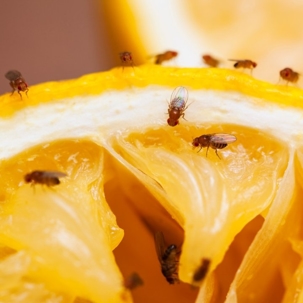
How To Get Rid Of Fruit Flies
Getting rid of fruit flies yourself requires a combination of sanitation, trapping, and prevention. Here’s a step-by-step approach for home or business owners to get rid of these small flies:
Identify and Eliminate Breeding Sources – Fruit flies reproduce rapidly in fermenting organic matter. Check all potential breeding sites, including overripe fruits and vegetables, compost bins, trash cans, drains, and even damp mops or sponges. Remove or properly store any exposed produce, discard spoiled food, and clean trash bins regularly. Eliminating these food sources is the single most effective step in controlling an infestation.
Thorough Cleaning of Surfaces and Drains – Fruit flies can breed in residue inside drains, under appliances, and on countertops. Scrub sinks, counters, and floors with a mild bleach solution or commercial disinfectant. Pour a mixture of boiling water and a small amount of baking soda or vinegar down drains to remove organic buildup where larvae may reside. Regular, deep cleaning reduces both current populations and future breeding opportunities.
Use DIY Traps – Traps are effective for reducing adult fruit fly populations quickly. A simple trap can be made by filling a small bowl with apple cider vinegar and a drop of dish soap. The vinegar attracts flies, while the soap breaks the surface tension, causing them to drown. Other variations include a jar with overripe fruit sealed with plastic wrap and punctured with small holes, allowing flies in but making escape difficult. Place traps near suspected infestation zones.
Seal and Store Food Properly – Store all fruits, vegetables, and other organic materials in sealed containers or in the refrigerator. Fruit flies are attracted to the scent of fermenting produce, so reducing exposure is crucial. Ensure pantry items like grains, nuts, and dried fruit are stored in airtight containers to prevent attracting flies.
Maintain Moisture Control – Fruit flies are drawn to damp environments. Repair leaking faucets or pipes, dry wet sponges, mop water, and any areas of standing moisture. Using dehumidifiers or increasing ventilation in kitchens or storage areas can reduce humidity levels, making the environment less attractive to fruit flies.
Consider Commercial Insecticides as a Last Resort – For persistent infestations, aerosol sprays or foggers labeled for flying insects can be used, but these should not replace the steps above. Always follow label instructions carefully, focusing on areas where flies rest rather than on food preparation surfaces. Overreliance on chemicals without source removal is ineffective.
Monitor and Repeat – Even after initial control, fruit flies can return if breeding sites remain. Continue monitoring traps, inspecting drains, and maintaining cleanliness. Regular upkeep—weekly disposal of overripe produce, routine surface cleaning, and checking drains—prevents re-infestation and keeps populations manageable.
Following these steps systematically can usually eliminate fruit flies, depending on the severity of the infestation.
How To Get Rid Of Fruit Flies Fast
The fastest results come from combining source elimination with targeted trapping and sanitation. Here are some of the most effective, rapid-action methods:
Immediate Source Removal – The fastest way to cut down fruit fly numbers is to remove what’s attracting them. Throw away or refrigerate all overripe fruits, vegetables, and fermenting organic matter. Empty trash and compost bins, and clean any spilled liquids or food residue. Without a food source, adult fruit flies cannot survive for long.
Apple Cider Vinegar Traps – These traps attract adult fruit flies and can reduce the population noticeably within 24–48 hours. Use a small container of apple cider vinegar with a drop of dish soap, or overripe fruit in a jar sealed with plastic wrap with small holes. Position traps near the source of infestation for maximum effect.
Drain Cleaning – If flies are breeding in sink drains, they will continue to appear even after surface cleaning. Pour boiling water, or a mixture of vinegar and baking soda, down drains to kill larvae. For severe cases, using a pipe brush to scrub the drain interior ensures removal of organic buildup where eggs and larvae develop.
Sticky or UV Light Traps – Commercial sticky traps or UV light traps capture adult flies quickly. These are particularly effective in kitchens, bars, or restaurants where populations are high. They reduce adults immediately and help prevent new generations from reproducing.
Sanitation and Moisture Control – Quickly drying wet sponges, mops, and wiping counters removes secondary breeding sites. Fruit flies thrive in damp environments; eliminating moisture accelerates population decline.
Targeted Aerosol Sprays (Optional) – Aerosols labeled for flying insects can knock down adult populations rapidly. They are not a long-term solution but can reduce visible flies while traps and source removal take effect. Avoid spraying directly on food or food prep areas.
The fastest elimination occurs when multiple strategies are applied simultaneously—remove food sources, set traps, clean drains, and maintain dry surfaces. Adult fruit flies die quickly without food, and traps prevent them from reproducing, leading to a noticeable reduction in as little as 1–2 days in small infestations.
How To Get Rid Of Fruit Flies Permanently
Permanently eliminating fruit flies requires a comprehensive, preventative approach, not just killing the visible adults. The key is addressing both the source of the infestation and preventing future breeding cycles. Here are some of the solutions most likely to achieve long-term control:
Source Removal and Food Management – Fruit flies reproduce rapidly in fermenting organic matter. Permanently eliminating infestations requires discarding or refrigerating overripe fruits and vegetables, storing pantry items in airtight containers, emptying trash and compost bins regularly, and cleaning under appliances or furniture where food debris can accumulate. Removing these breeding grounds prevents new generations from developing.
Drain and Moisture Sanitation – Many infestations originate in kitchen or floor drains, garbage disposals, and other damp organic matter. Permanent control involves scrubbing drains with brushes to remove slime and buildup, flushing drains with boiling water or a vinegar-baking soda solution weekly, and fixing leaks while keeping areas such as sinks, mops, and sponges dry.
Trapping During Infestation – Traps alone won’t eliminate the source, but they are effective at reducing adult populations and preventing reproduction while permanent measures are implemented. Apple cider vinegar traps, sticky traps, or UV light traps are ideal for this purpose.
Sanitation Protocols for Ongoing Prevention – Maintaining strict cleanliness is essential for permanent control. Wipe down countertops, sweep floors, and clean behind appliances routinely. Rinse recyclables and beverage containers before storage, and regularly remove fallen fruit or produce, including from gardens if applicable.
Structural and Environmental Management – For homes or commercial properties, sealing cracks and openings around windows, doors, and vents prevents entry from outside. Reducing humidity in food preparation areas makes the environment less hospitable to fruit flies. In commercial kitchens, proper food rotation and storage practices are critical to long-term control.
Targeted Use of Insecticides (Optional for Severe Infestations) – In persistent cases, short-term use of fly-targeted aerosols or foggers can reduce adult populations. However, insecticides alone cannot achieve permanent control unless all breeding sources are eliminated.
The only solution likely to eradicate fruit flies permanently is consistent removal of breeding sites combined with rigorous sanitation and food storage practices. Adult flies may die quickly, but if even a small source remains—like a forgotten drain or neglected fruit—infestations will recur.
How To Get Rid Of Fruit Flies Naturally
There are several natural methods that can effectively reduce and eventually eliminate fruit flies, especially when combined with strict sanitation and source removal. While they may take slightly longer than chemical methods, they are safe, eco-friendly, and effective if applied consistently:
Apple Cider Vinegar Traps – One of the most effective natural solutions. Fill a small container with apple cider vinegar and add a drop of dish soap. The vinegar attracts the adult flies, while the soap breaks surface tension so they drown. Variations include using overripe fruit instead of vinegar. Placing several traps near infestation hotspots can drastically reduce adult populations within 1–2 days.
Red Wine or Beer Traps – Fruit flies are attracted to fermenting liquids. A small amount of red wine or beer in a jar with a paper funnel or plastic wrap with holes works similarly to vinegar traps. The flies enter but cannot escape.
Lemon or Citrus Rind Traps – Citrus peels emit odors that attract fruit flies. Placing lemon or orange peels in a jar covered with plastic wrap punctured with tiny holes can trap flies naturally. This method works well for small infestations and as a preventative measure.
Essential Oils – Certain essential oils can repel fruit flies or interfere with their breeding. Lavender, eucalyptus, peppermint, or lemongrass oils can be diluted in water and sprayed around kitchen surfaces. Oils won’t directly kill adult flies but make the environment less attractive for laying eggs.
Sticky Paper or Fly Paper – Non-toxic adhesive strips capture adult fruit flies as they fly. Placing these in infested areas quickly reduces visible populations without chemicals.
Sanitation and Moisture Control (Natural Method) – This is arguably the most critical natural approach: Remove overripe produce and dispose of or store food properly. Clean counters, drains, and trash bins thoroughly. Dry sponges, mops, and any damp areas where flies may breed. Without eliminating breeding sites, no natural trap or repellent will fully work.
Biological Control (Optional, Advanced) – In rare cases, introducing natural predators such as certain parasitic wasps (used in agricultural or greenhouse settings) can reduce fruit fly populations. This is generally impractical for most homes but is a natural, chemical-free solution for persistent infestations in larger-scale operations.
Natural methods are effective only when combined with strict sanitation and breeding site elimination. Traps and repellents reduce adult populations, but the permanent solution always depends on removing food sources and damp breeding grounds.
The Best Way To Get Rid Of Fruit Flies
Our professional pest control is the best solution for fruit fly infestations because these tiny pests can be deceptively difficult to eliminate completely, especially in homes with ongoing food preparation or in commercial settings. Here’s why hiring our professionals is superior to DIY efforts:
Comprehensive Inspection
Our professionals don’t just treat the visible flies—they locate all breeding sites, which are often hidden in drains, garbage disposals, mop buckets, sinks, or even behind appliances.
A thorough inspection ensures that all sources of infestation are identified, which is crucial because fruit flies can reproduce rapidly if even one breeding site remains.
Effective Targeted Treatments
DIY traps mainly catch adult flies and don’t address larvae or eggs.
Our professionals have access to industrial-grade, food-safe treatments and strategies that can eliminate both adults and breeding larvae efficiently, reducing the chance of recurrence.
Integrated Pest Management (IPM) Approach
Our experts use a multi-pronged approach: sanitation guidance, structural treatment, and monitoring.
We provide long-term prevention plans, such as drain maintenance or food storage practices, that homeowners or employees might overlook.
Speed and Efficiency
Fruit flies reproduce quickly—one female can lay hundreds of eggs in just a few days.
Our professionals can rapidly reduce populations before they spiral out of control, which is especially critical in commercial kitchens, restaurants, or food-processing areas where infestations can affect business operations and safety compliance.
Access to Specialized Tools
Our professionals use advanced traps, aerosols, and non-toxic residual treatments that are more effective than consumer-grade options.
We also have monitoring equipment to detect early reinfestations, which is something DIY methods cannot provide reliably.
Prevention and Education
Beyond elimination, our professional pest control services educate home and business owners on best practices for storage, cleaning, and waste management.
Preventing future infestations is often more cost-effective than repeated DIY attempts, which can fail if underlying conditions aren’t corrected.
Fruit flies may seem harmless, but their rapid breeding, tiny size, and hidden larval habitats make them surprisingly resilient. DIY methods can reduce numbers temporarily, but our professionals eliminate the source, prevent re-infestation, and restore safe, fly-free environments—saving time, frustration, and potential health risks.
Get Rid Of Fruit Flies With Miche Pest Control
Hiring our team of professionals at Miche Pest Control is an investment in long-term protection, expertise, and peace of mind. Here’s why:
- Personalized Service and Local Expertise: We know the specific pest pressures in the area. Our technicians understand the environment, climate, and building types common to the area, allowing them to provide targeted, effective treatments.
- High-Quality, Comprehensive Solutions: As a full-service provider, we don’t just treat surface problems; we address the root causes. From inspections and prevention to exclusion and ongoing maintenance, we deliver complete, integrated pest management (IPM) programs designed to both eliminate infestations and prevent future ones.
- Accountability and Reliability: We live and die by our reputation. We rely on trust, referrals, and repeat business, meaning we're committed to doing the job right the first time and providing exceptional customer care.
- Faster Response Times: We respond quickly to emergencies and schedule services sooner than large, national chains. Especially when you’re dealing with urgent pest issues, that speed matters.
- Customized Treatment Plans: We tailor our services to your property’s specific needs instead of using one-size-fits-all chemical treatments. This results in safer, more effective pest control that minimizes environmental impact and reduces unnecessary pesticide use.
- Highly Trained, Experienced Technicians: We invest in training, certification, and continuing education for our technicians. We stay current on the latest pest biology, control techniques, and safety standards.
- Long-Term Prevention and Value: Our focus on providing quality service means fewer callbacks, longer-lasting protection, and better value over time. Instead of repeated, temporary fixes, you get strategic solutions that protect your home or business for the long run and provide better peace of mind.
Hiring our team means you get expertise you can trust, faster service, safer and more effective treatments, and long-term results that protect both your property and your peace of mind. Contact us today!