
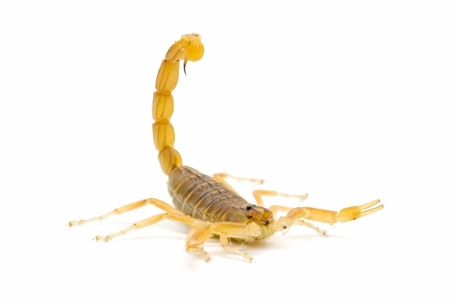
How To Get Rid Of Scorpions
Getting rid of scorpions on your own requires a combination of prevention, habitat modification, and targeted removal. While our professional pest control is the most reliable long-term solution, a homeowner or business owner can significantly reduce scorpion populations by following these strategies:
Reduce Moisture
Reducing moisture helps get rid of scorpions because it directly removes one of their primary survival requirements and indirectly collapses their food supply.
Scorpions are highly adapted to dry environments, but they still depend on localized humidity and sheltered damp areas to avoid dehydration, especially in residential and structural settings. Indoors and around buildings, they are most commonly found in basements, crawl spaces, bathrooms, laundry rooms, wall voids, and areas with plumbing leaks or poor drainage, where moisture levels remain elevated compared to surrounding conditions.
When moisture is reduced—through fixing leaks, improving ventilation, using dehumidifiers, and correcting drainage issues—these environments become less physiologically suitable for scorpions. Without stable humidity, scorpions lose moisture through their exoskeleton more quickly, which increases stress and forces them to relocate to more favorable outdoor habitats or deeper soil environments.
Moisture reduction also has a strong indirect effect through prey suppression. Scorpions primarily feed on insects such as cockroaches, crickets, silverfish, ants, and other small arthropods that thrive in damp environments. By drying out these conditions, you reduce insect populations, which in turn removes the food base that supports scorpions near or inside structures. As prey density drops, scorpions become less likely to remain in the area.
Additionally, moisture control helps disrupt harborage conditions. Damp wood, wet soil near foundations, mulch buildup, and cluttered, humid storage areas create protected microhabitats where scorpions can hide during the day. Removing excess moisture makes these spaces less stable and less attractive for long-term shelter.
In practical terms, moisture reduction is most effective when combined with sealing entry points and reducing exterior harborage, because scorpions often originate outdoors and move inside only when conditions are favorable. Drying out the structure reduces both their ability to survive indoors and the ecological support system that brings them close in the first place.
Eliminate Food Sources
When managing scorpions, the goal is not just to remove scorpions themselves but to eliminate the insect food web that supports them. Scorpions are opportunistic predators, and their presence around homes and businesses is strongly tied to the availability of prey. If food sources remain abundant, scorpions will continue to hunt and persist in the area even if other conditions are improved.
The most important food sources to eliminate are cockroaches, which are one of the primary prey items for many scorpion species. Cockroaches thrive in warm, moist, cluttered environments and often live in kitchens, basements, drains, and wall voids—areas that also overlap with scorpion activity zones. Reducing food debris, sealing cracks, managing moisture, and maintaining sanitation are key to suppressing cockroach populations.
Another major prey group is crickets, especially house crickets and field crickets that enter structures at night. Crickets are strongly attracted to lights and can accumulate around foundations, garages, and basements. Reducing outdoor lighting that draws insects, sealing entry points, and minimizing exterior clutter helps reduce cricket presence, which in turn reduces scorpion food availability.
Silverfish and firebrats are also common scorpion prey. These insects feed on starches, paper, glue, and organic debris and are typically found in humid, undisturbed indoor environments such as attics, basements, and storage areas. Controlling moisture, reducing clutter (especially cardboard and paper storage), and improving ventilation helps suppress their populations.
Scorpions will also feed on ants, spiders, and small insect larvae. Ants are particularly important because they are widespread and often form persistent foraging trails near structures. Spiders can also serve as both competitor and prey. General insect control measures—such as sealing entry points, maintaining cleanliness, and reducing exterior attractants—help reduce these populations.
In addition, scorpions may feed on flies, beetles, and other small arthropods that accumulate around exterior lighting, garbage areas, pet food, or decaying organic matter. Managing trash properly, keeping outdoor eating areas clean, and reducing standing organic debris all help limit these food sources.
In practical terms, eliminating scorpion food sources requires a broad-spectrum reduction of insect populations both indoors and around the structure, not just targeting scorpions directly. This is why integrated pest management approaches emphasize sanitation, moisture control, exclusion, and habitat modification together—because removing prey significantly reduces the environmental carrying capacity for scorpions.
Eliminate Shelter and Hiding Spots
Removing shelter and hiding spots helps get rid of scorpions because it directly disrupts their core survival strategy: avoiding desiccation, predators, and daytime exposure while waiting to ambush prey at night.
Scorpions are highly secretive, nocturnal predators that spend most daylight hours hidden in tight, dark, and stable microhabitats. These include cracks in foundations, gaps under rocks, stacked wood, debris piles, dense vegetation, wall voids, crawl spaces, and cluttered storage areas. These shelters provide three critical conditions: protection, humidity retention, and proximity to prey.
When these hiding places are removed or reduced, scorpions lose their ability to safely remain in the area during the day. Without stable cover, they become exposed to drying conditions, temperature fluctuations, and predators, which increases physiological stress and reduces survival. Because scorpions are sensitive to water loss through their exoskeleton, even moderate exposure in dry environments can force them to relocate.
Eliminating shelter also disrupts their hunting efficiency. Scorpions rely on concealed positions to ambush insects at night. Cluttered environments, mulch buildup, and structural voids provide ideal staging areas where prey insects also concentrate. When these hiding spots are removed, scorpions lose access to both cover and predictable prey pathways, making the environment less suitable for sustained feeding.
Another important effect is that reducing shelter breaks the connection between indoor and outdoor movement pathways. Scorpions often use stacked materials, vegetation touching structures, and debris near foundations as “bridges” into buildings. Clearing these transitions forces them to traverse more exposed ground, increasing risk and reducing successful entry.
Practical steps include removing wood piles, rocks, and debris near foundations; trimming vegetation away from structures; reducing mulch depth; sealing cracks and gaps in walls and foundations; and organizing storage so items are elevated and not directly on the ground. Indoors, reducing clutter in basements, garages, and utility rooms eliminates the hidden spaces they rely on for daytime refuge.
Seal Potential Entry Points
To keep scorpions out, the goal is to seal any opening that connects outdoor hiding areas to interior voids, especially low-level gaps where scorpions naturally travel while hunting insects or seeking shelter. Because scorpions can flatten their bodies and squeeze through surprisingly small spaces, even openings around 1/16–1/8 inch can be enough for entry.
The most important entry points to seal are cracks and gaps in the foundation, especially where concrete slabs meet walls, utility penetrations, and expansion joints. These areas often provide direct access into wall voids, basements, or crawl spaces. Another key zone is door thresholds and sweeps, since scorpions commonly enter under exterior doors, garage doors, and basement entries where weather stripping is worn or uneven. Window frames and torn or poorly fitted screens are also common access points, particularly at ground level or near vegetation.
You should also focus on utility penetrations, such as gaps around plumbing pipes, electrical conduit, cable lines, and HVAC refrigerant lines. These openings often lead directly into wall cavities or utility rooms. In addition, vents and weep holes in brick or block construction can serve as entry routes if not properly screened. Attic vents, soffit gaps, and roofline openings are less common but still relevant in severe infestations, especially when vegetation or structural clutter provides access routes upward.
For materials, the most effective sealing approach depends on the type of gap:
- For small cracks and joints in masonry or siding, use a high-quality polyurethane or elastomeric exterior caulk, which remains flexible and resists cracking as the structure shifts. This is important because rigid sealants can fail over time and reopen pathways.
- For deeper gaps around pipes or conduits, first insert copper mesh or stainless steel mesh to physically block movement, then seal over it with caulk or low-expansion polyurethane foam rated for pest exclusion. The mesh provides a long-term barrier even if the outer seal is disturbed.
- For larger structural gaps, such as broken concrete edges or foundation voids, use mortar, cement patching compound, or structural repair materials before finishing with sealant.
- For doors, install tight-fitting door sweeps (rubber or neoprene) and ensure full perimeter weather stripping with no visible light gaps.
- For vents and openings requiring airflow, use fine stainless steel or aluminum insect screen (properly secured)so ventilation is maintained while excluding arthropods.
A key principle is that sealing works best as part of a continuous barrier system, not isolated patching. Scorpions will exploit the weakest point along a structure, so all low-level and ground-contact gaps must be addressed together.
Use Traps
The most effective way to deploy traps for scorpions is to treat trapping as a targeted interception and monitoring system, not a bait-driven elimination method. Scorpions are predators, not food-seeking insects, so traps work best by capturing them along predictable movement routes, especially where they hunt for insects or travel between outdoor harborage and structures.
The most reliable tool is the glue board (sticky trap). These should be placed in a perimeter grid along baseboards, wall edges, and known travel corridors, because scorpions tend to move along vertical surfaces and edges rather than crossing open spaces. Indoors, the most productive locations are behind furniture, under sinks, inside closets, along garage walls, in basements, and near door thresholds, especially where insects are also present. Outdoors, traps are most effective along foundation lines, under deck edges, near landscaping borders, and around exterior lighting, where insect activity draws scorpions in.
Placement height matters. Traps should sit flush against walls with at least one edge touching the surface, forming a barrier that scorpions naturally cross. Corners are especially effective because they funnel movement. Using multiple traps per room or perimeter section is more effective than sparse placement, since scorpions may only pass through certain narrow travel paths.
Timing is also important. Scorpions are nocturnal hunters, so trap placement should be established before nighttime activity peaks. Checking traps early in the morning allows you to identify active zones and concentrate additional traps where captures occur.
To improve effectiveness, traps should be deployed in areas with high insect activity, since scorpions follow prey. This includes spaces near moisture sources, exterior lighting that attracts insects, and areas with visible ant, cockroach, or cricket activity. Without addressing insect presence, traps capture individuals but do not significantly reduce overall pressure.
Traps should be viewed as part of an integrated approach. Their performance improves significantly when combined with moisture control, exclusion (sealing entry points), and habitat reduction, because these measures reduce both scorpion movement and prey availability. Without those changes, traps will continue to capture scorpions but may not fully resolve ongoing activity.
Apply Insecticides
The most effective insecticide approach for scorpions is not broad spraying, but a targeted, residual perimeter and harborage-focused application that reduces both scorpions and the insects they feed on. Scorpions are nocturnal, edge-oriented predators, so success depends on placing product where they travel, hide during the day, and enter structures, rather than treating open surfaces.
The foundation of an effective program is an outdoor perimeter treatment band around the structure. This involves applying a labeled residual insecticide (typically a pyrethroid-based product or similar long-lasting formulation) in a continuous strip along the foundation base, around door thresholds, garage edges, utility penetrations, and other ground-level entry points. The goal is to create a treated zone that scorpions must cross when moving between outdoor habitats and the structure. These products work primarily through contact exposure and residual activity on surfacesrather than attraction.
Inside, insecticides should be used more selectively. The most effective indoor applications are crack-and-crevice treatments, not general sprays. Product should be placed into wall voids, baseboard gaps, under cabinets, around plumbing penetrations, and behind appliances, where scorpions rest during the day. This limits exposure while targeting their actual harborages. Broad indoor spraying is generally less effective and increases unnecessary exposure without addressing where scorpions actually hide.
A critical component is also treating the insect prey base, since scorpions persist where food is available. Many modern perimeter products also suppress ants, crickets, cockroaches, and other arthropods. Reducing these populations near the structure indirectly reduces scorpion activity over time.
Application timing and consistency matter. Treatments are most effective when applied before peak seasonal activity (often warm months) and maintained on a reapplication schedule consistent with product label guidance, since environmental breakdown (sunlight, rain, irrigation) reduces residual strength over time.
Effectiveness increases significantly when insecticide use is paired with moisture reduction, exclusion (sealing entry points), and habitat modification. Without those changes, insecticides may reduce visible activity temporarily but scorpions can continue to re-enter from surrounding areas.
The Best Way To Get Rid Of Scorpions
Our professional pest control is the most effective way to get rid of scorpions because scorpions are elusive, nocturnal, and hardy pests that are difficult to control with DIY methods alone. Here’s why hiring our trained experts is superior:
Accurate Identification and Knowledge
Our professionals can identify the exact species of scorpion, which is important because behavior, venom potency, and hiding preferences vary.
We understand where scorpions are most likely to hide and hunt—such as under rocks, in cracks, and in cluttered storage areas—which allows for targeted treatment.
Comprehensive Inspection
Our trained technicians will perform a thorough inspection, including hard-to-reach areas, crawl spaces, attics, and exterior perimeters.
DIY methods often miss hidden populations, which can allow scorpions to return even after repeated treatments.
Effective and Safe Chemical Treatments
Our professionals have access to industrial-grade insecticides that are more effective and longer-lasting than over-the-counter options.
We know safe application methods, minimizing risk to humans, pets, and the environment.
We can also apply residual sprays and barriers in precise locations to prevent future infestations.
Integrated Pest Management (IPM) Approach
Our experts combine multiple strategies: chemical treatments, habitat modification, exclusion, and ongoing monitoring.
This holistic approach addresses both the scorpions themselves and the conditions that attract them, rather than just killing a few on sight.
Time and Risk Reduction
Scorpions are nocturnal and often bite when disturbed, and some species can deliver medically significant stings.
Our professionals reduce personal risk because we are trained in safe handling and removal techniques.
Long-Term Prevention
We provide ongoing treatments and monitoring, ensuring scorpions do not re-establish in your home or business.
We can also provide advice on structural repairs, landscaping adjustments, and sanitation improvements that prevent future infestations.
While DIY methods can reduce scorpion numbers temporarily, our professional pest control addresses the root cause, ensures safety, and provides long-term results. For homes or businesses with recurring scorpion problems—or where venomous species are present—calling in our experts is the most reliable, efficient, and safe solution.
Get Rid Of Scorpions With Miche Pest Control
Hiring our team of professionals at Miche Pest Control is an investment in long-term protection, expertise, and peace of mind. Here’s why:
- Personalized Service and Local Expertise: We know the specific pest pressures in the area. Our technicians understand the environment, climate, and building types common to the area, allowing them to provide targeted, effective treatments.
- High-Quality, Comprehensive Solutions: As a full-service provider, we don’t just treat surface problems; we address the root causes. From inspections and prevention to exclusion and ongoing maintenance, we deliver complete, integrated pest management (IPM) programs designed to both eliminate infestations and prevent future ones.
- Accountability and Reliability: We live and die by our reputation. We rely on trust, referrals, and repeat business, meaning we're committed to doing the job right the first time and providing exceptional customer care.
- Faster Response Times: We respond quickly to emergencies and schedule services sooner than large, national chains. Especially when you’re dealing with urgent pest issues, that speed matters.
- Customized Treatment Plans: We tailor our services to your property’s specific needs instead of using one-size-fits-all chemical treatments. This results in safer, more effective pest control that minimizes environmental impact and reduces unnecessary pesticide use.
- Highly Trained, Experienced Technicians: We invest in training, certification, and continuing education for our technicians. We stay current on the latest pest biology, control techniques, and safety standards.
- Long-Term Prevention and Value: Our focus on providing quality service means fewer callbacks, longer-lasting protection, and better value over time. Instead of repeated, temporary fixes, you get strategic solutions that protect your home or business for the long run and provide better peace of mind.
Hiring our team means you get expertise you can trust, faster service, safer and more effective treatments, and long-term results that protect both your property and your peace of mind. Contact us today!