
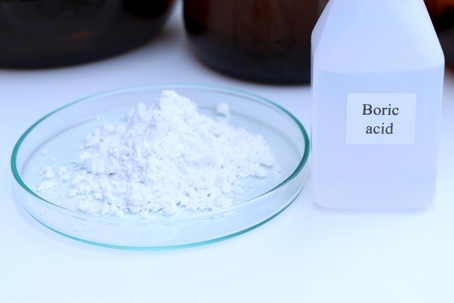
Boric Acid
Boric acid is widely used in pest control, pharmaceuticals, and household products, but it can be toxic if ingested, inhaled, or absorbed through the skin in large amounts. Knowing its properties, safe handling procedures, and potential health risks is crucial to prevent accidental poisoning, especially for children, pets, and workers in pest control or cleaning industries.
Effective Pest Control Application: Boric acid is an effective insecticide against cockroaches, ants, termites, silverfish, and other pests. Understanding how it works helps ensure proper and effective application, maximizing pest control results while minimizing unnecessary exposure to humans and non-target animals.
Regulatory Compliance: There are strict regulations regarding the use of boric acid in residential, commercial, and agricultural settings. Knowledge of these rules ensures compliance with local, state, and federal guidelines, avoiding legal liability and potential fines.
Environmental Awareness: Boric acid can affect soil and water ecosystems if misused. Understanding its environmental impact allows for responsible application, preventing contamination and harm to beneficial organisms, such as pollinators and aquatic life.
Knowing how to respond to exposure—through first aid measures, decontamination procedures, and when to seek medical help—is critical for anyone handling boric acid. This knowledge prevents serious health consequences in the event of accidental ingestion or prolonged contact.
What Is Boric Acid?
Boric acid (chemical formula H₃BO₃) is a naturally occurring compound derived from boron-rich minerals such as colemanite, ulexite, and borax deposits. It can also be found in small amounts in soil, water, plants, and even some foods. Its natural origin makes it an attractive option for pest control when seeking less synthetic chemical solutions.
Mode of Action as a Pesticide: As a naturally derived insecticide, boric acid works primarily through ingestion and contact. When insects come into contact with or consume boric acid, it disrupts their digestive system and dehydrates their exoskeleton. This leads to death over a period of hours to days, depending on the species and environmental conditions.
Target Specificity: Boric acid is especially effective against crawling insects. It is less toxic to mammals and birds in small, controlled amounts, making it safer for household and professional use compared to many synthetic pesticides. However, care must still be taken around pets and children, as accidental ingestion can be harmful.
Environmental Considerations: Because boric acid occurs naturally and breaks down slowly in the environment, it has a relatively low ecological impact compared to highly synthetic chemical pesticides. When applied correctly, it minimizes contamination of soil and water while still effectively controlling pest populations.
Boric acid fits well into IPM programs due to its natural origin and low mammalian toxicity. It can be combined with sanitation, physical barriers, and habitat modification to control pests sustainably without heavy reliance on synthetic chemicals.
Is Boric Acid Safe?
Boric acid is considered to have low acute toxicity when used correctly, but it is not completely harmless. Small, controlled exposures—such as dust applied in cracks or baits placed out of reach—are generally safe for adults. However, ingestion, inhalation, or prolonged skin contact can cause irritation or more serious health issues. Children and pets are particularly at risk if boric acid is left accessible.
Routes of Exposure and Risks:
Ingestion: Swallowing boric acid can lead to nausea, vomiting, diarrhea, abdominal pain, and in larger amounts, organ damage.
Skin Contact: Short-term contact is usually harmless, but prolonged exposure can cause irritation or rashes.
Inhalation: Dust or powder forms can irritate the respiratory tract.
Safe Handling Practices: To minimize risks, professionals and homeowners should wear gloves and a mask when applying powder or dust, avoid placing it where children or pets can access it, wash hands thoroughly after handling, and use baits or gels in targeted areas rather than spreading powdered boric acid indiscriminately.
Regulatory Perspective: The U.S. Environmental Protection Agency (EPA) classifies boric acid as a low-toxicity pesticide, and it is approved for certain uses in homes, food storage areas, and agriculture. Still, the label instructions and recommended doses must be followed strictly.
Environmental Safety: Boric acid has low persistence in the environment and minimal bioaccumulation. It is generally safe for soil and plants in the concentrations used for pest control, though excessive application can harm beneficial insects or aquatic life if it contaminates water sources.
Medical Use vs. Pesticide Use: While boric acid is used medicinally (e.g., in antiseptics or eye washes at very low concentrations), the concentrations used in pest control are higher and should never be ingested or applied directly to the body.
Boric acid is relatively safe when used properly as a pesticide, but it is toxic if misused. Safety depends on correct application, protective measures, and keeping it away from vulnerable populations like children, pets, and non-target wildlife.
Boric Acid For Ants
Boric acid is an effective ant killer, particularly when it is used in bait form rather than as a loose dust. Its greatest strength is colony-level control, not just killing the ants you see:
How It Works Against Ants: Boric acid acts as a slow-acting stomach poison. Worker ants consume the bait and carry it back to the nest, sharing it with other workers, larvae, and the queen through food exchange. This delayed action is critical because it allows the toxin to spread throughout the colony before ants begin to die.
Species Effectiveness: Boric acid works well on many common household ants, including odorous house ants, argentine ants, pavement ants, and pharaoh ants. Effectiveness can vary by species and by whether the bait is properly matched to the ants’ food preference (sweet vs. protein-based).
Importance of Proper Concentration: More is not better with boric acid. Concentrations that are too high will kill worker ants too quickly, preventing them from returning to the nest. Effective ant baits typically contain very low percentages of boric acid mixed with an attractant.
Application Strategy Matters: Boric acid should be placed along ant foraging trails and near entry points, but never directly on food surfaces. Dusting open areas is far less effective for ants than targeted bait placement.
Safety Considerations: While boric acid has relatively low mammalian toxicity, ant baits must be placed out of reach of children and pets. Bait stations or enclosed placements are preferred in residential and commercial environments.
Limitations: Boric acid is not ideal for outdoor mound-building ants, large carpenter ant colonies when structural damage is already present, or situations requiring immediate knockdown
Boric acid is best viewed as a precision tool within an integrated ant management program that includes sanitation, exclusion, and moisture control.
Boric Acid For Carpenter Bees
Boric acid is not well suited for controlling carpenter bees and should not be relied on as a primary or professional treatment.
Biological Mismatch: Boric acid works best on crawling, grooming insects (such as cockroaches and silverfish). Carpenter bees are large, flying insects that have minimal contact with treated surfaces and do not groom in a way that leads to meaningful ingestion of boric acid.
Limited Exposure Opportunity: Carpenter bees spend most of their time flying or inside wood galleries, not walking across treated areas. Boric acid dust applied externally rarely reaches the bee in sufficient quantity to be lethal. Bees are unlikely to ingest boric acid accidentally.
Ineffective Nest Penetration: Boric acid does not penetrate deeply into wood galleries unless mechanically injected, and even then, it lacks the immediate toxicity needed to control adult carpenter bees effectively.
Risk to Non-Target Species: Using boric acid improperly around flowering areas or entry holes increases the risk of exposing beneficial pollinators, which is both environmentally irresponsible and often restricted by regulations.
Better Carpenter Bee Control Methods: Residual insecticide dusts or aerosols labeled specifically for carpenter bees, applied directly into galleries, preventive wood treatments and sealants to deter reinfestation, physical exclusion and repairs after treatment, and targeted timing (treating nests at night when bees are inside).
Boric acid has little to no practical value for carpenter bee control. Effective management requires species-specific insecticides, proper gallery treatment, and structural prevention, not general-purpose dusts.
Boric Acid For Cockroaches
When applied correctly, boric acid is one of the most reliable and long-lasting cockroach control tools available, particularly for German cockroaches, American cockroaches, Oriental cockroaches, and brown-banded cockroaches:
How Boric Acid Kills Cockroaches: It works through multiple mechanisms, which makes resistance extremely unlikely. Ingestion during grooming after roaches walk through treated areas leads to disruption of the digestive system, causing internal damage, as well as desiccation of the exoskeleton, leading to dehydration. Death is not immediate, allowing exposed roaches to return to harborages and spread the toxicant.
Why It Works So Well on Roaches: Cockroaches are heavy groomers. Boric acid dust clings to their legs and bodies, ensuring ingestion even if they do not actively feed on it. This behavior makes cockroaches far more susceptible than many other pests.
Best Application Methods: Light dusting in cracks, crevices, wall voids, under appliances, and behind baseboards, and boric-acid-based baits in kitchens, bathrooms, and utility areas work best. Avoid thick piles—cockroaches will avoid heavy deposits.
Effectiveness by Species: Extremely effective against German cockroaches when combined with sanitation and exclusion. Effective against American and Oriental cockroaches in basements, crawl spaces, and sewer-adjacent areas. Effective against Brown-banded cockroaches when applied in high, dry harborages.
Advantages Over Many Insecticides: It has low odor and low vapor toxicity, it has long residual life when kept dry, and it has minimal resistance development.
Limitations: It is ineffective when wet or applied in humid conditions. It is slow-acting, not a quick knockdown solution, and it requires proper placement and sanitation to achieve full control
Safety Considerations: While boric acid has low mammalian toxicity, it must be applied in inaccessible areas and according to label directions to protect children and pets.
Boric acid is one of the best foundational treatments for cockroach control, especially as part of an integrated pest management program that includes monitoring, sanitation, and exclusion.
Boric Acid For Silverfish
Boric acid is one of the most reliable and widely recommended treatments for silverfish infestations, particularly in dry, undisturbed areas where these insects travel and hide.
How It Kills Silverfish: Ingestion during grooming after silverfish move through treated areas leads to digestive disruption once ingested, as well as desiccation, as boric acid damages the waxy coating of the exoskeleton, which leads to fatal dehydration. These combined effects make boric acid very effective, even at low application rates.
Why Silverfish Are Especially Susceptible: Silverfish are nocturnal, ground-traveling insects that frequently move along baseboards, cracks, and crevices—exactly where boric acid dust performs best. They also groom themselves enough to ensure ingestion after contact.
Best Application Methods: Light dusting in wall voids, under sinks, behind baseboards, and inside cabinets, cracks and crevices in bathrooms, basements, laundry rooms, and kitchens. Avoid thick layers, which silverfish may avoid.
Environmental Conditions Matter: Boric acid works best in dry environments. High humidity or moisture will reduce its effectiveness, which is important since silverfish prefer damp areas. Moisture control should be addressed alongside treatment.
Advantages Over Other Treatments: Long residual effect when kept dry, low odor and low volatility, and minimal resistance development.
Safety Considerations: While boric acid has relatively low mammalian toxicity, it should still be applied in inaccessible areas and according to label directions to protect children and pets.
Boric acid is an excellent foundational treatment for silverfish control, especially when combined with humidity reduction, sanitation, and exclusion measures.
Boric Acid For Termites
Boric acid (and borate compounds) are effective against certain species of termites, but they are not a complete replacement for liquid soil termiticides or fumigation in active, large-scale infestations.
How Boric Acid Works on Termites: It acts as a slow-acting stomach poison when termites ingest treated wood or dust. It disrupts digestion and energy production, eventually killing the termite. Because it is slow-acting, exposed termites can spread the toxicant through the colony via social feeding.
Drywood termites: Highly effective when used as a wood treatment or dust injected into galleries.
Dampwood termites: Effective when moisture issues are corrected.
Subterranean termites: Limited effectiveness; boric acid does not move through soil well and cannot form a continuous barrier.
Best Uses in Termite Control: Preventive wood treatments during construction or renovation, localized treatments for accessible drywood termite activity, and supplemental control as part of an integrated termite management program.
Where Boric Acid Falls Short: Boric acid does not eliminate large subterranean colonies in the soil. It is ineffective as a perimeter soil treatment, and it has slower results compared to professional liquid termiticides and baiting systems.
Advantages of Boric Acid for Termites: It provides long-lasting protection when applied to wood. It has low odor and low vapor toxicity as well as minimal resistance development, and it is environmentally favorable compared to many traditional termiticides.
Safety and Professional Use: Boric acid must be applied directly to wood or termite galleries and kept dry. Applications should follow label directions and building code requirements, especially in structural environments.
Boric acid is highly effective for drywood termites and preventive wood protection, but it is not sufficient as a standalone solution for subterranean termite infestations.