
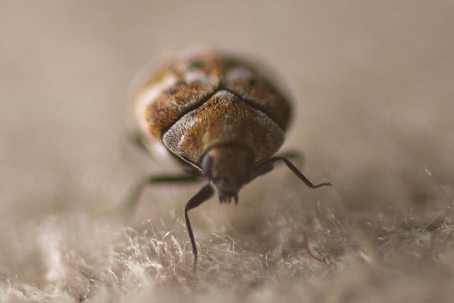
What Do Carpet Beetles Eat?
Carpet beetles feed on a variety of organic materials, primarily those that contain keratin, wool, silk, and other natural fibers. The diet of these beetles varies, depending on their life stage:
Larvae (Destructive Stage)
Carpet beetle larvae are the most damaging because they consume organic materials, including:
Animal-based fabrics – Wool, silk, leather, fur, feathers, and felt.
Household items – Carpets, rugs, upholstered furniture, blankets, and clothing (especially those made of natural fibers).
Dead insects and animals – They may feed on dried insect carcasses, animal hides, and even pet hair.
Stored food (occasionally) – Some species may infest dried foods like flour, cereals, and pet food.
Books and paper products – Especially if they contain glue or animal-based sizing.
Adults (Non-Destructive Stage)
Adult carpet beetles primarily feed on pollen and nectar from flowers and plants. They are often found outdoors or near windows as they seek light.
Since the larvae cause damage to household items, it’s crucial to control infestations early. If you’re dealing with carpet beetles, targeted cleaning, vacuuming, and pest control measures can help prevent serious damage.
Do Carpet Beetles Eat Fabric?
Yes, carpet beetles, particularly in their larval stage, readily eat fabric—but not all fabrics are equally appealing. They are primarily drawn to natural fibers that contain animal proteins. This includes:
Wool, silk, and cashmere – common in clothing, blankets, and scarves
Leather and fur – in jackets, shoes, and upholstery
Feathers – in pillows, comforters, and decorative items
Carpet beetles can also occasionally damage blends of natural and synthetic fibers if the material contains enough natural protein or if it’s soiled with food, sweat, or body oils. Synthetic fibers like polyester or nylon alone are generally resistant, though larvae may nibble at them if they are blended with wool or attached to leather trims.
The larvae are the destructive stage; adults mostly feed on pollen and nectar and are unlikely to cause damage to fabric. Signs of infestation include small irregular holes, shed larval skins, and fine hair-like bristles on fabrics.
Do Carpet Beetles Eat Carpet?
Yes, carpet beetles can eat carpets, but only those made from or containing natural fibers. Carpets composed of wool, silk, or blends containing these fibers are at risk. The larvae feed on the protein in these materials, which makes wool carpets particularly vulnerable.
Carpet beetles are not attracted to fully synthetic carpets like nylon, polyester, or olefin unless the fibers are contaminated with food, pet hair, or dust containing organic material. Damage typically appears as:
Irregular, patchy holes in the carpet fibers
Thinning areas in high-traffic or hidden spots (under furniture, along edges)
Shed larval skins and tiny bristles caught in fibers
Adults generally do not feed on carpet—they are primarily pollen and nectar feeders. The destruction is almost entirely caused by larvae.
For homes with wool or natural-fiber carpets, regular vacuuming, cleaning, and inspection of hidden areas are essential to prevent infestations.
Do Carpet Beetles Eat Clothing?
Yes, carpet beetle larvae readily eat clothing, particularly items made from natural fibers. Their preferred targets include:
Wool, silk, cashmere, and fur – coats, sweaters, scarves, hats, and gloves
Leather and suede – jackets, shoes, and accessories
Feathers – in jackets, pillows, or feather-trimmed clothing
Clothing made of synthetic fibers like polyester, nylon, or acrylic is generally safe unless it’s blended with natural fibers or contaminated with sweat, food, or oils, which can attract larvae.
Damage usually appears as:
Small irregular holes
Thin or worn patches in fabric
Presence of shed larval skins or tiny bristles on clothing
Adults do not feed on clothing; the destruction is caused exclusively by larvae. Proper storage—clean, sealed containers or garment bags—and regular laundering are key to preventing infestations.
Do Carpet Beetles Eat Dead Animals?
Carpet beetle larvae are scavengers that feed on dead animal matter rich in proteins like keratin, which they can digest. In homes or storage areas, they are most likely to consume:
Rodents and birds – carcasses or nests containing feathers or fur
Pet remains – hair, skin flakes, or small deceased animals
Other small vertebrate remains – if stored in attics, basements, or hidden spaces
They are drawn to any dried or decaying animal tissue that provides protein, fur, feathers, or skin. This is why infestations often start near attics, basements, or behind walls where dead animals may accumulate unnoticed.
Adults, however, do not feed on dead animals; the destructive feeding is entirely done by larvae.
Do Carpet Beetles Eat Wood?
No, carpet beetles do not eat wood. They primarily feed on organic materials like wool, silk, leather, feathers, and other natural fibers. The larvae, which cause the most damage, seek out fabrics and organic debris, but they do not bore into or consume wood like termites or wood-boring beetles like powderpost beetles.
However, if you find carpet beetles near wooden furniture, floors, or baseboards, they may be there because:
There are fabric materials nearby (e.g., wool rugs, upholstered furniture, or lint buildup).
They are feeding on dust, pet hair, or dead insects that have accumulated in cracks or crevices in wooden structures.
They are attracted to light, as adult carpet beetles tend to gather near windows or wooden surfaces exposed to sunlight.
If you’re seeing damage to wood, another pest like termites or powderpost beetles may be responsible.
Do Carpet Beetles Eat Paper?
Carpet beetles can occasionally damage paper, but it’s not their primary food source. They are mainly attracted to materials containing animal proteins or other organic matter. Paper that is clean and purely plant-based (like typical office paper) is generally safe, but they may chew on paper if it is:
Soiled with food, grease, or sweat
Lined with adhesives, glues, or bindings made from animal products
Containing animal-based decorations or fabrics, like certain book bindings or wallpaper with silk or leather inlays
Larvae are much more likely than adults to nibble on paper, and infestations often appear where paper is stored alongside wool, fur, or other natural fibers.
For archival or library materials, even minimal exposure to dust, oils, or proteins can make paper vulnerable to carpet beetle damage. Proper storage in sealed, clean containers can prevent this.