
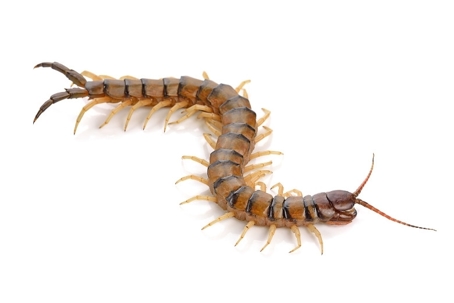
What Do Centipedes Look Like?
Recognizing centipedes helps distinguish between harmless species and those capable of delivering painful bites. While most centipedes are not lethal, some, like the Scolopendra species, can inject venom that causes significant pain, swelling, or allergic reactions. Accurate identification reduces unnecessary fear or mishandling.
Pest Management: Knowing what centipedes look like aids in controlling infestations. Homeowners and pest control professionals can implement targeted measures, such as sealing entry points or using traps, rather than applying indiscriminate pesticides that can potentially harm beneficial insects.
Medical Preparedness: Being able to identify centipedes enables quicker response in case of bites. Awareness of the species involved informs appropriate first aid or medical treatment, including whether medical attention is necessary for venomous species.
Centipedes can resemble other arthropods, such as millipedes, which are generally harmless. Correctly distinguishing centipedes from similar creatures prevents misinformed reactions, whether it’s panic, overuse of insecticides, or unnecessary relocation of non-threatening species.
Learn more: Centipedes vs Millipedes
What Size Are Centipedes?
The size of centipedes can vary significantly depending on the species. Centipedes can range in size from very small to relatively large. Here is an overview of the size range of centipedes:
- Small Centipedes: Some centipede species are quite small, measuring only a few centimeters in length. These tiny centipedes may be around 1 to 3 centimeters (0.4 to 1.2 inches) long. They are often found in leaf litter, soil, and other concealed habitats.
- Medium-Sized Centipedes: Many centipede species fall into the medium-sized category. These centipedes typically measure between 5 to 15 centimeters (2 to 6 inches) in length. They are commonly encountered in gardens, under rocks, and in damp environments.
- Large Centipedes: Some centipede species can grow to be relatively large. These centipedes can reach lengths of 20 to 30 centimeters (8 to 12 inches) or even more in some cases. Large centipedes are more commonly found in tropical regions and may have a more potent venom compared to smaller species.
Centipede size can also vary based on factors such as their age, diet, and environmental conditions. While the size range mentioned above covers most centipede species, there may be exceptions, and some particularly large or small species may exist.
How Big Can Centipedes Get?
Centipedes vary greatly in size depending on the species, with most common household varieties measuring between 1 and 6 inches (2.5–15 cm) in length. However, some tropical species can grow much larger. The largest known centipede, Scolopendra gigantea, found in parts of South America and the Caribbean, can reach lengths of up to 12 inches (30 cm) or more, with some reports exceeding 14 inches (35 cm). These larger centipedes are not only physically imposing but also possess more potent venom, making them capable of subduing larger prey, including small mammals and birds. Despite their size, centipedes are generally agile predators that rely on speed and their many legs to capture food rather than sheer bulk. Their size also varies with age, environmental conditions, and availability of food, meaning that under ideal conditions, a centipede can grow significantly larger than typical specimens encountered in temperate regions.
How Small Can Centipedes Be?
Centipedes can be remarkably small, with some species measuring just a few millimeters in length. The smallest centipedes, often from soil-dwelling or cave-adapted groups, can be as tiny as 5 millimeters (0.2 inches), making them easily overlooked in leaf litter, soil, or under rocks. These miniature species typically have fewer body segments and legs than larger centipedes, and their small size allows them to exploit microhabitats and prey on tiny invertebrates like mites, springtails, and other microscopic arthropods. Despite their diminutive stature, they are fully functional predators within their ecological niche, demonstrating that centipedes do not need to be large to be effective hunters.
What Color Are Centipedes?
Centipedes can exhibit a range of colors, and their coloration can vary depending on the species, their habitat, and even individual variations. Here is an overview of the colors that centipedes can be:
- Earthy Tones: Many centipede species are various shades of brown, from light tan to dark brown. These earthy colors often help them blend into their natural habitats, such as leaf litter and soil.
- Reddish-Brown: A common coloration among centipedes is a reddish-brown hue. This color can vary in intensity, with some centipedes having a deep reddish-brown coloration.
- Yellow and Orange: Some centipedes can be yellow or orange. These vibrant hues are less common but can be found in certain species.
- Green: Green centipedes are relatively rare, but they do exist. Their green coloration can provide camouflage in vegetation-rich environments.
- Gray and Black: While less common, there are centipede species with gray or black coloration. These colors can also help them blend into darker or shaded areas.
- Mottled or Patterned: Some centipedes may have mottled or patterned coloration, including stripes, spots, or other markings. These patterns can vary greatly between species.
- Bright Colors: In tropical regions, you may find centipede species with bright and striking colors, including blues and greens. These colors can serve as a warning to potential predators, indicating that the centipedes may be venomous.
- Iridescent: In certain species, the exoskeleton of centipedes can have an iridescent or metallic quality, reflecting a range of colors when viewed from different angles.
Centipede coloration can also change slightly as they molt and grow. Additionally, some species may have variations in color within the same population. While the colors mentioned here cover the general spectrum of centipede coloration, there may be exceptions and unique variations among different species and individuals.
What Shape Are Centipedes?
When viewed as a whole, the combination of elongation, segmentation, tapering, and numerous legs gives centipedes a worm-like appearance, though with much more pronounced appendages and a clear head region specialized for predation.
Elongated and Cylindrical: Centipedes have long, narrow, and cylindrical bodies that allow them to move quickly through soil, leaf litter, or narrow crevices. This streamlined shape is one of their defining features and is critical for navigating tight spaces while hunting or escaping predators.
Segmented Structure: Their bodies are divided into many distinct segments, each typically bearing a single pair of legs. This segmentation gives centipedes a flexible, jointed appearance, enabling them to coil, bend, and twist efficiently while moving or capturing prey.
Flattened Dorsoventrally (Varies by Species): Many centipedes are slightly flattened from top to bottom, which helps them squeeze under rocks, logs, and debris. Some species, particularly larger tropical ones, maintain a more cylindrical form, but a flattened body is generally advantageous for navigating narrow habitats.
Tapered Ends: Both the head and the tail of a centipede taper, giving it a pointed or slightly rounded appearance. The head usually bears long antennae and venomous forcipules (modified front legs), while the rear may have short terminal appendages that aid in balance and defense.
The legs extend from the sides of the body in a somewhat lateral arrangement, giving centipedes a sprawling, multi-legged appearance. This contributes to their rapid, undulating motion and gives them a distinctive, almost “many-legged” silhouette when in motion.
What Centipedes Look Like
In addition to their size, shape, and color:
Segmented Body: Centipedes have clearly divided body segments, each typically supporting one pair of legs. This segmentation is a defining feature and gives them a jointed, flexible appearance.
Numerous Legs: They possess many legs—usually one pair per body segment—arranged along the sides of the body. The legs are jointed and often angled outward, giving them a rapid, sprawling movement.
Antennae: On their head, centipedes have a pair of long, slender, highly sensitive antennae. These are used to sense their environment, detect prey, and navigate in the dark.
Forcipules (Venom Claws): Just behind the head, centipedes have modified front legs called forcipules, which function as venom-injecting pincers. These are often curved downward and are used to grasp and immobilize prey.
Eyes: Most centipedes have simple eyes (ocelli) or clusters of eyes, but some species are blind. Their vision is generally limited, relying more on tactile and chemical senses.
Mouthparts: Centipedes have strong mandibles and specialized mouthparts adapted for biting and consuming prey. These are positioned beneath the head and work in conjunction with the forcipules.
Posterior Features: The rear end of a centipede may have small terminal appendages or spines, which help with balance, sensory perception, or defense.
When active, centipedes often exhibit a sinuous, undulating motion with legs moving in a coordinated wave-like pattern, giving them a distinctly agile and predatory appearance.
How Many Legs Do Centipedes Have?
Centipedes are famous for having many legs, but contrary to popular belief, they do not have exactly 100 legs. The number of legs varies widely depending on the species and can range from as few as 30 to over 350. Each body segment typically bears a single pair of legs, and centipedes always have an odd number of leg pairs, meaning their total leg count is always even in terms of individual legs but odd in terms of pairs. Smaller species that live in soil or leaf litter tend to have fewer segments and legs, while larger tropical species, such as Scolopendra gigantea, can possess more than 20 pairs of legs. The legs are arranged laterally along the body, with those at the front often shorter and adapted for capturing prey, while the legs toward the rear are longer and aid in rapid locomotion. This multitude of legs enables centipedes to move quickly, squeeze into narrow crevices, and maintain balance while hunting or escaping predators. Their leg count increases incrementally with each molt during growth, meaning younger centipedes often have fewer legs than adults. The vast range of leg numbers across centipede species reflects their diversity, adaptability, and specialization as agile, predatory arthropods.
Do Centipedes Have Eyes?
Yes, centipedes do have eyes, but their visual capabilities vary significantly depending on the species. Most centipedes possess simple eyes called ocelli, which are small, single-lens structures that detect light and movement rather than forming detailed images. Some species have a cluster of several ocelli on each side of the head, while others may have only one or two, or none at all in species adapted to dark environments like caves or soil, where vision is less useful. Even in species with functional eyes, centipedes rely far more on their highly sensitive antennae and other tactile and chemical sensory organs to navigate, hunt, and avoid predators. The eyes help them sense changes in light, detect approaching threats, and orient themselves in their environment, but they are generally not capable of sharp vision or color discrimination. Blind species compensate with enhanced touch and vibration detection, demonstrating that while eyes are a common feature in centipedes, their importance for survival is secondary to other sensory adaptations.
What Do Centipede Nymphs Look Like?
Centipede nymphs, which are the juvenile stages of centipedes, resemble miniature versions of adults but with several noticeable differences. They typically hatch with fewer body segments and legs than adults, and the number of legs increases progressively with each molt until they reach maturity. Their bodies are often softer and more delicate, making them slightly more translucent than fully grown centipedes. Nymphs retain the same basic features as adults, including a segmented body, antennae, and small forcipules for capturing prey, but these structures are proportionally smaller and less developed. Their movements are similar to adults—fast and coordinated—but because of their smaller size and undeveloped exoskeleton, they may appear more fragile and less robust. In many species, coloration is also less pronounced in nymphs, providing a subtle camouflage that helps protect them from predators during these vulnerable early stages of life. Overall, centipede nymphs are essentially scaled-down, softer, and less segmented versions of adult centipedes, gradually developing full adult characteristics as they grow through successive molts.
What Do Centipede Eggs Look Like?
Centipede eggs are generally small, oval or spherical, and soft-bodied, often with a smooth or slightly textured surface. They are usually white, cream, or pale yellow in color, which can make them blend in with soil, leaf litter, or decaying wood where they are commonly laid. Depending on the species, a female may deposit a few dozen eggs in clusters or individually, often in protected environments such as under rocks, within soil crevices, or in rotting logs to shield them from predators and environmental stress. Some species exhibit parental care, with the female curling around the eggs to keep them moist and defend them until they hatch. The eggs are fragile and translucent when freshly laid, becoming slightly more opaque as development progresses. After a period ranging from a few weeks to a couple of months, tiny centipede nymphs emerge, usually resembling miniature adults but with fewer body segments and legs. The appearance and placement of centipede eggs reflect adaptations for survival, moisture retention, and protection in their natural habitats.