
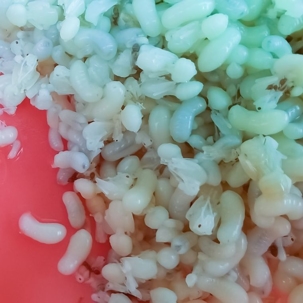
Do Ants Lay Eggs?
Yes, ants do lay eggs.
Ant Eggs
In an ant colony, the queen ant is the primary reproductive individual. Her main function is to lay eggs, sometimes thousands per day depending on the species and the size of the colony. The queen lays fertilized and unfertilized eggs: Fertilized eggs develop into females, which can be workers or new queens. Unfertilized eggs develop into males, whose sole purpose is reproduction.
Worker Ants: In most species, worker ants do not lay eggs. However, in some species without a queen, workers can lay unfertilized eggs that become males.
Environmental Influence: Factors like temperature, colony health, and food availability can affect egg-laying rates and the development of the eggs.
Ant reproduction is highly organized and central to the colony’s survival, with the queen essentially acting as the life source of the colony.
What Do Ant Eggs Look Like?
Being able to identify ant eggs is critical for effective ant control and colony management:
Early Detection of Infestation: Ant eggs indicate an active colony is present. Finding eggs allows you to detect infestations before they become large and harder to control, since eggs precede larvae, pupae, and fully grown workers. This is especially important because adult ants may only be foraging outside the nest, masking the colony’s actual size.
Targeting the Colony, Not Just Foragers: Sprays and baits aimed at adult ants often fail to eliminate the colony entirely because the queen and eggs remain protected. By identifying areas where eggs are clustered, treatments can be focused on the nest, disrupting reproduction and preventing population growth.
Understanding the Species and Behavior: Different ant species lay eggs in different patterns, locations, and quantities. Recognizing eggs can help identify the species, which is crucial because treatment strategies vary depending on whether the colony is carpenter ants, odorous house ants, fire ants, etc.
Monitoring Effectiveness of Treatment: After applying control measures, checking for eggs (or absence thereof) is an excellent way to confirm that the queen has been eliminated and the colony is no longer reproducing.
Preventing Future Infestations: Spotting eggs in early stages allows proactive measures. Removing or treating eggs can break the reproductive cycle, reducing the risk of reinfestation.
Cost-Effective Management: By identifying eggs, interventions can be precise rather than broad, which saves time, resources, and reduces unnecessary pesticide use.
Being able to see and recognize ant eggs allows you to intervene at the source of the problem rather than just chasing adult ants, making efforts to get rid of ants far more effective.
What Size Are Ant Eggs?
Ant eggs are very small, typically measuring between 0.5 to 1.5 millimeters in length, depending on the species. The tiny size allows them to be carried and tended by worker ants within the nest. Despite their minute dimensions, these eggs are the starting point for the colony’s entire population, eventually developing into larvae, pupae, and adult ants.
How Big Are Ant Eggs?
In larger ants, such as queen carpenter ants or leafcutter ants, eggs can reach up to 2–3 mm. These eggs are more elongated and slightly thicker than those of smaller ants.
Queen Eggs vs. Worker Eggs: Eggs laid by queens destined to become new queens are often larger than eggs that will develop into workers or males.
Environmental Influence: Egg size can also vary slightly depending on nutrition and colony health, with well-fed queens producing larger, more viable eggs.
So, while ant eggs are generally tiny, certain species and reproductive roles can produce eggs several times larger than the average.
How Small Are Ant Eggs?
Ant eggs can be extremely small, especially in tiny ant species.
Smallest Eggs: In very small ants, like pharaoh ants or thief ants, eggs can measure as little as 0.25–0.5 millimeters in length—roughly the size of a pinhead or a grain of sand.
Worker and Male Eggs: Eggs destined to become workers or males in small species are often the smallest, while queen-destined eggs are slightly larger.
Their minuscule size means that even a large cluster of eggs can be easily overlooked, which is why early detection of infestations often requires careful examination of the nest or brood chambers.
What Shape Are Ant Eggs?
Ant eggs are generally oval or cylindrical in shape. They are elongated with rounded ends, allowing them to be easily carried and tended by worker ants. While most species have smooth, symmetrical eggs, slight variations in shape can occur depending on the species or the developmental stage, with queen-destined eggs sometimes being slightly larger and more elongated than worker or male eggs.
Are Ant Eggs Round?
Ant eggs are not perfectly round; they are typically oval or cylindrical with rounded ends. This elongated shape makes them easier for worker ants to carry, cluster, and care for within the nest. While very small eggs may appear almost spherical to the naked eye, a closer look usually reveals their true oval form.
Are Ant Eggs Oval Shaped?
Yes, ant eggs are generally oval-shaped. They have an elongated form with rounded ends, which makes them easy for worker ants to carry, cluster, and tend within the nest. While some variation exists between species and egg types, the oval shape is the most common and characteristic form of ant eggs.
What Color Are Ant Eggs?
Ant eggs are generally very small and uniform in color, but there are subtle variations depending on species and age. Ant eggs are subtle in color, which is why careful inspection of the nest is often needed to locate them:
Are Ant Eggs White?
Yes, ant eggs are typically white or off-white in color. They are small, oval, and often slightly translucent, giving them a delicate, almost milky appearance. While white is the most common color, some eggs may appear creamy or slightly yellowish depending on the species and age, but they rarely deviate far from this pale range.
Are Ant Eggs Cream Colored?
Yes, some ant eggs can appear cream-colored, particularly in certain species or as they age. While most eggs are white or translucent when freshly laid, they may take on a pale, creamy hue over time. This subtle color variation does not affect their development but can help in identifying eggs in the nest.
Are Ant Eggs Yellow?
Ant eggs are generally not yellow, but in some species or under certain conditions, they can take on a very pale yellow tint. This is uncommon and usually subtle, with most eggs remaining white, translucent, or creamy in appearance. The yellowish hue does not affect their development and is primarily a natural variation.
Are Ant Eggs Translucent?
Yes, ant eggs are often translucent, especially when freshly laid. This translucency allows light to pass through, giving them a delicate, almost glassy appearance. Depending on the species and the stage of development, they may also appear milky or slightly opaque as the embryo inside begins to grow.
What Ant Eggs Look Like
In addition to their color, shape, and size, ant eggs have several notable characteristics:
Texture: They are smooth and slightly glossy, which helps prevent them from sticking together or to surfaces within the nest.
Surface Fragility: The outer shell, called the chorion, is very delicate and soft, making eggs easily damaged if handled roughly.
Grouping: Ant eggs are almost always found in clusters or batches, as workers tend to group them together for easier care and temperature regulation.
Moisture Sensitivity: Eggs require a humid environment; they are often kept in brood chambers where workers can regulate moisture to prevent desiccation.
Movement: Worker ants frequently manipulate eggs, moving them to optimal locations in the nest, which gives the eggs a somewhat “handled” appearance in well-maintained colonies.
Developmental Changes: As the embryo develops inside, eggs may appear slightly less uniform or show subtle internal structures when examined closely under magnification.
These features make ant eggs highly dependent on worker care and a protected environment for successful development.
Do Ant Eggs Look Like Rice?
Yes, ant eggs are often compared to grains of rice in appearance due to their small, elongated shape. Like rice, they are smooth and slightly tapered at the ends, though much smaller—usually only a fraction of a millimeter long. This resemblance makes them easier to visualize when inspecting a nest, even though their delicate texture and translucence differentiate them from actual rice grains.
Where Do Ants Lay Eggs?
Ant eggs are most commonly found in the brood chambers of the colony, where the queen lays them. These areas are usually well-protected, dark, and humid.
Hidden Cracks and Crevices: Many ants build nests in small, concealed spaces such as wall voids, under floors, or behind baseboards, making these spots prime locations for eggs.
Outdoor Nests: For species like fire ants, carpenter ants, or pavement ants, eggs are often laid in soil mounds, under rocks, or inside decaying wood.
Near Food and Moisture Sources: Worker ants sometimes move eggs closer to areas with consistent warmth and moisture, especially if the nest is within a structure.
Furniture or Wood Structures: Carpenter ants, in particular, may lay eggs inside wooden beams, furniture, or structural timbers where they can chew galleries and maintain humidity.
Avoiding Light: Ant eggs are typically kept in dark, protected spots since exposure to light or open air can dry them out or make them vulnerable.
Identifying these areas is key to effective inspection and targeted pest control.