
Are Opossums Dangerous?
While opossums (also called possums in North America) are generally not aggressive and rarely pose a direct threat to humans or pets, there are several ways they can still be considered potentially dangerous or problematic, particularly when living close to homes or businesses. Below is a detailed breakdown of the main health, safety, and property risks associated with opossums:
Are Opossums Aggressive?
Opossums are not naturally aggressive animals. They are shy, nocturnal scavengers whose primary defense strategy is avoidance, not confrontation. When given an escape route, an opossum will almost always retreat rather than attack.
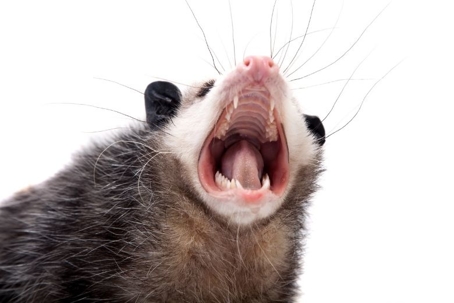
What is commonly mistaken for aggression is defensive behavior. When an opossum feels cornered or threatened, it may hiss, growl, bare its teeth, or open its mouth wide in an attempt to appear dangerous. This display is meant to scare predators away and is rarely followed by physical contact.
If the threat continues, opossums often resort to thanatosis, commonly known as “playing dead.” During this involuntary response, the animal becomes immobile, appears unconscious, and may emit a foul odor. This behavior is a last-resort survival mechanism and not a sign of aggression or illness.
Biting is uncommon and usually only occurs if an opossum is physically handled, trapped improperly, or injured. Even then, their low body temperature and strong immune response make them far less likely to transmit rabies than many other mammals.
Disease Transmission
Opossums can carry and spread various pathogens, parasites, and zoonotic diseases, even if they appear healthy. While they are less likely than raccoons or skunks to transmit rabies (due to their lower body temperature), they are still capable of spreading other harmful agents:
Rabies:
Opossums rarely spread rabies, and they are considered one of the lowest-risk wildlife species for rabies transmission. While they are mammals and can technically become infected, their low body temperature and strong immune response make rabies infection and viral shedding uncommon.
In the rare event an opossum is rabid, rabies would be spread the same way it is with other mammals: through saliva entering the body via a bite, scratch, or contact with mucous membranes such as the eyes, nose, or mouth. The virus must be present in the saliva and gain direct access to tissue or the nervous system to cause infection.
Opossums do not spread rabies through urine, feces, blood, or casual contact. Touching an opossum, being near one, or encountering droppings does not pose a rabies risk. Transmission requires a specific exposure involving saliva and broken skin or mucous membranes.
Most reported rabies cases in wildlife involve raccoons, bats, skunks, and foxes, not opossums. When opossums display unusual behavior—such as daytime activity, disorientation, or lack of fear—these signs are far more often caused by injury, poisoning, or neurological disease rather than rabies.
Leptospirosis:
Opossums spread leptospirosis primarily through the shedding of Leptospira bacteria in their urine. When an opossum is infected, the bacteria colonize its kidneys and are excreted continuously or intermittently in urine, often without the animal appearing sick. This makes opossums effective environmental contaminators rather than direct transmitters.
The bacteria survive well in moist environments, especially warm, shaded areas such as soil, mud, puddles, drainage ditches, crawlspaces, and standing water. When opossums urinate on these surfaces, the bacteria can persist for weeks or even months under favorable conditions. Rain can spread the contamination over a wider area, increasing exposure risk.
Transmission occurs when humans or animals come into contact with contaminated water or soil, and the bacteria enter the body through broken skin, cuts, abrasions, or through mucous membranes of the eyes, nose, or mouth. Direct handling of contaminated materials—such as insulation, soil, or debris in areas where opossums nest or travel—also increases risk.
Domestic animals, particularly dogs, are at elevated risk because they may drink from contaminated puddles, investigate urine-marked areas, or hunt wildlife. Once infected, pets can become seriously ill and may further spread bacteria in their own urine, amplifying environmental contamination around homes or facilities.
Opossums do not typically spread leptospirosis through bites or direct contact. The disease is considered environmentally transmitted, with urine contamination being the primary mechanism. Effective prevention focuses on wildlife exclusion, sanitation, moisture control, and the use of protective equipment when cleaning areas contaminated by wildlife activity.
Salmonella:
Opossums spread salmonellosis primarily through fecal contamination of the environment. When an opossum is infected with Salmonella bacteria, the organism is shed in its droppings, often without visible signs of illness. As opossums travel through yards, attics, crawlspaces, garbage areas, and outdoor food sources, they can deposit contaminated feces on surfaces that later come into contact with people or animals.
The bacteria are commonly spread when food, water, or surfaces become contaminated. Opossums may defecate near pet food bowls, bird feeders, compost piles, gardens, or trash containers. Rainwater and foot traffic can further distribute the bacteria across patios, walkways, and soil, increasing the likelihood of indirect exposure.
Humans and animals become infected through hand-to-mouth contact after touching contaminated surfaces and failing to wash their hands thoroughly. Children, elderly individuals, and immunocompromised people are at higher risk due to lower resistance to infection. Pets may ingest Salmonella by sniffing or consuming contaminated material, then carry the bacteria indoors on their fur or paws.
Direct handling of opossums or their droppings also presents a risk, particularly during cleanup or exclusion activities without proper protective equipment. While opossums are not aggressive and rarely bite, salmonellosis does not require direct contact with the animal—environmental contamination is the primary route of transmission. Proper sanitation, exclusion, and hygienic cleanup practices are key to preventing spread.
Tularemia:
Opossums spread tularemia primarily through indirect transmission involving ectoparasites, rather than through direct contact. When opossums become infected with Francisella tularensis, the bacteria circulate in their bloodstream and can be picked up by ticks, fleas, or biting flies that feed on them. These infected parasites can then transmit the bacteria to humans or pets through subsequent bites.
Transmission can also occur through direct handling of an infected opossum, particularly if the animal is sick or deceased. Skinning, disposing of carcasses, or cleaning areas contaminated with blood or bodily fluids can allow the bacteria to enter through cuts, abrasions, or mucous membranes. Although less common, this route poses a higher risk for people involved in wildlife control or carcass removal.
Environmental exposure is another possible route. Francisella tularensis can survive for extended periods in soil, water, or vegetation contaminated by infected animals. Humans or animals may become infected by inhaling contaminated dust or by contacting contaminated water, especially in rural or wooded areas where wildlife activity is high.
Opossums are considered a minor reservoir for tularemia compared to rabbits, rodents, and some other wildlife species. While the overall risk from opossums is relatively low, their role in supporting infected parasite populations and contributing to environmental contamination makes proper protective measures important during wildlife handling and cleanup.
Property and Structural Damage
Opossums cause property damage primarily through accessing structures for shelter, food, and nesting, rather than through chewing or intentional destruction. Their damage is usually the result of repeated movement, nesting activity, and contamination rather than structural gnawing.
Opossums commonly damage property by entering attics, crawlspaces, sheds, garages, and decks. They exploit existing openings such as damaged vents, loose soffits, uncapped chimneys, or gaps under foundations. While entering and exiting, they can bend screens, dislodge vent covers, tear duct insulation, and widen weak entry points over time.
Once inside a structure, opossums often cause damage through nesting and bedding behavior. They use insulation, stored materials, or debris to create nests, compressing or displacing insulation and reducing its effectiveness. This can lead to higher energy costs and moisture retention, increasing the risk of mold growth.
A significant form of damage comes from urine and fecal contamination. Opossums tend to use specific areas as latrines, leading to strong odors, staining of wood or drywall, corrosion of metal surfaces, and contamination that can require professional cleanup. Accumulated waste can also attract insects and secondary pests.
Outdoor damage commonly occurs around gardens, lawns, and landscaping. Opossums may dig shallow holes while foraging for insects, grubs, or fallen fruit. They also overturn trash cans, scatter garbage, and damage fencing or skirting while accessing crawlspaces.
Although opossums do not chew wiring like rodents, their weight and climbing behavior can break roof tiles, damage shingles, collapse weak ductwork, and dislodge stored items. Over time, these issues can result in costly repairs if access points and attractants are not properly addressed.
Attracting Secondary Pests and Predators
Opossums attract other pests and predators primarily by creating food sources, shelter opportunities, and scent trails that signal the presence of an accessible environment. Their activity often acts as a catalyst for broader pest pressure rather than an isolated wildlife issue.
One of the main ways opossums attract other pests is through food contamination and spillage. As scavengers, they rummage through trash cans, compost piles, pet food areas, gardens, and fallen fruit. Leftover food scraps, scattered garbage, and partially eaten material attract rodents, insects, raccoons, skunks, and feral animals. These secondary pests may remain even after the opossum is gone.
Opossums also attract pests through feces and urine accumulation. Waste deposits provide organic material that supports flies, cockroaches, beetles, and other insects. These insects, in turn, draw spiders, ants, and insect-eating rodents, increasing pest diversity and population density around the property.
Their presence commonly introduces fleas, ticks, mites, and lice into an area. When opossums nest under decks, in crawlspaces, or in sheds, ectoparasites drop off into the surrounding environment. These parasites can then infest pets, wildlife, or interior spaces, creating ongoing health and control issues.
By occupying or creating shelter sites, opossums indirectly attract larger predators. Hawks, owls, coyotes, foxes, bobcats, and domestic dogs may be drawn to properties where opossums regularly travel or den. This increases the likelihood of predator sightings, aggressive encounters, and additional property damage.
Opossums also leave strong scent trails from glandular secretions and waste that signal consistent wildlife activity. These odors act as markers to other animals that food, shelter, and safety are available, turning a single opossum problem into a multi-species pest issue if exclusion and sanitation are not properly addressed.
Odor And Sanitation Problems
Opossums create sanitation, odor, and biohazard problems primarily through repeated waste deposition, nesting behavior, and decomposition, especially when they occupy enclosed or poorly ventilated spaces. These issues often escalate over time if the animals are not excluded promptly.
Sanitation problems begin with urine and feces accumulation. Opossums tend to reuse specific areas as latrines, leading to concentrated waste buildup in attics, crawlspaces, under decks, sheds, and garages. This waste can soak into insulation, wood, drywall, and soil, contaminating surfaces and making standard cleaning ineffective. The contamination creates conditions favorable for bacteria, fungi, and parasites.
Odor issues develop as waste breaks down and ammonia levels rise. Urine produces strong, persistent smells that penetrate porous building materials and can travel through HVAC systems into living spaces. Fecal matter contributes additional odors and becomes increasingly offensive as moisture and heat accelerate decomposition. These odors often persist long after the animals are gone without professional remediation.
Biohazard concerns arise from the pathogens and parasites associated with opossum waste. Feces and urine can harbor bacteria such as Salmonella and Leptospira, while nesting areas may contain fleas, ticks, mites, and fly larvae. Disturbing contaminated materials can aerosolize bacteria or dust, increasing the risk of exposure through inhalation or contact with mucous membranes.
Carcasses present an additional biohazard risk. Opossums frequently die inside wall voids, crawlspaces, or attics, leading to rapid decomposition odors, maggot infestations, and fluid leakage that can saturate insulation and structural components. This creates severe sanitation issues and can attract scavenging insects and animals.
Psychological and Emotional Stress
Opossums can cause psychological and emotional stress by creating a persistent sense of invasion, uncertainty, and loss of control within a home or property. Even when physical damage is limited, the ongoing presence of wildlife in or around living spaces can significantly affect occupants’ well-being.
Stress commonly develops from unexpected encounters and fear responses. Opossums are nocturnal, so residents often hear loud thumping, scratching, or hissing sounds at night. These unexplained noises disrupt sleep, increase anxiety, and create ongoing worry about what is moving inside walls, ceilings, or crawlspaces. Repeated disturbances can lead to chronic sleep deprivation and heightened stress levels.
Health-related anxiety is another major factor. Concerns about disease exposure, parasites, contamination, and odorscan cause constant worry, particularly for households with children, elderly individuals, or pets. Even when actual risk is low, the perception of potential health threats can lead to ongoing unease and hypervigilance.
Opossums can also cause emotional distress by creating a sense of unsanitary or unsafe living conditions. Strong odors from urine, feces, or decomposition can make spaces feel unclean and unlivable. Residents may avoid certain rooms, storage areas, or outdoor spaces, reducing their quality of life and enjoyment of their property.
For some individuals, the stress is amplified by helplessness or frustration. Repeated sightings, failed do-it-yourself solutions, or recurring infestations can create feelings of loss of control and resentment toward the property itself. This is especially common when damage, odors, or noises persist despite efforts to resolve the issue.