
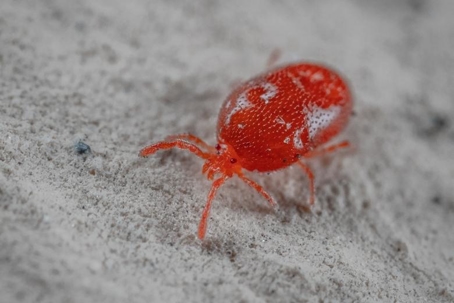
What Do Mites Look Like?
Different mite species vary widely in behavior, habitat, and the damage they cause. Some, like spider mites, attack plants, while others, like scabies or dust mites, affect humans. Being able to visually identify the specific mite allows for targeted treatment rather than using generic methods that may be ineffective or even harmful.
Prevention of Infestations: Recognizing mites early, even in small numbers, is crucial to preventing larger infestations. Many mites reproduce rapidly, so knowing their appearance enables timely action before populations explode.
Health and Safety Considerations: Certain mites carry diseases or trigger allergic reactions. For example, bird mites can bite humans, causing irritation, and dust mites contribute to asthma and allergic symptoms. Being able to recognize them ensures proper precautions, such as protective equipment or environmental controls.
Appropriate Chemical or Physical Intervention: Different mite species respond differently to different treatments. Some require insecticides, others need humidity control or heat treatment. Visual identification ensures the correct method is chosen, increasing effectiveness and reducing unnecessary chemical exposure.
Monitoring and Documentation: Knowing what mites look like supports accurate reporting, monitoring infestation trends, and evaluating the success of control measures. Without visual identification, it’s difficult to measure whether interventions are working.
Many pests, such as small insects or other arthropods, can be mistaken for mites. Correct identification prevents misdiagnosis, which could lead to improper control measures and wasted resources.
What Size Are Mites?
Most mites are extremely small, usually between 0.2 mm and 0.5 mm in length. To put this in context, a standard grain of sand is roughly 0.5–2 mm, so many mites are smaller than or about the size of a coarse grain of sand. Their minuscule size is why early infestations often go unnoticed until damage or bites occur. Careful inspection under magnification is essential for accurate detection and identification.
How Big Can Mites Get?
Mites are generally very small, but some species can grow larger; for example, certain parasitic or soil-dwelling mites may reach up to 1 millimeter. Even at their largest, mites are still extremely tiny compared to most insects, which is why detecting them often requires magnification.
How Small Can Mites Be?
Mites can be remarkably small, with some species measuring as little as 0.1 to 0.2 millimeters in length. At this microscopic scale, they are almost invisible to the naked eye and can easily go unnoticed in homes, on plants, or on animals. Their minuscule size allows them to inhabit tiny crevices, dust particles, or skin layers, which can make detection and control challenging. Despite their tiny dimensions, these mites are fully functional arthropods capable of feeding, reproducing, and causing damage or irritation, highlighting the importance of careful inspection and magnification when monitoring for infestations.
Are Mites Visible?
Mites are often too small to be easily seen with the naked eye, though some larger species may be faintly visible as tiny specks moving on surfaces, plants, or skin. Most common household or plant mites, such as dust mites or spider mites, are microscopic, typically ranging from 0.2 to 0.5 millimeters, making them almost invisible without magnification. Detection usually relies on observing indirect signs, such as webbing, bite marks, or damage to plants, rather than seeing the mites themselves. Using a magnifying glass or microscope is often necessary for proper identification, inspection, and monitoring of mite infestations.
What Color Are Mites?
The color of mites can vary widely depending on their species, habitat, and diet. Mites come in a range of colors, and their coloration often serves as a form of camouflage, helping them blend into their environment. Here are some common colors that mites can exhibit:
- Transparent or Colorless: Many mites are translucent or nearly colorless, making them difficult to see with the naked eye. These mites may appear clear or pale, allowing them to go unnoticed on surfaces like leaves or skin.
- White: Some mites are white or off-white, especially those that live in snowy or pale environments. This coloration helps them remain inconspicuous on surfaces where other colors would stand out.
- Brown: Brown is a common color for mites. It can range from light brown to dark brown, depending on the species. Brown mites often inhabit soil, leaf litter, and organic debris.
- Red: Red mites are also quite common and can vary in shade from light pinkish-red to deep crimson. You may find red mites on plants, in the soil, or on some animals.
- Green: Certain mites can appear green, which is an adaptation for blending in with plant foliage. Green mites are often herbivorous and feed on plant tissues.
- Black: While less common, some mites have a black or dark coloration. These mites may inhabit various environments, including soil, animals, and decaying organic matter.
- Yellow: Yellow mites are less common but can be found in some species. Their coloration may help them blend with specific plants or substrates.
Mites are incredibly diverse, with thousands of described species and likely many more yet to be discovered. Consequently, their coloration can vary significantly, and some mites may exhibit patterns or markings in addition to their base color. When identifying mites or studying their characteristics, it's crucial to consider not only color but also other morphological features and habitat preferences to accurately classify them.
What Shape Are Mites?
Mites are small, compact arthropods with a body that is usually oval or round when viewed from above. Their legs are relatively short compared to their body size, giving them a squat appearance.
Segmented Body: Like other arachnids, mites have two main body regions—the cephalothorax (front, fused head and thorax) and the abdomen—though in many mites these segments appear merged, making the body look like a single oval shape.
Special Adaptations Affecting Shape: Some mites have flattened bodies for living under skin or in cracks, while others have slightly elongated or rounded forms for crawling on plants or surfaces.
Leg Placement: Mites have four pairs of legs in the adult stage, often giving the body a symmetrical appearance. Juveniles may have fewer legs, which can slightly alter the visible shape.
The most common shapes are oval to round, sometimes slightly flattened depending on habitat and lifestyle, making them distinct from insects with segmented, elongated bodies.
Do Mites Have Antennae?
Mites do not have antennae. Unlike insects, which typically possess a pair of antennae used for sensing their environment, mites belong to the class Arachnida, the same as spiders, ticks, and scorpions. Instead of antennae, mites rely on other sensory structures to detect their surroundings. These include tiny hairs, bristles, or specialized sensory organs on their legs or body, which can sense vibrations, chemical signals, humidity, and temperature. Their mouthparts can also have sensory functions, helping them locate food or hosts. This lack of antennae is a key distinguishing feature that separates mites and other arachnids from insects, despite their small size and sometimes insect-like appearance.
What Mites Look Like
Mites are much more than tiny dots; these microscopic features—surface texture, legs, mouthparts, and subtle body markings—are what experts use for species identification beyond size, shape, or color:
Surface Texture: Mites often have fine hairs, bristles, or bumps on their bodies. For example, spider mites have tiny setae (hairs) that can be seen under magnification, and scabies mites have a rough, grainy-looking surface that helps them anchor into skin.
Leg Structure: Mites have eight jointed legs as adults, with some species showing tiny claws or specialized structures at the tips for gripping surfaces, fur, or feathers. Juveniles may have six legs. The legs are often proportionally short compared to the body.
Mouthparts: Mites have specialized mouthparts adapted to their feeding habits. Piercing-sucking mouthparts for plant-feeding mites like spider mites, chewing or gnawing mouthparts for some soil mites, and burrowing and skin-penetrating mouthparts for parasitic mites like scabies.
Body Segmentation and Features: Even though many mites appear as a single oval body, their bodies may show subtle divisions or lobes, sometimes with a hardened dorsal shield or patterning that is species-specific.
Movement Behavior: Mites often exhibit slow, crawling movements, but some, like spider mites, can move rapidly over surfaces. Some species may spin fine silk webs or leave visible trails, which is a behavioral clue to their presence.
Certain mites may carry visible eggs or tiny translucent sacs attached to the body or nearby, which can be indicators of infestation. Some parasitic mites appear shiny or slightly translucent when engorged with blood or tissue fluids.
What Do Mite Eggs Look Like?
Mite eggs come in various shapes, sizes, and colors, depending on the species of mite. However, they typically share some common characteristics. Here's what mite eggs look like:
- Size: Mite eggs are very small and often barely visible to the naked eye. They are typically less than 0.5 millimeters in size, and some can be as tiny as a few micrometers.
- Shape: Mite eggs are usually oval or round, but the exact shape can vary. Some may appear more elongated than others. The shape is influenced by the specific adaptation of the mite species and the structure of the surface they are laid on.
- Color: The color of mite eggs can vary widely. They can be transparent, white, cream-colored, brown, or even reddish, depending on the species. The color may change as the egg develops, so freshly laid eggs may look different from older ones.
- Texture: Mite eggs often have a smooth or slightly textured surface. This texture can help them adhere to the substrate they are laid on, whether it's a plant leaf, animal skin, or another surface.
- Clustering: Depending on the mite species, the eggs may be laid singly or in clusters. Some mites, especially those that are social or parasitic, may lay their eggs in a protected nest or burrow.
- Attachment: Mite eggs are typically attached firmly to the substrate by a thin stalk or pedicel. This attachment helps anchor the eggs in place and prevents them from being easily dislodged by environmental factors.
The appearance of mite eggs can vary significantly between different species, making it challenging to identify them solely based on egg characteristics. For accurate identification, especially in the context of pest control or research, it's essential to consider the entire life cycle of the mite, including the morphology of adults, nymphs, and eggs, as well as their behavior and habitat preferences.