
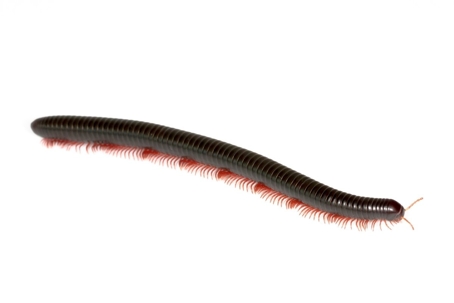
Are Millipedes Venomous?
No, millipedes are not venomous. Unlike venomous animals such as scorpions, spiders, and snakes, they do not inject toxins through a bite or sting. Instead, millipedes are chemically defensive and rely on external secretions from specialized glands (ozadenes) along their body. These chemicals—like hydrogen cyanide, benzoquinones, and phenols—are released when the millipede is threatened.
Contact with these secretions can irritate the skin or eyes and sometimes cause mild discomfort if ingested, but there is no venom injected, so they cannot cause poisoning through a bite.
Are Millipedes Poisonous?
Millipedes are not venomous, but they can be chemically defensive:
Defensive Secretions: Many millipede species secrete chemicals from glands along the sides of their bodies when threatened. These secretions can contain compounds such as hydrogen cyanide, quinones, or phenols, depending on the species. These chemicals are primarily meant to deter predators rather than harm humans.
Human Contact: Direct contact with millipede secretions can cause skin irritation, redness, or a burning sensation. It’s usually mild but can be more pronounced in sensitive individuals. Accidental ingestion could cause nausea or gastrointestinal upset but is rarely dangerous.
Contrast With Centipedes: Unlike millipedes, centipedes are venomous and can bite, causing pain, swelling, and sometimes allergic reactions. This is a key distinction when assessing risk.
Millipedes are chemically defensive but not poisonous in a lethal sense. The main concern is skin irritation or mild discomfort if chemicals are contacted or ingested.
What Do Millipedes Secrete?
Millipedes secrete a variety of chemical compounds from specialized glands called ozadenes (or repugnatorial glands) located along the sides of their body segments. These secretions are used primarily for defense against predators. The exact chemical composition varies by species:
Do Millipedes Secrete Hydrogen Cyanide?
Yes, some millipedes secrete hydrogen cyanide (HCN) as a chemical defense, but it is species-specific and generally intended to deter predators rather than harm humans:
Species That Produce HCN: Many tropical millipedes, particularly large, brightly colored ones in the family Polydesmidae and related groups, can release hydrogen cyanide from specialized glands (ozadenes) along their body. Most temperate-zone millipedes (North America and Europe) primarily secrete benzoquinones, which are less toxic than HCN.
Mechanism of Secretion: HCN is produced as a gaseous chemical when the millipede is threatened. The secretion is usually low in concentration, enough to repel predators like birds, small mammals, or insects, but not lethal to humans in normal encounters.
Effects on Humans: Direct contact with HCN-containing secretions can cause skin irritation or a bitter almond smell, which is the characteristic odor of cyanide. In very high, concentrated exposures (extremely rare in casual handling), inhalation could theoretically cause mild respiratory discomfort, but serious poisoning from a millipede is essentially unheard of.
Hydrogen cyanide secretion occurs in some millipede species, but in humans it is generally only irritating, not dangerously toxic.
Do Millipedes Secrete Benzoquinones?
Yes, many millipedes, particularly those in North America and Europe, secrete benzoquinones as part of their chemical defense system:
Purpose of Benzoquinone Secretion: Benzoquinones are released from specialized repugnatorial (ozadene) glands when the millipede is threatened. The secretion acts as a repellent to predators, including ants, birds, small mammals, and other insects.
Effects on Humans: Can cause skin irritation, redness, itching, or a mild burning sensation upon contact. May stain skin or surfaces temporarily due to the dark-colored chemical. Eye contact can result in watering, redness, or mild discomfort, but it is generally not dangerous.
Species Distribution: Benzoquinone secretion is particularly common among polydesmid millipedes in temperate climates. Tropical millipedes may produce other compounds, such as hydrogen cyanide, either alone or in combination with benzoquinones.
Additional Properties: Benzoquinones also have antimicrobial properties, helping protect millipedes from pathogens in decaying plant material they feed on. The secretion is mostly a deterrent rather than a lethal chemical, effective primarily for small predators.
Benzoquinones are a common chemical defense in millipedes, irritating and repellent but not life-threatening to humans.
Do Millipedes Secrete Phenols?
Yes, some millipedes do secrete phenols, often in combination with other defensive chemicals, as part of their chemical defense system:
Role of Phenols: Phenols function as chemical deterrents, making millipedes distasteful or irritating to predators. They are released from specialized defensive glands (ozadenes) when the millipede is threatened or crushed.
Which Millipedes Produce Phenols: Phenolic compounds are most commonly found in tropical and subtropical millipede species, though some temperate species may produce small amounts. They are often present alongside benzoquinones or hydroquinones, rather than alone.
Effects on Humans: Skin contact may cause irritation, redness, itching, or a burning sensation. Phenols can contribute to the strong, unpleasant odor associated with disturbed millipedes. Eye contact can result in stinging and watering, but serious injury is rare.
Toxicity Level: The concentrations secreted by millipedes are low and defensive, not intended to cause serious harm to large animals or humans. Phenols are far more effective against insects and small predators than people.
Phenols help explain why millipedes should not be handled bare-handed. Crushing millipedes indoors can release phenolic compounds that linger on surfaces and cause irritation or odor issues.
Phenols are a documented but secondary component of millipede defensive chemistry, contributing to irritation and repellent effects rather than true poisoning.
Do Millipedes Secrete Hydroquinones?
Yes, many millipedes secrete hydroquinones, either alone or in combination with benzoquinones, as part of their chemical defense system:
What Hydroquinones Are: Hydroquinones are phenolic compounds commonly involved in defensive secretions of arthropods. In millipedes, they are produced by specialized repugnatorial (ozadene) glands located along the sides of the body segments.
Which Millipedes Produce Them: Hydroquinones are especially common in temperate-region millipedes, including many species found in North America and Europe. They are most frequently documented in flat-backed millipedes (order Polydesmida) and related groups.
How They Function: When released, hydroquinones can oxidize into benzoquinones, increasing their defensive effectiveness. This combination creates a strong-smelling, irritating chemical barrier that deters predators.
Effects on Humans: Contact with the secretion may cause skin irritation, redness, itching, or mild chemical burns in sensitive individuals. They can leave dark stains on skin or surfaces. Eye exposure may cause burning and watering, but serious injury is uncommon.
Toxicity Perspective: At the low concentrations produced by millipedes, hydroquinones are irritants, not deadly toxins, to humans. They are far more toxic to small predators and microorganisms than to people.
Hydroquinones are a well-documented component of millipede defensive secretions, often acting as precursors or partners to benzoquinones to enhance chemical defense.
Do Millipedes Secrete Alkaloids?
Yes, some millipedes secrete alkaloids or alkaloid-like nitrogenous compounds, but this is far less common than quinones or phenols and is highly species-specific:
Occurrence: Alkaloids are documented primarily in certain tropical and subtropical millipede species. They are not the dominant defensive chemical in most millipedes and are absent in many common North American species.
Function: These compounds act as potent feeding deterrents, making the millipedes unpalatable or mildly toxic to predators such as birds, reptiles, and insects. Alkaloids interfere with nervous system or metabolic processes in small predators.
Chemical Context: When present, alkaloids are usually part of a chemical mixture, often alongside benzoquinones, hydroquinones, or phenols. They contribute more to toxicity and deterrence than to irritation or odor.
Effects on Humans: Human effects are typically minimal, limited to mild skin irritation or discomfort with prolonged contact. Serious toxicity from alkaloids via millipede contact has not been documented in normal exposure scenarios.
Because alkaloid-producing millipedes are relatively rare and often localized, they pose little public health concern. Standard handling precautions (avoiding bare-hand contact and crushing) remain sufficient.
Millipedes can secrete alkaloids, but this occurs in limited species, mainly tropical ones, and plays a secondary role compared to quinone-based defenses. The risk to humans is very low.
What Symptoms Do Millipede Secretions Cause?
Contact with millipede secretions can cause a range of mild to moderate symptoms, mostly localized to the skin or mucous membranes. The severity depends on the millipede species and the individual’s sensitivity:
Skin Irritation: Redness, itching, or a burning sensation where the secretion touches the skin. Sometimes small blister-like lesions can appear, especially with prolonged contact. Dark-colored secretions (like benzoquinones) may stain the skin temporarily.
Eye Irritation: If secretions get into the eyes, they can cause watering, redness, burning, or temporary blurred vision. This usually resolves quickly once the eyes are flushed with clean water.
Respiratory or Mucous Membrane Effects: Rarely, strong-smelling secretions (like hydrogen cyanide-containing compounds) may cause coughing or mild throat irritation if inhaled in an enclosed space.
Gastrointestinal Symptoms: Accidental ingestion is uncommon but can cause nausea, vomiting, or stomach discomfort.
Allergic Reactions: Very rare, but some individuals may have heightened skin sensitivity or minor allergic reactions, such as hives.
In general, millipede secretions are not life-threatening, but they are unpleasant and can cause temporary discomfort.
What To Do About Millipede Secretions
Remove the source immediately – Gently move the millipede away or brush it off without crushing it on your skin, as crushing releases more chemicals.
Wash the affected area – Use soap and lukewarm water to thoroughly clean the skin. Wash for at least 1–2 minutes to remove all residues of the secretion.
Rinse eyes if exposed – If secretions contact the eyes, rinse immediately with clean water or saline for at least 10–15 minutes. Avoid rubbing, which can worsen irritation.
Remove contaminated clothing – Take off any clothing that has secretions on it to prevent further skin contact. Wash the clothing separately.
Apply soothing measures – For mild skin irritation, consider using cold compresses or over-the-counter hydrocortisone cream to reduce redness and itching.
Monitor for severe reactions – Watch for symptoms like persistent blistering, swelling, or difficulty breathing. Seek medical attention immediately if these occur.
Avoid further exposure – When handling millipedes in the future, wear gloves and avoid direct contact, especially with tropical or brightly colored species known to produce stronger secretions.
Clean surfaces – If the millipede secretions got onto surfaces (tables, floors, or pet areas), wipe them down with soapy water to remove residual chemicals.
Millipedes can be tricky to get rid of from your home or business. Contact us to learn about our professional pest control services and how they can help.