
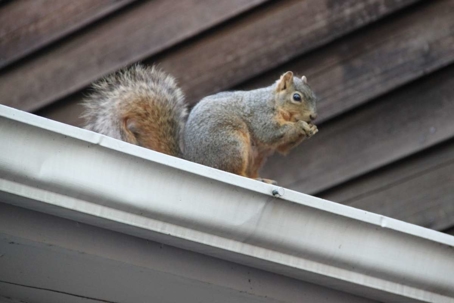
Squirrel Poop
Squirrel droppings, also known as squirrel poop, feces, scat, or excrement, may carry diseases and parasites, so it's essential to handle them with care.
Hantavirus Risk: Squirrel feces can carry hantaviruses, which are primarily transmitted through contact with rodent urine, droppings, or saliva. If dried feces are disturbed, particles can become airborne and inhaled, potentially causing severe respiratory illness in humans. Although squirrels are less common carriers than mice or rats, the risk exists, particularly with wild populations.
Salmonella Contamination: Squirrel droppings can harbor Salmonella bacteria. Contact with contaminated feces, surfaces, or soil can lead to gastrointestinal infections, presenting symptoms such as diarrhea, fever, abdominal cramps, and vomiting. Children, the elderly, and immunocompromised individuals are at higher risk.
Leptospirosis Exposure: Squirrels may carry Leptospira bacteria, which can be present in feces or urine. Humans can become infected through direct contact or through contaminated soil or water, leading to flu-like symptoms, liver or kidney damage, and in severe cases, meningitis or respiratory distress.
Fungal Infection Risk: Squirrel droppings can promote fungal growth, such as Histoplasma capsulatum, which thrives in decomposing organic matter. Inhalation of fungal spores from contaminated feces or nesting areas can cause histoplasmosis, a lung infection with symptoms ranging from mild respiratory discomfort to severe pneumonia.
Parasite Transmission: Squirrel feces may contain parasites, including roundworms, tapeworms, or protozoa. Humans can contract these parasites through accidental ingestion of contaminated material, leading to gastrointestinal distress, malnutrition, or more severe systemic infections depending on the parasite type.
Allergic Reactions and Respiratory Irritation: Even in the absence of infectious agents, dried squirrel feces and nesting debris can become airborne as fine dust. This dust can trigger allergic reactions, asthma attacks, or other respiratory irritation in sensitive individuals.
Accumulated squirrel droppings can contaminate soil, attic insulation, and surfaces, creating unsanitary conditions. This increases the likelihood of indirect transmission of pathogens and makes decontamination necessary before human reoccupation of affected areas.
While not a direct health risk, when squirrel droppings accumulate in attics, crawlspaces, and roofs, sometimes alongside urine, this can accelerate wood rot, insulation degradation, and mold growth, indirectly creating additional health hazards for humans.
What Do Squirrel Droppings Look Like?
Correctly identifying squirrel droppings ensures that you know which type of animal is present. This distinction is crucial because squirrels require different management strategies compared to rodents like rats or mice, both in terms of exclusion methods and safe removal of feces. Misidentification can lead to ineffective control measures.
Targeted Health Risk Assessment: Different animals carry different pathogens and parasites. By identifying squirrel droppings specifically, you can assess the particular health risks involved, such as potential exposure to Salmonella, Leptospira, or fungal spores, and implement appropriate precautions for cleanup.
Monitoring Infestation Severity: Squirrel feces can indicate the extent of an infestation. Frequent, fresh droppings suggest active squirrels and possibly nesting or entry points, while older, dry droppings indicate past activity. Understanding the scale of the infestation helps prioritize intervention efforts and reduces the likelihood of repeated exposure to health hazards.
Prevention of Property Damage: Identifying squirrel droppings helps locate areas where squirrels are nesting or moving. Prompt identification allows for targeted exclusion and repair of structural vulnerabilities before feces, urine, and nesting materials cause significant damage to insulation, wood, or wiring.
Efficient Cleanup Planning: Knowing that droppings are from squirrels allows you to tailor cleaning and disinfection procedures. Squirrel feces can carry different pathogens than other rodents, so identifying the source informs the correct protective equipment, disinfectants, and disposal methods, minimizing health risks.
Using traps or poisons designed for rats or mice on squirrels is not only ineffective but can create additional hazards. Accurate identification of droppings helps prevent inappropriate methods that could endanger humans, pets, or non-target wildlife.
What Size Are Squirrel Droppings?
Squirrel droppings are usually 0.5 to 1 inch (1.3–2.5 cm) long and about 0.25 inch (0.6 cm) thick. They are generally elongated with slightly pointed ends, resembling small grains of rice, but often larger and more irregular than mouse droppings.
Variation by Species: Eastern gray squirrels and fox squirrels tend to produce droppings on the larger end of this range, while smaller species like flying squirrels produce smaller, more delicate droppings.
Consistency and Shape: Fresh droppings are firm but pliable and often cylindrical or slightly curved. Older droppings dry out, becoming brittle and darker, sometimes breaking into smaller pieces, which can make size estimation slightly tricky.
Comparison to Other Rodents: For perspective, mouse droppings are typically 0.25–0.5 inch long and thin, while rat droppings are 0.75–1.25 inch long and thicker. Squirrel droppings fall in between, but with a more tapered and cylindrical shape than rat feces.
Diet can slightly affect size; squirrels feeding heavily on nuts or seeds may produce larger, denser droppings, while those eating fruits or softer foods may leave smaller, softer feces.
What Color Are Squirrel Droppings?
Fresh squirrel droppings are usually dark brown to black. The rich color is due to their high-fiber diet of nuts, seeds, and plant material.
Older or Dried Droppings: As feces age and dry, the color often fades to gray or light brown. Exposure to sunlight, air, and moisture accelerates this color change.
Dietary Influence: The color can vary slightly depending on the squirrel’s recent diet. For example, consumption of berries or other fruits may tint droppings reddish or dark purple, while large amounts of green vegetation can make them appear greenish-brown.
Moisture Content: Fresh, moist droppings appear shiny and darker, whereas dry droppings are dull and lighter in appearance.
Unlike rat droppings, which are usually black or dark brown consistently, or mouse droppings, which are smaller and black, squirrel droppings are slightly larger and their color can fluctuate more noticeably with age and diet.
What Shape Are Squirrel Droppings?
Squirrel droppings are typically elongated and cylindrical, resembling small, slightly tapered tubes. This is the most common and recognizable shape:
Tapered Ends: The ends of the droppings often come to a slight point, distinguishing them from the blunt ends of rat droppings.
Curved or Slightly Bent: Many droppings have a gentle curve or bend, though they are generally uniform in diameter along most of their length.
Segmented Appearance: Sometimes droppings may appear slightly segmented or ridged, reflecting the squirrel’s digestive process and fibrous diet.
Variations Due to Age and Diet: Fresh droppings are firm and maintain their cylindrical form, while older or dried droppings can crumble or break, sometimes altering the perceived shape. Droppings from squirrels eating softer foods may be less firm and slightly irregular.
Mouse droppings are smaller, thin, and sharply pointed at both ends, whereas rat droppings are thicker, more uniform, and often blunt-ended. Squirrel droppings are intermediate in size, cylindrical, and pointed, often curved—making them distinctive in field identification.
What Squirrel Droppings Look Like
In addition to their size, shape, and color, squirrel droppings generally have the following physical characteristics:
Texture: Fresh squirrel droppings are typically firm and slightly pliable, not overly hard like rat droppings. Older droppings dry out and become brittle, easily crumbling when touched.
Surface Appearance: Droppings often have a slightly rough or ridged surface, sometimes showing segmentation from the squirrel’s digestion of fibrous material.
Odor: Squirrel droppings have a mild, musky smell when fresh. Unlike rat droppings, which can smell stronger due to urine contamination, squirrel feces are usually less pungent unless there is a large accumulation.
Moisture Content: Fresh droppings may appear slightly shiny or moist, whereas older droppings are dry, powdery, or chalky.
Associated Debris: Squirrel droppings are often found alongside nesting materials such as leaves, twigs, shredded insulation, or chewed nuts. This can help distinguish them from other rodent droppings.
Clumping or Scattering: Droppings may appear in small piles or scattered along travel routes, nesting sites, or near food sources, rather than randomly dispersed like some smaller rodents.
Impact on Surroundings: In attics or crawlspaces, droppings can stain surfaces or insulation, sometimes combining with urine or nesting debris to leave dark patches or powdery accumulations.
These visual and tactile characteristics, along with location and other contextual clues, help accurately identify squirrel feces - sometimes even without measuring size, color, or shape.
Where Are Squirrel Droppings Found?
Squirrel droppings are almost always found near points of entry, nesting sites, or food sources:
Attics and Roof Spaces: Squirrels often enter attics through gaps, vents, or damaged roofing. Droppings are commonly found along rafters, beams, insulation, and near nesting areas where squirrels sleep and store food.
Crawlspaces and Basements: If squirrels gain access through small openings near foundations, droppings may accumulate in crawlspaces or unfinished basements, especially near entry points or along their travel routes.
Wall Voids: Squirrels sometimes nest inside wall cavities. Droppings may be visible around wall vents, electrical outlets, or holes where they enter, often accompanied by gnaw marks or nesting material.
Garages and Sheds: Squirrels are attracted to storage areas with easy access and shelter. Droppings are often found near rafters, shelves, or stored boxes, particularly in less frequently used spaces.
Chimneys and Fireplace Areas: Squirrels may enter via chimneys, leaving droppings on the fireplace hearth, chimney top, or surrounding roof area.
Eaves, Soffits, and Fascia: Outdoor droppings may accumulate around roof overhangs where squirrels enter or exit. Evidence may also include chewed wood, gnawed vents, or nesting debris.
Around Bird Feeders and Fruit Trees: While technically outdoors, droppings often appear beneath bird feeders, on decks, or under fruit-bearing trees, especially if squirrels frequent these areas for food.
Inside HVAC or Vent Ducts: Rare but possible, squirrels entering vents can leave droppings inside ducts, which can spread contamination and odors throughout a home or business.
Identifying where squirrel droppings are located is an important step for both cleanup and effectively getting rid of squirrels. If you would like professional assistance, contact our team of experts to schedule a free inspection and consultation.