
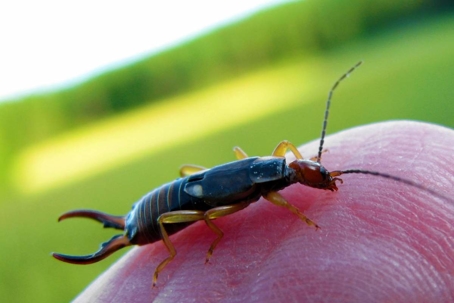
Can Earwigs Bite?
Earwigs can bite, but it’s extremely uncommon and not something to worry about in most cases. These insects, also known as pincher bugs or Dermaptera, have pincer-like appendages on their rear called cerci, which they use for defense, capturing prey, and mating—not for biting humans.
Can Earwigs Bite Humans?
Earwigs can pinch humans, but they do not bite in the typical sense and this behavior is uncommon. They lack venom, fangs, and biting mouthparts capable of breaking human skin, and their small forceps are mainly used for defense and mating. If an earwig is handled or trapped against the skin, it may pinch lightly, causing minor irritation at most, but earwigs do not attack people and pose no real medical risk.
Do Earwigs Pinch?
Earwigs are far more likely to pinch than bite, and their pincers (or cerci) are their primary means of defense and interaction. While they look intimidating, their pinches are usually harmless and rarely break the skin. Earwigs typically use their pincers for defense, capturing prey, and mating rituals, but they will use them on people under certain conditions.
They are most likely to pinch in the following situations:
When they feel threatened or cornered: Earwigs will raise their pincers in a defensive posture if they feel trapped. This commonly happens if someone tries to pick one up, press it against a surface, or disturb it suddenly.
If they’re accidentally trapped against skin or clothing: When an earwig is unintentionally caught inside clothing, bedding, shoes, or towels, it may pinch instinctively to defend itself or try to escape the pressure.
When handled roughly: Picking up or poking at an earwig often triggers a defensive pinch. They interpret this as an attack and react by clamping their cerci on whatever is touching them.
During mating or territorial interactions: Male earwigs use their curved pincers to spar with other males. In crowded conditions, they may react aggressively to movement nearby—including a human hand—if they’re already in a defensive mood.
When protecting themselves from predators: If a bird, lizard, spider, or even a person’s finger approaches too closely, earwigs may use their pincers as a bluff to ward off perceived danger.
Although the sensation of an earwig pinch can be startling, it’s rarely painful and almost never breaks the skin. At worst, it may leave a faint red mark or mild irritation that fades quickly.
Do Earwigs Sting Or Bite?
Earwigs do not sting and they do not bite in the traditional sense. They have no stinger, no venom, and no mouthparts capable of delivering a true bite to humans. In rare situations, an earwig may pinch with its small forceps if it feels threatened, which can cause mild, brief discomfort, but this is defensive rather than aggressive behavior and does not pose a health risk.
Do Earwigs Bite?
Earwigs are often accused of biting, but true bites—where the insect uses its mouthparts to break skin—are extremely rare. Earwigs do have chewing mouthparts, but they are not adapted for piercing human or animal skin. In the unusual cases where someone reports what feels like an earwig “bite,” it’s typically a defensive pinch from their cerci (the pincer-like appendages at the rear of their body), not an actual bite.
That said, if an earwig were to attempt to bite, it would most likely occur under the following unusual circumstances:
Defensive reaction to being handled or trapped: If an earwig is accidentally squeezed or pinned against the skin—such as being caught in clothing, bedding, shoes, or while being picked up—it might try to defend itself. Even then, it typically uses its pincers rather than its mouth.
Extreme stress or provocation: When earwigs feel cornered and can’t escape, they may open their mandibles as a defensive gesture. Actual biting pressure would be minimal and likely harmless.
Mistaken contact during feeding behavior: Earwigs feed on decaying plant matter, fungi, and soft-bodied insects. If one crawled over a person while foraging in darkness, it might briefly test the surface with its mouthparts, though this would not result in a true bite or puncture wound.
High population density and limited food sources: In rare indoor infestations with overcrowding and limited organic material to eat, earwigs might exhibit exploratory or agitated behavior, increasing the odds of incidental contact with humans.
Earwig “bites” are practically nonexistent in the medical or entomological sense. When people report being bitten, it’s almost always a misinterpreted pinch, minor scratch, or unrelated skin irritation from another source.
Do Earwigs Sting?
No, earwigs do not sting. They don’t have stingers or venom glands of any kind. The pincers (or cerci) on the back of their bodies may look like stingers at first glance, but they’re not capable of injecting venom or delivering any kind of sting. Earwigs use those pincers for:
Defense: warding off predators or deterring threats
Capturing prey: holding small insects or soft-bodied organisms
Mating behavior: males use their curved pincers during courtship or competition with other males
If an earwig pinches a person, it’s purely a defensive reaction and not a sting. The pinch might feel sharp but is typically harmless and doesn’t break the skin or cause lasting irritation.
Earwig Bites
Earwig bites are essentially a myth, but pinches from their pincers (cerci) are real—though rarely serious. The risks associated with an earwig pinch are minimal compared to true bites or stings from other insects. Still, there are a few minor issues that can occasionally occur, especially if the skin is broken or irritated. Here are some of the potential risks:
Minor skin irritation or redness: The pressure of an earwig’s pincers can leave a small red mark or slight swelling, similar to a mild scratch or pinch from a fingernail. This usually fades within a few hours.
Superficial punctures (rare): In very rare cases—especially with larger male earwigs—the pincers might break the skin slightly. This could cause a small spot of bleeding or tenderness, but it heals quickly with basic care.
Secondary infection (if skin is broken): If an open scratch or puncture is not cleaned properly, bacteria from the earwig’s environment or from your own skin could lead to a mild local infection. Washing the area with soap and water and applying antiseptic prevents this.
Allergic-type irritation (very uncommon): A few people may experience minor allergic reactions such as itching, mild swelling, or a localized rash. These are typically short-lived and respond to over-the-counter treatments like hydrocortisone or antihistamines.
Psychological discomfort or anxiety: Because earwigs look intimidating, their presence and pinching behavior often cause more fear than physical harm. The perceived risk is usually greater than the real one.
Earwig pinches are harmless in nearly all cases, causing only temporary discomfort or minor irritation. They don’t inject venom, transmit disease, or pose any significant health threat to humans or pets.
Do Earwig Bites Hurt?
Earwig “bites” usually do not hurt in a significant way. Earwigs do not seek to bite humans and can only pinch with their small forceps if they feel threatened or trapped against the skin. When this happens, the sensation is typically mild—more like a brief pinch or pressure than true pain—and may be followed by slight redness or irritation. Any discomfort is usually short-lived and does not result in lasting injury.
Do Earwig Bites Itch?
Yes, reactions to what people call “earwig bites” can itch, but it’s important to clarify that earwigs rarely bite humans at all. When they do pinch with their small forceps (usually only if handled or trapped), it may cause mild skin irritation such as redness, slight swelling, or tenderness, which can itch for a short time due to local inflammation. The sensation is generally minor and temporary, far less severe than bites from mosquitoes, fleas, or bed bugs, and typically resolves without medical treatment.
What Do Earwig Bites Look Like?
True earwig bites are virtually nonexistent, since earwigs don’t use their mouthparts to pierce human skin. However, when people describe being “bitten” by an earwig, what they usually experienced is a pinch from the insect’s rear pincers (cerci). The resulting mark can look similar to a mild insect bite or skin irritation, depending on how hard the pinch was. If an earwig has pinched the skin, the affected area might look like this:
Earwig Bite Symptoms
Small red marks or faint scratches: The most common appearance is a small red dot, minor indentation, or light abrasion at the site where the pincers grabbed.
Mild swelling or irritation: Some people develop slight swelling or tenderness in the area, particularly if the skin was sensitive or the earwig applied more pressure.
Tiny surface puncture (rare): Large male earwigs have stronger pincers and could—very rarely—cause a superficial break in the skin. This might result in a pinpoint-sized scab or minor bleeding.
No mark at all: Many people feel a brief pinch but see no visible sign afterward, especially if the skin wasn’t caught tightly.
A supposed “earwig bite” will not look like a true insect bite—there will be no puncture pair marks, venom reaction, or raised welt like those caused by spiders, mosquitoes, or fleas. If you notice pronounced swelling, itching, or spreading redness, it’s likely from another source or a mild secondary irritation rather than the earwig itself.
What To Do About Earwig Bites
If you believe you’ve been bitten or pinched by an earwig, there’s no cause for alarm—these incidents are harmless in nearly all cases. Earwigs don’t carry diseases, inject venom, or cause lasting injury. Still, it’s good practice to clean and care for the area to avoid irritation or infection, especially if the skin was broken or scratched.
Here’s exactly what to do:
Clean the area thoroughly: Wash the site with mild soap and warm water to remove any dirt or bacteria the earwig may have transferred. This is the most important step for preventing infection.
Disinfect (if the skin was broken): Apply an antiseptic such as hydrogen peroxide, rubbing alcohol, or an over-the-counter antibiotic ointment (like Neosporin) to protect the area from bacteria.
Soothe irritation: If the area feels itchy or sore, you can apply a cool compress, aloe vera gel, or a mild hydrocortisone cream. Over-the-counter pain relievers like ibuprofen or acetaminophen are optional but rarely necessary.
Avoid scratching: Even minor scratching can delay healing or introduce bacteria to the site, increasing the chance of a mild infection.
Monitor for unusual reactions: Though highly uncommon, watch for signs of infection such as increasing redness, swelling, warmth, pus, or pain over the next 24–48 hours. If any of these appear, or if you develop an allergic-type rash, seek medical attention.
Inspect your surroundings: If earwigs are repeatedly appearing indoors, check damp or dark areas—like under sinks, in basements, or beneath mulch near entryways. Controlling moisture and sealing entry points helps prevent future encounters.
Remove unwanted earwigs: The best way to prevent future "bites" from earwigs is to reduce their populations around your home or business. While earwig removal is something that can be attempted on your own, for the best results, you should contact our team of exterminators for professional pest control.
An earwig pinch or “bite” is more startling than harmful. With basic hygiene and observation, it should heal quickly and completely without any complications.
Are Earwigs Dangerous?
Earwigs are often perceived as dangerous due to their intimidating appearance—especially their pincer-like forceps—but in reality, they pose very little threat to humans. However, there are several ways in which earwigs might be considered potentially dangerous or problematic under certain circumstances:
Minor Pinching Capability: Earwigs have forceps (cerci) at the end of their abdomen, which they use for defense and to capture prey. While they can pinch if handled or threatened, these pinches are not venomous and rarely break the skin. At most, the pinch may cause minor discomfort or a small red mark.
Psychological Fear and Misconceptions: The long-standing myth that earwigs crawl into people’s ears and lay eggs in their brains has caused widespread fear. While completely false, this myth contributes to their reputation as dangerous insects and can lead to distress or panic when people encounter them indoors.
Damage to Plants and Gardens: Earwigs are omnivorous and can feed on both decaying organic matter and living vegetation. In large numbers, they may damage soft fruits, flowers, and tender plant shoots, making them a nuisance pest in gardens, greenhouses, and agricultural settings.
Contamination Concerns: When earwigs enter homes, especially kitchens or pantries, they can crawl over surfaces and stored items, potentially contaminating them with dirt or bacteria picked up from the outdoors or damp areas where they hide.
Infestation and Nuisance Factor: Earwigs are nocturnal and drawn to moisture. If they find entry points into a home—often through cracks, doors, or basement vents—they can accumulate in bathrooms, laundry rooms, or basements. While not directly harmful, a large presence indoors can be distressing and unsanitary.
Earwigs are not dangerous in a medical or venomous sense, but they can be nuisance pests that cause minor pinching, cosmetic plant damage, and psychological discomfort. Their danger lies more in perception and annoyance than in any actual threat to human health.
Other Ways Earwigs Can Be Dangerous
Here are a few other ways earwigs might be considered potentially “dangerous,” though these are mostly indirect:
Allergic Reactions: Some people may have mild allergic reactions to earwigs, particularly if they come into contact with their body parts, secretions, or droppings. This could include skin irritation, itching, or redness. Severe reactions are extremely rare.
Damage to Stored Crops or Food: In agricultural or food storage settings, earwigs can feed on grains, fruits, and vegetables. Large infestations may result in economic losses for farmers or contamination of stored produce.
Vectors of Microorganisms: Earwigs are scavengers and feed on decaying organic matter. This means they can potentially carry bacteria or fungi on their bodies. If they crawl over food or food-preparation surfaces, there is a small risk of contamination.
Triggering Pest Cascades: Earwigs are attracted to moisture and decaying matter. Large infestations can indicate underlying issues like excessive dampness, poor drainage, or decaying plant material, which could also attract other pests such as ants, silverfish, or cockroaches—indirectly creating a more serious pest problem.
Structural Concerns in Severe Infestations: While earwigs do not chew wood or structural materials like termites, in extremely damp areas (such as basements, crawlspaces, or under rotting logs near homes), they can contribute to the breakdown of decaying plant matter that is in contact with buildings, potentially worsening moisture-related structural issues.
The “danger” of earwigs is largely indirect, including minor allergic reactions, contamination, economic damage, or serving as an indicator of other environmental problems. They are not inherently harmful to humans, pets, or structures.