
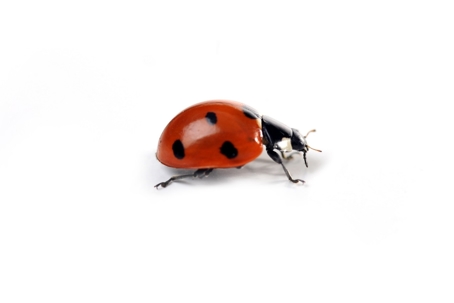
Ladybugs In Your House?
Seeing ladybugs in your house is quite common, especially during the fall and winter months. Ladybugs, particularly the invasive Asian lady beetle (Harmonia axyridis), tend to seek shelter indoors when temperatures drop. Here’s why and when you might see these beetles:
What Attracts Ladybugs?
Ladybugs—especially Asian lady beetles—are strongly attracted to sun-heated surfaces. South- and west-facing walls receive the most afternoon warmth and are the most common gathering spots, particularly on bright fall days:
Why Are Ladybugs Swarming My House?
Light-colored siding and contrast: White, beige, gray, and light yellow siding reflect UV light in a way that attracts beetles. High visual contrast (light siding with dark trim, shutters, or rooflines) further concentrates them along edges and corners.
Overwintering instincts: In late summer and fall, ladybugs seek tall, prominent structures that resemble cliff faces or rock outcrops in nature. Homes, especially multi-story structures, naturally trigger this instinct as potential overwintering sites.
Exterior gaps and sheltered entry points: Beetles are drawn to areas that offer protection, including window and door frames, soffit and fascia gaps, siding seams and J-channels, utility penetrations and light fixtures. These don’t just allow entry—they actively attract clustering behavior.
Residual scent from previous infestations: Ladybugs release aggregation pheromones. If a home had them in prior seasons, those chemical cues remain and pull new beetles back year after year to the same exterior walls and openings.
Nearby food sources in the landscape: While they don’t feed on homes, nearby aphid-heavy plants (roses, trees, shrubs, ornamental plants) increase local ladybug populations, raising the likelihood they’ll end up on nearby structures.
Calm, protected wall areas: Walls shielded from wind—especially leeward sides of the house—are preferred. Corners, eaves, and recessed areas provide both warmth and protection, encouraging mass clustering.
Timing makes it worse: Peak attraction happens in early to mid-fall, when daytime warmth is high but nights are cooling. Homes that meet multiple factors above become predictable annual targets.
Ladybugs aren’t randomly showing up. When they accumulate on a home’s exterior, it’s because the structure provides heat, height, shelter, and chemical familiarity—a perfect overwintering signal rather than a food source. Ladybugs are attracted to the structure and conditions of a home, not dirt, damage, or interior problems. The issue starts outside, and that’s where effective control must begin.
Why Are There Ladybugs In My House?
Once ladybugs (most often Asian lady beetles) gather on the exterior, their biological goal is to find a protected, stable-temperature void to survive winter. Your house isn’t food—it’s shelter.
Heat misleads them: Exterior walls warmed by the sun signal “safe overwintering site.” When they follow that warmth, tiny cracks often lead indoors. Once inside, central heating and sunlight confuse them, repeatedly waking them up and causing ongoing activity.
Small gaps are enough: Ladybugs don’t chew or force entry. They exploit existing openings such as window and door frames, siding seams and J-channels, soffit and fascia gaps, utility lines, vents, and light fixtures, attic and roofline transitions. Openings as small as 1/16 inch are sufficient.
Air leakage actively pulls them in: Pressure differences from exhaust fans, attic ventilation, or temperature-driven airflow can literally draw insects inward once they’re on the exterior wall surface.
Chemical trails guide them inside: Ladybugs release aggregation pheromones. If even a few get inside, they leave scent cues that attract more—turning a minor entry point into a recurring problem.
They mistake wall voids for caves: In nature, ladybugs overwinter in cliffs, rock crevices, and tree hollows. Wall voids, attics, and ceiling spaces mimic these environments almost perfectly.
Fall timing intensifies movement: As nights cool and days stay sunny, ladybugs alternate between dormancy and activity. Each warm day increases the chance they’ll crawl deeper into cracks and accidentally end up indoors.
Ladybugs come inside because your home completes their overwintering instinct. Exterior clustering + warmth + entry gaps equals indoor activity. The problem is structural and seasonal—not random. Once ladybugs are on your exterior walls, entry is accidental but predictable. If they’re coming inside, it means access points exist and the home is providing the warmth and shelter they’re biologically programmed to seek.
Why Do I Keep Finding Ladybugs Inside My House?
The ladybugs you see in winter are not newly entering from outdoors. They came in during fall and settled into wall voids, attics, ceiling cavities, and other hidden spaces to overwinter.
Winter warmth wakes them up. Ladybugs (especially Asian lady beetles) enter a dormant state. When indoor heat, sunlight on walls, or a warm spell raises the temperature, they wake up and begin moving—eventually emerging into living spaces.
Wall voids act like launch points. As they warm up, ladybugs instinctively crawl toward light, which is why they appear on window sills, ceilings, light fixtures, and exterior-facing rooms—even when it’s freezing outside.
They overwinter in groups, not individually. Dozens or hundreds can be hiding behind insulation, siding, or drywall. Seeing “one at a time” is simply the staggered emergence of a larger hidden population.
Heating systems increase movement. Forced-air systems, bathroom fans, dryers, and attic ventilation create air currents and pressure changes that help push overwintering beetles out of wall cavities and into rooms.
Why it can last for months: Every sunny day or temperature swing reactivates a few more beetles. This is why sightings can continue from late fall all the way into early spring.
Why vacuuming doesn’t “solve” it: Removing visible ladybugs only addresses the ones that surfaced—not the larger group still hidden in the structure.
Persistent winter ladybugs mean your home provided an excellent fall overwintering site and has structural entry points that allowed access. It’s a seasonal structural issue, not an ongoing infestation. You keep finding ladybugs in winter because they’re emerging from inside your walls—not because they’re breeding or coming in from the cold outside. Once temperatures stabilize and the hidden population is exhausted, sightings stop until the next fall cycle.
Do Ladybugs Lay Eggs In Houses?
No—ladybugs do not lay eggs inside houses. Neither native ladybugs nor Asian lady beetles reproduce indoors under normal residential conditions:
Egg-laying requires live prey: Ladybugs only lay eggs near abundant food sources, primarily aphids and other soft-bodied plant pests. Homes do not provide the live prey necessary for egg survival or larval development.
Their lifecycle can’t function indoors: Ladybug larvae are active predators that must feed continuously. Without plants and pest insects, larvae would starve, which is why females will not lay eggs inside structures.
Why this concern is common: When homeowners see dozens—or hundreds—inside, it creates the impression of breeding. In reality, all indoor ladybugs entered from outside as adults looking for overwintering shelter.
Dead ladybugs are not evidence of reproduction: Accumulations of dead beetles are simply overwintering adults that dehydrated or exhausted their fat reserves—not newly hatched insects.
No indoor nests, eggs, or colonies: Unlike ants, roaches, or flies, ladybugs do not establish indoor populations. There are no hidden egg sites in walls, furniture, or carpets.
Ladybugs indoors are a seasonal invader issue, not an infestation that multiplies inside the home. If you see ladybugs indoors, they came from outside. They will not lay eggs, hatch young, or spread internally—once access points are sealed, the problem ends.
Are Ladybugs In Your House Good Or Bad?
Ladybugs in your house are usually more bad than good, even though they’re beneficial insects outdoors.
Why ladybugs are good outdoors: In gardens and landscapes, ladybugs are excellent predators. They feed on aphids, mites, and other plant-damaging pests, which makes them highly desirable in agricultural and landscaping environments.
Why they’re not helpful indoors: Inside a home, ladybugs have no pests to control. They don’t reproduce indoors, don’t provide any benefit, and generally end up wandering, clustering, or dying, which creates nuisance and cleanup issues.
Important distinction — many “ladybugs” aren’t true ladybugs: The majority found inside homes are Asian lady beetles, a closely related species. These are more aggressive, far more likely to invade homes in large numbers, capable of biting (mild but unpleasant), and known for releasing a yellow, foul-smelling fluid that can stain walls, curtains, and furniture
Seasonal behavior explains the invasion: In fall, these beetles look for warm, protected spaces to overwinter. Homes with light-colored siding, sun exposure, and small gaps around windows, soffits, or siding are prime targets. Once inside, heat and sunlight wake them up repeatedly, making the problem seem constant.
Health and structural impact: They do not reproduce indoors, chew wood, or cause structural damage. However, in large numbers they can trigger allergies in sensitive individuals, create sanitation issues when they die and accumulate, and become a recurring seasonal problem year after year.
From a professional standpoint, ladybugs indoors are classified as occasional invaders, not beneficial insects. While harmless in small numbers, repeated or heavy infestations indicate an exterior entry issue that should be corrected rather than ignored. Ladybugs are good for your garden, not your house. Indoors, they’re a nuisance pest whose presence signals a need for exclusion, sealing, and preventative control—not tolerance.
Contact us today to learn more about our professional pest control services, or to schedule a free inspection!
Learn more: How To Get Rid Of Ladybugs