
What Do Silverfish Look Like?
Silverfish resemble other small, fast-moving household insects, such as cockroaches, firebrats, and certain types of beetles. Misidentifying them can lead to using ineffective treatments, wasting time, effort, and money. Knowing their distinct appearance ensures that the correct control measures are implemented.
Early Detection Reduces Infestation Severity: Silverfish reproduce relatively quickly and can hide in cracks, books, clothing, and behind baseboards. Recognizing their characteristic features—silvery scales, tapered bodies, long antennae, and three tail-like appendages—allows for early detection, which is critical for preventing a small problem from becoming a full-blown infestation.
Targeted Treatment Strategies: Silverfish have specific behavioral patterns, such as preferring dark, humid environments and feeding on starchy materials. Knowing what they look like helps professionals and homeowners identify hotspots accurately, which informs placement of traps, baits, or environmental modifications like dehumidifiers and sealing entry points.
Prevention of Damage: Silverfish feed on paper, fabrics, glue, and food items. Recognizing them quickly helps protect valuable materials, including books, wallpaper, clothing, and pantry goods. Being able to distinguish them from harmless insects allows proactive measures before noticeable damage occurs.
Professional Communication: When working with our pest control experts, being able to describe or show what has been seen ensures a correct assessment. Accurate identification significantly improves the efficiency and effectiveness of treatments, reducing repeat visits and improving long-term control.
While silverfish are not known to transmit diseases, they can contaminate food or leave allergenic particles. Knowing what they look like ensures that hygiene practices—like properly storing dry goods and maintaining clean, dry environments—are applied in areas where silverfish may appear.
What Size Are Silverfish?
Adult silverfish typically range from 12 to 19 millimeters (0.5 to 0.75 inches) in length. Some individuals may grow slightly larger under optimal conditions, but they rarely exceed 25 millimeters (1 inch):
Juvenile Size: Newly hatched silverfish, called nymphs, are much smaller—around 3 to 5 millimeters. They gradually grow through multiple molts before reaching adult size, which can take several months depending on temperature and food availability.
Body Shape and Proportion: Despite their small size, silverfish have a distinct elongated, flattened, carrot-shaped body. Their antennae and three tail-like appendages at the rear can make them appear longer than their actual body length.
To visualize, an adult silverfish is roughly the length of a small paperclip or slightly shorter than a dime, making them easy to overlook unless you know where and how to spot them.
What Color Are Silverfish?
Silverfish are generally silvery-gray, which gives them their name. Their bodies have tiny reflective scales that create a metallic sheen, making them appear almost shiny under light.
Variations in Hue: Depending on age, diet, and environment, silverfish can also appear bluish-gray, brownish-gray, or yellowish-gray. The coloration tends to be lighter on younger individuals and darker on older adults.
Juvenile (Nymph) Color: Nymphs are usually pale whitish or translucent, gradually darkening as they molt and develop scales. This lighter color can make them harder to spot in cracks and crevices.
Environmental Influence: Silverfish that inhabit dark, humid areas may appear duller or less reflective, while those exposed to light may show a more pronounced silvery sheen.
Despite slight color variations, the combination of elongated, flattened body, silvery or grayish scales, and three tail-like appendages remains consistent and is the most reliable identification feature.
What Shape Are Silverfish?
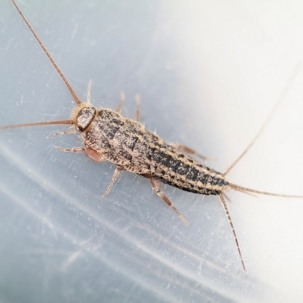
Silverfish have a teardrop or carrot-shaped body—broad at the front (head) and tapering toward the rear. This shape allows them to move quickly and squeeze into narrow cracks and crevices.
Flattened Profile: Their bodies are dorsoventrally flattened, meaning they are compressed from top to bottom. This flattened shape helps them hide under baseboards, behind wallpaper, in books, or inside clothing folds.
Segmented Appearance: The body is clearly segmented, giving a subtle ridged look along the back. Each segment is covered with tiny reflective scales, contributing to their silvery sheen.
Tail Appendages: At the rear, silverfish have three long, filament-like appendages: two lateral cerci and a central terminal filament. These create a distinctive forked look that enhances their characteristic “fish-like” silhouette.
Antennae: Their long, thin antennae extend forward from the head, adding to their overall elongated appearance and helping with sensory navigation in dark areas.
The head is slightly narrower than the thorax, and legs are short but sturdy. Combined with the tapered rear, the overall shape is optimized for quick, darting movements in tight spaces.
What Silverfish Look Like
Silverfish are covered in tiny, shiny scales that give them a slightly metallic, reflective appearance. The scales are delicate and can sometimes shed, leaving a faint powdery residue.
Movement Pattern: They have a rapid, wiggling, fish-like motion, darting quickly across surfaces. Unlike many insects, they do not fly or jump; they run in a characteristic sideways, serpentine manner.
Legs: Silverfish have six short, slender legs that are well-adapted for running on flat surfaces and climbing walls or furniture. Their legs are often hard to see due to their small size and the speed of movement.
Antennae: Long, thin antennae extend forward from their head. These are constantly moving, helping the silverfish navigate and sense their environment.
Tail Filaments: Three long appendages extend from the rear: two lateral cerci and a central terminal filament. These give the insect a forked, whisker-like appearance from behind.
Head Features: The head is small and somewhat pointed, with mandibles designed for chewing paper, starches, and other materials. They have no prominent eyes; instead, small compound eyes are present but not highly developed.
Silverfish are nocturnal, so sightings are often limited to nighttime activity. Daytime visibility is usually in dark, undisturbed areas like under furniture, in closets, or inside storage boxes.
What Do Silverfish Eggs Look Like?
Silverfish eggs are quite small and are typically oval or elongated in shape. Here is what silverfish eggs look like:
Size and Shape: Silverfish eggs are very small, typically 0.8 to 1.0 millimeters in diameter, and oval or elliptical in shape. They are smooth and have a slightly elongated appearance.
Color: The eggs are usually white to pale yellow when freshly laid. Over time, they may darken slightly, but they remain generally light-colored and often blend in with their surroundings.
Texture: The surface of the eggs is smooth and slightly shiny, without noticeable ridges or patterns. They are delicate and can be easily crushed.
Clustering and Placement: Silverfish often lay eggs singly or in small clusters of 2–20. The eggs are usually deposited in hidden, dark, and humid locations, such as under baseboards, inside cracks, behind wallpaper, in books, or among stored clothing or papers.
Incubation and Visibility: Because of their tiny size and pale color, eggs are difficult to see with the naked eye. They usually hatch within 2–8 weeks, depending on temperature and humidity.
Adult silverfish sometimes cover eggs with scales or debris to camouflage them, making early detection even more challenging.
What Do Silverfish Droppings Look Like?
Silverfish droppings, also known as frass, are small and distinctive in appearance. Here is what silverfish droppings look like:
Size and Shape: Silverfish droppings are tiny, cylindrical pellets, usually 0.5 to 1 millimeter in length. They can resemble very small grains of black pepper or coarse sand.
Color: The droppings are typically dark brown to black, sometimes with a slight shiny appearance due to the undigested food matter inside.
Texture: Droppings are hard and brittle, and they can crumble easily when pressed between fingers or brushed.
Appearance Relative to Food Source: The shape may sometimes be slightly tapered at the ends if the silverfish has been feeding on paper, glue, or starch-rich materials. When feeding on more fibrous items, the droppings may appear rougher or granular.
Common Locations: Droppings are often found near their hiding places: under baseboards, behind wallpaper, inside books, in closets, or along cracks and crevices. Because silverfish are nocturnal, droppings may be one of the earliest visible signs of an infestation.
Additional Indicators: Sometimes, droppings are accompanied by tiny scales from their bodies, which also accumulate near activity areas. The combination of dark pellets and shed scales is a strong indicator of silverfish presence.
The presence of silverfish droppings can be an indicator of an infestation, and it's important to address the underlying issue if you discover them in your home. Proper sanitation, reducing moisture levels, and using pest control methods can help manage silverfish infestations and prevent further damage to items like books, paper, and textiles that they may feed on.