
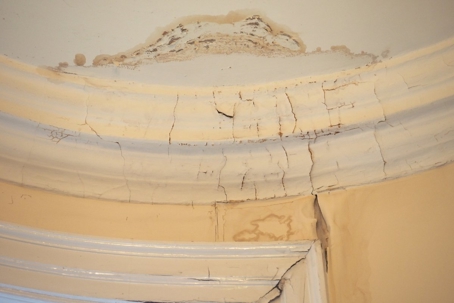
Moisture Damage
Moisture damage and insect damage are commonly confused because both conditions produce similar visual and structural warning signs, including discoloration, softness, swelling, blistering paint, sagging wood, and loss of structural strength. However, insect damage typically includes additional indicators such as mud tubes, galleries, frass, exit holes, hollow sounds, or visible insect activity. Moisture damage alone generally causes more uniform wood decay and fungal growth patterns without the distinct tunneling or excavation associated with insects. Accurate identification usually requires probing damaged wood, measuring moisture levels, and understanding the feeding and nesting behavior of different wood-destroying insects.
Moisture Damage vs Subterranean Termite Damage
The primary difference between moisture damage and subterranean termite damage is the underlying cause of deterioration. Moisture damage results from excessive water exposure caused by leaks, condensation, poor drainage, flooding, or high humidity, which leads to wood rot, fungal growth, swelling, and structural weakening over time. Subterranean termite damage, by contrast, is caused by termites actively feeding on cellulose within wood and other structural materials. Although termites are strongly attracted to moist environments, the actual destruction comes from insect feeding activity rather than the moisture itself.
Moisture-damaged wood typically deteriorates in a more uniform and irregular pattern, while subterranean termite damage usually follows distinct internal feeding galleries. Wood affected by moisture often becomes soft, spongy, warped, swollen, or crumbly throughout the affected area. In contrast, subterranean termites hollow out the softer springwood portions inside lumber while often leaving a thin outer surface intact. This creates hidden internal cavities beneath paint, drywall, or wood surfaces that may appear normal until pressure is applied.
The texture and appearance of damaged wood can help distinguish the two conditions. Moisture damage often produces dark staining, mold growth, fungal decay, peeling paint, and widespread softness throughout the wood fibers. Rotting wood may break apart unevenly and appear fibrous or decomposed. Subterranean termite damage, however, usually contains layered galleries with a honeycomb or etched appearance following the grain of the wood. The interior surfaces of termite galleries often contain dirt, mud, or soil particles because subterranean termites use moisture and soil to maintain humidity inside their tunnels.
Moisture damage commonly produces visible signs of water intrusion, while termite damage frequently includes evidence of insect activity. Areas with moisture damage may show water stains, rust, mold, mildew odors, condensation, plumbing leaks, roof leaks, or poor ventilation conditions. Subterranean termite infestations often include mud tubes along foundations, walls, support piers, or crawlspace surfaces. Additional termite indicators may include discarded wings, hollow-sounding wood, blistered surfaces, visible swarmers, or live termites inside damaged wood.
Structural failure patterns differ between the two types of damage. Moisture damage weakens wood gradually as fungal decay breaks down the fibers, often causing sagging, warping, or widespread deterioration in chronically wet areas. Subterranean termite damage may leave the exterior of structural members appearing intact while the interior becomes extensively hollowed out. This hidden destruction can allow severe structural compromise to develop before obvious external symptoms appear.
Moisture readings can help differentiate the conditions during inspection. Moisture-damaged wood typically shows elevated moisture content because the source of water intrusion is still active or recent. Subterranean termite damage may or may not show high moisture readings depending on environmental conditions and whether a leak or dampness problem exists nearby. Since termites prefer moist environments, both conditions often occur together, especially in crawlspaces, basements, bathrooms, and around plumbing penetrations.
The odor associated with each condition may also differ. Moisture damage and wood rot frequently produce musty, mold-like odors caused by fungal growth and prolonged dampness. Subterranean termite infestations may produce an earthy or mildew-like smell due to mud tubes, damp galleries, and termite activity, but the odor is generally less pronounced than active fungal decay.
Repair and treatment methods are significantly different for each problem. Correcting moisture damage requires identifying and eliminating the water source, improving ventilation or drainage, drying affected materials, and replacing rotted wood if necessary. Treating subterranean termite damage requires professional termite control measures such as soil treatments, baiting systems, foam applications, or wood treatments in addition to repairing structural damage. If termite activity is mistaken for simple moisture deterioration, the infestation can continue spreading unnoticed and cause major structural damage over time.
In many structures, moisture damage and subterranean termite damage occur simultaneously because excessive moisture creates ideal conditions for termite activity. Leaking plumbing, poor crawlspace ventilation, roof leaks, wood-to-soil contact, and drainage problems all increase termite risk. For this reason, thorough inspections often involve evaluating both moisture conditions and evidence of wood-destroying insects to determine the full extent of the problem and ensure that both contributing factors are properly addressed. Contact us for professional assistance eliminating subterranean termites!
Moisture Damage vs Carpenter Ant Damage
The primary difference between moisture damage and carpenter ant damage is the source of the deterioration. Moisture damage is caused by excessive water exposure from leaks, humidity, condensation, flooding, or poor ventilation, which weakens wood fibers and promotes fungal decay over time. Carpenter ant damage, however, is caused by ants excavating wood to create nesting galleries. Unlike termites, carpenter ants do not consume wood for food; they remove it to expand their colonies. Although carpenter ants are commonly associated with damp or water-damaged wood, the structural damage itself comes from excavation activity rather than moisture alone.
Moisture-damaged wood typically appears soft, swollen, warped, or decomposed throughout the affected area, while carpenter ant damage usually consists of clean, smooth tunnels inside otherwise solid wood. Water-damaged wood often breaks apart unevenly and may feel spongy or crumbly because fungal decay destroys the wood fibers. Carpenter ant galleries, by contrast, are generally smooth, sanded-looking, and hollowed out in a more organized pattern. The ants prefer to follow the grain of the wood and remove softer material while creating interconnected nesting chambers.
The presence of frass is a major distinguishing factor between carpenter ant damage and moisture damage. Carpenter ants produce frass, which resembles coarse sawdust and may contain wood shavings, insect body parts, insulation fragments, or debris from the nest. This material is often found beneath infested walls, windows, baseboards, or ceiling voids. Moisture damage alone does not create frass. Instead, moisture problems may produce decayed wood particles, fungal growth, or soft wood deterioration without the distinct sawdust-like debris associated with carpenter ants.
Moisture damage usually includes visible signs of water intrusion, while carpenter ant infestations often show evidence of insect activity. Water-damaged areas commonly display staining, peeling paint, bubbling surfaces, mold, mildew odors, condensation, or visible leaks. Carpenter ant infestations may involve rustling sounds inside walls, visible ants trailing indoors, swarmers with wings, or piles of frass near entry points. In some cases, homeowners first discover carpenter ant activity after hearing faint scratching noises inside wall voids or ceilings.
The structural patterns of damage differ significantly between the two conditions. Moisture damage often spreads outward from the water source and affects wood in a more generalized and irregular manner. Prolonged exposure can weaken entire sections of framing, trim, or flooring. Carpenter ant damage is usually more localized around nesting sites and consists of hollow galleries extending through structural members. In severe infestations, ants may tunnel through wall studs, beams, subfloors, or window frames while leaving thin exterior wood surfaces intact.
The texture of the damaged wood can help identify the problem during inspection. Moisture-damaged wood tends to feel damp, soft, fibrous, or deteriorated throughout. Carpenter ant-damaged wood may initially appear solid on the exterior but sound hollow when tapped. When opened, the galleries are typically clean and smooth rather than decayed or muddy. Unlike subterranean termites, carpenter ants do not pack their tunnels with soil or mud.
Odors associated with each condition can also vary. Moisture damage frequently produces musty, mold-like odors caused by fungal growth and persistent dampness. Carpenter ant infestations may produce a faint earthy or acidic odor in heavily infested areas, particularly inside wall voids or confined nesting spaces, although the smell is usually less noticeable than moisture-related mold odors.
Moisture readings are another important difference. Wood affected solely by moisture damage generally shows elevated moisture content because active leaks or humidity problems are present. Carpenter ant-damaged wood may or may not have high moisture levels depending on whether the ants are nesting in previously damp wood or have expanded into adjacent dry wood. Carpenter ants are strongly attracted to moisture-compromised wood because it is easier to excavate, so both problems frequently occur together.
Repair and treatment methods differ substantially between the two conditions. Correcting moisture damage requires identifying and repairing the water source, improving drainage or ventilation, drying affected materials, and replacing rotted wood if necessary. Carpenter ant infestations require locating and eliminating the colony, applying appropriate insecticide treatments or baiting methods, sealing entry points, and correcting any moisture issues that attracted the ants in the first place. If carpenter ant activity is mistaken for simple moisture damage, the infestation may continue expanding inside structural voids even after water repairs are completed.
In many buildings, moisture damage and carpenter ant activity are closely connected because damp conditions create ideal nesting environments. Roof leaks, plumbing leaks, poorly ventilated attics, wet crawlspaces, and decayed window frames commonly attract carpenter ants. For this reason, a thorough inspection should evaluate both moisture conditions and evidence of insect activity to determine whether structural deterioration is caused by water exposure alone or by an active carpenter ant infestation contributing to the damage. Contact us for professional assistance eliminating carpenter ants!
Moisture Damage vs Wood Boring Beetle Damage
The core difference between moisture damage and wood-boring beetle damage is the mechanism of deterioration. Moisture damage results from prolonged exposure to water intrusion, high humidity, condensation, or poor drainage, which leads to fungal decay, swelling, warping, and breakdown of wood fibers. Wood-boring beetle damage, on the other hand, is caused by insect larvae feeding within the wood as they develop, consuming the structural material from the inside out. While moisture can contribute to beetle infestations by making wood more suitable for egg-laying, the actual damage in beetle cases is caused by biological feeding activity rather than water alone.
The visual appearance of damaged wood differs significantly between the two conditions. Moisture damage typically produces dark staining, softening, warping, blistered paint, and irregular decomposition that affects broader sections of wood. Wood-boring beetle damage often presents as small, round or oval exit holes on the surface of the wood, sometimes accompanied by fine tunnels beneath the surface. The exterior may appear relatively intact aside from these perforations, while the interior can be heavily compromised.
Frass characteristics are one of the most reliable distinguishing features. Moisture damage does not produce frass; instead, it results in decayed wood fibers, fungal growth, or mushy material. Wood-boring beetles produce fine powdery frass that may resemble sawdust or flour, depending on the species. This powder often accumulates beneath infested wood, along baseboards, or inside voids. In powderpost beetle infestations, the frass is extremely fine and can sift out of small exit holes over time.
The structural pattern of damage also differs. Moisture damage typically affects wood in a more uniform or irregularly decayed manner, often spreading from a point of water intrusion and weakening entire sections. Wood-boring beetles create highly specific internal tunneling patterns as larvae feed within the wood. These galleries often follow the grain and may remain hidden beneath the surface until the infestation is advanced or the wood is cut open.
Moisture-damaged wood often feels soft, spongy, swollen, or fibrous due to fungal decay breaking down the cellulose structure. In contrast, beetle-damaged wood may initially feel solid externally but become brittle, hollow, or structurally weak internally. When tapped, heavily infested wood may produce a hollow sound even if the surface appears intact. The weakening is often more uniform along internal feeding paths rather than the widespread saturation seen in moisture problems.
Visible environmental indicators can also help differentiate the two conditions. Moisture damage is typically accompanied by signs of water intrusion such as staining, mold or mildew growth, condensation, leaks, peeling paint, or elevated humidity levels. Wood-boring beetle activity does not require ongoing water intrusion, although it often develops in wood that was previously damp or poorly stored. Instead, beetle infestations are identified by exit holes, frass deposits, and sometimes live larvae or adult beetles.
Odor differences may be present depending on severity and duration. Moisture damage often produces a musty, earthy smell associated with mold and fungal growth. Wood-boring beetle infestations may have little to no noticeable odor, although heavily infested or long-standing activity can sometimes produce a faint stale or woody smell due to accumulated frass and decay within the wood.
Moisture readings are another useful diagnostic distinction. Wood affected by moisture damage typically shows elevated moisture content, especially if the source of water intrusion is ongoing or recent. Wood-boring beetle damage may occur in wood that is currently dry or has returned to normal moisture levels after prior exposure. Because of this, moisture testing alone cannot confirm beetle activity but can help rule in or out active water-related decay.
The progression of damage over time also differs. Moisture damage generally worsens as long as the water source remains unresolved, leading to expanding rot, mold spread, and structural weakening. Wood-boring beetle infestations progress as larvae mature and new generations emerge, often taking months to years to significantly compromise structural integrity, depending on the species and infestation level. Exit holes may continue to appear long after initial infestation.
Repair and remediation approaches differ significantly. Moisture damage requires identifying and eliminating the water source, drying affected areas, improving ventilation or drainage, and replacing rotted structural components as needed. Wood-boring beetle damage requires targeted insect control measures to eliminate active infestation, along with removal or reinforcement of structurally compromised wood. If beetle activity is mistaken for moisture damage, the infestation may remain active and continue to spread unnoticed within structural wood components. Contact us for professional assistance eliminating wood boring beetles!
Moisture Damage vs Carpenter Bee Damage
The fundamental difference between moisture damage and carpenter bee damage lies in the cause and mechanism of deterioration. Moisture damage is the result of prolonged exposure to water intrusion, humidity, condensation, or poor drainage, which leads to fungal decay, swelling, warping, and breakdown of wood fibers over time. Carpenter bee damage, however, is caused by adult carpenter bees boring into wood to create nesting tunnels. The structural weakening comes from repeated excavation and reuse of galleries rather than water exposure.
The appearance of affected wood differs noticeably between the two conditions. Moisture damage typically produces widespread discoloration, dark staining, soft or spongy wood, peeling paint, and irregular decay that spreads across larger sections of material. Carpenter bee damage is more localized and characterized by clean, round entry holes roughly the diameter of a pencil. These holes are often found on exposed exterior wood such as fascia boards, soffits, decks, railings, and siding.
The internal damage patterns are also distinct. Moisture-damaged wood tends to deteriorate in a more uniform, fibrous manner as fungal decay breaks down the structure of the wood. Carpenter bee damage consists of smooth, drilled tunnels that follow the grain of the wood and extend several inches inward before turning along the wood’s length. These galleries are relatively clean and lack the decayed, mushy texture typical of moisture-related rot.
One of the most important distinguishing features is the presence of frass and waste material. Moisture damage does not produce insect frass; instead, it may result in mold, mildew, or decomposed wood fibers. Carpenter bees often eject coarse sawdust-like material and yellowish staining (bee excrement) beneath entry holes. Over time, this can create dark streaks on siding or fascia boards directly below the nesting sites.
The location of damage is another key difference. Moisture damage commonly occurs in areas prone to leaks or water accumulation such as basements, crawlspaces, bathrooms, window frames, roofs, and poorly ventilated structural cavities. Carpenter bee damage is almost exclusively found in unpainted, weathered, or lightly finished exterior wood exposed to direct sunlight. Painted or treated wood is less likely to be targeted, although older or damaged coatings can still be vulnerable.
Structural symptoms vary depending on the type of damage. Moisture damage weakens wood broadly, often causing sagging, warping, and softening that affects entire assemblies. Carpenter bee damage is more concentrated around individual tunnel systems. While a single gallery may not cause major structural failure, repeated infestations over years can significantly compromise decks, trim boards, or fascia due to cumulative tunneling.
Activity indicators also differ. Moisture damage is typically associated with water-related signs such as staining, mold growth, condensation, leaks, or musty odors. Carpenter bee infestations may include visible bees hovering near eaves or wood surfaces during warm months, audible buzzing near entry holes, and repeated seasonal reuse of the same holes. Woodpecker damage may also appear as secondary evidence, as birds often target carpenter bee larvae.
Moisture readings provide another point of distinction. Wood affected by moisture damage will often show elevated moisture content due to ongoing or recent water exposure. Carpenter bee damage may occur in wood that is relatively dry, since bees do not require saturated wood to excavate. Instead, they prefer soft or weathered wood that is easier to tunnel, not necessarily wet wood.
Odor differences may be subtle but present in some cases. Moisture damage often produces a persistent musty or moldy odor due to fungal growth. Carpenter bee infestations generally do not produce a strong odor, although heavily infested areas may have a faint sweet or stale smell due to accumulated waste and long-term nesting activity.
Repair and treatment strategies differ significantly. Moisture damage requires locating and correcting the water source, drying the structure, improving ventilation or drainage, and replacing rotted wood where necessary. Carpenter bee damage requires sealing or treating active tunnels, applying appropriate insecticidal treatments, preventing reinfestation by painting or sealing exposed wood, and repairing structural damage where tunneling has weakened materials. Misidentifying carpenter bee activity as moisture damage can allow repeated seasonal infestations to continue degrading exterior wood over time. Contact us for professional assistance eliminating carpenter bees!