
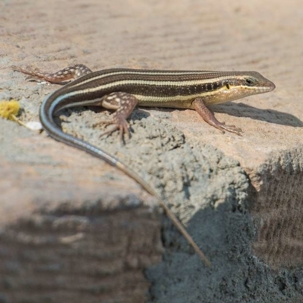
Do Skinks Bite?
Skinks are generally shy, non-aggressive lizards that prefer to flee rather than fight. However, they may bite people or pets if they feel directly threatened or cornered. Bites are defensive, not predatory, and are typically harmless—though they can startle or cause minor discomfort. The situations in which skinks are most likely to bite include:
When handled roughly or restrained: If someone tries to pick up or hold a skink, especially by the tail or body, the skink may perceive this as an attack. In defense, it may nip in an attempt to escape.
When cornered or trapped: If a skink becomes stuck indoors, in a pet’s mouth, or in a confined space (like under furniture), it may bite if it feels there’s no way to retreat.
When protecting itself during capture attempts: Trying to catch a wild skink with bare hands or a net can provoke defensive biting, as the animal feels under extreme stress.
When mistaken handling occurs during feeding: In captivity, a skink might accidentally bite if a person’s fingers are too close to its food, mistaking the hand for prey or food.
When interacting with curious pets: Dogs and cats may corner, paw, or mouth a skink out of curiosity. The skink may bite in self-defense before attempting to flee.
The best prevention is to avoid handling wild skinks and to teach pets not to chase or harass them.
Skink Bites
Skink bites are typically very mild and rarely cause any serious injury. Skinks are small, nonvenomous lizards with weak jaws designed for grasping insects, not for inflicting harm. Here’s how bad skink bites can be and what to expect:
Pain Level: Most skink bites feel like a light pinch or pressure. Smaller species (such as five-lined skinks or ground skinks) often can’t even break human skin. Larger species, like blue-tongued skinks, may deliver a stronger bite that can sting or bruise slightly but is still not dangerous.
Skin Damage: In most cases, there’s no visible injury beyond a small red mark. Occasionally, a bite may cause a minor scrape or shallow puncture if the skink latches on firmly. These wounds usually heal quickly with basic first aid.
Infection Risk: While rare, any break in the skin can introduce bacteria. Cleaning the area thoroughly with soap and water and applying an antiseptic helps prevent infection. If swelling, redness, or pus develops, medical attention may be warranted—but this is uncommon.
Allergic or Secondary Reactions: True allergic reactions to skink bites are extremely rare. The most you might see is mild localized irritation, similar to a mosquito bite or small scratch.
Impact on Pets: For dogs or cats, a skink bite is almost never harmful. Pets may react more to the surprise than the pain. The greater risk is the skink being injured or killed during the encounter, not the pet being harmed.
Skink bites are harmless to humans and pets, producing only mild, short-lived discomfort at worst.
What Do Skink Bites Look Like?
Skink bites are usually minor and barely noticeable, especially from smaller species. What they look like can vary slightly depending on the size of the skink and the sensitivity of your skin, but here’s what you can typically expect:
Mild Redness or Small Mark: Most skink bites leave behind nothing more than a small red spot or faint pressure mark where the jaws made contact. It often looks similar to a mild pinch or a bug bite.
Tiny Scrapes or Shallow Punctures: If the skink is larger—like a blue-tongued skink or a broad-headed skink—the bite may cause a pair of small, shallow puncture marks or light abrasions where the teeth made contact. These marks are superficial and usually don’t bleed much, if at all.
Slight Swelling or Tenderness: Some people may notice very mild swelling or tenderness around the bite area for a few hours afterward. This is a normal reaction to the pressure or minor skin break.
Rare Bruising: A strong bite from a large skink might leave a faint bruise, especially on softer areas like the hand or forearm, but this is uncommon.
Healing Appearance: The area typically heals quickly—within a day or two for mild redness, and within a few days for minor scratches. Once healed, there’s no scarring or lasting mark.
In most cases, a skink bite looks less severe than a typical insect bite. If you experience noticeable swelling, warmth, or discharge (which is rare), it could indicate infection and should be cleaned again or checked by a healthcare professional. But overall, skink bites are visually minor, clean, and heal rapidly with minimal care.
What To Do About Skink Bites
If you get bitten by a skink, there’s no need to panic—these bites are generally harmless and usually cause only mild discomfort. Still, it’s best to treat any animal bite with basic care to prevent infection and ensure proper healing. Here’s what to do:
Stay Calm and Don’t Pull Away Suddenly: If the skink is still attached, remain calm and gently loosen its grip instead of jerking your hand away. Pulling back quickly could injure the skink or tear your skin slightly.
Rinse the Bite Thoroughly: Wash the affected area immediately with warm water and mild soap. This removes dirt, saliva, and bacteria from the skin’s surface. Spend at least 20–30 seconds scrubbing the area gently but thoroughly.
Apply an Antiseptic: After washing, use an antiseptic such as hydrogen peroxide, iodine, or rubbing alcohol to disinfect the wound and reduce the risk of infection.
Stop Any Minor Bleeding: If the bite caused a small puncture or scratch that bleeds slightly, apply light pressure with a clean tissue or gauze until it stops.
Apply a Topical Antibiotic (Optional): A thin layer of antibiotic ointment (like Neosporin or bacitracin) can be used before covering the bite to further prevent infection.
Cover if Needed: If the bite is on a part of your body that may get dirty or rubbed (like your hand), cover it with a sterile bandage. Otherwise, leaving it open to air can help it heal faster.
Watch for Signs of Infection: Although very rare with skink bites, monitor the area for redness, swelling, warmth, or pus. If any of these occur—or if the bite becomes painful after a day or two—seek medical attention.
Tetanus Consideration: If the bite breaks the skin and you haven’t had a tetanus booster in the last 10 years (or 5 years for a dirty wound), you may want to check with your healthcare provider about getting one.
Avoid Handling the Skink Again: Skinks bite defensively when frightened or restrained. To prevent future bites, avoid trying to pick up or corner wild skinks, and teach pets not to chase or catch them.
Treat a skink bite the same way you would treat a small cut or scratch—clean it, disinfect it, and keep it protected. With proper care, it should heal quickly and without complications.