
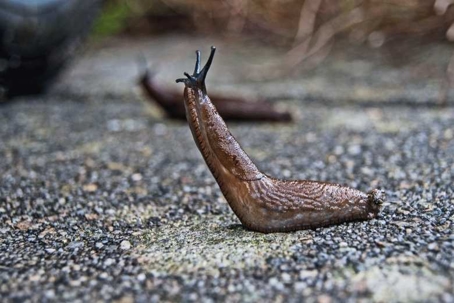
Can Slugs Bite?
Slugs are herbivorous or detritivorous, feeding mainly on plants, fungi, and decaying matter. These mollusks do have a radula—a tongue-like organ covered in tiny teeth—that they use to scrape food, but it is not strong enough to puncture human skin under normal circumstances.
Do Slugs Bite?
Slugs are extremely unlikely to bite people, but there are a few very specific and uncommon situations where a person might feel a “bite” or minor rasping sensation:
Handling slugs directly: If someone picks up a slug with bare hands, the slug’s radula (the tiny, sandpaper-like teeth on its tongue) may scrape the skin, especially on soft areas like fingertips. This is not a true bite—more of a grazing sensation.
Soft, exposed skin contact: Rarely, if a slug crawls on very thin or sensitive skin (for example, a cut, blister, or newborn’s skin), its rasping movement could irritate or cause a slight scratch.
Mistaken “biting” by young children or pets: Small children or pets may perceive the slug’s rasping or its secretion of mucus as a “bite” if it brushes or sticks to their skin.
Accidental ingestion: If someone accidentally puts a slug in their mouth (common with young children playing outdoors), the radula may scrape the inside of the mouth, which could be perceived as a bite.
In all cases, the “bite” is mild, superficial, and poses almost no mechanical danger. The real concern is exposure to pathogens or parasites, like rat lungworm, if the slug’s mucus comes into contact with open wounds or is ingested.
Slug Bites
Slug “bites” are extremely minor in terms of physical severity, but there are some associated health risks, primarily from pathogens rather than the bite itself:
Severity of Slug Bites
Physical trauma: Minimal to none. A slug’s radula (tiny scraping teeth) is not strong enough to puncture intact human skin. Any sensation is usually a slight scratch or grazing on soft areas like fingertips.
Pain: Almost always negligible. You might feel a light tickle or scratch.
Inflammation: Rarely mild redness if the skin is sensitive, but no swelling or bleeding under normal circumstances.
Risks Associated with Slug Bites
Bacterial exposure: Slugs can carry bacteria on their bodies or in their mucus, such as Salmonella or Escherichia coli. Risk is mostly from handling slugs and then touching your mouth, eyes, or open wounds.
Parasitic infections: In some regions, slugs are intermediate hosts for Angiostrongylus cantonensis (rat lungworm). Humans can become infected if slug mucus contaminates food or enters cuts, leading to rare but serious neurological issues.
Allergic or skin reactions: Some people may develop mild irritation or itching from contact with slug mucus, especially if they have sensitive skin.
Preventive Measures
Wear gloves when handling slugs.
Wash hands thoroughly after gardening or touching slugs.
Avoid putting hands near the mouth after contact.
Keep children and pets from playing with or eating slugs.
The “bite” itself is harmless, but the real risk comes from exposure to pathogens on the slug’s body or mucus.
What Do Slug Bites Look Like?
Actual slug bites are extremely rare, and in most cases what people perceive as a “slug bite” is not a true bite but a mild abrasion or irritation from the slug’s radula or mucus. Here’s what it may look like:
Typical Appearance
Slight redness: Usually a small, faint pink area where the skin was grazed.
Superficial scratch marks: Tiny, irregular lines or rasp-like marks if the radula scraped the skin.
Moist or shiny patch: Sometimes the slug’s mucus leaves a slightly wet or slimy residue.
Mild irritation or itching: Rarely, there may be minor swelling or itching, mostly from the mucus rather than the scrape itself.
What It Is Not
No puncture wounds. Slugs cannot pierce intact human skin.
No bleeding in most cases. Only if the skin is already broken or extremely sensitive might there be tiny, superficial bleeding.
No venom or toxic reaction directly from the slug.
If someone thinks they were “bitten” by a slug, it usually just looks like a small, red scratch that fades within a few hours.
What To Do About Slug Bites
If you experience what feels like a slug “bite,” the steps to take are mostly preventive and hygienic, since the actual bite is harmless but there is a risk of bacterial or parasitic exposure:
Immediate Steps
Wash the area thoroughly: Use warm water and soap to remove any mucus or potential pathogens. Pay attention to scrubbing gently around any tiny abrasions.
Disinfect if needed: Apply an over-the-counter antiseptic or alcohol wipe, especially if there are tiny scratches or breaks in the skin.
Avoid touching your face or mouth: Slug mucus can carry bacteria or parasites, so avoid contact with eyes, nose, or mouth until hands are clean.
Monitor for Symptoms
Mild skin reaction: Slight redness, itchiness, or irritation is normal.
Infection signs: Swelling, warmth, pus, or persistent redness may indicate bacterial infection. Seek medical attention if this occurs.
Unusual symptoms: In regions where rat lungworm is present, watch for fever, headache, or neurological symptoms after possible exposure. Consult a healthcare provider if these appear.
Preventive Measures for the Future
Wear gloves when handling slugs or gardening.
Wash hands thoroughly after contact.
Keep children and pets from touching or eating slugs.
There’s no need for emergency care for a slug bite. Focus on cleaning the area and preventing pathogen exposure.