
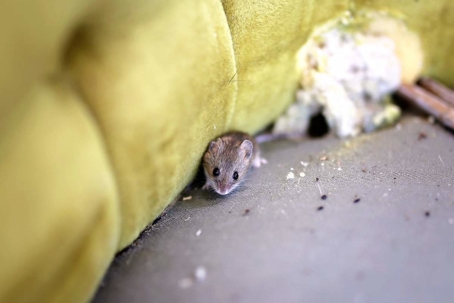
Do House Mice Bite?
House mice are generally timid creatures and prefer to avoid humans, so bites are relatively uncommon. However, there are specific situations where these mice are more likely to bite:
Defensive Reactions: When a mouse feels threatened or cornered, it may bite as a form of self-defense. Examples: being trapped in a container, caught by hand, or suddenly surprised.
Disturbing Nesting Areas: Mice may bite if you disturb their nests, which are often hidden in clutter, clothing, bedding, or behind walls. A mouse protecting its young is more likely to bite.
Food-Related Encounters: In rare cases, a hungry or desperate mouse may bite a human when competing for food. This is more likely in environments where mice have regular access to human food, like kitchens or pantries.
Handling or Attempted Capture: Trying to handle or remove a live mouse increases the risk of being bitten. Even small, non-aggressive mice may bite when restrained.
Sick or Stressed Mice: Mice that are ill, injured, or extremely stressed are more prone to defensive biting. Their normal instinct to flee may be reduced, increasing bite risk.
House mice bite primarily out of fear, self-protection, or desperation, rather than aggression. Most bites occur when humans unknowingly corner or handle them.
House Mouse Bites
House mouse bites, while uncommon, should always be taken seriously due to the potential for infection and disease transmission. Even though these small rodents don’t usually attack unless they feel cornered or threatened, their bites can pose several health risks. Below are the main potential dangers associated with house mouse bites:
- Bacterial Infections: The most immediate concern is infection from bacteria present in the mouse’s mouth or on its fur. A bite can introduce these pathogens into the wound, causing redness, swelling, pain, or pus. If untreated, a localized infection can spread deeper into tissues or even enter the bloodstream. Common bacterial infections may include Staphylococcus aureus and Streptococcus infections (leading to cellulitis or abscesses), or Tetanus, if the person’s vaccinations are not up to date.
- Rat-Bite Fever (RBF): Although more often linked to rat bites, house mice can also carry Streptobacillus moniliformis—the bacteria responsible for rat-bite fever. Symptoms usually develop 3–10 days after exposure and may include fever and chills, joint pain or arthritis-like symptoms, rash on the hands and feet, or headache and vomiting. Without treatment, RBF can lead to serious complications like sepsis, endocarditis (infection of the heart lining), or pneumonia.
- Lymphocytic Choriomeningitis Virus (LCMV): House mice are the primary carriers of LCMV, a virus transmitted through saliva, urine, and droppings. While infection through a bite is rare, it’s possible. Early symptoms resemble the flu—fever, malaise, muscle aches, and nausea—but the virus can progress to meningitis or encephalitis, especially in individuals with weakened immune systems or pregnant women.
- Allergic Reactions: Some individuals may experience allergic responses to mouse saliva or dander introduced by a bite. This can lead to itching, redness, or localized swelling. Severe reactions (anaphylaxis) are rare but possible.
Even if no specific disease is transmitted, a mouse bite wound can worsen due to delayed treatment or improper cleaning. Untreated bites may lead to abscess formation, persistent swelling and pain, scarring, and even systemic infection (sepsis) in severe cases.
What Do House Mice Bites Look Like?
House mouse bites are usually small but can still be concerning because of the risk of infection. Here’s what house mouse bites look like:
Size and Shape: Typically small puncture wounds, about 1–2 mm each. Often appear as a pair of tiny punctures from the mouse’s upper and lower incisors. Sometimes multiple bites occur in a cluster or short line if the mouse bites repeatedly.
Color and Surrounding Skin: The area may be red or slightly swollen. Minor bleeding is common, but usually stops quickly.
Other Signs may include pain or tenderness at the bite site. Itching or irritation may develop within a few hours. Pus or increased redness can occur if the wound becomes infected.
What To Do About House Mouse Bites
If you’re bitten by a house mouse, it’s important to treat the injury immediately and carefully to reduce the risk of infection or disease. Even though these mice are small, their bites can puncture the skin and introduce harmful bacteria or viruses. Here’s exactly what to do, step-by-step:
Clean the wound immediately
Wash your hands thoroughly with soap and warm water before touching the wound.
Rinse the bite under running water for several minutes to flush out dirt and bacteria.
Use soap to gently but thoroughly clean around and inside the bite area.
If available, apply an antiseptic solution such as hydrogen peroxide, povidone-iodine, or rubbing alcohol to disinfect the wound.
Control any bleeding
If the bite is bleeding, apply gentle pressure with a clean cloth or sterile gauze until it stops.
Avoid using a tourniquet or wrapping the wound too tightly—this can restrict blood flow and cause tissue damage.
Apply an antibiotic ointment and cover it
Once bleeding has stopped and the wound is clean, apply an over-the-counter antibiotic ointment (e.g., Neosporin or bacitracin).
Cover the bite with a sterile bandage or dressing to keep it clean and protected from further contamination.
Replace the bandage at least once daily or sooner if it becomes wet or dirty.
Monitor for signs of infection or illness
Over the next several days, carefully watch the wound and your general health.
Seek medical attention immediately if you notice:
Increasing redness, swelling, warmth, or pus around the bite
Fever, chills, or body aches
Joint pain, rash, or swollen lymph nodes (possible signs of rat-bite fever)
Persistent or worsening pain
Contact a healthcare provider
Even if the bite seems minor, it’s best to call or visit your doctor—especially because house mice can carry rat-bite fever bacteria (Streptobacillus moniliformis) and LCMV (lymphocytic choriomeningitis virus). Your doctor may:
Prescribe antibiotics as a preventive measure
Administer a tetanus booster if you haven’t had one in the last 10 years
Evaluate for infection or potential disease transmission
Follow-up care
Continue cleaning and rebandaging the wound daily until healed.
Keep the area dry and avoid scratching or picking at scabs.
If the bite shows no improvement within 48 hours—or worsens—return to your healthcare provider.
Address the source of the problem
If you were bitten inside your home or workplace, it’s important to inspect for an infestation.
Contact our team of licensed pest control professionals to identify entry points, remove nesting areas, and eliminate the mice safely.
Sanitize any areas contaminated by mouse droppings or urine while wearing gloves and a mask, as LCMV can spread through inhalation of particles.