
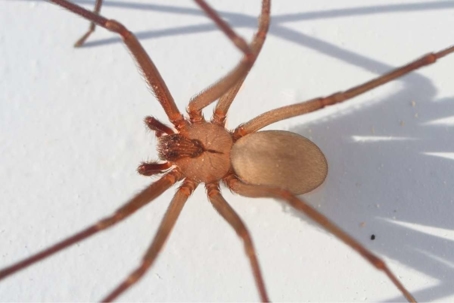
Are Brown Recluse Spiders Poisonous?
No, brown recluse spiders are not poisonous. The term "poisonous" refers to organisms that release toxins when ingested or touched, like poisonous frogs or certain plants. Brown recluse spiders do not pose a risk through ingestion or casual contact in that way.
Are Brown Recluse Spiders Venomous?
Yes, brown recluse spiders are venomous. These spiders inject venom through their bites, which contains enzymes that can break down tissue. Most bites cause mild symptoms like redness, itching, or a small blister, but in some cases, the venom can cause necrosis (tissue death) at the bite site or, rarely, more severe systemic reactions.
Brown Recluse Spider Venom
Brown recluse spider venom is a complex, highly potent hemotoxic and cytotoxic substance designed to immobilize prey and break down tissue for easier digestion. It contains a mixture of enzymes and proteins, the most significant of which is sphingomyelinase D—an enzyme responsible for much of the venom’s destructive effects on human tissue. Here’s what makes brown recluse venom so harmful:
Sphingomyelinase D (the primary toxin): This enzyme breaks down cell membranes and causes red blood cells and skin cells to rupture. It triggers a chain reaction of inflammation, tissue destruction (necrosis), and sometimes systemic effects. It is one of the only known biological agents capable of causing dermonecrosis (death of skin tissue).
Other enzymes and proteins: Hyaluronidase – helps the venom spread more easily through tissues. Lipase and protease enzymes – further degrade cell membranes and proteins. Alkaline phosphatase and esterase – contribute to the breakdown of biological molecules and cellular components.
Effects on the body: Within hours, the bite site may become red, swollen, and tender. A blister often forms, later turning into an ulcer with a dark, necrotic center as tissue dies. In rare cases, the venom enters the bloodstream, causing fever, chills, muscle pain, nausea, and hemolysis (destruction of red blood cells). This condition, known as loxoscelism, can be serious and occasionally life-threatening if not treated.
Why it’s so destructive: Unlike neurotoxic venoms (such as those from black widow spiders), brown recluse venom primarily destroys soft tissue and blood vessels, which can lead to open wounds that take weeks or months to heal.
Although brown recluse bites can look severe, most heal without lasting damage when properly cared for. However, medical evaluation is always recommended to manage infection risk and minimize tissue loss.
Signs Of Brown Recluse Spider Envenomation
Brown recluse spider envenomation can vary in severity, but there are some characteristic signs and symptoms to watch for. They typically develop gradually over hours to days after the bite:
- Immediate or early signs (first few hours): Often mild or unnoticed at first. A small red or purple bump at the bite site. Mild pain, itching, or stinging. Sometimes a pinprick sensation as the spider injects venom.
- Within 12–24 hours: The area may develop a pale or blistered center surrounded by a reddish area. Swelling and tenderness can increase. Some people may experience mild systemic symptoms like fatigue, headache, or low-grade fever.
- After 24–72 hours (progressive signs): The bite site can develop a “target” or bullseye appearance: dark center, pale ring, reddish outer area. In moderate cases, tissue necrosis (skin and underlying tissue breakdown) may occur, forming an open sore or ulcer. Severe pain at the bite site. Systemic reactions (rare) can include fever, chills, nausea, muscle aches, or rash.
- Healing phase (weeks): Necrotic lesions can take weeks to months to heal. Scarring may occur. Secondary infection is a risk if the wound is not properly cared for.
Many suspected brown recluse bites are actually caused by other conditions (infections, other insect bites, skin disorders), so proper medical evaluation is crucial.
What To Do About Brown Recluse Spider Envenomation
If you suspect you’ve been bitten by a brown recluse spider, prompt and careful action is important to reduce tissue damage and prevent complications. Here’s what to do:
Stay Calm and Assess
Most brown recluse bites are mild, and severe reactions are uncommon.
Identify the bite site and remove any tight clothing or jewelry around it to avoid constriction if swelling occurs.
Clean the Bite
Wash the area gently with soap and cool water to reduce the risk of infection.
Avoid harsh scrubbing or applying strong chemicals.
Reduce Swelling and Pain
Apply a cool compress or ice pack (wrapped in a cloth) for 10–15 minutes at a time, several times a day.
Keep the affected area elevated if possible.
Over-the-counter pain relievers such as acetaminophen or ibuprofen can help manage discomfort.
Do not apply heat, as it can worsen tissue damage.
Monitor for Signs of Necrosis or Infection
Watch for increasing redness, darkening, blistering, or ulcer formation.
If the wound develops a dark, sunken center or becomes increasingly painful, this may indicate necrosis.
Look for systemic symptoms like fever, chills, nausea, body aches, or rash, which require urgent medical attention.
Seek Medical Care
Contact a healthcare professional promptly, especially if the bite appears severe or is worsening, there is necrosis or spreading redness, or systemic symptoms develop.
A doctor may clean and debride necrotic tissue if needed, prescribe antibiotics if infection is suspected, provide tetanus vaccination if not up-to-date, and/or recommend pain management or wound care.
There is no widely available antivenom for brown recluse bites in the U.S., so treatment focuses on supportive care and preventing complications.
Avoid Harmful Home Remedies
Avoid cutting or attempting to suck out the venom.
Avoid home remedies like heat, strong chemicals, or topical irritants—they can worsen tissue damage.
Most bites are mild and self-limiting, but tissue necrosis can occur in some cases. Early wound care and medical evaluation are essential to minimize complications. Keep the bite area clean, cool, and elevated, and monitor carefully for changes.