
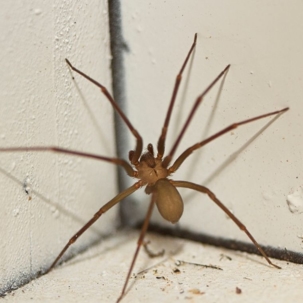
How To Get Rid Of Brown Recluse Spiders
Getting rid of brown recluse spiders on your own can be challenging because these spiders are shy, reclusive, and potentially dangerous. Still, there are effective steps a home or business owner can take to reduce their presence safely. Here’s how to get rid of brown recluse spiders:
Confirm Their Identify As Brown Recluse Spiders
Brown recluse spiders (Loxosceles reclusa) are widely reported in Washington, D.C., Maryland, and Northern Virginia, but confirmed established populations in the area are actually considered extremely rare to nonexistent in most outdoor environments. The natural range of brown recluse spiders is concentrated in the central and south-central United States (especially Missouri, Kansas, Oklahoma, Arkansas, and surrounding states), where they thrive in stable, dry, sheltered environments. In the Mid-Atlantic, including the DMV region, most credible arachnological surveys and pest management findings indicate that brown recluse sightings are typically isolated, accidental introductions—for example, transported in boxes, furniture, or shipments from endemic states—rather than evidence of breeding populations. When spiders resembling brown recluses are found locally, they are frequently misidentifications of native species that share similar coloration or body shape, which contributes to their reputation being exaggerated in the area. More commonly encountered spiders in Washington, D.C., Maryland, and Northern Virginia include a wide range of harmless or mildly beneficial species such as wolf spiders (Lycosidae), which are ground-dwelling hunters often mistaken for dangerous species due to their size and speed; house spiders (Parasteatoda and Tegenaria/Eratigena species), which build irregular webs in corners, basements, and garages; jumping spiders (Salticidae), small active hunters often seen on windowsills or exterior walls; and orb-weaver spiders (Araneidae), which create large circular webs outdoors in gardens, trees, and around buildings during warmer months. Other frequently encountered species include cellar spiders (Pholcidae) in basements and crawl spaces, and spider species in the sac spider group (Cheiracanthium spp.), which are sometimes mistaken for medically significant spiders due to their pale coloration and indoor wandering behavior. While sac spiders are occasionally involved in minor bites, they are not equivalent to medically important recluse spiders in terms of venom potency or clinical outcomes. Our regional spider fauna is dominated by non-dangerous, ecologically beneficial species that help control insect populations, and genuine brown recluse populations are not considered established in the DMV area despite frequent public concern and misidentification.
Reduce Outdoor Habitat
Reducing outdoor habitat helps limit brown recluse spider presence by removing the stable, sheltered, and low-disturbance environments where they can live, breed, and expand before occasionally moving into structures. While brown recluses are more strongly associated with indoor or protected microhabitats, in regions where they do occur they often rely on exterior refuges such as stacked materials, dense ground cover, debris piles, and sheltered voids near foundations. These areas provide darkness, humidity control, and protection from predators and disturbance, allowing populations to persist close to buildings and increasing the likelihood of accidental or gradual indoor entry. When these outdoor conditions are removed or simplified, spiders lose their primary staging zones, their population density drops, and the pressure to migrate indoors is significantly reduced.
A key step is eliminating clutter and long-term ground storage. Items such as stacked lumber, unused construction materials, pallets, cardboard, tarps, and outdoor equipment should be stored off the ground and, ideally, inside sealed containers or dedicated storage structures. When outdoor storage is unavoidable, elevating materials on racks and keeping them tightly organized reduces the number of void spaces where spiders can hide. Similarly, removing debris such as leaf piles, brush piles, and accumulated yard waste reduces the layered ground cover that creates ideal harborage conditions. Compost piles should be managed carefully and kept contained, since loose organic matter can support insect prey populations that indirectly sustain spiders.
Another important step is managing vegetation and ground cover near structures. Dense shrubs, ivy, and overgrown landscaping that directly touches building walls create shaded, humid corridors that allow spiders to move easily between outdoor habitats and entry points. Trimming vegetation back from the structure and maintaining a clear “buffer zone” of exposed ground reduces both shelter and access pathways. Mulch should be used conservatively near foundations, since thick layers retain moisture and provide concealment; replacing heavy organic mulch with less hospitable materials like gravel in critical perimeter zones can reduce suitability.
Controlling moisture and insect prey outdoors is also essential. Brown recluses depend on other arthropods for food, so reducing outdoor insect populations indirectly limits spider survival. This includes fixing irrigation overwatering, preventing standing water, ensuring gutters drain properly, and avoiding excessive night lighting that attracts insects near building exteriors. Managing waste bins and food sources outdoors helps reduce insect activity that would otherwise sustain a local food web supporting spiders.
Reduce structural outdoor harborage points by sealing gaps in exterior walls, repairing damaged siding, closing openings around utility lines, and screening vents. Even small voids can serve as protected daytime refuges. When combined with sanitation, storage control, and vegetation management, these steps reduce the continuity between outdoor habitats and indoor environments, which is what ultimately limits brown recluse pressure on a home or business.
Seal Entry Points
Sealing entry points helps reduce brown recluse spiders by cutting off two key pathways: new introductions from outside sources and movement between structural voids and living spaces. Even though established populations are uncommon in many parts of the Mid-Atlantic, brown recluses (when present) tend to spread gradually through hidden travel routes such as gaps in foundations, wall voids, utility penetrations, and openings around doors, windows, and vents. They are not aggressive wanderers in open areas, but they can follow edges, plumbing lines, and electrical conduits, which allows them to move from basements, crawl spaces, or exterior nesting sites into interior rooms. When these entry and migration routes are sealed, it reduces the ability of spiders to disperse, isolates any existing populations, and makes interior spaces far less accessible over time, which supports other control methods like cleaning, trapping, and habitat reduction.
Effective sealing starts with a systematic inspection of low-light, low-disturbance zones, especially basements, crawl spaces, garages, utility rooms, and storage areas. The most important structural gaps to address are cracks in foundation walls and slab joints, openings where pipes, wires, and cables pass through walls, gaps under doors, poorly sealed window frames, torn or missing door sweeps, and unsealed attic or crawl space vents. Each of these should be treated as a potential “highway” for spider movement, especially where they connect exterior conditions (vegetation, mulch beds, or stacked materials) directly to interior spaces. For cracks and crevices in masonry or concrete, use a high-quality polyurethane or masonry-grade sealant that remains flexible over time, since rigid fillers often crack and reopen. For utility penetrations, gaps should be filled with appropriate backer material (such as steel wool or copper mesh where applicable) and then sealed over with caulk or expanding foam rated for pest exclusion, ensuring there are no voids left behind.
Doors and windows are another major weak point, so installing or repairing tight-fitting door sweeps, threshold seals, and weatherstripping is essential, especially on basement and garage doors where small gaps are common. Window screens should be intact and properly seated in their frames, and any damaged mesh should be replaced rather than patched loosely, since spiders can exploit even small tears. Ventilation points such as dryer vents, attic vents, and foundation vents should be covered with properly fitted insect-proof screening (fine enough to block arthropods but still allow airflow), and any gaps around the frames should be sealed to prevent bypass routes.
Outside the structure, sealing efforts are more effective when combined with reducing direct contact points between vegetation and the building. Overhanging branches, dense shrubs pressed against walls, stacked firewood, and debris piles create bridge-like access routes that allow spiders to reach entry points easily. Maintaining a clear buffer zone around the foundation reduces the likelihood that spiders can find and exploit small structural weaknesses. In addition, improving exterior lighting choices can indirectly help, since bright lights attract insect prey that in turn can support spider populations near entry points.
Finally, sealing is most effective when treated as part of a closed-loop strategy: it prevents reinfestation, but it does not immediately eliminate spiders already inside. For that reason, sealing should be paired with interior cleanup, monitoring (such as sticky traps in basements and along walls), and reduction of insect prey sources. When these elements work together, sealing entry points becomes the foundation of long-term prevention rather than a standalone fix.
Declutter and Clean
In the case that you are actually dealing with brown recluse spiders, decluttering and cleaning are some of the most effective ways to reduce brown recluse spider presence because these spiders are strongly dependent on undisturbed, sheltered microhabitats rather than open, active living spaces. Brown recluses prefer areas where they are unlikely to be disturbed for long periods, such as stacked boxes, stored clothing, paper piles, cardboard, wood storage, unused furniture, and cluttered basement or garage corners. When these environments are present, they gain a network of protected crevices for daytime hiding and egg sac placement, which allows populations to persist unnoticed. By contrast, systematic decluttering removes the very structure that allows them to survive: reducing stacked materials eliminates hidden voids, breaking down cardboard storage replaces attractive nesting substrates, and organizing items off the floor reduces continuous dark contact points along walls and baseboards where spiders commonly travel.
Cleaning complements this by disrupting both the spiders and their food supply. Regular vacuuming—especially along baseboards, behind furniture, and in storage areas—physically removes spiders, egg sacs, and prey insects such as small flies, ants, and cockroaches, which are a key part of their survival cycle. Wiping down surfaces and reducing dust also makes environments less favorable for insect prey, indirectly making the space less attractive to recluse spiders over time. Additionally, reducing clutter increases airflow and light penetration into areas that are typically dark and still; brown recluses strongly prefer low-traffic, dim environments, so improving visibility and disturbance frequency makes those spaces less suitable for colonization.
Another important effect of cleaning and decluttering is that it increases detectability and disruption, which is critical for this species. Brown recluses rely on remaining hidden, so when objects are frequently moved, inspected, or cleaned, their ability to establish stable hiding sites is reduced. It also makes any incidental presence easier to spot early, preventing small introductions from developing into larger, established populations. However, it is important to recognize that cleaning alone is not a complete solution if there are ongoing entry points or heavy outdoor populations nearby; it works best as part of an integrated approach that also includes sealing gaps, reducing insect prey, and removing long-term storage conditions that allow stable harborage.
Use Sticky Traps
Sticky traps are one of the most practical tools for detecting and reducing brown recluse spiders, but they work best when used as part of a targeted placement strategy rather than scattered randomly. The most effective approach is to think of traps as interception points along travel routes, because brown recluses tend to move along edges—baseboards, wall-floor junctions, behind furniture, and along utility lines—rather than crossing open floor space. Begin by placing non-toxic glue boards in low-disturbance, dark, and undisturbed areas, especially basements, crawl spaces, storage rooms, garages, and closets. Focus on perimeter placement: tight against walls, inside corners, under shelving, behind stored boxes, and along known pathways where spiders would naturally navigate. It is also important to place traps horizontally flush to surfaces, since gaps reduce effectiveness and spiders often avoid elevated or unstable placements.
For meaningful coverage, traps should be distributed in a grid-like pattern in infested or suspected zones, with higher density in areas showing signs of activity (such as webs, droppings from prey insects, or sightings). In basements or large storage areas, spacing traps every 10–20 feet along walls and concentrating near cluttered or previously undisturbed zones improves capture rates. In multi-room structures, traps should be placed in every room at least along two adjacent wall lines to ensure no major travel corridor is missed. Pay particular attention to transition points such as doorways between basement and living areas, utility penetrations, and the edges of stacked storage, since these are common movement routes.
Traps should be **checked regularly—ideally every few days at first and then weekly—**to monitor activity levels and identify hotspots. High capture zones indicate where harborages are likely nearby, which can guide further cleaning, decluttering, or sealing efforts. It is important not to relocate traps too frequently, since consistency allows patterns to emerge over time. Replacing traps once they become full or dusty is necessary because their adhesive effectiveness declines.
For brown recluse situations specifically, traps are most powerful when used as a diagnostic and suppression tool rather than a stand-alone eradication method. They reduce active individuals, but more importantly they reveal hidden population centers that would otherwise go unnoticed. When combined with clutter reduction, sealing entry points, and insect prey control, trapping becomes significantly more effective, because it removes wandering spiders while other measures reduce the conditions that support ongoing survival and reproduction.
Targeted Insecticide Use (With Caution)
Insecticides can help suppress brown recluse spiders, but their effectiveness depends heavily on correct product selection, precise placement, and integration with habitat reduction, because these spiders spend most of their time hidden in protected voids where sprays alone may not reach. The most effective approach is typically a combination of residual insecticides applied to travel routes and crack-and-crevice treatments in harborage areas, rather than broad, space-fogging applications. Residual products labeled for spiders (often synthetic pyrethroids such as bifenthrin, deltamethrin, or lambda-cyhalothrin, depending on local regulations and product labeling) are commonly applied along baseboards, wall-floor junctions, behind appliances, inside closets, around stored materials, and in basement or crawl space perimeters where spiders are likely to move. Crack-and-crevice application is especially important for brown recluses, since they tend to hide in narrow gaps, voids behind baseboards, and storage clutter, and light surface spraying on open floors is largely ineffective because it does not contact resting spiders. Dust formulations, such as silica gel or diatomaceous earth products labeled for indoor void use, can be particularly useful in wall voids, attics, and behind fixed structures because they remain active for long periods and can penetrate deeper into hidden spaces than liquid sprays. In outdoor-adjacent zones, perimeter treatments around foundations, entry points, and utility penetrations can help reduce spider migration pressure into structures, but these should be applied carefully to avoid runoff and should always follow label restrictions regarding weather, application zones, and frequency. Importantly, insecticides alone will not eliminate an established population if harborage conditions remain intact; they are most effective when used after or alongside clutter removal, sealing entry points, and reduction of insect prey, which forces spiders out of protected refuges and into treated zones where they are more likely to encounter active residues. Reapplication schedules should follow product labeling and environmental conditions, since residual effectiveness can degrade with dust accumulation, humidity, and cleaning. In professional programs, rotating application methods (liquid residuals, dusts, and targeted void treatments) while focusing on structural “hot zones” consistently produces better results than repeated broad spraying, which tends to create diminishing returns and unnecessary chemical exposure without significantly improving control.
Limitations of DIY Control
DIY brown recluse spider control is limited mainly by how the species actually behaves and where it hides, which makes complete elimination difficult without professional-level tools and access. One of the biggest constraints is that brown recluses spend most of their time in deep, concealed harborage areas such as wall voids, behind baseboards, inside stacked materials, under insulation, and in inaccessible structural gaps. These zones are rarely reached effectively by household sprays, traps alone only capture wandering individuals, and many infestations persist unseen because the core population remains hidden and undisturbed. As a result, DIY efforts often reduce visible activity without addressing the underlying population, which can lead to the false impression of success followed by re-emergence weeks or months later.
Another limitation is misidentification and uneven detection. Many spiders in the Mid-Atlantic region resemble brown recluses in color or shape, and homeowners often either overestimate the problem or fail to recognize actual recluse presence. Without accurate identification and understanding of infestation patterns, treatments may be misapplied to low-activity areas while missing true hotspots in cluttered storage zones or structural voids. This leads to inefficient use of traps, sprays, and cleaning effort.
DIY approaches also struggle with scale and continuity of treatment. Effective control typically requires consistent coverage across multiple rooms, basements, crawl spaces, and exterior-to-interior transition zones. Homeowners often treat isolated rooms or visible areas, but spiders move through interconnected structural pathways that are easy to overlook, such as utility chases, attic-to-wall void connections, and gaps behind built-in structures. Missing even a few key pathways allows recolonization of treated areas.
A further limitation is lack of long-term monitoring and integrated strategy. Brown recluse management depends heavily on sustained reduction of harborage, insect prey, and entry points, not just one-time chemical or trapping efforts. DIY efforts frequently focus on immediate removal (sprays or traps) without fully addressing clutter, moisture, and structural sealing, which means the underlying habitat remains capable of supporting reinfestation.
Finally, there are safety and exposure considerations. Disturbing heavy clutter or vacuuming suspected harborage areas without proper precautions can increase exposure risk, and overuse or improper use of insecticides can create unnecessary chemical exposure without improving control outcomes. For these reasons, DIY methods are most effective for low-level prevention or early detection, but they are often insufficient for established or widespread infestations where coordinated structural, environmental, and targeted treatment strategies are needed.
Personal Safety Precautions
When attempting DIY brown recluse spider control, the main safety goal is to reduce the chance of accidental contact while disturbing hidden harborage areas and to prevent exposure to both spiders and the environments they occupy. Start with proper personal protective equipment (PPE): wear long sleeves, long pants tucked into socks or boots, and thick gloves (ideally leather or heavy-duty work gloves) when handling storage items, moving clutter, or working in basements, crawl spaces, garages, or sheds. Eye protection is important when pulling items from overhead shelves or disturbing dusty, undisturbed materials, and a well-fitted mask or respirator (such as an N95) is recommended when cleaning areas with heavy dust, insulation, or suspected insect debris to reduce inhalation of allergens and contaminants.
Before moving items, use a controlled inspection approach rather than immediate grabbing or sweeping, especially in storage-heavy areas. Lift boxes carefully, shake out items outdoors when appropriate, and avoid placing hands directly into dark voids, shoes, boots, or clothing that has been stored for long periods. Shoes and gloves that have been sitting unused should be inspected and shaken out before wearing, since brown recluses can occasionally shelter in undisturbed personal items. When accessing tight spaces such as behind furniture or inside closets, use tools like flashlights, hooks, or extension tools instead of reaching blindly.
During cleaning or decluttering, it is safer to disturb and remove items slowly and methodically rather than quickly or forcefully, since sudden movements can displace hidden spiders into exposed areas. Vacuuming is generally safer than sweeping in heavy debris zones because it contains material more effectively, but vacuum canisters or bags should be sealed and disposed of promptly to prevent re-exposure. When handling potentially infested clutter (cardboard stacks, old storage bins, or yard debris), it is best to carry items directly outside rather than sorting through them indoors.
If insecticides are used, follow strict label-directed safety precautions, including ensuring adequate ventilation, avoiding skin contact with wet residues, and keeping people and pets out of treated areas until products have fully dried. Never mix chemicals or exceed recommended application rates, since improper use increases health risks without improving spider control effectiveness.
Reduce your risk by minimizing exposure time in high-risk zones and maintaining good lighting in work areas, since brown recluses prefer dark, undisturbed environments and are more easily avoided when visibility is high. A disciplined, slow, and well-protected approach significantly reduces the chance of incidental bites or accidental contact while still allowing effective reduction of spider habitat and activity.
The Best Way To Get Rid Of Brown Recluse Spiders
Our professional pest control is the best approach for eliminating brown recluse spiders because of the spider’s elusive behavior, the risks they pose, and the technical expertise required to control them effectively. Here’s why:
Comprehensive, Professional Inspection
Our professionals conduct thorough inspections of the entire property, including attics, basements, crawlspaces, closets, and storage areas.
We can identify potential entry points and other conditions that attract spiders, such as clutter, moisture, or insect prey.
This comprehensive approach is difficult to replicate in a DIY effort.
Expertise in Identification and Behavior
Accurate identification: Brown recluses can easily be mistaken for other, less harmful spiders. Our professionals can correctly identify them and distinguish them from lookalikes.
Behavior knowledge: Our experts understand their habits—they hide in dark, undisturbed areas, are nocturnal, and rarely leave visible webs. Knowing where they hide is crucial for effective control.
Time and Efficiency
Searching for brown recluse spiders in cluttered attics, basements, or storage rooms is time-consuming and often frustrating.
Our professionals can achieve more effective results in less time due to experience, equipment, and knowledge of spider behavior.
Integrated Pest Management (IPM)
Our professionals use IPM strategies, combining habitat modification (decluttering, sealing entry points), targeted chemical control, monitoring (sticky traps, visual inspections)
This ensures long-term control, not just temporary reduction of visible spiders.
Effective and Safe Use of Insecticides
Our professionals use EPA-approved residual insecticides that are effective against spiders but safe when applied correctly.
DIY users often misapply sprays, which can waste chemicals and increase exposure risks for people and pets.
Our professionals know the correct formulations, dosages, and application methods, targeting cracks, baseboards, and entry points rather than open spaces.
Long-Term Prevention
Our professionals not only eliminate current spiders but implement strategies to prevent future infestations, such as sealing cracks and gaps, reducing outdoor habitats, and educating homeowners on spider-safe practices.
DIY methods often only address immediate sightings and may allow a hidden population to persist.
Reduced Risk of Bites and Complications
Brown recluse bites can cause serious medical issues, including necrotic skin lesions and infections.
Our professionals can handle spiders safely, reducing the risk of bites during treatment.
DIY attempts in tight or hidden spaces carry a higher likelihood of accidental exposure.
While homeowners can take steps to reduce brown recluse sightings, true elimination and prevention often requires professional expertise. Our pest control professionals combine inspection, targeted treatment, long-term monitoring, and prevention strategies to ensure safety, efficiency, and lasting results—something DIY methods cannot reliably achieve.
Get Rid Of Brown Recluse Spiders With Miche Pest Control
Hiring our team of professionals at Miche Pest Control is an investment in long-term protection, expertise, and peace of mind. Here’s why:
- Personalized Service and Local Expertise: We know the specific pest pressures in the area—such as seasonal rodent activity, regional ant species, or local termite threats. Our technicians understand the environment, climate, and building types common to the area, allowing them to provide targeted, effective treatments.
- High-Quality, Comprehensive Solutions: As a full-service provider, we don’t just treat surface problems; we address the root causes. From inspections and prevention to exclusion and ongoing maintenance, we deliver complete, integrated pest management (IPM) programs designed to both eliminate infestations and prevent future ones.
- Accountability and Reliability: We live and die by our reputation. We rely on trust, referrals, and repeat business, meaning we're committed to doing the job right the first time and providing exceptional customer care.
- Faster Response Times: We respond quickly to emergencies and schedule services sooner than large, national chains. Especially when you’re dealing with urgent pest issues like rodents or wasps, that speed matters.
- Customized Treatment Plans: We tailor our services to your property’s specific needs instead of using one-size-fits-all chemical treatments. This results in safer, more effective pest control that minimizes environmental impact and reduces unnecessary pesticide use.
- Highly Trained, Experienced Technicians: We invest in training, certification, and continuing education for our technicians. We stay current on the latest pest biology, control techniques, and safety standards.
- Long-Term Prevention and Value: Our focus on providing quality service means fewer callbacks, longer-lasting protection, and better value over time. Instead of repeated, temporary fixes, you get strategic solutions that protect your home or business for the long run and provide better peace of mind.
Hiring our team means you get expertise you can trust, faster service, safer and more effective treatments, and long-term results that protect both your property and your peace of mind. Contact us today!