
Sugar Ants
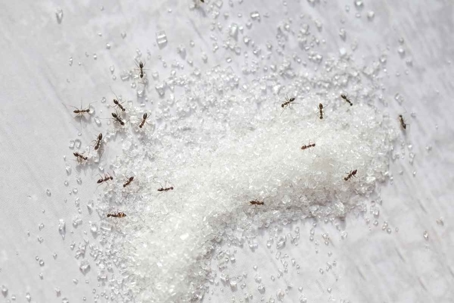
Sugar ants are a general term for small ants that are attracted to sweet foods. The name is commonly used to describe several different species, including odorous house ants (Tapinoma sessile), pavement ants (Tetramorium caespitum), and Argentine ants (Linepithema humile). However, the true sugar ant (Camponotus consobrinus) is a species native to Australia.
Are Sugar Ants Harmful?
Sugar ants, while not directly dangerous in the way that venomous or aggressive insects might be, can still pose several risks. Here are some ways they can be considered a threat:
Food Contamination – Sugar ants can crawl over unsanitary surfaces before entering homes and businesses. They can carry bacteria and pathogens from garbage, feces, or other contaminated areas to food sources, increasing the risk of foodborne illnesses.
Allergic Reactions – Some people may experience allergic reactions from ant bites or contact with their waste. While sugar ants do not bite aggressively, their presence in large numbers can increase the likelihood of skin irritation or allergic responses.
Infestation Growth – If left unchecked, sugar ant colonies can grow rapidly. This can lead to widespread infestations that are difficult to eliminate, causing long-term nuisance and potential damage to food storage and kitchen areas.
Damage to Property – Some species of sugar ants, such as the odorous house ant, can nest inside walls, electrical outlets, or insulation. Over time, their nesting habits can contribute to minor structural damage and create hidden infestations that require costly pest control interventions.
Attracting Other Pests – The presence of sugar ants can attract other pests, such as spiders or predatory insects that feed on ants. Additionally, open food sources that attract sugar ants may also lure in cockroaches or rodents, compounding the problem.
While sugar ants are not the most dangerous pest, their ability to spread germs, cause infestations, and create inconvenience makes them a pest worth addressing quickly.
Learn more: Do Sugar Ants Bite?
Sugar Ant Control
Hiring our professional sugar ant control is often the smartest and most effective approach when dealing with these persistent pests. While DIY baits and sprays may provide temporary relief, sugar ants are highly organized, with colonies that can contain thousands of workers and multiple queens. This makes them extremely difficult to eliminate without expert intervention. Our professional service brings several advantages:
- Accurate Identification and Inspection: Many small ants look alike, but sugar ants require specific treatment strategies. Our trained technicians can correctly identify the species, locate entry points, and track trails back to nests.
- Colony Elimination, Not Just Surface Treatment: Store-bought sprays often kill only the ants you see. Our professionals use targeted baits and treatment methods designed to reach the hidden colony, including satellite nests, ensuring long-term control.
- Safe and Effective Products: Over-the-counter solutions are limited in strength. Our pest control experts use professional-grade products that are more effective, carefully applied for maximum impact while protecting your family, pets, and property.
- Prevention of Recurring Infestations: Even if you wipe out visible ants, new colonies can quickly move in. Our professionals focus on long-term prevention by sealing entry points, removing attractants, and setting up ongoing protection.
- Protection of Food and Property: Sugar ants are drawn to sweets, grease, and food scraps, contaminating kitchens and pantries. Our professional pest protection program keeps your food prep areas hygienic and prevents property damage caused by moisture and nesting.
- Cost-Effective in the Long Run: Repeated DIY attempts can waste money and time while the infestation spreads. Our professional pest control services eliminate the problem more efficiently, saving you from recurring headaches.
Our professional sugar ant control ensures thorough elimination, prevents reinfestation, and restores peace of mind by keeping your home or business ant-free.
Learn more: How To Get Rid Of Sugar Ants
What Do Sugar Ants Look Like?
Sugar ants are small to medium-sized ants known for their attraction to sweet substances, and their appearance can vary slightly depending on the specific species (since “sugar ant” is a common name used for several types of ants). However, the following description applies to the most commonly encountered varieties in homes:
Size: Typically between 2.5 to 15 millimeters (1/16 to 5/8 inch) long, depending on the species. The smaller sugar ants found indoors are usually around 2.5–4 mm.
Color: Most are light brown, orange-brown, or dark brown to black. Some species have lighter-colored bodies with darker heads or abdomens.
Body Shape: Like all ants, they have a three-segmented body (head, thorax, abdomen) with a narrow waist. Their bodies are smooth and shiny.
Antennae: Elbowed (bent) antennae that are constantly in motion as they search for food.
Legs: Long and slender, allowing quick movement, especially along countertops and baseboards.
Wings: Winged forms (swarmers) may appear seasonally when colonies reproduce. These have two pairs of wingsand are slightly larger than the worker ants.
Indoors, “sugar ants” often refer to odorous house ants (Tapinoma sessile) or Argentine ants (Linepithema humile)—both small, dark brown to black ants that form trails to sugary food sources.
Where Are Sugar Ants Found?
You are most likely to find sugar ants in warm, moist environments that provide easy access to food—especially sugary or carbohydrate-rich substances. Because they are highly adaptable, sugar ants can nest both indoors and outdoors, often moving inside when food or water becomes scarce outside:
Indoors (most common infestation sites)
Kitchens and Pantries – Near sugar, honey, fruit, baked goods, soda cans, and other sweet items. Inside or around food cabinets, under appliances, or in crumbs and spills. They often follow trails along countertops, backsplashes, or baseboards.
Bathrooms – Drawn by moisture, especially around sinks, tubs, and faucets. They can nest behind tile cracks, mirrors, or wall voids where humidity is high.
Walls and Electrical Outlets – They use cracks, electrical conduits, and voids as travel routes and nesting areas. Colonies may be hidden inside walls, behind baseboards, or beneath flooring.
Laundry Rooms or Utility Areas – The warmth and moisture from machines and water heaters attract them. They may also feed on soap residues or fabric softener sugars.
Outdoors (nesting and source colonies)
Under Rocks, Logs, or Leaf Litter – Sugar ants often nest in soil, under stones, wood piles, or garden debris. You may notice small dirt mounds near pavement edges, driveways, or patios.
In or Around Foundations – Colonies frequently establish near cracks in concrete, foundation gaps, or building perimeters where they can enter structures.
Trees and Shrubs – They often nest at the base of trees, under loose bark, or in rotting wood. Some species farm aphids or scale insects on plants for honeydew—a sweet liquid they collect and bring back to the nest.
Outdoor Food Sources – Around trash bins, compost piles, picnic areas, and pet food bowls left outside.
Sugar ants are most active at night and during warm, humid seasons (spring through early fall). They often form visible foraging trails between their nests and food sources, especially after rain or during dry spells when they seek moisture indoors.
What Do Sugar Ants Eat?
Sugar ants have a highly varied diet, but as their name suggests, they are particularly attracted to sweet foods and sugary substances. Their feeding habits are opportunistic—meaning they’ll eat almost anything available, depending on what’s easiest to find. Here is what sugar ants eat, both indoors and outdoors:
Sweet Foods (Primary Attraction)
Sugar ants have a strong preference for carbohydrate-rich and sugary substances, which provide quick energy for foraging and colony activity. Common examples include:
Sugar, honey, and syrup
Candy, baked goods, and jams
Fruits (especially ripe or rotting ones like bananas, apples, and berries)
Soft drinks and juices (including spills or residues)
Nectar from flowers and honeydew secreted by plant-sucking insects (like aphids and scale insects)
Outdoors, this attraction to sweetness often leads them to protect or “farm” aphids on garden plants so they can harvest their honeydew—a sticky, sugary liquid.
Proteins
While they favor sugars, sugar ants also need protein to sustain their larvae and maintain colony growth. When sweets are less available, they’ll switch to:
Meat scraps, pet food, and dead insects
Grease or fatty foods
Protein-rich crumbs or food residues (like eggs, peanut butter, or cheese)
Indoors, they may be found scavenging around kitchen trash bins, pet feeding areas, or grill residue.
Plant and Organic Materials
Some species of sugar ants also consume organic debris and plant-based substances, such as:
Seeds and grains
Plant sap or damaged fruit
Decaying vegetation near nests
This behavior is especially common outdoors, where they forage broadly for natural carbohydrates.
Water and Moisture Sources
Sugar ants are also drawn to moist environments. They’ll seek:
Condensation on pipes, faucets, and sinks
Pet water bowls
Puddles or damp sponges
Access to water is essential for digestion and colony survival, particularly in hot or dry conditions.
Feeding Behavior
Sugar ants are mostly nocturnal foragers, active at night when competition and risk are lower.
They leave chemical trails (pheromones) that lead other workers to food sources, forming long, visible lines.
Once a food source is found, hundreds of workers may swarm it quickly, breaking down and transporting particles back to the nest.
Sugar ants eat a combination of sugars, proteins, and moisture, but they’re most persistent when sweet, sticky, or sugary items are available.
Sugar Ant Life Cycle
The life cycle of sugar ants follows the typical complete metamorphosis pattern seen in other ant species, progressing through four distinct stages: egg, larva, pupa, and adult. Each stage serves a specific purpose in colony development, and the duration of the cycle depends on temperature, food availability, and species type. Here is how sugar ants develop and maintain their colonies:
Egg Stage
Duration: Approximately 1–4 weeks, depending on environmental conditions.
The queen ant lays the eggs, which are tiny, oval, and white or translucent.
Eggs are carefully guarded by worker ants, who keep them clean, humid, and at stable temperatures.
Only the queen produces eggs, though larger colonies may have multiple queens.
Fertilized eggs develop into females (workers or potential queens), while unfertilized eggs produce males.
Larva Stage
Duration: Roughly 2–3 weeks, though it varies with food supply and warmth.
Eggs hatch into larvae, which are legless, white, grub-like, and completely dependent on workers for feeding.
Workers feed larvae a diet of predigested sugary fluids and proteins, regulating what type of adult they become:
Worker ants are produced when larvae receive moderate nutrition.
Queen larvae receive abundant food, especially protein and fats.
The larvae grow rapidly and shed their outer layers (molting) several times before pupating.
Pupa Stage
Duration: Around 1–3 weeks on average.
Mature larvae spin a silken cocoon (in some species) and enter the pupal stage, during which they undergo metamorphosis.
Inside the pupa, the ant’s body completely reorganizes—developing legs, antennae, wings (for reproductives), and a hardened exoskeleton.
The color gradually shifts from pale white to the characteristic brown, black, or orange of adult sugar ants.
Adult Stage
Duration: Adults can live from a few weeks to several years, depending on their role.
Once metamorphosis is complete, the adult ant emerges fully formed. The colony consists of several castes:
Queen(s): The reproductive center of the colony; can live up to 7 years or more.
Males (drones): Their only role is to mate with new queens; they die soon after mating.
Workers: Sterile females that handle foraging, brood care, nest maintenance, and defense. Workers live 2–3 months on average.
Colony Development and Expansion
A new colony begins when a mated queen finds a suitable site—often soil, wood, or wall voids—and lays her first batch of eggs.
She raises the first generation of workers alone, feeding them from energy reserves stored in her body.
Once those workers mature, they take over foraging and care duties, allowing the queen to focus solely on reproduction.
As the colony grows, it may reach thousands of workers and eventually produce winged reproductives (alates)that leave the nest to start new colonies during nuptial flights (often in warm, humid weather).
Overall Life Cycle Duration
From egg to adult, the sugar ant’s full life cycle typically takes 6 to 8 weeks under favorable conditions, though cooler or drier environments can slow development.