
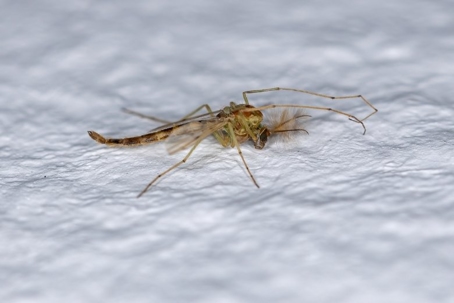
How To Get Rid Of Midges
Getting rid of midges (small, often biting flies) can be challenging for home or business owners, but there are practical steps you can take before calling in our professional pest control. The most effective approach combines prevention, habitat modification, and targeted control methods. Here’s how to get rid of midges:
Identify the Source
Midges are small fly-like insects that typically originate from moist or water-associated environments, and the exact source depends on the specific type of midge involved. In general, most midges require water, saturated soil, or decaying organic material for their larval development, which means infestations are strongly tied to excess moisture and organic buildup. One of the most common sources is standing or slow-moving water such as ponds, lakes, marshes, retention basins, drainage ditches, stormwater systems, decorative fountains, and poorly drained low-lying areas. Non-biting midges commonly develop in the sediment of these aquatic environments, where their larvae feed on algae and decomposing organic matter. Large adult swarms are especially common near waterfront properties or areas with nutrient-rich water during warm weather. Biting midges, often called “no-see-ums,” are more commonly associated with coastal marshes, muddy shorelines, mangroves, wet sand, damp forest soil, and livestock areas where moist organic sediment remains consistently wet. Around homes and businesses, midges and similar small flies may also originate from localized moisture problems such as clogged gutters, leaking irrigation systems, poorly drained landscaping, sewage leaks, dirty floor drains, sump pits, crawl spaces with excess humidity, and standing water in containers or equipment. Organic-rich materials such as compost piles, rotting vegetation, wet mulch, garbage accumulation, and overwatered potted plants can also serve as developmental sources for some species. In indoor environments, people often notice small flying insects around sinks, drains, or plant soil because these damp microhabitats provide ideal breeding conditions. Artificial lighting can further worsen midge problems because many adult midges are strongly attracted to lights, causing them to congregate around windows, entryways, signage, and illuminated exterior walls even when the actual breeding source is located some distance away. Overall, the primary sources of midges are environments that combine moisture with organic material, making water management, drainage correction, sanitation, and moisture reduction key components of effective long-term control.
Eliminate Standing Water
Eliminating standing water is one of the most important steps in getting rid of midges because many midge species depend on water or saturated environments for their entire larval development stage. Adult midges are usually short-lived and primarily focused on reproduction, but their larvae require moist or aquatic habitats rich in organic material in order to survive and mature. Standing water provides exactly the stable, nutrient-rich environment these immature stages need. Ponds, clogged gutters, birdbaths, drainage ditches, retention basins, plant saucers, buckets, tarps, poorly drained landscaping, and even small pockets of stagnant water can serve as breeding sites depending on the species involved. In these environments, organic debris such as algae, decomposing leaves, sludge, and microorganisms accumulate, creating a food source for developing larvae. If standing water remains available, new generations of midges can continuously emerge, making infestations persistent and difficult to control. Eliminating or reducing standing water interrupts the midge life cycle before larvae can mature into flying adults, which is far more effective than trying to manage large adult populations after they emerge. Water removal also helps reduce humidity and dampness in surrounding areas, making nearby environments less attractive to both adult midges and other moisture-dependent pests. In addition, many adult midges remain close to their breeding source, so removing standing water often leads to a significant decline in local activity relatively quickly. Even small reductions in stagnant moisture can have a major impact because many midge species are capable of developing in surprisingly shallow or temporary water sources. Overall, eliminating standing water is critical because it directly removes the breeding habitat necessary for midge reproduction, preventing continuous population renewal and significantly reducing long-term infestation pressure.
Lighting And Attraction Control
Changing the lights around a home or business can help reduce midge problems because many adult midges are strongly attracted to certain types of artificial light, especially lights that emit higher amounts of ultraviolet (UV), blue, or cool-white wavelengths. At night, these wavelengths act as visual attractants that draw flying insects toward buildings, entryways, patios, parking lots, signage, and windows. Once concentrated around lights, midges may accumulate in large numbers, increasing nuisance activity and making it easier for them to enter structures through doors, vents, or small gaps.
Traditional incandescent bulbs, mercury vapor lights, and many cool-white fluorescent or LED lights tend to attract significantly more flying insects than warmer-colored lighting. Replacing these with warm-colored, yellow-toned, or “bug light” LEDs can reduce attraction because these lights emit less of the spectrum that many insects use for navigation and orientation. Lowering the intensity or unnecessary nighttime use of exterior lighting can also reduce insect congregation around structures.
Light placement matters as well. Positioning lights away from doors and entry points helps draw insects away from the building rather than concentrating them directly at access points. For example, using perimeter or landscape lighting farther from entrances can reduce the number of midges gathering near doors where they are likely to enter when opened.
Changing lighting does not eliminate breeding sources or directly kill midges, but it significantly reduces the behavioral attraction that concentrates adults around buildings, especially during large seasonal emergences near water or damp environments. This can greatly improve comfort around outdoor spaces and reduce indoor intrusion.
Physical Barriers
Several physical barriers can be very effective at reducing contact with midges, especially when they are properly matched to the species involved and combined with moisture management and exclusion practices. Physical barriers work by either preventing midges from entering structures or stopping them from reaching people in outdoor spaces.
For outdoor comfort, air movement barriers can also be highly effective. Midges are weak fliers, so strong airflow from ceiling fans, pedestal fans, or directed outdoor ventilation can make it difficult for them to land or remain concentrated in seating areas. This is one of the most practical and effective non-chemical approaches for patios, decks, restaurant seating areas, and outdoor gathering spaces.
Some commercial properties also use air curtains above doors and loading areas. These create a continuous stream of air that disrupts flying insect entry when doors open frequently, helping reduce indoor intrusion near entrances.
One of the most effective barriers is fine-mesh screening. Standard window screens are often not sufficient for very small biting midges (“no-see-ums”), which can pass through ordinary mesh openings. In those situations, tighter “no-see-um” mesh with a much finer weave is significantly more effective for windows, porches, patios, gazebos, screened enclosures, vents, and outdoor seating areas. Proper installation is critical because even small gaps around frames, doors, or utility penetrations can allow insects through.
Another important barrier is maintaining tight structural exclusion around homes and businesses. This includes sealing gaps around doors, windows, siding joints, utility penetrations, vents, and damaged weather stripping. Since adult midges are small and attracted to indoor lighting, preventing entry through tiny openings can dramatically reduce indoor nuisance activity.
Protective clothing functions as another physical barrier, particularly for biting species. Long sleeves, long pants, tightly woven fabrics, socks, and head netting help prevent skin exposure in high-activity environments such as marshes, lakesides, or coastal areas.
Physical barriers are most effective when paired with source reduction, especially elimination of standing water and excessive moisture. If breeding sites remain nearby, large numbers of adults may continue to pressure barriers over time.
Maintain Cleanliness
Sanitation plays a major role in reducing midge populations because many midges and midge-like flies depend on moist organic material, microbial growth, and decaying debris for breeding and larval development. Improving sanitation removes the food-rich environments that support immature stages and reduces the moisture conditions that attract adults.
One of the most important sanitation steps is eliminating organic sludge and buildup in drains, floor sinks, and plumbing areas. Many small flies that people casually call “midges” or “gnats” develop in the gelatinous organic film that accumulates inside drains and pipes. Regular cleaning of drains using mechanical scrubbing and appropriate drain-cleaning products helps remove the microbial material larvae feed on.
Proper garbage management is also critical. Trash containers should be emptied regularly and cleaned to prevent accumulation of fermenting organic material. Food waste, spilled liquids, and residue around dumpsters, recycling bins, and compactors can support large populations of small flies and attract adult insects toward structures.
Another major sanitation factor is reducing decaying plant material and organic debris. Wet leaves, grass clippings, compost piles, algae buildup, mulch accumulation, and rotting vegetation create moist habitats where larvae can develop. Keeping landscaping clean and preventing organic buildup near structures helps reduce outdoor breeding pressure.
Indoor plant maintenance is also important, especially for fungus gnat-type infestations. Overwatered potted plants, waterlogged soil, dead plant material, and algae growth on potting surfaces can support larvae. Allowing soil surfaces to dry appropriately between watering and removing decaying plant matter can significantly reduce activity.
Food sanitation inside homes and businesses also matters because adult midges are often attracted to sugary residues, spills, beverage stations, fermenting fruit, and damp cleaning equipment. Regular cleaning of countertops, under appliances, mop buckets, beverage drains, and food preparation areas reduces attractants and microbial growth.
Moisture-related sanitation is equally important. Fixing plumbing leaks, improving drainage, cleaning gutters, and preventing standing water helps eliminate the damp conditions many species require. Even small amounts of stagnant water combined with organic residue can support breeding.
Midge Traps
Some traps can help reduce or monitor midge activity, but their effectiveness depends heavily on the type of midge involved and the size of the infestation. In most situations, traps are best viewed as a supplemental control and monitoring tool, not a complete solution, because midges often reproduce in very large numbers from nearby moisture sources.
One of the most effective trap types for many adult midges is the UV light trap. These traps use ultraviolet light to attract flying insects and either capture them on glue boards or electrocute them with an electric grid. They can be useful indoors, in commercial facilities, on patios, or near entry points where adult midges are gathering around lights. However, placement is important: traps should be positioned away from primary entrances and occupied areas so they pull insects away from people and buildings rather than drawing more insects directly toward them.
For biting midges (“no-see-ums”), CO₂-based traps can be effective in some outdoor settings. These traps mimic mammal respiration by releasing carbon dioxide and sometimes heat or scent lures, attracting female biting midges searching for a blood meal. Once attracted, the insects are vacuumed or trapped inside the unit. These systems are most effective when deployed continuously in high-pressure outdoor environments such as coastal properties, marsh-adjacent homes, or outdoor hospitality areas.
Sticky traps can also provide limited benefit, especially indoors or in greenhouses where small flying insects are concentrated. Yellow sticky cards are commonly used to monitor fungus gnat and small fly activity around plants or damp areas. While they usually do not eliminate infestations on their own, they help reduce adult numbers and identify activity hotspots.
For non-biting aquatic midges, trapping is often less effective because emergences can involve massive numbers of adults developing from nearby water sources. In those cases, environmental management—especially reducing standing water and limiting attractive lighting—is usually more important than trapping alone.
Insecticides
The most effective way to use insecticides against midges is to focus on targeted applications that interrupt adult resting activity and larval development, while recognizing that insecticides alone rarely solve the problem if breeding sources remain active. Because many midge species reproduce in water, saturated soil, or organic sludge, long-term control depends heavily on combining insecticide use with moisture reduction, drainage improvement, sanitation, and standing water management.
For adult midges around homes and businesses, the most effective approach is usually a targeted residual treatment on resting surfaces and entry areas. Adult midges commonly rest on vegetation, shaded walls, fences, under decks, and around moist landscaping during the day. Applying a labeled residual insecticide to these areas can reduce local adult populations by killing insects that land on treated surfaces. Exterior perimeter applications around doors, windows, soffits, patios, and other congregation areas may also help reduce the number entering structures.
For indoor activity, treatments should be focused on localized source areas, not broad indoor spraying. If midges are originating from drains, sump areas, wet crawl spaces, or organic buildup, the priority should be correcting the moisture problem and treating those breeding zones directly if appropriate. Insecticide use indoors is generally most effective as a supplemental measure after sanitation and moisture correction.
Where larval breeding sites can be identified, larvicides are often more effective than repeatedly treating adults. In standing water or aquatic environments, products containing bacterial larvicides such as Bacillus thuringiensis israelensis(Bti) are commonly used because they specifically target developing fly larvae while having relatively low impact on many non-target organisms. These are especially useful in retention ponds, decorative water features, drainage systems, and other stagnant-water habitats where complete water removal is impractical.
ULV (ultra-low volume) fogging or space sprays may provide temporary knockdown of large outdoor adult swarms, particularly near waterfronts or wetlands, but these treatments usually offer only short-term relief because new adults continue emerging from breeding sites. Without source reduction, populations often rebound quickly.
Timing also matters. Treatments are generally most effective when applied near peak adult activity periods, around dusk or evening for many species, and before major emergence cycles where possible.
Avoid overreliance on insecticides alone. Many large midge populations originate from environmental sources that extend beyond the property itself, meaning repeated spraying without habitat management often produces only temporary suppression.
The Best Way To Get Rid Of Midges
Our professional pest control is the most effective way to eliminate midges because it addresses the problem systematically, safely, and comprehensively—something DIY methods often cannot achieve:
Accurate Identification
Accurately identifying the type of midge is important because different “midges” come from different environments, have different breeding sites, and respond to very different control methods. Treating the wrong type often leads to wasted effort and recurring infestations because the actual source is not being addressed.
One major reason is that midge groups have different life cycles and habitats. For example, non-biting midges (often chironomids) develop in standing or slow-moving water with organic sediment, such as ponds, stormwater basins, or drainage systems. In contrast, biting midges (“no-see-ums”) often breed in wet soil, marshes, coastal mud, or saturated organic matter. Fungus gnats, which are frequently mistaken for midges indoors, develop in overwatered plant soil and decaying plant material. Because these sources are completely different, control strategies must be tailored accordingly.
Identification also determines whether control should focus on water management, soil management, plant care, drainage systems, or structural sanitation. If the wrong source is targeted—for example, treating drains when the problem is actually overwatered houseplants—infestations will persist even after repeated treatments.
Another important factor is that different midge types respond differently to control tools. Some are more effectively managed with larvicides in water systems, others require soil drying and plant management, while others are best controlled through exclusion and moisture reduction around structures. Insecticides and traps that work well for one type may have little effect on another.
Accurate identification also affects trap effectiveness and placement strategy. Light traps may be useful for some adult aquatic midges but less effective for others that are not strongly attracted to light. Similarly, CO₂-based traps are more relevant for biting species seeking hosts, not fungus gnats or drain-associated flies.
Correct identification helps prevent unnecessary or excessive chemical use. Without knowing the source, treatments may be applied broadly and repeatedly without resolving the underlying breeding site, leading to ongoing infestation, resistance issues, and higher costs.
Use of Professional-Grade Products
Professional-grade insecticides can be more effective than over-the-counter (OTC) products for midges, but the difference is not simply “stronger vs weaker.” The real advantage is usually better active ingredients, longer residual performance, more precise formulations, and professional application techniques—all of which matter more than raw toxicity.
One major difference is formulation quality and residual life. Many professional products are designed to leave a longer-lasting film on treated surfaces, which is important for midges because adults are constantly emerging from nearby moisture sources. A longer residual means insects contacting treated vegetation, siding, or entry points are exposed over a longer period, reducing re-treatment frequency and improving consistency.
Professional products also often contain more effective or more diverse active ingredients, including combinations or newer chemistries that are not always available in consumer formulations. These can provide better knockdown, longer control, or improved performance against small flying insects in outdoor environments where pressure is continuous.
Another advantage is precision in application methods. Professionals typically use calibrated equipment (such as backpack sprayers, ULV applicators, or targeted crack-and-crevice tools) that allow for more uniform coverage in the exact areas midges use—like shaded vegetation, foundation lines, drainage edges, and harborage zones. OTC applications are often more general and may miss key resting or breeding-adjacent areas.
However, it’s important to be realistic about effectiveness: even high-grade professional insecticides usually provide temporary suppression rather than complete elimination when midges are continuously emerging from nearby water, soil, or organic sources. In those cases, the limiting factor is not the product strength, but the ongoing reproduction in the environment.
Integrated Pest Management (IPM) Approach
Our exterminators use Integrated Pest Management (IPM). IPM is the most effective approach for midges because it addresses the problem at every stage of their life cycle and across all environmental drivers, rather than relying on a single control method like spraying or trapping. Midges are particularly difficult to eliminate with one tactic because they often originate from off-site or hidden breeding sources, especially water, saturated soil, or organic buildup that continuously produces new adults.
The first reason IPM is so effective is that it focuses on source reduction, which is the foundation of midge control. Since larvae develop in standing water, wet soil, drains, algae-rich sediment, or decaying organic matter, removing or correcting these conditions directly interrupts reproduction. Without addressing these breeding sites, adult control measures only provide temporary relief because new generations keep emerging.
IPM combines multiple complementary control strategies rather than relying on one tool. This typically includes moisture and drainage correction to eliminate breeding conditions, sanitation to remove organic buildup that supports larvae, habitat modification such as vegetation management and debris removal, physical barriers like screening and sealing entry points, targeted insecticide use only where appropriate, and traps for monitoring and localized reduction. Each method alone is limited, but together they create overlapping pressures that significantly reduce both survival and reproduction.
IPM emphasizes accurate identification and targeted action, which is especially important with midges because different types require different solutions. Aquatic midges, biting midges, and fungus gnats all look similar to the untrained eye but require very different control strategies. IPM reduces wasted effort by ensuring the correct environmental source is being addressed.
Another advantage is long-term sustainability. Chemical-only approaches often provide short-lived results because they do not stop new midges from being produced. IPM reduces reliance on repeated pesticide applications by making the environment itself less suitable for breeding and survival.
IPM is effective because it focuses on preventing reinfestation rather than just reacting to adults. By disrupting breeding sites, reducing attractants like moisture and organic debris, and blocking entry pathways, it reduces the overall carrying capacity of the environment for midges.
Safety and Compliance
Hiring our professionals is generally safer than DIY midge control because it reduces chemical exposure risk, prevents misapplication, improves treatment accuracy, and addresses hidden breeding sources more effectively, all of which are common failure points in self-treatment attempts.
One of the primary safety advantages is proper chemical selection and application. Our professional applicators are trained to choose products that are appropriate for the specific midge type and environment, and to apply them at labeled rates using calibrated equipment. DIY use often involves overapplication, incorrect dilution, or using products in places they are not intended for, which can increase risks to people, pets, and non-target organisms without improving results.
Another safety factor is exposure management. Our professionals are trained in how to apply insecticides in a way that minimizes contact with indoor air spaces, food preparation areas, and occupied zones. DIY applications often unintentionally contaminate surfaces, drift into living areas, or create unnecessary residue buildup, especially when using foggers, aerosol sprays, or broad perimeter treatments.
Our professionals also provide safer outcomes because they focus on identifying and eliminating breeding sources rather than relying on repeated chemical use. Midges often originate from hidden or inaccessible areas such as storm drains, sump systems, saturated soil zones, clogged gutters, or off-site water sources. Without locating these sources, DIY efforts often lead to repeated spraying of visible adults while the infestation continues to regenerate.
Another key advantage is equipment and technique precision. Our professional tools such as ULV applicators, crack-and-crevice systems, and targeted residual sprayers allow for controlled placement of product in areas where midges actually rest or develop. This reduces unnecessary chemical spread and improves effectiveness at the same time.
There is also a risk reduction benefit in diagnosing the problem correctly. Many small flying insects are mistaken for midges, including fungus gnats, drain flies, or other similar species. Our professionals are trained to correctly identify the pest, which is critical because different species require very different control strategies.
Our professional treatments are safer in the long term because we integrate environmental correction, sanitation, drainage improvement, and prevention, reducing the need for repeated chemical applications that DIY approaches often rely on.
While homeowners can take steps to reduce midges, our professional pest control is the best way to ensure complete, safe, and lasting elimination. Our professionals combine accurate identification, targeted treatments, and preventive strategies that DIY methods cannot match, making our services essential for severe or persistent infestations, especially in commercial settings.
Get Rid Of Midges With Miche Pest Control
Hiring our team of professionals at Miche Pest Control is an investment in long-term protection, expertise, and peace of mind. Here’s why:
- Personalized Service and Local Expertise: We know the specific pest pressures in the area. Our technicians understand the environment, climate, and building types common to the area, allowing them to provide targeted, effective treatments.
- High-Quality, Comprehensive Solutions: As a full-service provider, we don’t just treat surface problems; we address the root causes. From inspections and prevention to exclusion and ongoing maintenance, we deliver complete, integrated pest management (IPM) programs designed to both eliminate infestations and prevent future ones.
- Accountability and Reliability: We live and die by our reputation. We rely on trust, referrals, and repeat business, meaning we're committed to doing the job right the first time and providing exceptional customer care.
- Faster Response Times: We respond quickly to emergencies and schedule services sooner than large, national chains. Especially when you’re dealing with urgent pest issues, that speed matters.
- Customized Treatment Plans: We tailor our services to your property’s specific needs instead of using one-size-fits-all chemical treatments. This results in safer, more effective pest control that minimizes environmental impact and reduces unnecessary pesticide use.
- Highly Trained, Experienced Technicians: We invest in training, certification, and continuing education for our technicians. We stay current on the latest pest biology, control techniques, and safety standards.
- Long-Term Prevention and Value: Our focus on providing quality service means fewer callbacks, longer-lasting protection, and better value over time. Instead of repeated, temporary fixes, you get strategic solutions that protect your home or business for the long run and provide better peace of mind.
Hiring our team means you get expertise you can trust, faster service, safer and more effective treatments, and long-term results that protect both your property and your peace of mind. Contact us today!