
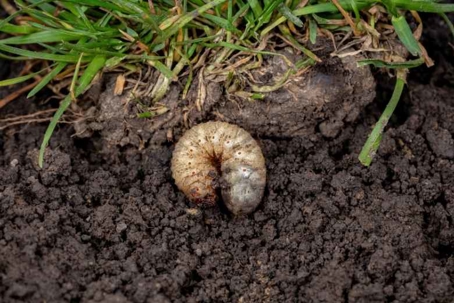
Grub Damage
Grubs—larval stages of beetles such as Japanese beetles, June bugs, and European chafers—can cause extensive damage to lawns, gardens, and landscaped areas by feeding on the roots of grass and plants. Their destructive feeding behavior disrupts the root system, which leads to several visible and costly problems for home and business owners.
- Lawn and Turf Damage: Grubs are most notorious for destroying turfgrass. As they chew through the roots, the grass loses its ability to absorb water and nutrients. The result is brown, irregular patches that often resemble drought stress but do not recover with watering. In severe infestations, entire sections of turf can detach from the soil like loose carpet because the roots have been completely severed.
- Secondary Animal Damage: Grub infestations often attract other pests that feed on them—such as skunks, raccoons, crows, and moles. These animals dig up lawns in search of grubs, leaving behind torn-up turf, holes, and uneven soil. In many cases, the secondary damage from these predators exceeds the direct damage caused by the grubs themselves.
- Plant and Garden Bed Damage: Although grubs prefer grass roots, they can also feed on the roots of ornamental plants, flowers, and vegetables in garden beds. This can cause plants to wilt, yellow, or die, especially in newly established gardens or potted plants where root systems are more fragile.
- Increased Watering and Maintenance Costs: Lawns damaged by grubs require more frequent watering, reseeding, and sometimes full resodding to restore. For businesses or property managers, this translates into higher maintenance costs and diminished curb appeal, which can impact customer perception and property value.
- Soil Health Decline: By breaking down and consuming root material, grubs contribute to soil destabilization. The loss of root density can cause erosion and make it easier for weeds to invade damaged areas, compounding long-term maintenance issues.
Grub infestations can lead to significant turf destruction, increased wildlife activity, dead plant material, costly repairs, and ongoing landscape stress. Early detection and control—through lawn monitoring, proper irrigation, and timely treatment—are key to preventing extensive damage.
What Does Grub Damage Look Like?
Grub damage in lawns and landscapes has a distinctive appearance that worsens as the infestation progresses. Recognizing the signs early is key to preventing extensive turf loss and secondary damage. Here’s what grub damage typically looks like, along with visual and tactile cues property owners should watch for:
- Brown, Irregular Patches in the Lawn: The most obvious sign of grub damage is the appearance of irregular, brown, and dead patches of grass—often mistaken for drought stress. These patches typically show up in late summer to early fall when grubs are most active and feeding heavily on grass roots. Unlike drought damage, however, grub-damaged grass does not recover with watering.
- Spongy or Loose Turf: When grubs destroy the root system, the grass loses its anchoring in the soil. As a result, the turf feels soft, spongy, or springy when walked on. If you pull on the grass, it may peel up easily like a loose carpet, exposing the white, C-shaped grubs underneath. This is one of the most definitive signs of a serious infestation.
- Thinning or Wilting Grass: Before large brown patches form, affected areas may appear slightly wilted, thin, or patchy. The grass may have a grayish-green color and begin to die despite adequate irrigation and fertilization. These early symptoms are often overlooked until the damage becomes severe.
- Increased Animal Activity: Wildlife damage often accompanies grub infestations. Animals such as skunks, raccoons, crows, and moles dig into lawns to feed on the grubs, leaving behind torn-up turf, holes, and scattered soil. If you notice overnight digging or rolled-back sod, it’s often a clear indicator that grubs are present below the surface.
- Visible Grubs in the Soil: To confirm the presence of grubs, lift a small section of turf in the damaged area and inspect the soil beneath. You’ll often find the pests curled into a “C” shape, creamy white in color with brown heads. Finding more than 5–10 grubs per square foot typically indicates a damaging infestation.
- Patchy Regrowth and Persistent Bare Spots: After damage occurs, these areas often struggle to recover—even after reseeding—because the soil structure has been compromised. Roots have been severed, and beneficial soil organisms may have declined, leaving the area vulnerable to weeds and erosion.
Grub damage is characterized by brown, dying patches of grass, loose or spongy turf that lifts easily, and increased animal activity. Early detection through inspection and monitoring helps prevent extensive destruction and allows for targeted control measures.
Where Is Grub Damage Found?
Grub damage is most likely to appear in the specific areas of a property where environmental conditions and soil quality favor beetle activity and larval development. Understanding where to look can help homeowners and business owners detect infestations early and minimize costly repairs. Here are the most common locations where grub damage occurs:
- Sunny, Well-Irrigated Lawns: Grubs prefer moist, well-maintained lawns with thick turf and healthy root systems—conditions ideal for egg-laying beetles such as Japanese beetles, June beetles, and chafers. Sunlit areas tend to warm the soil, creating a favorable environment for grub growth. Damage in these areas often appears first and spreads outward over time.
- South-Facing or Exposed Lawns: Because grubs thrive in warm soil, lawns with southern exposure or areas that receive prolonged sunlight during the day are at higher risk. These locations often experience earlier and more intense infestations than shaded or cooler areas.
- Edges of Lawns and Garden Beds: Grub damage frequently begins along the perimeter of lawns—near driveways, sidewalks, patios, or flower beds—where beetles prefer to lay eggs. These transition zones between grass and landscaped areas often hold moisture, making them especially appealing to egg-laying adults.
- Areas with Consistent Irrigation or Fertilization: Lawns that are frequently watered or heavily fertilized tend to support lush grass growth with dense roots—ideal food for grubs. In contrast, drier or stressed turf may be less appealing to egg-laying beetles, making grub populations lower in those spots.
- Areas Previously Damaged by Grubs: Grubs often return to the same sections of turf year after year. If an area of the lawn has a history of grub problems, it’s likely to be reinfested because adult beetles often emerge nearby, mate, and deposit eggs back into the same soil.
- Under Trees and Near Shrubs: Although grubs prefer open lawns, they can also damage turf under trees and near shrubs—especially if the area is irrigated. Some beetle species are drawn to the shelter these plants provide while still laying eggs in nearby grassy soil.
- High-Value or Commercial Landscapes: Business properties, golf courses, and athletic fields with manicured lawns and consistent maintenance are prime grub habitats. These environments often provide the moisture, nutrition, and soil structure grubs need to thrive undisturbed.
Grub damage is most likely to appear in sunny, well-irrigated sections of turf—especially along lawn edges, previously infested areas, and high-maintenance landscapes. Regular inspection of these zones during late summer and early fall can help catch infestations before they escalate.