
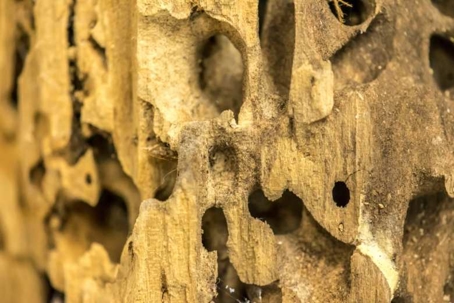
Carpenter Ant Damage
Carpenter ants can pose significant structural and financial risks to homes and businesses if left untreated. While they do not eat wood like termites, they excavate it to create extensive nesting galleries. Over time, this tunneling can lead to serious damage. Here are some of the risks associated with carpenter ant damage:
- Structural Weakening: Carpenter ants hollow out wood to build their nests, especially in damp or decaying wood. As their colonies expand, they can compromise the integrity of wooden beams, joists, walls, floors, and window frames. Severe infestations can cause sagging floors, weakened supports, and even partial structural failure in extreme cases.
- Hidden and Progressive Damage: Carpenter ants often work behind walls, in crawl spaces, attics, or under flooring—areas that aren’t easily visible. Because their activity is concealed, the damage often progresses for months or years before being noticed, leading to costly repairs once discovered.
- Secondary Moisture Problems: These ants prefer moist or water-damaged wood. Their presence often indicates underlying moisture issues such as roof leaks, plumbing leaks, or poor ventilation. If these conditions persist, they can lead to rot, mold growth, and additional structural decay beyond what these ants cause directly.
- Expensive Repairs: Repairing carpenter ant damage often involves replacing compromised wood, treating surrounding areas, and addressing moisture sources. The costs can escalate quickly, especially if the infestation spreads to multiple areas of a structure or requires extensive demolition to access damaged sections.
- Recurring Infestations: If the main nest or satellite colonies are not fully eliminated, carpenter ants can reestablish themselves. Even after repairs, residual moisture or untreated problem areas can attract new colonies, leading to repeated infestations and further damage.
- Property Value Reduction: Active or historical carpenter ant infestations can lower property value. Home inspectors frequently flag these issues, which can delay real estate transactions or force sellers to pay for remediation before closing.
While carpenter ants work more slowly than termites, the damage they cause can still be extensive, expensive, and dangerous over time. Prompt identification, professional inspection, and targeted pest control are the best ways to mitigate risks and protect the structure’s integrity.
What Does Carpenter Ant Damage Look Like?
Carpenter ant damage can often be mistaken for termite damage, but it has several distinct characteristics that make it identifiable to trained eyes or attentive property owners. Recognizing the signs early can help prevent more serious structural problems. Here’s what carpenter ant damage looks like:
Smooth, Clean Wood Galleries
Carpenter ants excavate wood to create nesting tunnels and chambers. Unlike termites, which chew and eat wood, carpenter ants remove it piece by piece.
The resulting galleries are smooth, clean, and polished, as if sanded with fine-grit sandpaper.
You may see neatly carved tunnels following the natural grain of the wood.
Termite galleries, by contrast, look rough and are filled with mud and debris.
Piles of Sawdust-Like Material (Frass)
One of the most common visual clues is the presence of frass—a mix of wood shavings, soil particles, insulation, and dead ant parts that carpenter ants push out of their nests.
Frass resembles fine sawdust and may accumulate beneath wall voids, baseboards, windowsills, attics, or crawl spaces.
These piles often appear below small slit-like openings or holes where ants have pushed waste out of their galleries.
Small Openings or Holes in Wood
Carpenter ants create small, round or oval exit holes in the surface of the wood to dispose of frass or to create access points.
These holes are often found in door frames, window sills, eaves, beams, decks, or wooden furniture.
You might notice ants emerging from or disappearing into these tiny openings.
Soft, Hollow-Sounding Wood
If you tap on an infested area—especially damp or older wood—it may sound hollow or papery.
Over time, as the ants expand their galleries, the internal wood structure weakens even though the surface may still appear intact.
This hollowing is particularly noticeable in support beams, walls, and wooden floors.
Water-Damaged or Moist Wood
Carpenter ants typically target wood softened by moisture or decay.
Infestations often start near leaky roofs, windows, pipes, or basements where damp wood is easier to excavate.
You may notice darkened, softened, or crumbling wood in these areas—an invitation for ants to move in.
Presence of Large Black Ants
While not direct “damage,” the presence of large black or reddish-black ants (⅜ to ½ inch long) indoors is often the first visible sign of a carpenter ant colony.
Winged reproductive ants (swarmers) emerging indoors, especially in spring, indicate a mature colony likely nesting within the structure.
Structural Distortion
In advanced infestations, carpenter ant damage may cause:
Buckling floors or warped wood
Doors or windows that stick or won’t close properly
Visible sagging beams or supports
These are signs that the structural integrity has been significantly compromised.
Carpenter ant damage is characterized by smooth tunnels, sawdust-like frass, and hollow or weakened wood—often in areas affected by moisture. Because much of the activity occurs behind walls or within framing, it’s best to have our professional pest control team inspect the property to confirm the extent of the infestation and damage.
Where Is Carpenter Ant Damage Found?
Carpenter ant damage is most commonly found in areas of a home or building where wood is damp, decaying, or has consistent moisture exposure. These ants are attracted to soft, wet wood because it’s easier to excavate for nesting. Over time, they may expand into dry wood as their colony grows. Here is where you’re most likely to find carpenter ant damage:
Around Moisture-Damaged Wood
Carpenter ants prefer nesting in wood that’s been softened by moisture. Key areas include:
Leaky roofs and eaves – particularly under shingles or in roof valleys where rainwater collects.
Around windows and doors – especially if condensation or rain has seeped into the frame.
Under sinks or behind dishwashers – plumbing leaks often create the perfect humid environment.
Near bathtubs, showers, or toilets – where small, slow leaks can soften surrounding wood.
Attics and Roof Structures
Attics often harbor carpenter ant colonies when moisture from roof leaks or poor ventilation creates damp wood.
Look for damage near rafters, roof sheathing, skylights, and ventilation fans.
Frass piles may appear near insulation or under beams.
Exterior Wooden Structures
The outside of a building provides many entry points and nesting opportunities.
Decks, porches, and wooden railings frequently host satellite colonies.
Wooden siding, fascia boards, and trim, especially where paint is peeling or caulk has failed.
Tree stumps, logs, and landscaping timbers near the foundation can house colonies that later move indoors.
Basements, Crawl Spaces, and Foundations
These are prime locations because they tend to be dark, humid, and close to the ground.
Damage is often found in floor joists, sill plates, support beams, or subflooring.
Carpenter ants can enter through cracks in the foundation or gaps around utility lines.
Wall Voids and Insulated Areas
Once inside, carpenter ants create hidden nests behind walls or insulation where warmth and humidity are ideal.
Damage may occur inside walls behind bathrooms, kitchens, or laundry rooms.
You may hear rustling or faint tapping sounds within the walls if the colony is active.
Window and Door Frames
Carpenter ants often target window and door frames because condensation and weather exposure make the wood damp.
Check for tiny piles of frass beneath the frame, soft wood, or ants emerging from small holes.
Structural Beams and Wooden Flooring
As colonies expand, they may move into load-bearing beams, joists, and hardwood floors.
Look for buckling, sagging, or hollow-sounding areas when tapped.
This type of damage indicates a large, established colony and can threaten structural integrity.
Exterior Trees and Landscaping
Carpenter ants frequently establish their main (parent) colony outdoors in:
Dead or decaying trees, tree stumps, and logs
Wood piles, retaining walls, or landscape timbers
From there, they create satellite nests inside nearby structures, causing the visible indoor damage.
Carpenter ant damage is most likely to occur anywhere wood meets moisture—especially in hidden structural areas like walls, attics, crawl spaces, and around windows or plumbing. Early detection and moisture control are crucial to preventing severe infestations and costly repairs.