
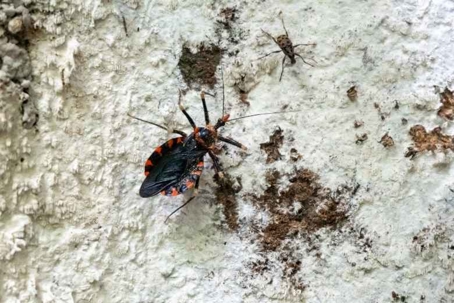
What Do Kissing Bugs Eat?
Kissing bugs, scientifically known as Triatominae, are hematophagous bugs, which means they feed exclusively on blood. They are obligate blood feeders, relying on the blood of vertebrates for nutrition at all life stages. Their typical hosts include mammals, birds, and reptiles, but they have a strong preference for mammals, particularly humans, dogs, and livestock in areas where these bugs are common.
Kissing bugs feed primarily at night. They are attracted to the carbon dioxide and body heat of their hosts and tend to bite exposed skin, often around the face, lips, or other soft areas—hence the name “kissing bug.” They pierce the skin with their specialized mouthparts, inject saliva containing anticoagulants to prevent blood clotting, and then suck blood over several minutes.
Their feeding behavior can transmit Trypanosoma cruzi, the parasite responsible for Chagas disease, though transmission typically occurs when the bug defecates near the bite site, not directly through the bite itself. Beyond blood, kissing bugs do not consume plant material or other foods—they are entirely dependent on blood meals for growth, reproduction, and survival.
Do Kissing Bugs Actually Eat Blood?
Yes—kissing bugs genuinely and exclusively feed on blood. They are true hematophagous insects, meaning blood is their only source of nutrition. Every stage of their life cycle, from nymph to adult, requires a blood meal to grow and reproduce.
They don’t just “peck” at skin; they pierce it with a specialized proboscis and extract blood over several minutes. Their saliva contains anticoagulants to keep the blood flowing while they feed. Without blood, they cannot survive, molt to the next stage, or lay eggs.
So, unlike some insects that might opportunistically feed on nectar or plant juices, kissing bugs are strictly blood-eaters—they don’t eat anything else.
Do Kissing Bugs Feed On Rodents?
Yes, rodents are among the primary natural hosts for kissing bugs. Wild and domestic rodents provide an abundant, accessible blood source, which is why kissing bugs are often found in areas where rodents nest:
Primary wild reservoirs: Rodents, especially species like rats, mice, and squirrels, are a natural and frequent target. Kissing bugs often live in burrows, wall voids, or nests where rodents reside, making feeding convenient.
Nocturnal opportunists: Kissing bugs feed at night, taking advantage of the rodents’ resting periods. Burrow-dwelling rodents or those sleeping in sheltered nests are particularly accessible.
High reproductive impact: Rodents provide reliable blood meals that support the bug’s development and reproduction. A stable rodent population can sustain kissing bug populations in the wild and near human dwellings.
Disease reservoir role: Rodents can carry Trypanosoma cruzi, the parasite that causes Chagas disease. Kissing bugs feeding on infected rodents can then transmit the parasite to other hosts, including humans, dogs, or cats, either by direct movement into homes or indirectly through contamination.
Accessibility factor: Cracks, burrows, piles of wood, and debris near homes can make rodents—and therefore kissing bugs—more likely to come into proximity with humans and pets.
Rodents serve as both a convenient blood source and a breeding ground for sustaining kissing bug populations.
Do Kissing Bugs Feed On Humans?
Kissing bugs are most likely to feed on humans under conditions where their natural hosts (wild mammals, birds, and reptiles) are scarce or where humans live in close proximity to their habitats. Specifically, the highest risk situations include:
Nighttime activity: Kissing bugs are nocturnal and feed primarily at night. They are attracted to body heat, carbon dioxide, and sometimes sweat or odors, so people sleeping unprotected are the main targets.
Poorly sealed homes: Cracks in walls, gaps around doors and windows, thatched roofs, or other structural openings make it easy for kissing bugs to enter. They are strong climbers and can hide in wall crevices, behind furniture, or in bedding during the day.
Presence of domestic animals: Dogs, chickens, or other pets can attract kissing bugs into homes. Once inside, the bugs may opportunistically bite humans if their preferred animal host is unavailable.
Rural or peri-urban settings: In regions where houses are close to wild habitats or where livestock is kept nearby, humans are at greater risk. The insects may migrate from natural nests—such as rodent burrows or bird nests—into human dwellings.
Sleeping without bed nets or protection: People sleeping on the floor, in poorly screened rooms, or without bed nets are particularly vulnerable. Kissing bugs often feed on exposed skin, especially the face, lips, and arms.
Seasonal or environmental factors: In warm months or during dry spells, when natural food sources are limited, kissing bugs may venture more aggressively into human homes in search of blood.
Effectively, any situation where humans are stationary, exposed, and near the bugs’ hiding places makes them more likely to be bitten.
Do Kissing Bugs Feed On Dogs?
Kissing bugs are highly opportunistic and will feed on dogs whenever the conditions favor it. Dogs are especially attractive because they are warm-blooded, often sleep in predictable locations, and are sometimes left outdoors or in areas with easy bug access. Key situations where dogs are most likely to be bitten include:
Outdoor sleeping or kennels: Dogs that sleep outside, in unsealed kennels, dog houses, or near walls and shrubs where kissing bugs hide are at high risk. The bugs are nocturnal and feed while the dog is stationary.
Proximity to human dwellings or wild habitats: Dogs living near rodent burrows, woodpiles, chicken coops, or dense vegetation may attract kissing bugs that migrate toward their blood source.
Sleeping on the floor or low to the ground: Kissing bugs often crawl rather than fly long distances. Dogs that sleep directly on soil, grass, or low bedding are more accessible than humans in elevated beds.
Warm climates and seasons of high activity: In regions where kissing bugs are endemic, they become more active in warmer months. Dogs outdoors at night are particularly vulnerable during these periods.
Holes, cracks, or clutter in or around the home: Dogs inside homes with poor structural sealing, gaps around doors, windows, or baseboards can be bitten just as easily as humans.
Presence of multiple hosts: Dogs may be bitten if other animals, like chickens or rodents, attract kissing bugs nearby, and the bugs opportunistically feed on the dog instead.
Dogs can serve as a reservoir for Trypanosoma cruzi, the parasite that causes Chagas disease, meaning repeated bites can put them—and sometimes humans—at higher risk of infection.
Do Kissing Bugs Feed On Cats?
Kissing bugs will feed on cats under conditions very similar to those that make dogs vulnerable, though some behavioral differences in cats can slightly influence exposure risk. Cats are nocturnal hunters themselves, which sometimes overlaps with kissing bug activity, but they also tend to sleep in hidden or elevated spots that may reduce exposure. Key situations where cats are most likely to be bitten include:
Outdoor sleeping or roaming: Cats that spend nights outdoors, especially in areas with dense vegetation, woodpiles, barns, or near rodent burrows, are at high risk. Kissing bugs are nocturnal and seek stationary hosts at night.
Sleeping close to walls, crevices, or clutter: Even indoor cats can be at risk if they rest in areas near baseboards, behind furniture, or in poorly sealed spaces where kissing bugs hide.
Low, ground-level sleeping spots: Cats that sleep on the floor or near ground-level structures are more accessible to crawling kissing bugs. Elevated sleeping spots like shelves or cat trees reduce risk somewhat.
Warm climates and high insect activity seasons: In regions where kissing bugs are endemic, peak activity often occurs in warm months. Cats outdoors at night are particularly susceptible during these periods.
Proximity to other hosts: If a home or yard hosts chickens, dogs, or rodents that attract kissing bugs, cats may become opportunistic targets when the bugs are nearby.
Unprotected shelters: Cats that use outdoor sheds, barns, or similar structures for sleeping are at higher risk if these areas have cracks, gaps, or infestations of kissing bugs.
Cats, like dogs, can be carriers of Trypanosoma cruzi if bitten repeatedly, which is a concern for their health and for humans living in the same environment.
Do Kissing Bugs Feed On Birds?
Yes, kissing bugs can and do feed on birds, though birds are generally considered less common hosts compared with mammals like humans, dogs, or rodents. Birds are warm-blooded, so they provide the blood that kissing bugs need, but several factors make them less frequent targets:
Feather coverage: Feathers make it more difficult for kissing bugs to reach exposed skin, so bites are less efficient and less likely than on mammals with less dense fur.
Nest locations: Kissing bugs will feed on birds that nest close to the ground or in accessible areas, such as chickens in coops or wild birds nesting near walls, roofs, or perches. Birds in high trees or fully enclosed nests are usually safe.
Stationary behavior: Kissing bugs are nocturnal and prefer hosts that are resting or sleeping. Birds roosting at night in predictable spots may occasionally be bitten, especially domestic birds like chickens, ducks, or pigeons.
Host preference: Kissing bugs have a strong preference for mammals. They may feed on birds opportunistically, particularly if other blood sources are scarce.
While birds can serve as occasional blood sources, they are not the primary hosts and are less likely to sustain large populations of kissing bugs compared with mammalian hosts.