
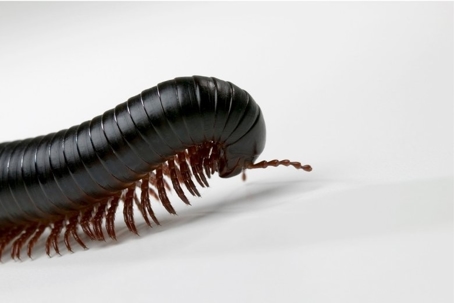
Can Millipedes Bite?
Millipedes do not bite people. Unlike centipedes, which have venomous fangs, millipedes lack the mouthparts needed to pierce human skin. Instead, they feed on decaying organic matter such as leaves and wood.
Do Millipedes Bite?
Millipedes actually do not bite people at all — even under stress or provocation. Their mouthparts simply aren’t designed to pierce or grab skin. They’re detritivores, meaning they feed exclusively on decaying organic matter like dead leaves and wood, not on living tissue.
That said, people sometimes mistake their defensive behavior for biting. When threatened, handled roughly, or accidentally stepped on, millipedes may:
Curl tightly into a spiral, protecting their softer underside.
Secrete a defensive fluid that can irritate skin or eyes.
Emit an unpleasant odor as a deterrent to predators.
So, while a person might feel a burning or tingling sensation if millipede secretions get on their skin, this is chemical irritation, not a bite.
Millipede Bites
Millipedes don’t actually bite, but they can defend themselves in a way that causes skin reactions. Their primary defense is a chemical secretion—not an aggressive attack—so the “risks” come from contact with that fluid rather than from a true bite.
Here are the main concerns:
- Skin irritation (most common): Many species release a defensive toxin containing benzoquinones or hydrochloric acid–based compounds. When this fluid contacts skin, it can cause mild to moderate irritation, redness, burning, or discoloration that may last hours to a couple of days.
- Blistering or dermatitis: Some people develop more pronounced reactions, including small blisters or rashlike lesions. These typically resolve on their own but can be uncomfortable.
- Eye exposure risk: If the secretion gets into the eyes, it can cause intense burning, inflammation, and temporary vision disturbances. This is considered the most serious risk and requires prompt rinsing and, in some cases, medical attention.
- Allergic reactions (rare): A small number of people may experience an exaggerated immune response to the toxin, leading to swelling or hives around the contact area.
The defensive fluid can also temporarily stain skin yellow or brown. This is harmless but surprising if you don’t expect it.
What Do Millipede Bites Look Like?
When people report what they believe to be millipede bites, they are almost always seeing skin irritation caused by the millipede’s defensive chemicals, not puncture wounds.
Here’s what millipede-related skin irritation can look like:
Redness or brownish discoloration in the area of contact
Mild swelling or localized burning sensation
Small blisters or rash-like patches in more sensitive individuals
Dark staining of the skin (especially from species that secrete quinones) that can last several days to a week before fading
These symptoms usually appear within minutes of contact and remain localized to the skin that touched the millipede. Unlike insect or spider bites, there are no puncture marks, no spreading inflammation, and no systemic symptoms like fever or body aches. What people sometimes call a “millipede bite” actually looks more like a chemical burn or mild dermatitis, never a true bite wound.
What To Do About Millipede Bites
If you come into contact with a millipede’s defensive chemicals—the closest thing to a “bite”—you can treat it easily in most cases. Here’s what to do:
- Wash the area thoroughly: Rinse the skin with cool, running water and mild soap to remove the irritant. This is the most important step.
- Avoid rubbing the skin: Friction can spread the chemical and worsen irritation.
- Apply a cold compress: A clean, cool cloth helps reduce burning and redness.
- Use over-the-counter relief if needed: Hydrocortisone cream or an oral antihistamine (like cetirizine or diphenhydramine) can calm itching or swelling. Avoid applying alcohol-based products directly to the irritated area, as they may intensify discomfort.
- Watch for blistering or worsening irritation: Mild redness is normal, but if blisters form, keep the area clean and dry. Don’t pop them—let them heal naturally.
- Be especially careful with eye exposure: If the secretion gets into your eyes, flush immediately with clean water for at least 10–15 minutes. Any persistent pain, redness, or vision issues warrants prompt medical care.
Professional evaluation is recommended if burning becomes severe, the irritation spreads, or symptoms last longer than a few days.