
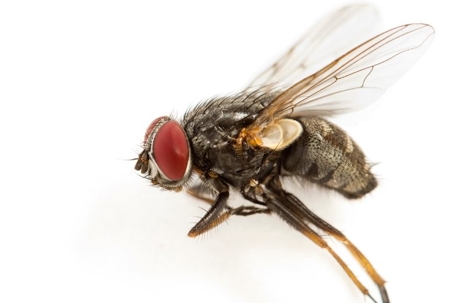
Can House Flies Bite?
House flies (Musca domestica) do not have biting mouthparts and are incapable of piercing skin, so they cannot bite humans or animals. Instead, these flies feed by sponging up liquid or semi-liquid substances, such as food, waste, or decaying organic matter. Their mouthparts are designed to secrete digestive enzymes onto solid food to liquefy it before ingestion, not to puncture skin.
Do House Flies Bite?
People most often think house flies have bitten them in situations where the flies are extremely active or persistent, creating the sensation of a “bite” even though they cannot puncture skin. A few scenarios tend to trigger this misunderstanding:
- When flies repeatedly land on sweaty skin: House flies are strongly attracted to moisture, salt, and body odors. They’ll repeatedly land on sweaty arms, legs, or the back of the neck. Those quick, light contacts can feel like tiny pinches and are often mistaken for bites.
- When a stable fly or horse fly is nearby: Stable flies look very similar to house flies at a glance but can bite—and they’re aggressive. If both are present, people may attribute the painful bite to a harmless house fly, simply because that’s the species they recognize.
- When skin is already irritated: Sunburn, heat rash, dry skin, or existing bug bites can make even gentle contact feel sharp or stinging. A house fly landing on sensitive skin can be misinterpreted as a bite.
- When flies feed on tiny wounds or scabs: House flies are attracted to small abrasions, cuts, or scabbed-over spots because they can lap up fluids. Their probing can create an uncomfortable sensation that people perceive as a bite.
- When flies regurgitate digestive enzymes: They often spit a small amount of digestive fluid onto food or skin to break down material before feeding. On sensitive skin, that brief chemical contact may feel like a slight sting.
In kitchens, barns, garages, or outdoor gatherings, a sudden cluster of house flies landing on exposed skin can feel overwhelming—leading people to assume they’re being bitten.
Do House Flies Bite Humans?
Under normal circumstances, house flies (Musca domestica) cannot bite humans, because their mouthparts are strictly adapted for sponging up liquids, not piercing skin. There are no documented cases of a typical house fly piercing human skin to feed. However, there are some rare and exceptional scenarios worth noting:
Open sores or wounds – If a person has an exposed wound, lesion, or ulcer, house flies may attempt to feed on the exudate (fluids) from the wound. While they aren’t technically biting, their contact with damaged skin can be irritating and may feel like a tiny nibble. This is more of a “feeding on fluids” behavior than a true bite.
Mouth or mucous membrane contact – If a house fly lands in a person’s mouth or nose, it may probe with its sponging mouthparts. This can cause brief discomfort, but again, it’s not a bite in the conventional sense.
Misidentification – Sometimes people assume a “bite” is from a house fly when it is actually a stable fly(Stomoxys calcitrans) or another small biting fly. Stable flies look very similar to house flies but do bite humans to feed on blood.
So, practically speaking, you won’t experience a true bite from a house fly. The real concern with house flies is disease transmission, not direct injury.
Why Do House Flies Bite?
When people say a house fly “bites,” it’s almost always a misinterpretation of their behavior, because house flies physically cannot bite. What they are actually doing falls into a few distinct behaviors that might feel like biting or cause irritation:
Probing with their sponging mouthparts – House flies have specialized mouthparts designed to liquefy and ingest food. When they land on skin, they may press and move their mouthparts against it in an attempt to feed on sweat, oils, or other organic residues. This can feel like a tiny nibble or prick, but it is not a true bite.
Feeding on bodily fluids from wounds – If there’s an open sore, lesion, or other skin damage, house flies may attempt to feed on the exudate. Their contact with sensitive tissue can sting or irritate, leading people to describe it as a “bite.”
Confusion with biting flies – Stable flies, deer flies, and other small biting flies are often mistaken for house flies. These species do bite and feed on blood, which reinforces the perception that house flies might do the same.
A “house fly bite” is almost always a misperception of their probing or feeding behavior. Any discomfort comes from mechanical irritation or contamination of skin, not from actual penetration or injection of saliva like biting insects do.
House Fly Bites
Even though house flies don’t actually bite, the situations that make people think they’ve been bitten can still carry meaningful risks. These risks come from contamination and irritation rather than skin punctures.
- Transfer of bacteria and pathogens: House flies frequently land on garbage, feces, animal waste, and decaying organic matter. When they move from those surfaces to human skin, food, or countertops, they can transfer bacteria such as E. coli, Salmonella, and Shigella. This can lead to gastrointestinal illness if the contamination reaches food or the mouth.
- Secondary skin irritation: Their saliva, digestive enzymes, and constant probing can irritate sensitive or damaged skin. It won’t resemble a real bite, but redness or a mild rash can occur, especially in people with sensitive skin or allergies.
- Infection of existing wounds: If flies land on open cuts, scabs, or healing skin, they can introduce bacteria into the wound. This increases the risk of localized infection—redness, swelling, discomfort, or delayed healing.
- Spread of eye infections: Flies that land on or around the eyes can transmit organisms associated with conjunctivitis (“pink eye”) and other minor eye irritations.
- Spread of foodborne illness: Their habit of walking across food, utensils, and prep areas makes them efficient mechanical carriers of pathogens. This is one of the biggest health concerns associated with house fly activity.
Persistent fly activity can lead to stress, sleep disruption, or a general feeling of being “bitten,” even when no skin damage is present.
What Do House Fly Bites Look Like?
Because house flies can’t actually bite, there is no true house fly bite mark. However, the situations where people think they’ve been bitten can still create symptoms that resemble mild skin irritation. What people usually interpret as a “house fly bite” typically looks like a small red spot or patch of irritated skin with no puncture in the center. The area may be slightly raised, warm, or itchy, especially if the skin was already sensitive, sunburned, or scratched before the fly landed. Sometimes the irritation comes from the fly’s saliva or digestive enzymes on open or healing skin, which can produce a faint rash-like appearance rather than a definitive bite. If the spot is painful, sharply swollen, or shows a clear puncture mark, another fly species—most often stable flies, horse flies, or deer flies—is the real culprit.
What To Do About House Fly Bites
If you think a house fly has bitten you, the good news is that it wasn’t an actual bite. Still, the irritation you’re feeling is real and should be treated the same way you would handle minor skin discomfort or possible contamination. Here’s what to do:
- Clean the area thoroughly: Wash the skin with soap and warm water. This removes any bacteria or digestive fluids the fly may have transferred when it landed or probed the skin.
- Apply a mild antiseptic: Using an over-the-counter antiseptic wipe or cream helps reduce the chance of infection, especially if the skin was already scratched or damaged.
- Soothe any irritation: If the spot is itchy or red, apply a cold compress or use an anti-itch product like hydrocortisone or calamine. This quickly reduces discomfort.
- Avoid scratching: Scratching can break the skin and introduce bacteria, which is a bigger risk with house flies than anything they do directly.
- Watch for signs of infection: If redness spreads, swelling increases, warmth develops, or the area becomes painful over the next 24–48 hours, it may have become infected and could need medical attention.
- Consider whether another fly species caused it: If the spot is painful, has a clear puncture, or swelled significantly, it’s far more likely a stable fly, horse fly, or deer fly is responsible. Those require slightly more attention.
If you suspect house flies are biting you, contact our team of pest control professionals.