
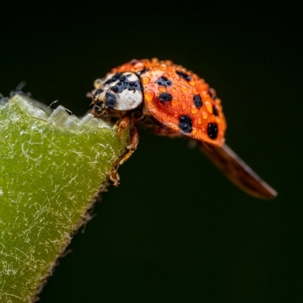
Are Asian Lady Beetles Invasive?
Yes — Asian lady beetles (Harmonia axyridis) are considered an invasive species in North America. These beetles were originally introduced from Asia in the early 1900s and again in the 1980s as a form of biological control to manage agricultural pests like aphids and scale insects. However, their population spread rapidly beyond intended areas, and they have since become a nuisance for homeowners and a threat to native ladybug species. Here’s why Asian lady beetles are classified as invasive:
Competition with Native Species: Asian lady beetles outcompete native ladybugs for food and habitat, leading to a decline in native populations.
Rapid Reproduction and Adaptability: They reproduce quickly, adapt to various climates, and can survive winters by invading homes and buildings to overwinter.
Nuisance to Humans: When they gather indoors, they release a foul-smelling yellow fluid that can stain walls and cause allergic reactions in some people.
Agricultural and Ecological Impact: Although they eat harmful pests, their dominance disrupts natural ecosystems and reduces biodiversity among beneficial insects.
While they were introduced with good intentions, Asian lady beetles have become a problematic invasive species across much of the U.S. and Canada.
Invasive Ladybugs
Asian lady beetles (Harmonia axyridis) were introduced to control aphids, but as a non-native species they outcompete native lady beetles for food and habitat. They are larger, more aggressive, and reproduce more successfully, which leads to population declines in native beetle species that play important roles in maintaining balanced ecosystems.
They reduce biodiversity: By dominating food sources and directly preying on the eggs and larvae of native beneficial insects, Asian lady beetles decrease overall insect diversity. Reduced biodiversity weakens ecosystem resilience, making environments more vulnerable to pests, disease, and environmental changes.
They create significant nuisance problems for people: Unlike native lady beetles, Asian lady beetles commonly invade homes in large numbers to overwinter. Once inside, they cluster on walls and ceilings, stain surfaces with defensive secretions, emit unpleasant odors, and are difficult to remove, creating both structural and quality-of-life issues.
They can cause health and safety concerns. Asian lady beetles are more likely to bite humans than native species. While not dangerous, bites can be painful and alarming. In sensitive individuals, exposure may trigger allergic reactions, asthma flare-ups, or skin irritation due to their defensive chemicals.
They negatively affect agriculture and food production: When aphid populations decline, Asian lady beetles switch to feeding on fruit such as grapes, apples, and pears. In vineyards, crushed beetles mixed into harvested grapes can taint wine with bitter flavors, causing measurable economic losses.
They are difficult to control once established: As an invasive species, Asian lady beetles spread rapidly and adapt well to many climates. Natural predators rarely keep their populations in check, and eradication is virtually impossible once they become established, leaving only long-term management as an option.
The spread of Asian lady beetles highlights how well-intended biological control efforts can create unintended consequences. Their impact serves as a clear example of why invasive species matter: they can cause lasting ecological damage, economic loss, and ongoing human conflicts that outweigh their original benefits.
Asian Lady Beetle Infestations
Asian lady beetles naturally survive winter by gathering in massive groups inside rock crevices and cliff faces in their native range. Homes unintentionally mimic these conditions, offering cracks, wall voids, attics, and siding gaps that provide warmth and protection, making houses an ideal substitute.
They are strongly attracted to buildings by visual cues: Asian lady beetles respond to light-colored, sunlit vertical surfaces—especially white, beige, or light gray exteriors. On warm fall days, south- and west-facing walls absorb heat, drawing beetles in far more effectively than the vegetation-based cues used by most native ladybugs.
They are more persistent and exploratory than native ladybugs: Once Asian lady beetles land on a structure, they actively search for entry points. Their behavior includes crawling into soffits, window frames, vents, and even hairline gaps. Native ladybugs typically overwinter outdoors under bark, leaf litter, or stones and show far less persistence around buildings.
They follow chemical signals left by previous beetles: Asian lady beetles release aggregation pheromones that attract additional beetles to the same location year after year. A home that was infested once is chemically “marked,” making repeat infestations far more likely unless thoroughly sealed.
They tolerate warmer indoor conditions without dying: Many insects perish if they accidentally enter heated spaces during winter. Asian lady beetles are highly tolerant of fluctuating indoor temperatures, allowing them to survive inside walls and living areas instead of dying off quickly like native species might.
They are stronger flyers and disperse more widely: Asian lady beetles can fly long distances and climb to elevated heights, increasing their chances of encountering multi-story buildings. Native ladybugs tend to stay closer to ground-level vegetation, reducing interactions with human structures.
Over decades of spread across North America, Asian lady beetles that successfully overwintered in buildings survived and reproduced at higher rates. This unintentional selection pressure has reinforced a strong tendency to infest homes, making the behavior far more pronounced than in “regular” ladybugs.