
What Do Raccoons Look Like?
Recognizing raccoons (Procyon lotor), also known as coons, accurately allows you to distinguish them from other animals, such as opossums, cats, or foxes. Misidentification can lead to unsafe interactions, especially since raccoons can carry diseases like rabies or raccoon roundworm that are transmissible to humans and pets.
Property Protection: Knowing what raccoons look like helps in identifying signs of infestation early. Raccoons often damage roofs, attics, and gardens. If you can correctly identify them, you can take timely measures to prevent structural damage, contamination, and food loss.
Targeted Pest Control Measures: Understanding raccoon behavior and appearance allows for appropriate control methods. For example, live trapping, exclusion, and habitat modification are most effective when you know the specific animal involved. Using the wrong method on a misidentified species may be ineffective or even illegal.
Legal and Ethical Considerations: Raccoons are protected in certain areas, and misidentification could result in unlawful harm to wildlife. Accurate identification ensures compliance with local wildlife regulations while implementing humane management strategies.
Health Risk Mitigation: Raccoons are nocturnal and may leave droppings, urine, or nesting debris in attics and crawl spaces. Recognizing raccoons quickly allows for proper sanitation and reduces the risk of zoonotic disease exposure to humans and pets.
Knowing raccoons visually helps you interpret their tracks, scat, and nesting habits. This understanding allows for proactive measures, such as securing garbage bins, sealing entry points, or removing attractants, before a serious problem develops.
What Raccoons Look Like
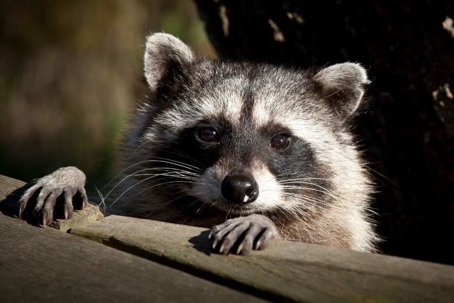
Raccoons (Procyon lotor) are medium-sized mammals known for their distinctive appearance. They have a robust and somewhat stocky build, characterized by several key physical features. Raccoons typically measure about 23 to 30 inches (58 to 76 centimeters) in length, excluding their bushy tail, which can add an additional 7 to 12 inches (18 to 30 centimeters) in length. Here is a more detailed description of their appearance:
Fur and Coloration: Raccoons have dense fur that is primarily gray in color with a salt-and-pepper appearance due to a mix of light and dark fur. Their fur helps insulate them in various weather conditions.
Face: The most recognizable feature of raccoons is their facial mask. They have a black mask that extends across their eyes, giving them a bandit-like appearance. This mask is bordered by white fur, which contrasts with the black, creating a striking pattern. Their facial markings help reduce glare from light sources and may assist with night vision.
Eyes and Ears: Raccoons have round, dark eyes with excellent night vision, which is essential for their nocturnal behavior. Their ears are rounded and have a noticeable white outline, which enhances their distinctive facial markings.
Nose: Their nose is pointed and sensitive, aiding in their ability to detect scents and forage for food.
Body: Raccoons have a stout body with sturdy legs. Their front legs have dexterous paws with five fingers, which function similarly to human hands, allowing them to manipulate objects and food. Their hind legs are more robust and adapted for climbing and swimming.
Tail: Raccoons have a long, bushy tail covered in alternating light and dark rings, which can help with balance, especially when climbing. The tail often appears fluffy.
Size: Adult raccoons typically weigh between 10 to 30 pounds (4.5 to 13.6 kilograms), with males generally being larger than females.
Claws: Raccoons possess sharp, curved claws on their paws, which aid in digging, climbing, and capturing prey.
Overall Appearance: Raccoons have a distinct hunched posture when they walk, which is accentuated by their stocky build. Their overall appearance, marked by the mask-like facial pattern and bushy tail, makes them easily recognizable.
Raccoons are characterized by their gray fur, distinctive facial mask with white markings, round eyes, pointed nose, and bushy, ringed tail. Their physical adaptations, such as dexterous paws and excellent night vision, contribute to their ability to thrive in a variety of habitats and conditions.
What Color Are Raccoons?
Raccoons (Procyon lotor) are known for their distinctive coloration, which includes various shades of gray and black, giving them a characteristic appearance:
Fur Color: The predominant color of a raccoon's fur is gray. However, it's important to note that this gray fur can vary in shades from light to dark gray. The fur often appears to have a salt-and-pepper or mottled appearance due to the combination of light and dark hairs.
Facial Mask: One of the most recognizable features of raccoons is their black facial mask. This mask covers their eyes, giving them a bandit-like appearance. The black mask is bordered by white fur, which contrasts sharply with the black markings.
White Markings: Raccoons have white fur markings on their face and often on their throat and chest. These white markings help create a distinct contrast with the dark mask, enhancing their facial features.
Tail Rings: Raccoons have a long, bushy tail with alternating light and dark rings. The rings on their tail are typically light gray or cream-colored, while the spaces between the rings are dark gray to black.
Limbs and Paws: The limbs and paws of raccoons are also covered in dark gray to black fur. Their dexterous front paws, resembling human hands, may have lighter patches of fur, especially on the palms.
Nose and Ears: The nose of a raccoon is usually black or dark brown, and their round ears have white outlines, which contribute to their distinctive appearance.
Raccoons' coloration serves various purposes in their natural environment. The dark mask around their eyes helps reduce glare from light sources and may enhance their night vision. Their overall gray coloration provides camouflage in their woodland and urban habitats. Additionally, the contrasting facial markings and tail rings make raccoons easily recognizable.
While the described coloration is typical for raccoons, there can be some individual and regional variations in color due to genetic and environmental factors. In urban areas, where raccoons have more access to human food sources, their fur may appear darker due to exposure to pollutants and contaminants.
What Size Are Raccoons?
Raccoons (Procyon lotor) exhibit size variations based on factors such as age, sex, region, and diet. On average, adult raccoons are medium-sized mammals, with males generally being slightly larger than females. Here is a description of their size:
Length: Adult raccoons typically measure about 23 to 30 inches (58 to 76 centimeters) in length, from the tip of their nose to the base of their tail.
Tail Length: Their bushy tail adds an additional 7 to 12 inches (18 to 30 centimeters) to their overall length.
Weight: The weight of adult raccoons can vary significantly depending on various factors. On average, they weigh between 10 to 30 pounds (4.5 to 13.6 kilograms). However, individuals at the lower end of this range are more common in urban and suburban areas, where food may be more readily available, leading to larger populations.
Sexual Dimorphism: Male raccoons tend to be slightly larger than females. Adult male raccoons may weigh between 15 to 30 pounds (6.8 to 13.6 kilograms), while adult females typically weigh between 10 to 25 pounds (4.5 to 11.3 kilograms).
Raccoons can exhibit significant regional variations in size due to differences in habitat and available food resources. Raccoons in urban areas may also be larger than their rural counterparts due to access to human food sources.
Juvenile raccoons are smaller and have sizeable growth throughout their first year of life. Newborn raccoons, known as kits, are tiny, measuring only a few inches in length and weighing a few ounces. As they grow, they gradually reach adult size.
Brown Raccoons
Raccoons are not purely brown, though brown can be part of their coloration:
Fur Color: Their fur is typically a mix of gray, black, and brown, often appearing more grayish from a distance. The brownish tones are usually interspersed with gray guard hairs, giving a salt-and-pepper effect.
Distinctive Markings: The most recognizable feature is the black “mask” around the eyes, which contrasts sharply with the lighter fur on the face. Their ringed tail has alternating dark and light bands, which are usually black or dark brown with lighter gray or brown.
Variations: Raccoons can have slight color variations depending on the region. Some may appear darker, almost black, while others may show more brownish or reddish tones, especially on their legs or sides.
Juveniles vs. Adults: Young raccoons may appear slightly lighter or more uniformly brown, but as they mature, the gray and black guard hairs become more prominent.
So, while brown is present, raccoons are better described as gray with brown and black highlights rather than simply brown.
Albino Raccoons
Albino raccoons are a rare genetic variation of the common raccoon (Procyon lotor). Albinoism is a genetic condition that results in the complete absence of melanin, the pigment responsible for giving color to hair, skin, and eyes. As a result, albino raccoons have a unique and distinctive appearance:
Fur Color: Albino raccoons lack melanin, which means they have pure white fur. Their fur is completely devoid of any pigment, giving them an all-white or creamy appearance. This stark contrast to the typical gray and black coloration of raccoons makes them stand out.
Eye Color: One of the most striking features of albino raccoons is their pink or light red eyes. Without melanin, the iris of their eyes lacks the typical dark coloration found in raccoons. The pink or red color is a result of blood vessels showing through the transparent iris.
Skin Color: Like their fur and eyes, the skin of albino raccoons is also pale and lacks pigmentation. Their skin can appear pinkish or light-colored.
Vulnerability: Albino raccoons are especially vulnerable in the wild due to their lack of camouflage. The absence of protective coloration makes them more conspicuous to predators and reduces their ability to hide from threats.
Rarity: True albino raccoons are quite rare in the wild because the albino trait is the result of a recessive genetic mutation. Both parents must carry the albino gene for it to be expressed in their offspring. Consequently, albino raccoons are not commonly observed in the wild.
Survival: Albino raccoons face additional challenges in the wild because their lack of pigmentation can make them more sensitive to sunlight, potentially leading to sunburn or skin problems. Their reduced ability to blend into their surroundings also makes them more visible to predators, making survival more challenging.
Albino raccoons are occasionally observed in some regions, but their rarity and distinct appearance make them a unique and fascinating natural phenomenon. It's important to note that albinoism is a genetic condition that occurs in various animal species, not just raccoons, and it results from a genetic mutation that affects the production of melanin.