
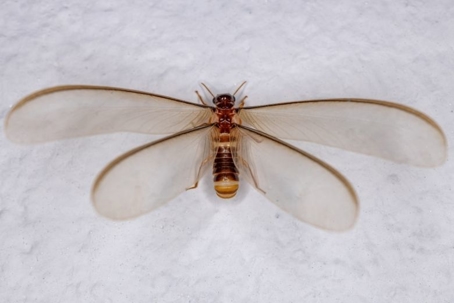
How To Get Rid Of Flying Termites
Flying termites, often called swarmers, are the reproductive members of a termite colony. Seeing them inside your home or business indicates that a colony is nearby or that existing infestation has reached maturity. While DIY efforts can help reduce or prevent swarms, eliminating flying termites entirely without professional help is extremely difficult. Still, there are practical steps a homeowner or business owner can take:
Identify the Source
Flying termites, also known as alates, usually emerge in large numbers during specific seasons, often triggered by warm temperatures and moisture. Take note of the time of day, weather conditions, and location of the swarms. Swarms originating indoors typically indicate a colony within the structure, while outdoor swarms are more likely from nearby soil or decaying wood.
Trace the flight path: Carefully watch the direction in which the termites are flying. Alates typically leave their colony in a straight or slightly arched path. Observing their flight path back to the exit point can help pinpoint entry points such as cracks in walls, gaps around windows and doors, or foundations.
Inspect wood structures and moisture-prone areas: Termites often emerge from infested wood or damp areas. Check baseboards, door frames, window sills, wooden furniture, crawl spaces, and attics for signs of hollowed wood, mud tubes, or frass (termite droppings). Moisture-prone areas, including leaky pipes, roof leaks, or poor drainage zones, can encourage colony establishment near or within the structure.
Examine soil and surrounding landscape: Subterranean termites build colonies in soil and create mud tubes to reach above-ground food sources. Inspect the perimeter of the building, especially where soil meets wood, around tree stumps, firewood piles, and mulch. Look for mud tubes or disturbed soil that may indicate the original colony location.
Use baiting and monitoring systems: Professional monitoring stations or termite baits placed around the property can help identify active colonies. The presence of feeding activity or fresh termite sightings at specific stations can indicate a nearby colony, providing a more precise source than casual visual inspection.
Keep a detailed record of where swarms are observed, flight patterns, and signs of infestation. Mapping these observations over time can reveal patterns and help determine whether termites are originating from inside the structure, the immediate soil around the property, or nearby wood sources.
Remove Swarmers Immediately
First, contain the immediate infestation. Close doors and windows to prevent termites from spreading throughout the building. If indoors, use plastic sheets or containers to trap the flying termites as they land.
Vacuum or physically remove alates: Use a vacuum cleaner to quickly remove flying termites from floors, walls, and surfaces. Empty the vacuum immediately into a sealed bag and dispose of it to prevent survivors from escaping. For smaller numbers, you can use sticky traps or manually remove them with tissue or gloves.
Apply contact insecticides: Use a labeled indoor insecticide specifically for termites or flying insects. Spray areas where alates have landed, including windowsills, baseboards, and around light fixtures. Avoid overuse on surfaces where children or pets may touch. For outdoor swarms, treat landing zones near the foundation and entry points.
Reduce Attraction
Flying termites are strongly attracted to light sources at night. Move porch lights, security lights, and landscape lighting away from doors, windows, and wooden structures. Consider using downward-facing lights or shielding to limit light dispersion.
Switch to termite-resistant or low-attraction lighting: Yellow “bug lights” or LEDs with low UV emission are less attractive to alates than bright white or fluorescent lights. Replace bulbs near entry points with these alternatives to reduce swarm landings.
Reduce indoor light visibility at night: Close curtains or blinds during termite swarm season. Ensure light does not spill onto patios, porches, or windows, which can draw alates toward the structure.
Remove or relocate decaying wood and cellulose materials: Alates are attracted to accessible wood for egg-laying. Clear piles of firewood, cardboard, or debris away from foundations and maintain a minimum distance of 20–30 feet from the building. Store firewood off the ground on racks.
Control moisture sources: Flying termites are drawn to humid, damp areas. Fix leaking pipes, ensure proper drainage, and reduce standing water around foundations. Well-ventilated crawl spaces and attics discourage termite activity and reduce attractiveness.
Seal potential entry points: Alates often land near cracks, gaps, or poorly sealed windows and doors. Caulking and weather-stripping reduce accessible surfaces where termites may swarm and enter the building.
Trim shrubs and plants away from the structure. Avoid placing mulch directly against foundations, as this creates a damp environment that attracts termites and provides landing zones.
Remove Wood and Moisture Sources
Examine the property for any rotting or termite-damaged wood, including tree stumps, logs, old firewood, wooden landscaping structures, and fence posts. Remove and either dispose of or burn this material far from the building. For firewood you plan to keep, store it at least 20–30 feet away from the structure and elevate it on racks to prevent soil contact.
Eliminate wood-to-soil contact: Flying termites often emerge where wood touches the ground. Ensure wooden structures such as decks, siding, or fences are raised above soil level by a few inches. Replace wood that is in direct contact with soil with pressure-treated lumber or termite-resistant materials.
Reduce moisture around foundations: Check gutters, downspouts, and drainage systems to ensure water is directed away from the building. Grade the soil so it slopes away from the foundation, preventing pooling. Repair leaks in plumbing, roofs, and exterior faucets, and maintain proper ventilation in crawl spaces and attics to keep humidity low.
Remove or replace mulch near structures: Thick mulch retains moisture and attracts termites. Either eliminate mulch near foundations entirely or keep it at least 12–18 inches from building edges. Use dry, well-drained mulch types, and replace decayed mulch regularly.
Address hidden moisture sources: Inspect basements, crawl spaces, and utility areas for damp wood, wet insulation, or condensation on pipes. Install vapor barriers in crawl spaces and dehumidifiers where necessary. Replace or treat any wet, damaged wood with termite-resistant materials or wood preservatives.
Maintain landscaping strategically: Keep shrubs, trees, and other vegetation trimmed back so branches do not touch the building. Roots and dense plantings can trap moisture near foundations, creating ideal conditions for termite activity.
Continuously monitor for new moisture problems or decaying wood. Promptly repair leaks, replace damaged wood, and keep the area around the building dry. Preventive maintenance is crucial to eliminating conditions that attract flying termites and reducing the chance of swarms.
Use DIY Treatments
Use a ready-to-use termite or flying insect spray labeled for indoor and outdoor use. Spray around windowsills, doors, baseboards, and entry points where alates are landing. For outdoor areas, treat around the foundation, porch, or decks. Focus on areas where swarms gather or light attracts them.
Use sticky traps: Place sticky traps near light sources, doors, or windows where flying termites enter. These traps capture alates as they land, preventing them from reaching wooden structures and reproducing. Check and replace traps regularly during swarm season.
Vacuum or physically remove swarms: Indoors, a vacuum cleaner can quickly remove flying termites from floors, ceilings, and furniture. Immediately dispose of vacuum contents in a sealed bag outside to prevent escape. Manual removal with tissue or paper towels can work for small numbers.
Treat infested wood with liquid termiticides: For visible termite activity in wooden structures, apply a labeled liquid termiticide directly to affected wood. This can kill termites on contact and create a protective barrier. Always follow product instructions for safe and effective application.
Apply borate-based wood treatments: Borate powders or solutions penetrate wood and prevent termite infestations. Treat exposed wood surfaces, furniture, or framing in crawl spaces and attics. Borates are especially useful for long-term prevention and reducing the appeal of wood to swarming termites.
Eliminate moisture sources: While technically preventive, DIY moisture control enhances treatment effectiveness. Repair leaks, improve drainage, ventilate crawl spaces, and remove damp mulch or debris near foundations. Dry wood and soil reduce termite survival and discourage alates from emerging.
Flying termites often emerge in cycles. Keep monitoring traps, inspect wood and moisture-prone areas, and reapply treatments as needed. Consistent effort ensures that swarms are controlled and future infestations are minimized.
Monitor for Activity
Inspect known problem areas such as baseboards, window sills, door frames, attics, crawl spaces, and wooden furniture for signs of swarming, discarded wings, or fresh frass. Pay attention to corners, cracks, and any damp or damaged wood. Scheduling these inspections weekly during swarm season ensures early detection.
Install sticky traps and monitoring stations: Place sticky traps near entry points, windows, doors, and light sources where flying termites are likely to swarm. For outdoor monitoring, position termite bait stations or commercially available monitoring systems around the perimeter of the property, particularly near mulch, soil, or wood structures. Check these traps regularly to detect any new alate activity.
Document sightings and patterns: Keep a log of where, when, and in what numbers flying termites are observed. Include environmental conditions such as weather, temperature, and humidity. Mapping this data over time can help identify persistent swarm locations and potential colony sources.
Monitor moisture-prone areas: Use moisture meters in crawl spaces, attics, and near foundation wood to identify damp spots that might attract termites. Ongoing monitoring of humidity levels can alert you to conditions conducive to new swarms and guide preventive measures.
Check light sources and perimeters at night: Flying termites are attracted to lights. Observe porch lights, exterior security lighting, and windows during swarm periods to detect alates landing around the structure. Adjust or shield lights to reduce attraction and track whether swarms are still occurring.
Evaluate bait and treatment stations: If termite baits or chemical treatments have been applied, monitor them for activity. Fresh feeding or the presence of termites indicates ongoing colony presence and can guide the timing of follow-up treatments.
Flying termite activity often peaks during specific months depending on species and climate. Plan heightened monitoring around these periods to catch early swarm activity and prevent reinfestation.
Limitations of DIY Methods
DIY methods typically target visible alates or small infestations, but the main termite colony—often hidden underground or inside walls—remains unaffected. Without addressing the source, swarms are likely to recur, making DIY removal a temporary solution rather than a long-term fix.
Limited penetration into hidden wood: Liquid sprays, borate treatments, and surface applications cannot reach termites inside structural wood, wall voids, or inaccessible areas. Subterranean or deep-seated infestations may continue undetected and cause structural damage despite visible alate removal.
Short-term effectiveness: Vacuuming, sticky traps, and surface sprays only eliminate termites present at the time of treatment. Swarms are seasonal, and new alates may emerge later, requiring repeated interventions and ongoing monitoring.
Safety and chemical restrictions: Many over-the-counter insecticides are less potent than professional termiticides and may pose health risks if misapplied. Overuse or incorrect application can also harm pets, plants, or indoor air quality, limiting the practicality of DIY approaches.
Difficulty in identifying colony location: Effective long-term control depends on finding the colony, which can be underground, inside walls, or in decaying wood outside the structure. DIY inspections often fail to accurately locate these sources, reducing the overall effectiveness of treatments.
Environmental and structural factors: Moisture, soil contact, and landscape features can promote termite emergence even after DIY treatment. Without correcting these conditions, swarms and infestations can persist, requiring ongoing intervention.
Labor-intensive and time-consuming: Repeated vacuuming, spraying, and monitoring can be physically demanding and inconvenient, especially for larger properties. DIY methods require persistent effort and vigilance, which may not be sustainable for many property owners.
DIY treatments lack the residual effect of professional liquid barriers or fumigation, which are designed to kill existing colonies and prevent new ones. Consequently, structural damage risk remains higher with DIY-only approaches.
How To Get Rid Of Flying Termites Fast
If the goal is fast elimination of flying termites (swarmers), the most effective approach combines immediate physical removal, insecticidal sprays, and trapping. Here’s how to do it:
Immediate Indoor Control
Aerosol or surface insecticide sprays: Use a fast-acting insecticide labeled for flying termites indoors. Target windows, doors, and light sources where swarmers congregate. Pyrethroid-based sprays (e.g., permethrin or deltamethrin) can kill visible swarmers on contact within minutes.
Vacuuming: Use a vacuum to physically remove swarmers indoors. Dispose of the bag immediately to prevent escape. This is fast, but only addresses the ones already inside.
Outdoor Control Near the Source
Perimeter sprays: Apply a liquid termiticide around the building’s foundation and entry points. Non-repellent insecticides (like fipronil) can act quickly when compared with bait stations, and can kill termites that attempt to enter. This kills swarmers after they come in contact with treated areas, and it also targets workers, reducing further swarming.
Direct wood treatment: For visible infestations in exposed wood, use a borate or another appropriately labeled solution to kill any termites emerging or flying off that structure.
Traps and Interception
Sticky traps or light traps near doors/windows: These catch flying termites immediately as they attempt to enter the building. While not eradicating the colony, this quickly reduces the indoor swarm population.
Colony-Level Considerations
Flying termites are just the reproductive stage of a colony. Eliminating them quickly indoors will reduce nuisance, but swarmers will keep coming until the colony is treated. To fully prevent new swarmers:
Bait systems can kill the colony over the course of weeks to months.
Soil treatments can eliminate the termites faster if they come in contact with treated soil.
How To Get Rid Of Flying Termites Permanently
Permanently eliminating flying termites requires targeting the entire colony, not just the visible swarmers. Termites live in colonies that can number hundreds of thousands of individuals, so quick fixes like surface sprays or vacuuming swarmers alone won’t provide long-term control. The solutions most likely to achieve permanent eradication combine colony elimination, ongoing prevention, and structural protection:
Liquid Termiticides (Soil Treatments)
Non-repellent termiticides such as fipronil or imidacloprid are applied in the soil around the foundation of the structure.
Mechanism: Termites contact the treated soil, carry the chemical back to the colony, and spread it among nestmates, killing the entire colony over time.
Effectiveness: This method can provide permanent colony elimination when applied correctly. Coverage must be thorough; any gaps in the soil barrier can allow the colony to bypass the treated zone and survive.
Pros: Fast-acting for colony exposure, long-lasting residual effect.
Cons: Requires precise application, potential for chemical exposure if misapplied.
Bait Systems
Mechanism: Termite baits contain a slow-acting insecticide (commonly hexaflumuron or diflubenzuron) mixed with cellulose. Worker termites feed on the bait and return it to the colony, gradually eliminating it.
Effectiveness: Highly effective at eradicating colonies, particularly subterranean termites, because the slow-acting nature ensures the queen and other colony members are exposed.
Placement: Bait stations are placed around the structure and monitored regularly.
Pros: Targeted, environmentally safer, kills entire colonies.
Cons: Takes weeks to months to achieve full colony elimination; requires ongoing monitoring.
Direct Wood Treatment
Borate-based treatments penetrate wood and kill termites feeding on it.
Application: Useful for localized infestations in structural wood, framing, or furniture.
Effectiveness: Eliminates termites within treated wood but does not affect underground colonies unless combined with soil treatments or baits.
Fumigation (Tent Fumigation / Whole-Structure Gas)
Mechanism: Structures are tented, and gas fumigants (sulfuryl fluoride) permeate the wood and air space, killing all termites, including swarmers and hidden workers.
Effectiveness: Extremely effective for drywood termites; can eradicate the colony within the structure entirely.
Limitations: Does not protect against reinfestation from external or subterranean colonies, so preventive measures are still needed.
Preventive Measures for Long-Term Control
Even after colony elimination, termites can reinfest if conditions remain favorable. Long-term prevention includes:
Moisture control: Fix leaks, improve drainage, reduce soil-to-wood contact.
Barrier systems: Keep soil, mulch, and wood away from foundation walls.
Regular inspections: Check for mud tubes, wood damage, or new swarms annually.
How To Get Rid Of Flying Termites Naturally
There are natural methods that can help reduce flying termites, but it’s important to understand that these methods rarely eradicate an entire termite colony on their own. Flying termites (alates) are just the reproductive members, so killing them does not stop the main colony from surviving and producing more swarmers. That said, some natural approaches can help reduce their numbers or repel them:
Physical Removal
Vacuuming swarmers: This is safe, chemical-free, and effective at removing visible termites indoors. Dispose of the vacuum bag immediately.
Sticky traps: Place near windows, doors, and light sources to capture swarmers. This prevents them from flying further indoors.
Diatomaceous Earth (Food-Grade)
Mechanism: A natural powder made from fossilized algae. It scratches termite exoskeletons, causing dehydration and death.
Application: Sprinkle lightly around entry points or near infested wood.
Limitations: Works only on termites that physically contact it; does not eliminate the colony underground.
Boric Acid
Mechanism: Acts as a slow-acting poison. Termites ingest it or carry it back to the colony when applied to wood or bait.
Application: Mix with water and apply to infested wood or make simple bait with cellulose (paper, cardboard) mixed with boric acid.
Effectiveness: Can reduce colony size over time, but slow; best used as a supplementary method, not a primary control method.
Beneficial Nematodes
Mechanism: Microscopic worms (e.g., Steinernema or Heterorhabditis species) infect and kill termites in the soil.
Application: Applied to soil around foundations or infested areas with sufficient moisture.
Effectiveness: Targets the subterranean colony; environmentally safe. Works best in warm, moist soil conditions.
Essential Oils (Repellents)
Types: Orange oil, neem oil, or clove oil.
Mechanism: Oils can kill termites on contact and act as a repellent.
Application: Injected into wood or sprayed near entry points.
Limitations: Works on exposed termites or small infestations; does not reach hidden colonies deep in soil.
Natural methods are most effective as preventative measures or for small localized infestations. They generally do not provide permanent control for established subterranean colonies. Combining physical removal, moisture control, wood treatment, and natural agents can significantly reduce flying termites indoors, but colony elimination usually requires chemical treatments or professional intervention.
The Best Way To Get Rid Of Flying Termites
Our professional pest control is the best way to get rid of flying termites because termite infestations are typically hidden, persistent, and structurally damaging, and DIY methods alone rarely eliminate the problem completely. Here’s why hiring our professionals is superior:
Accurate Identification
Our professionals can differentiate termites from flying ants or other insects, which is critical because treatments differ.
We can determine the species of termite (subterranean vs. drywood), which dramatically influences the control method.
Colony Detection
Flying termites are only the reproductive members of the colony. The main colony can be hidden underground or within wood, sometimes hundreds of feet away from where swarmers appear.
Our professionals use advanced inspection techniques to locate colonies that are invisible to the naked eye.
Effective Treatment
Targeted termiticides: Our licensed applicators have access to professional-grade soil treatments and non-repellent chemicals that are more potent and longer-lasting than over-the-counter products.
Baiting systems: Our professionals can place and monitor termite bait stations strategically to eliminate the entire colony.
Wood treatments: For drywood termites, our professionals can perform localized injections or fumigation where needed.
Long-Term Prevention
Our professionals don’t just kill visible termites—we create a barrier and monitoring system to prevent future infestations.
We can advise on moisture management, wood-to-soil separation, and structural modifications, which significantly reduce the risk of re-infestation.
Safety and Compliance
Termiticides and fumigants can be hazardous if misused, especially around children, pets, or food areas. Our professionals are trained in safe application techniques and follow regulatory guidelines.
Using chemicals improperly can cause limited effectiveness or accidental contamination, leaving you still at risk.
Cost vs. Damage
While DIY methods may seem cheaper, missed colonies can lead to structural damage that is far more expensive to repair.
Our professional control may seem costly upfront, but it saves money in the long term by protecting the home or business from major damage.
Our professionals combine expertise, advanced detection, effective treatments, safety, and prevention to not just kill the swarmers you see, but to eradicate the colony and protect your property. DIY methods can reduce visible termites temporarily, but they rarely achieve long-term elimination or protect your structure.